Christmas Joy?

Christmas is supposed to be a time of joy, yet my heart is torn by so much that is wrong in our world that it can be hard to find joy. 

I was privileged to have visited Mozambique some years ago.  Having experienced a tiny glimpse of life there, I now regularly send money to help some of the poorest who live there.   This picture shows one lady with all that she has to live on for the next month:
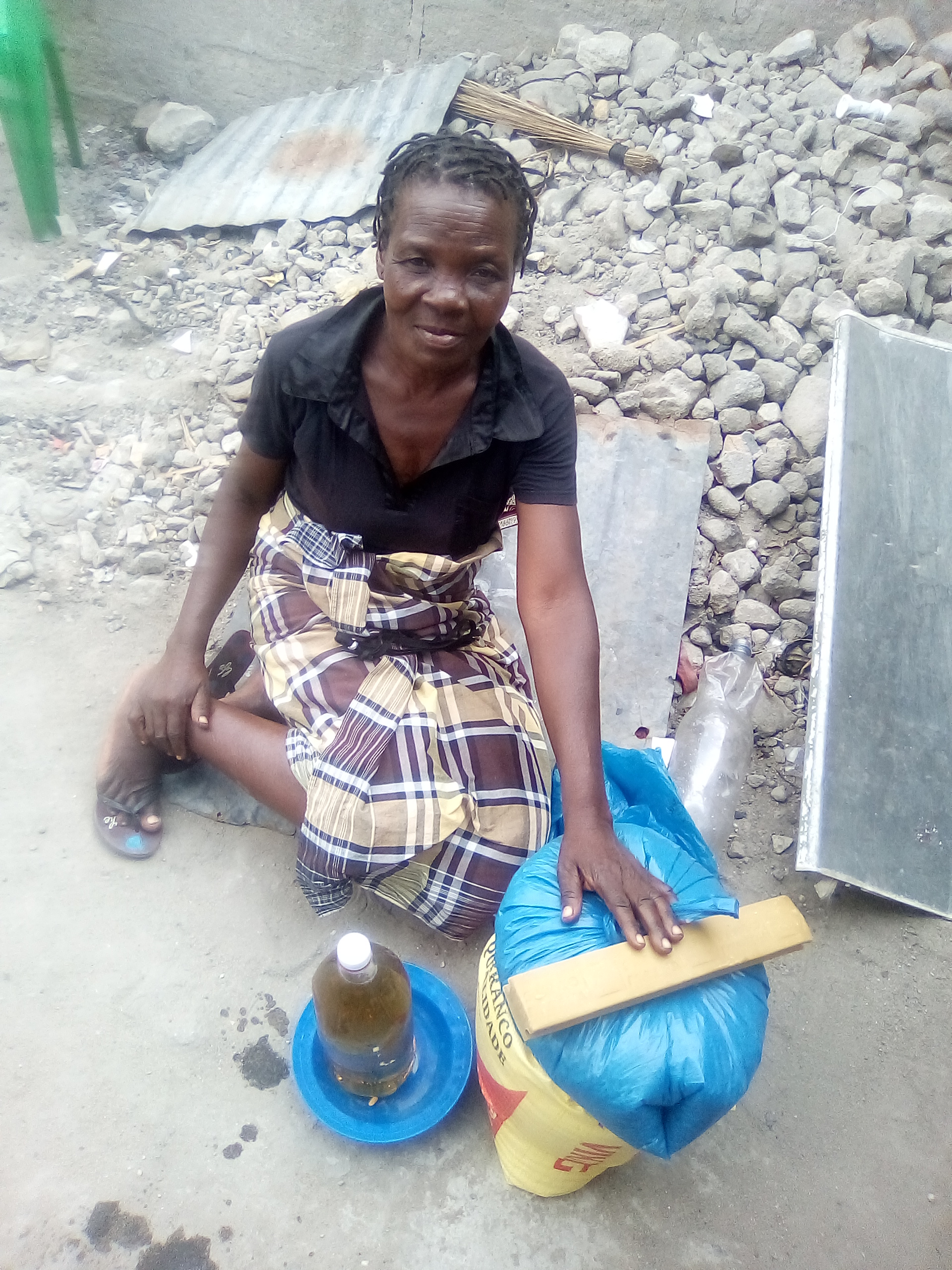
Is she any less valuable human being than me, or you?  Does she matter less because she happens to have been born in a poor country?  Or because she’s black?  Isn’t that what we think deep down if we deny help to people in this situation?

It’s not just our government cutting back that matters.  What about each of us as individuals?  There is a line in a song “my Chinese take away would pay for someone’s drugs”  (medicines) – that is so true.   I know many people, quite a few now retired or close to retiring – university professors, doctors, professional engineers, teachers, civil servants – who have amassed significant amounts of money, own big houses, take expensive holidays.  Healthy pension funds and investments have secured a comfortable retirement – as our culture tells us that that is what we have to do.  

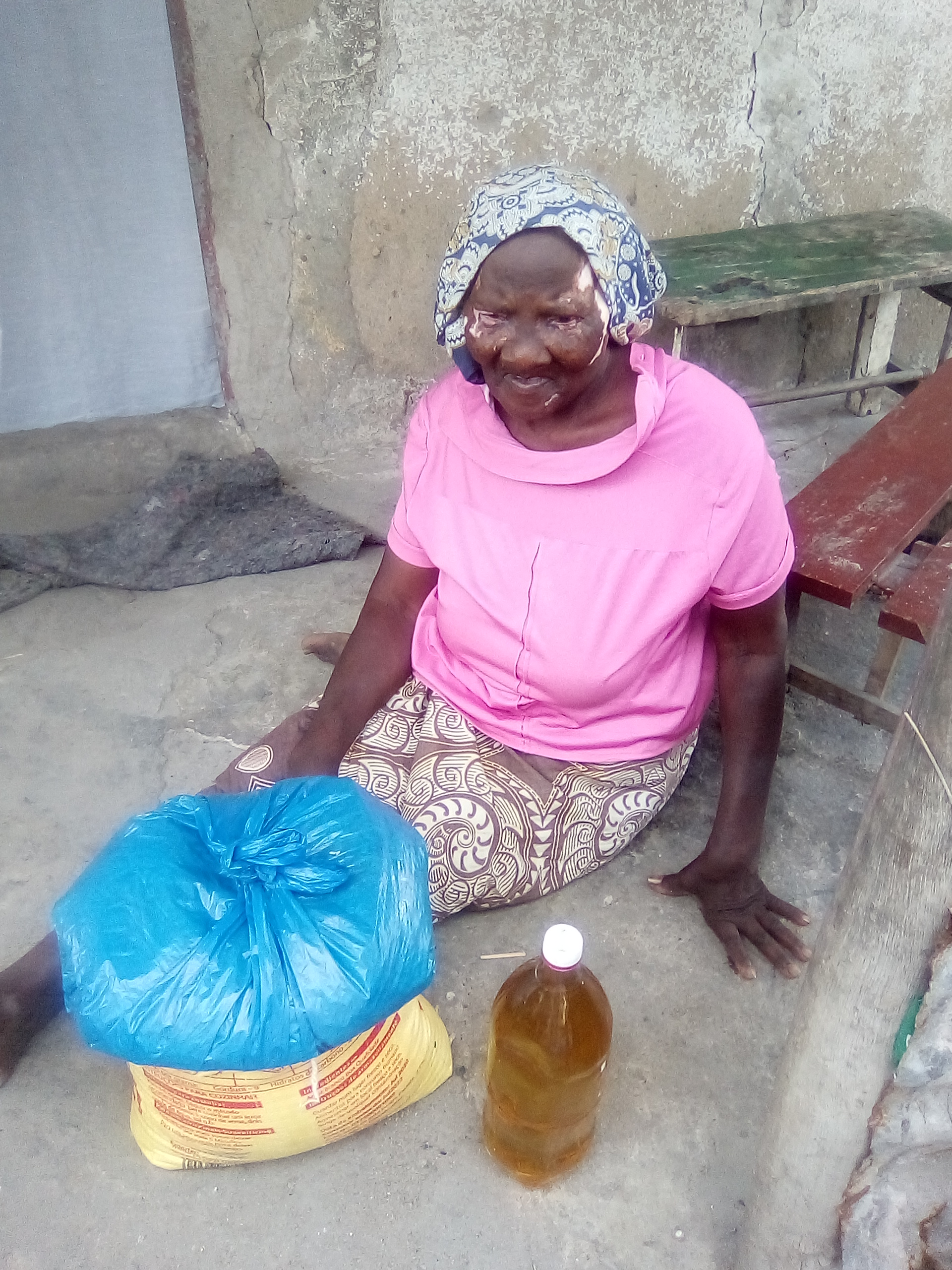
And yet this old lady has no such ‘essentials’.   She lives day to day in accommodation that we would not give space to in our garden, and is desperately grateful for a sack of rice and some cooking oil:
We in the ‘developed’ world are not deliberately evil, but we are ignorant.  We are ignorant of the life of the majority of the world.  We have money but are fearful of losing it.  We are taught to save for our rainy day, but we do that when so many others are already being flooded out by a deluge. 

It would be hypocritical of me to say we should sell all we have and give to the poor – although since Jesus said it, it is probably right.  But we can start to move in that direction.  It does not cause any discomfort if the total of our investments drop by (say) 10% when we still don’t think twice before having our Chinese takeaway – and yet I have found that joy comes from seeing the images of those who I have been able to help.  This person has something to eat because I chose to send some money.  That person can now put a tin sheet over the hole in the roof of their house because I chose to send some money.  When I  give, I feel no pain, only gain.  And yet it is still not ‘easy’ – still the pressures of sixty years of western capitalist propaganda take effort to resist.  It takes an act of will sometimes to give, but it is worth it.

Try it this Christmas?

May God bless us all.
How to create the society that we deserve.

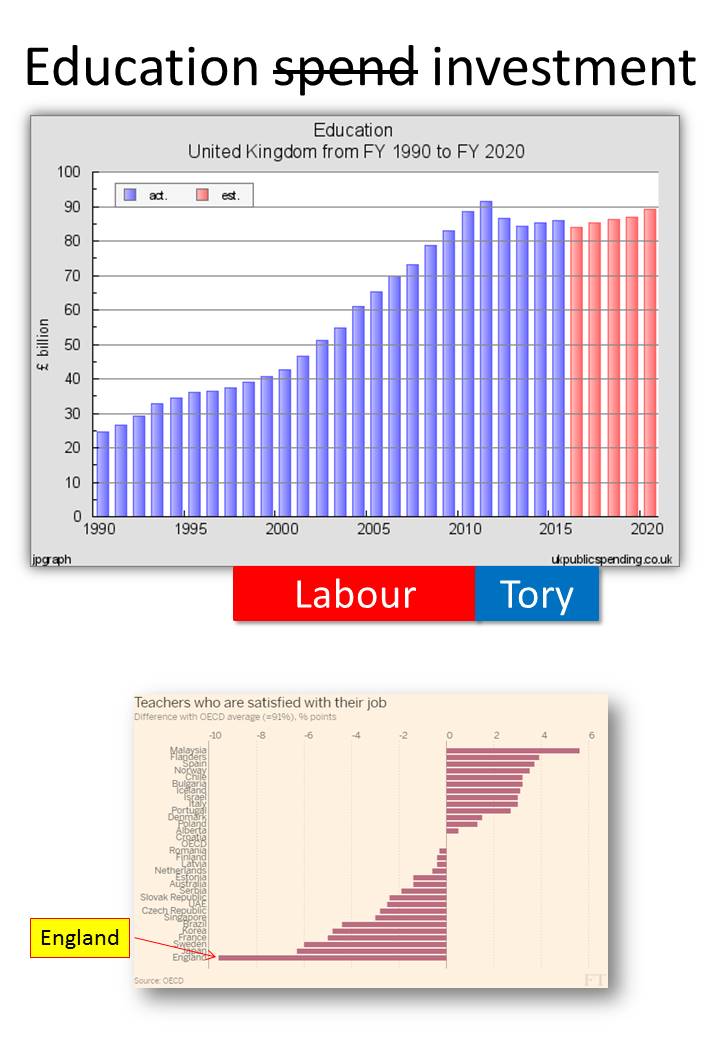
As a society, we decide what we value. Where do we want our work to generate value?  Do we value our transport infrastructure, do we value our children’s education, do we value our police force, our armed forces, caring for the elderly, the weak and the sick?  If we do, then our work has to be generating value in those areas.

Every hour we work generates more value than we receive as pay.  But who decides where the value that we create goes?  Clearly we can decide where we spend the value that we earn, but the extra value is retained by our employer, often private sector companies.

Businesses are responsible to their owners (shareholders) and have the responsibility to maximise income for the owners.  Their goal is to channel the value that we create to the owners.  Businesses do not have souls. Businesses are only interested in caring for the sick if it generates more income for the owners.  They are purely financially driven.  That is not a criticism but a fact.  It keeps things simple, and can produce very efficient and focussed activities.

In order to create the nation that the people want, we need a regulatory environment that directs value where we want it and allows the businesses to operate within that environment.   That is the role of government, through the tax and regulatory systems.

There is plenty of value generated in this country, we just need to see it allocated to the right areas.  At the moment, too much is allocated to a small number of people.  The activities that benefit us all are not valued enough by the few who decide where to ‘spend’ the value that they acquire.

As a society, we have the right to decide what we value and a right to ensure that our work creates value in areas that are important to us.  If we want to be cared for when we are old, we need people working to care for us.  If we want safe streets we need our police force.  If we want our children taught well we need teachers.

If more people work in these areas, it may mean less people working in other areas.  We may have to accept less people working in the finance industry, or the retail industry for example.  But surely a civilised society values caring for its people higher than moving money around, or selling more stuff?

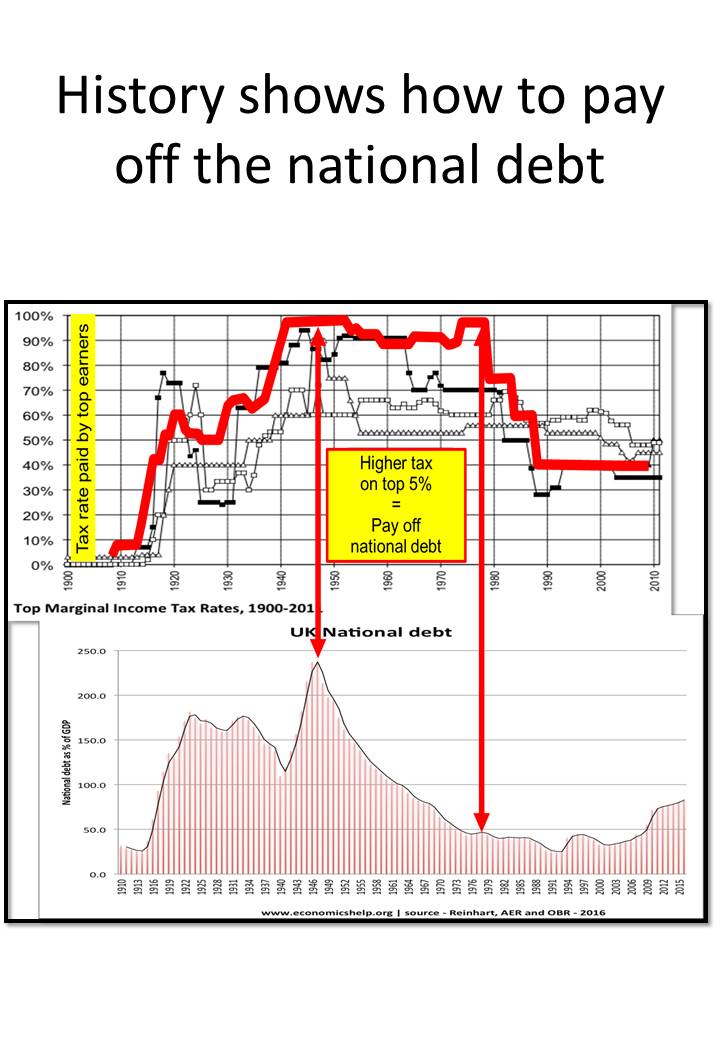
So, we need a taxation system that allows the society that we deserve to be funded.  That is why it is important to regain more control of the allocation of value.  Government needs to take back control from businesses, and from the top 5% of earners.

But what about the argument that ‘they will just go somewhere else’.  The value that is currently channelled to the wealthy is being created here.  It will still be created here.  All that will happen if the owner of a company decides to emigrate is that they will be harvesting the value created in the country that they go to.  The value created in our country will stay here for the benefit of our citizens.

So when we get the chance , let’s vote for the society that we deserve.  Let’s grasp our future with excitement and hope, and not shrink from the opportunity to make this nation great.

Draw your own conclusions

Here is some data.  It should be more powerful than rhetoric.  Draw your own conclusions…

Why it is right to reverse the increase in Inheritance Tax threshold.

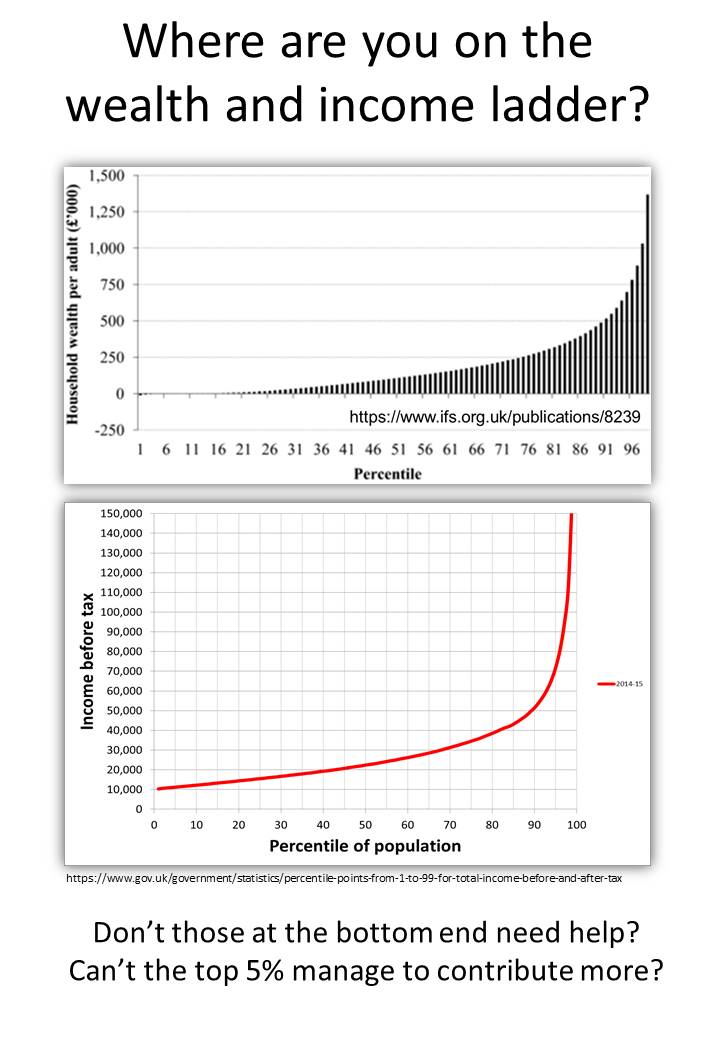
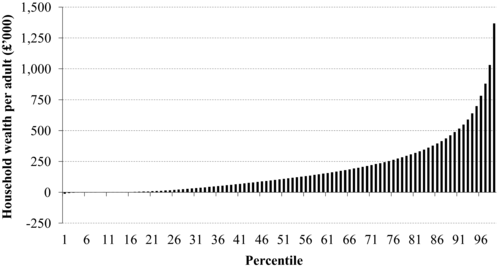
The Institute of Fiscal Studies says that “..wealth is distributed very unequally. One per cent of households have negative net wealth of greater than £12,000 per adult (the 1st percentile), while the 9th percentile is £0 so 9 per cent of households have no positive net wealth. Wealth at the median is £104,000 per adult. Wealth at the very top increases dramatically across a small number of percentiles – the 95th and 99th percentiles are £0.7 million and £1.4 million per adult respectively. In fact, the estimates of wealth held at the very highest percentiles could be underestimates;”

There is no problem with saving your income to increase your wealth.  But there is a problem when inherited wealth means that those who have not had the good fortune to have wealthy parents or ancestors are denied the chance to ‘better’ themselves.

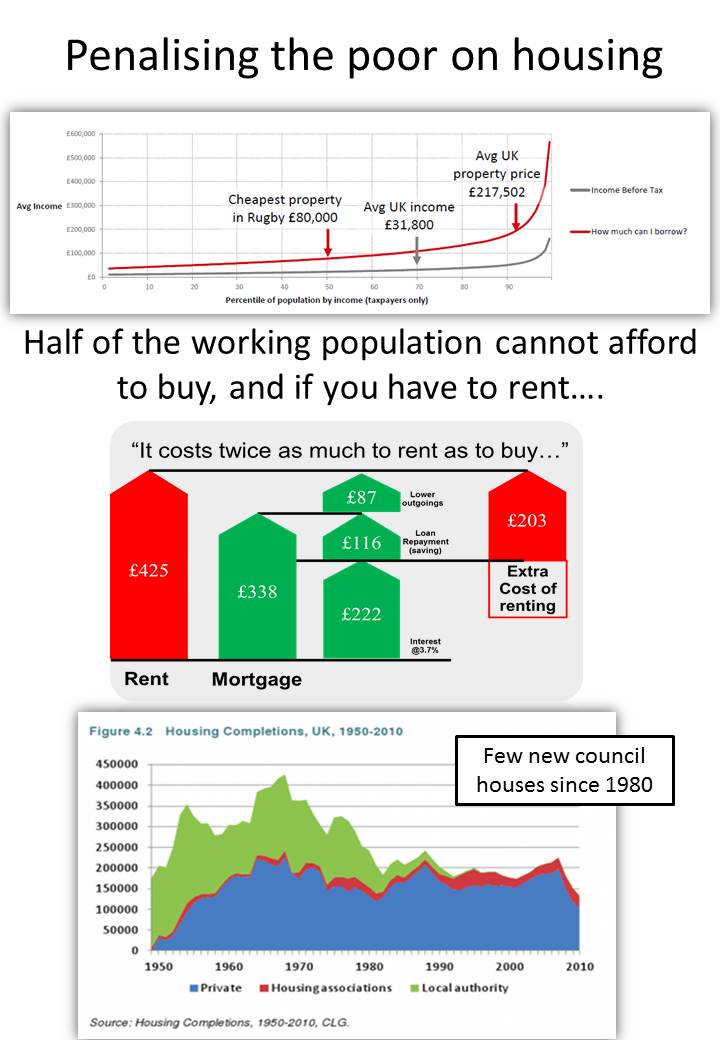
This is more than an academic problem.  For example, for most people, the biggest expenditure is housing.  If you look at how much you can borrow, and at typical house prices then two-thirds of people cannot buy a home without help from someone who has wealth.  The graph above shows that perhaps a third of the population have insufficient wealth to avoid the having to enter the private rental market.  The high cost of renting means they have less chance of building themselves a better future – the rules are stacked against them.

That is why it is right to reverse the increase in Inheritance Tax threshold, we need to even out the playing field.

It is time to cut VAT.

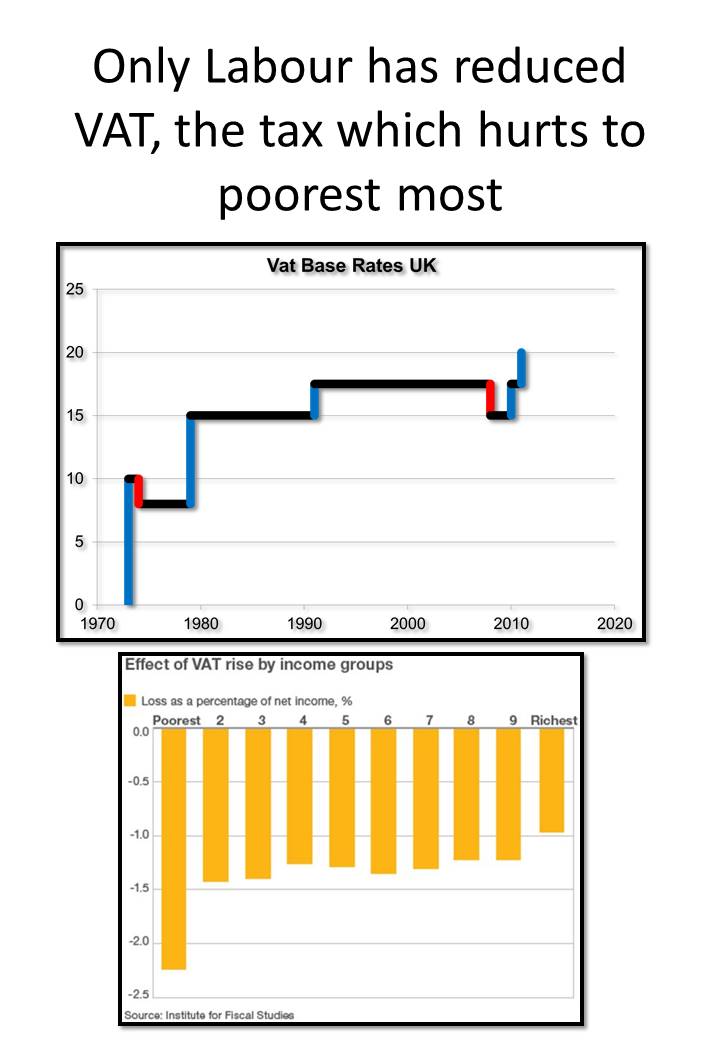
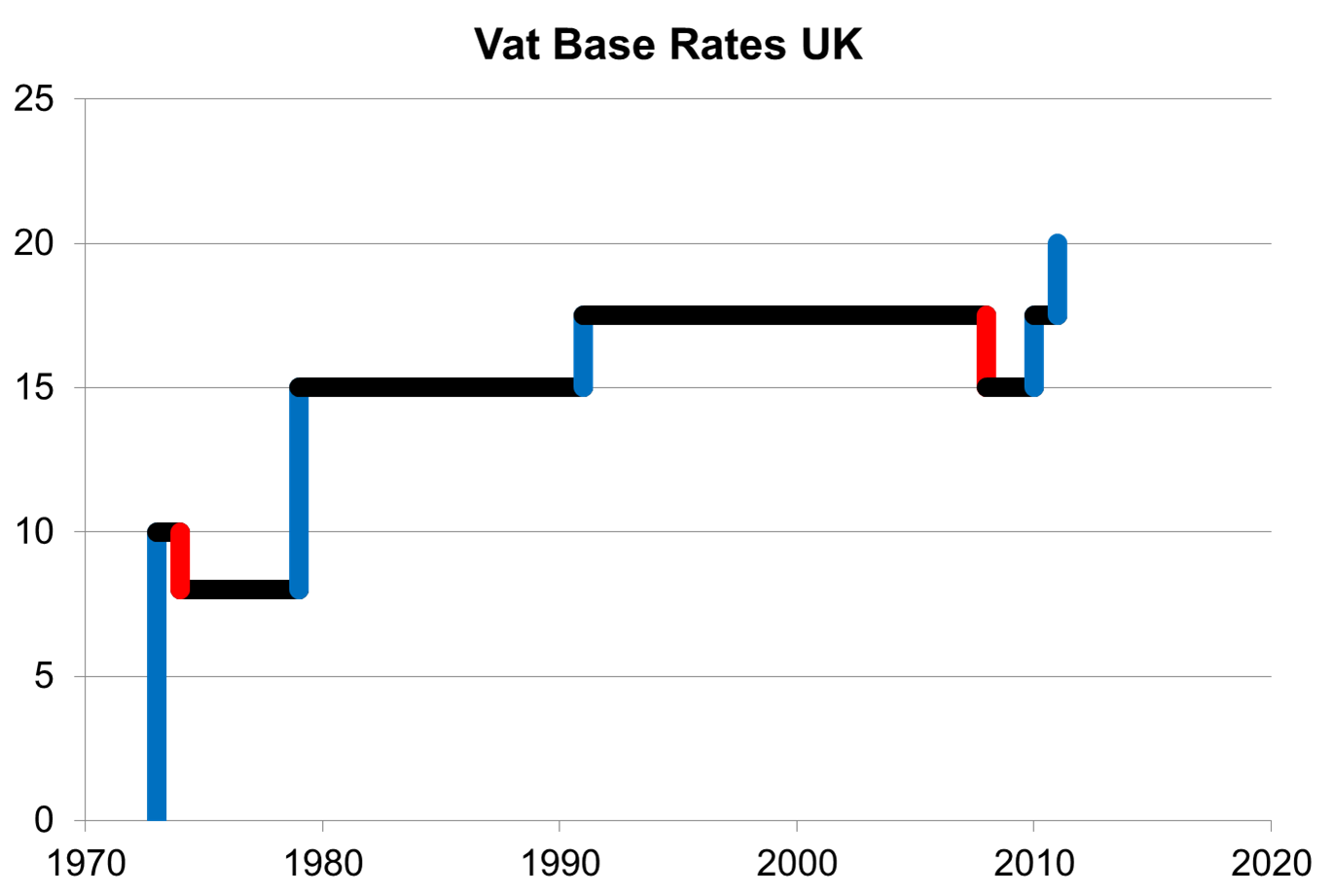
VAT is a tax on what we spend.  Everybody has to pay VAT at the same rate, rich and poor alike.  The following chart shows which parties have changed the basic rate of VAT since its introduction by the Conservative government on 1973.

VAT rate changes

Increasing VAT puts a bigger burden on the poor than the rich, as shown by the following analysis of the most recent VAT risk from 17.5% to 20%:

Reducing the rate of VAT will ease life for the less well off, increase sales, increase business activity and lead to higher employment.  That will increase income and corporation tax revenues and reduce the cost benefit payments as there will be less people out of work.

It is time to cut VAT, not to consider increasing it.

Why we need more council houses

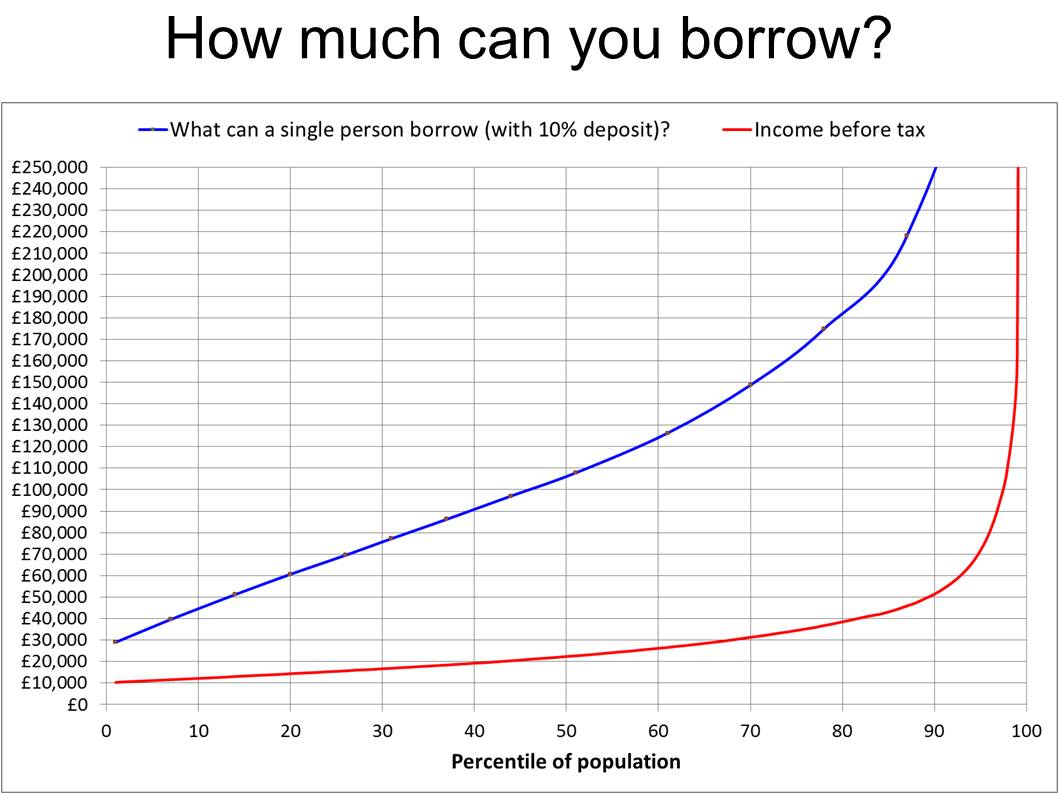
The chart below shows the income distribution in the UK (latest figures available from government statistics) and the corresponding amount that you can borrow if you have a 10% deposit (using the Halifax building society mortgage calculator).

Two thirds of the working population would be earning too little to buy a house for £150,000 by themselves. If you do not have the ‘bank of Mum and Dad’ then you have no chance.

Your only option is to rent, from the private sector, at a cost that is higher than your mortgage repayments would be if you were able to get a loan.

That is why we NEED more council houses.

That is why I’m voting for a Labour government. (see Pledge 2)

How can Theresa May call herself a Christian?

“If someone had enough money to live well and sees a brother in need but shows no compassion – how can God’s love be in that person?” 1 John 3:17

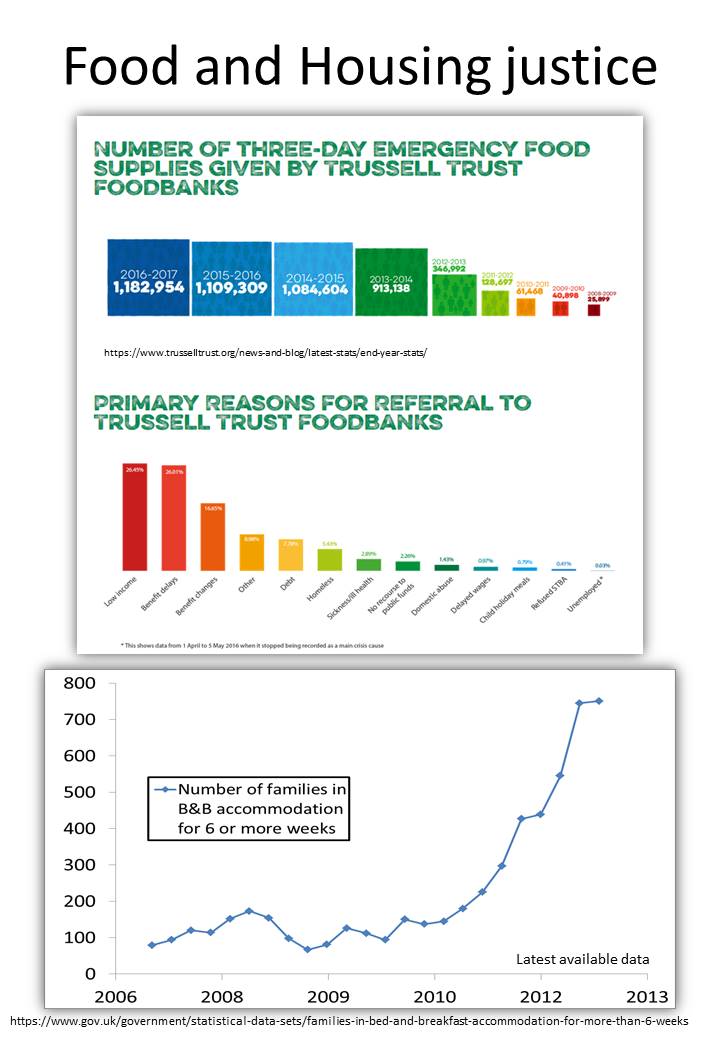
The Conservative party have overseen the rise in homelessness and food bank usage, hardship caused by severe sanctioning of benefits, zero hour contracts, deep cuts in public services.  Yet Mrs May has called herself a Christian.  I don’t understand how.  Jesus said “If you love me, obey my commandments” John 14:15 yet I see no sign of that.

Jesus calls us to love our neighbour, not to exploit them.  He noted that the widows offering of a few small coins was worth far more than the trumpeted gifts of the wealthy.  She gave all she had to live on.

Unfortunately the Conservative government have demanded all from the poorest in society.  There have been plenty of opportunities for a change of heart – now it is time for a change of government.

How to approach the General Election campaign.

“Stop telling lies. Let us tell our neighbours the truth for we are all part of the same body.”

“Get rid of all bitterness, rage, anger, harsh words and slander, as well as all types of evil behaviour. Instead, be kind to each other, tenderhearted, forgiving one another, just as God through Christ has forgiven you”

“Live a life filled with love”

“You can be sure that no immoral, impure or greedy person will inherit the Kingdom of Christ and of God.  For a greedy person is an idolater, worshiping the things of this world.  Don’t be fooled by those who try to excuse their sins, for the anger of God will fall on all those who disobey him.  Don’t participate in the things these people do.  Take no part in the worthless deeds of evil and darkness; instead, expose them.”

In the run-up to this latest election, here are instructions from St Paul on how to behave.  They are as valid today as when they were written, and I long for politicians and those in the media to listen to them.  Let’s encourage them to behave like this when we can.

But they are also a challenge for each one of us.  I find myself getting angry and bitter at what I hear from the campaigns, and I can let it control my responses.  Look at most of discussion threads and you will see the same.  But it does not help to use harsh words or slander; let’s try to put our arguments graciously.

And finally there is the message of justice: “no immoral, impure or greedy person will inherit the Kingdom of Christ and of God” and “the anger of God will fall on all those who disobey him”.  We don’t know how – it may be simply that they become bitter and unhappy individuals, or it may be something more painful.  But if we know that justice will be done then it helps us restrain our own feelings of anger, and perhaps be moved to compassion and mercy instead.

Please share this message to try to make the next few weeks more bearable for us all.

(Quotes are from the book of Ephesians)

“Forgive me my sin, as I forgive those who sin against me.”

Think about this carefully.  It is the route to national and individual healing.

If we are a wealthy banker and are angry and unforgiving of those who voted for Brexit, then this prayer gives the Brexit voter permission to be angry and unforgiving of us, as we maintain the system of oppression of the poor.  The country tears in two, hatred spreads and we are all worse off.

If we are poor and homeless and are unforgiving of the uncaring nature of those who are financially safe, then that gives those in power no incentive to change the situation.  And we can expect to be punished for any bad behaviour on our part.

If we are unforgiving of less than perfect service from (say) hospital A&E, teachers, or waiters then we can expect no forgiveness when we fall short of perfection in our work.

If we cannot forgive our friends or family when they say or do something that upsets us, then we must be perfect in our behaviour towards them.

The prayer asks that we are forgiven in the same way that we forgive others.  If we cannot forgive others, we must maintain the same demand for perfection in ourselves; a demand that we will never be able to live up to.  If we want to free ourselves from feelings of guilt or inadequacy, we must choose to forgive others first for their shortcomings, and then we can know then that we are forgiven.

The ethical way to balance the books

If the government makes ‘savings’ of £1million, what does it actually save?  Well, by savings we mean job cuts, and almost all of the job cuts are from lowly paid workers.

A person on (say) £12000 a year will pay £673 in tax and NI contribution.  They now do not have a job and so will receive (at least) jobseekers allowance of £73.1 a week, or the equivalent of £3801 a year.  So the immediate saving is not £12000 but £7525 a year.

But someone on a low income will not be saving, but spending their money to live.  The government will therefore lose VAT on their spending, let’s say on average 15%.  Applied to £7525 a year this reduces the saving to £6397.

On top of that, anything that they buy will add to the profits of the business who sell them the product – and the business will be paying tax on the profit. The business will employ someone to get the product to them and serve them – and that person is paying tax too.

So for every £1million that the government claims to cut the saving is probably only half at best.

In terms of human suffering this seems to me to be a very cruel and inefficient way of balancing the books.  Surely it is better to increase the contributions from the wealthy who will not suffer any hardship, but simply see a reduction in the amount of money that they squirrel away?