Great Britain? I hope so.

Eighty years ago this nation was at a crisis.  Politicians of the day worked together for the good of Britain and Europe.  The monarch was respected and brought hope to the people suffering – visiting Coventry after the horrific bombings, addressing our nation and urging us to pull together to fight against fascist powers that were oppressing the poor, the weak and the scapegoat Jews.  It was a time where national values and pride meant doing the right thing for our neighbours.

Fast forward to today.  We have in power an unelected leader who is treating our Queen with contempt, as a tool to be used as he sees fit.  We see those in high office treat our honourable institution of parliament with utter disrespect – lounging on the front benches. New scapegoats are created.  Our traditions are trampled.  Unelected oligarchs and manipulators hold powerful positions.  The similarities with the fascist regimes that “Great” Britain united to defeat are startling.

We will have a general election soon.  It will be a test.  Has our nation abandoned the values that we once held dear, and for which men and women gave their lives in our finest hour?  Or will truth and goodness prevail?  This will not be an election about Brexit, but it will be a test of what we are as a nation.  It will be a test of our values.  I hope and pray that we will choose truth, justice and honour.

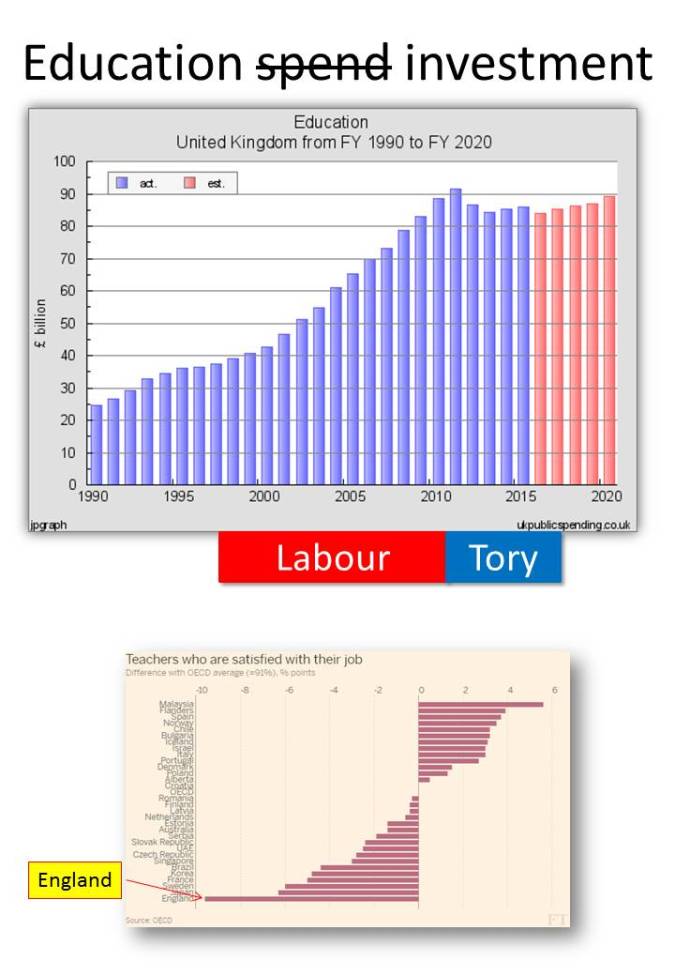
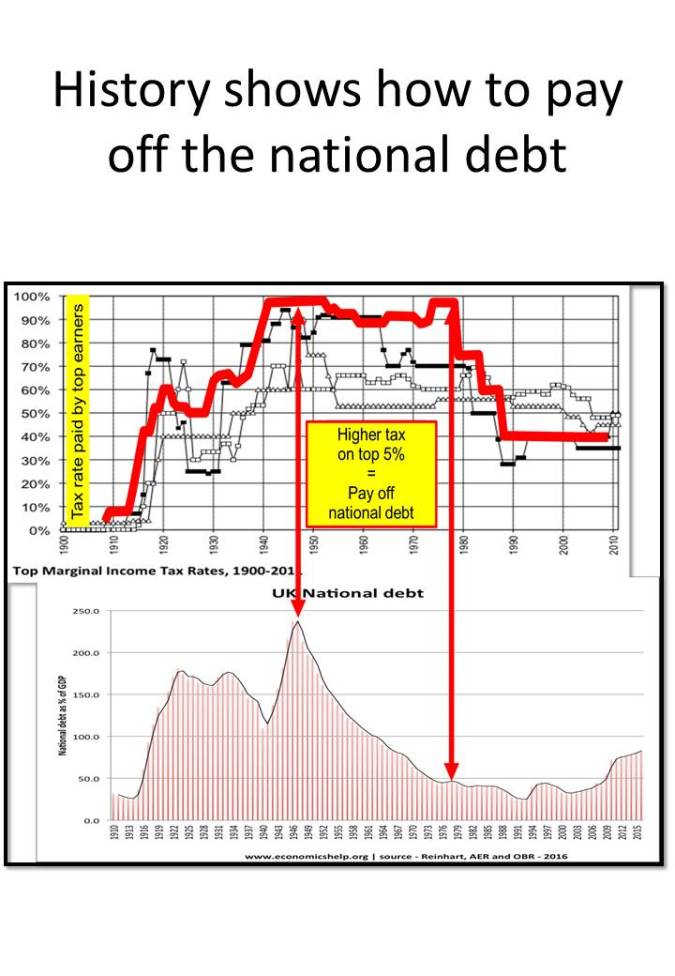
Draw your own conclusions

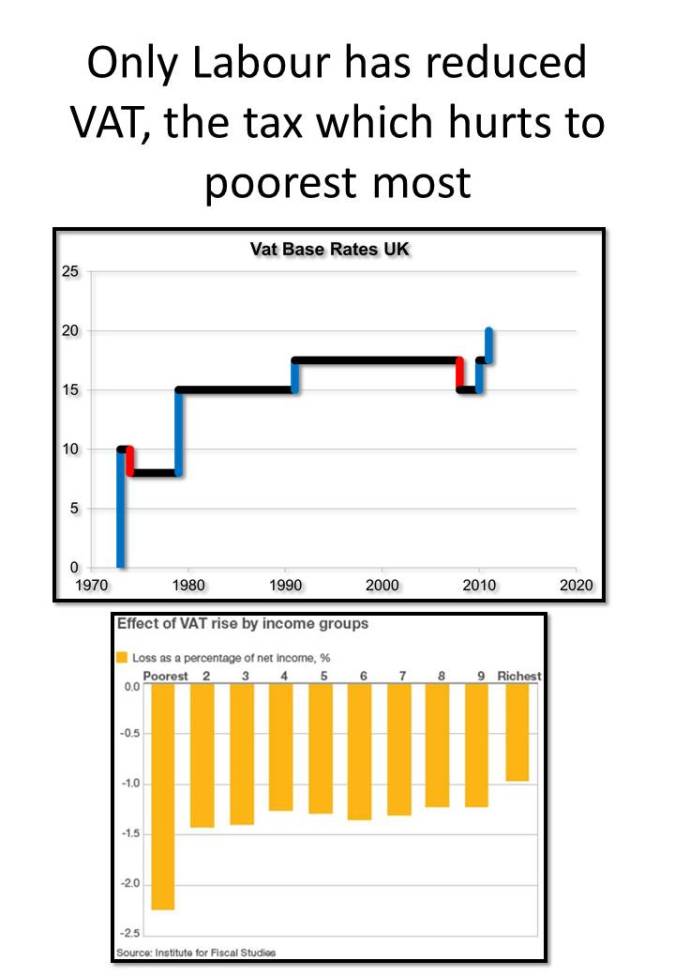
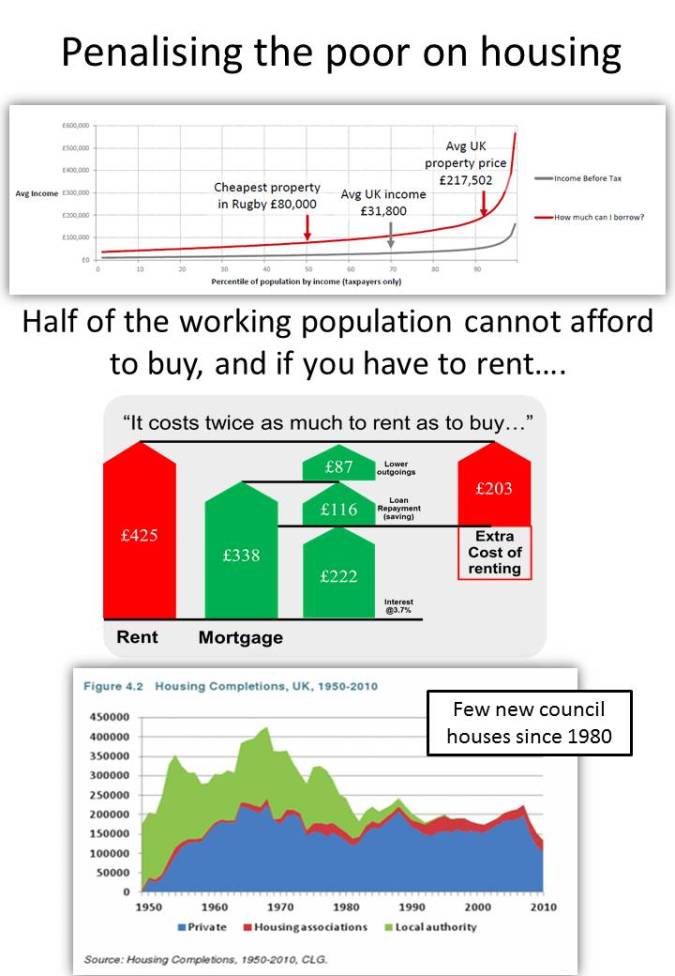
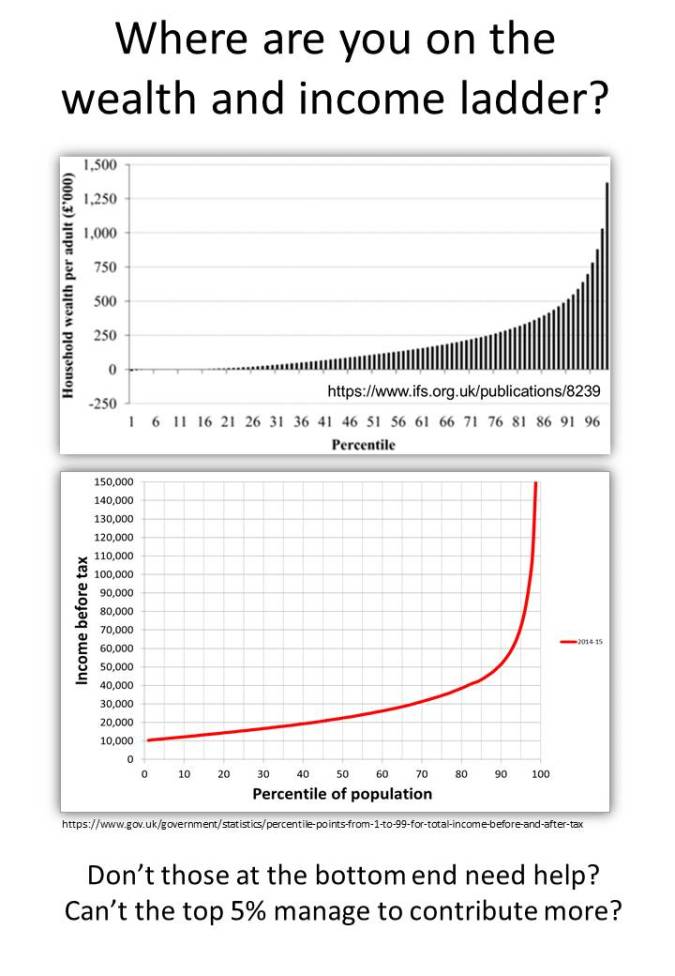
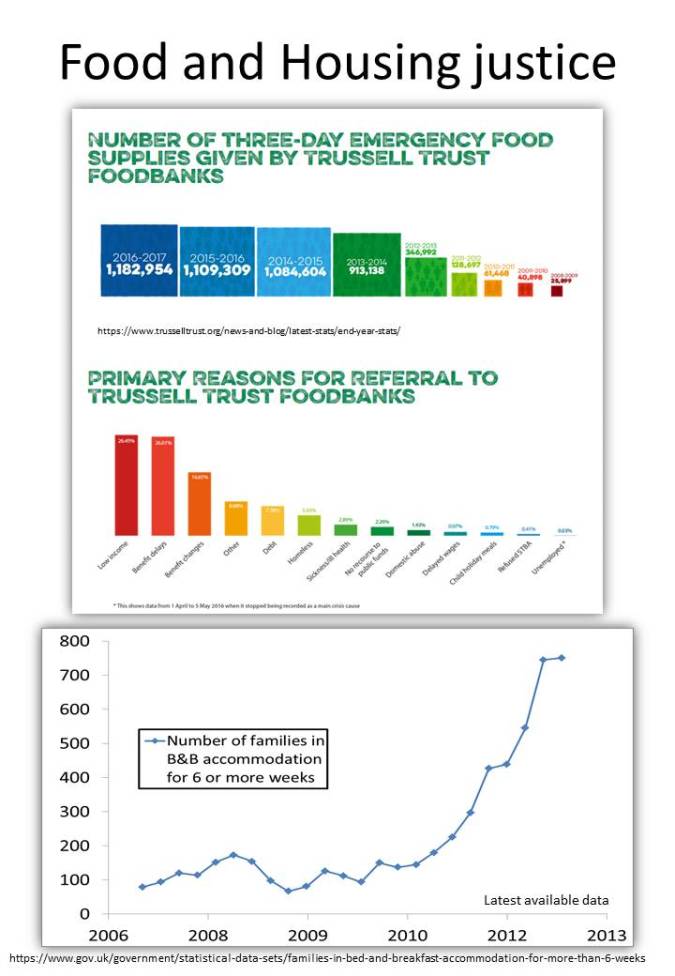
Here is some data.  It should be more powerful than rhetoric.  Draw your own conclusions…

How to approach the General Election campaign.

“Stop telling lies. Let us tell our neighbours the truth for we are all part of the same body.”

“Get rid of all bitterness, rage, anger, harsh words and slander, as well as all types of evil behaviour. Instead, be kind to each other, tenderhearted, forgiving one another, just as God through Christ has forgiven you”

“Live a life filled with love”

“You can be sure that no immoral, impure or greedy person will inherit the Kingdom of Christ and of God.  For a greedy person is an idolater, worshiping the things of this world.  Don’t be fooled by those who try to excuse their sins, for the anger of God will fall on all those who disobey him.  Don’t participate in the things these people do.  Take no part in the worthless deeds of evil and darkness; instead, expose them.”

In the run-up to this latest election, here are instructions from St Paul on how to behave.  They are as valid today as when they were written, and I long for politicians and those in the media to listen to them.  Let’s encourage them to behave like this when we can.

But they are also a challenge for each one of us.  I find myself getting angry and bitter at what I hear from the campaigns, and I can let it control my responses.  Look at most of discussion threads and you will see the same.  But it does not help to use harsh words or slander; let’s try to put our arguments graciously.

And finally there is the message of justice: “no immoral, impure or greedy person will inherit the Kingdom of Christ and of God” and “the anger of God will fall on all those who disobey him”.  We don’t know how – it may be simply that they become bitter and unhappy individuals, or it may be something more painful.  But if we know that justice will be done then it helps us restrain our own feelings of anger, and perhaps be moved to compassion and mercy instead.

Please share this message to try to make the next few weeks more bearable for us all.

(Quotes are from the book of Ephesians)

How to really make Britain great again.

The headline tells us “Brexit to send UK tumbling down world economic league table…”.  and we ask “Is this making Britain great again?”

But the headline, indeed the whole question of where Britain ranks in the world economy has absolutely NOTHING to do with whether Britain is great.  What matters is whether Britain is becoming more human.

Being human has nothing to do with the economy or wealth, but everything to do with values. It is about valuing everybody equally, irrespective of colour, class, wealth or religion. It is about selfless behaviour for the good of others. It is about acting with integrity and speaking truth. It is about doing what is right, irrespective of the consequences.

Britain will become great when those who are well off are willing to contribute enough to ensure the wellbeing of those who are not well off,  when we are willing to give up our own comforts for those who have nothing,  when we are willing to give sanctuary to those fleeing war dispite the risk of personal harm.

Britain will become great when we stop expecting a political system that gives everyone all the rights that they demand, but encourages us all to self-centredness. We cannot demand perfection from public services that we are not prepared to fund. We need to stop demanding perfect treatment from others, when we cannot give it ourselves.  We need to stop demanding that teachers work until midnight to keep up.  We need to stop expecting to be treated in A&E within minutes when we have drunkenly staggered into a lamppost.  We need to stop abandoning our personal responsibility for our own circumstances.

Britain will become great only when we choose to love one another; when we learn to contribute what we can, and to keep our expectations of others reasonable.  That is my hope for 2017.  Make it yours.

War, religion, God, and why I write

I remember a discussion soon after I became a Christian where I was asked “so what about all the other religions?”  My reply was that they were simply mistaken.  I think the remark was taken to be rather arrogant.

I read the news today. I see the conflict, anger and fear; fighting between Moslems of different sects.  I see forced imposition of religious dogma; conversion to another religion punishable by death.  We all know that this is not as it should be. And I am reminded of my reply.

Reason and evidence tells me there is a God, and my whole being tells me that love is our ultimate purpose.  And when I find that love underpins and is at the heart of Jesus teaching I begin to see how it all fits together; how we are meant to be.

If I were God and someone from another religion was praying to me, I would not ignore them because they think I have a different name, I would not condemn them because they don’t understand my intentions for them.  I would be saddened that they are misled, I would try to teach them, and I would restrain some of their actions, but I would still love them.

As a mere human trying to follow God’s purpose, I don’t hate the Muslims, or even the Westborough Baptists, but I believe they are misled and mistaken.  I hate what they do, and I want them to stop.  I want them to understand the truth, and find their real purpose.  I want that for everyone.

If we all really understood Christ’s teaching, if we really loved God with all our heart, and loved our neighbour as ourselves, if we really were ready to forgive others and restore broken relationships we know that the world would be a better place.

That is why I write.  That is why I follow Christ.  That is my purpose.

What is yours?

Lord Kelvin and God

From the BBC website:

Lord Kelvin believed science must be treated with reverence, as he explained:

“I have long felt that there was a general impression that the scientific world believes science has discovered ways of explaining all the facts of nature without adopting any definite belief in a Creator. I have never doubted that impression was utterly groundless.

“The more thoroughly I conduct scientific research, the more I believe science excludes atheism. If you think strongly enough you will be forced by science to the belief in God, which is the foundation of all religion.”

http://www.bbc.co.uk/religion/0/24535331

If, like Kelvin, you are as willing to explore the facts and consider your own opinion, you might like my recently released book “The Big Picture – an honest examination of God, Science and Purpose”

http://www.electiopublishing.com/index.php/bookstore#!/~/product/category=4758362&id=28794920


Goodness – me!

Do you ever stop to think what you would like on your gravestone when you are dead?  It’s a good way of finding out what we really want to be like.  I don’t think any of us would like to see phrases like:

“Always selfish and greedy”

“Never had time for anyone else”

“Vindictive and hateful”

When we see a new baby, at a christening who would want to think that the baby would grow up to be a thief, or to have a string of husbands who she cheated on and deserted, or to be a child molester.

We know deep down that we want to be good.

In the 11th century, Anselm of Canterbury described how being good is possible through ‘goodness’, and how supreme goodness is God.  So that desire to be good is actually us wanting to be like God (supreme goodness), to act like God, to be in his image.

St John’s describes in his gospel that God is love.  So when we love one another, our love is possible through love, which is through God.  We are choosing to act like God, to be part of God.

Each of us has the essence of goodness in us, and the essence of love in us.  God is goodness and God is love, so we all have God within us.  Sometimes we choose to ignore goodness and love, and instead choose to be selfish, vindictive or hateful.  But that is not what we want to be – as we found at the start of this post.

The true Christian religion is about helping us to be what we want to be – good and loving.  It is about connecting with that goodness and love within us; God within us.  It is about learning from Christ what goodness and love looks like, and trying to imitate him.

And if you want to be good and loving, then that means that you want to be like God.  Jesus said that ‘if you have seen me then you have seen God’; Jesus represented supreme goodness and love in human form.  So if you want to be good and loving, since Jesus was supremely good and loving, then you want to be like Jesus, and if you want to be like Jesus you can call yourself a Christian.

Christians pray to help make that connection with goodness and love.  Here’s an example of a Celtic prayer from Lindisfarne:

Help me dear Lord to care too much

To love too freely

To pray unceasingly

To forgive endlessly

To laugh fearlessly

To question

To live

To be who I am

To be where I am

To be what I am

To hope

To believe

To reach out my hand

That’s a good prayer, isn’t it?  It’s about connecting with God within us.  It’s asking God to help us be who we want to be.

Do you want to be the sort of person that the prayer describes?  You can take a step closer by praying that prayer.

Related posts

https://philhemsley.wordpress.com/2012/06/21/an-argument-for-and-definition-of-god/

https://philhemsley.wordpress.com/2012/12/29/the-god-of-science/


Proof of God?

A friend asked “Let us suppose it was absolutely certain there was no god but many people honestly believed there was – how different would the world look today?”

I could answer that if there was no God there would be no universe and no people to observe it.

Clearly, as we are both intelligent people we must be talking about something different when we say the word ‘god’.

The God that I conclude exists is a creator, and a God who sustains the universe.  Clearly the universe exists and continues to exist.  Ask a physicist why and he will probably say ‘because of the laws of physics’.  A rose is a rose by any other name, so at minimum my God is the laws of physics – we just choose to give it different names.

Perhaps my friend’s question is going beyond that definition of God.  Perhaps he is asking about a God who has ‘character’, a ‘me’-ness that I have.  (I know that I exist, there is an essence that is ‘me’).  What would things be like if there was not a God who had an essence of ‘me’?

It’s actually not easy to define what ‘I’ am.  Science of course shows that my brain has massively complex computational ability, but that doesn’t really help.  Literature and philosophy, and our daily experience tells me that there are things like love, joy, peace, thoughts, free will.  Let’s consider these as parts of ‘me’, and think – what if there were not a god who also had these characteristics.

But once again, the same sort of argument applies.  God is love, joy, peace.  Therefore without God there would be no love, joy or peace.  There would be no literature, there would be no mathematics, no equations, there would be not science.

Free will though is slightly different.  We know we have free will, and yet it is inexplicable by science.  It is inconsistent with the laws of physics.  Free will seems a bit of a paradox.  If God is the laws of physics, and free will is inconsistent with the laws of physics then how can that work?  A rational explanation is that free will is something that is a gift of God, that is not constrained by the laws of physics.  Therefore we begin to see what would be different in my friends question.  Without God we would have no free will, we would not be able to choose right from wrong, we would simply be robots who respond to stimuli.

But to explore the question further.  My last paragraph introduced right and wrong.  We know that there is right and wrong – even if we don’t always know what is right and what is wrong.  Right and wrong are different from free will, so let’s suppose that we were able to have free will but had no knowledge of right and wrong.  Clearly right and wrong exist.  Goodness and evil exist.  And yes, my definition of God includes ultimate goodness.  So without God we would have no constraint on what we do, we would simply live to serve ourselves.  The world would be governed simply by whoever was strongest.  We would be like most of the rest of the animal kingdom.  States like North Korea would be everywhere and left unchecked.  Anarchy would reign.  The world would be a very different place to live.

So have I proved God exists?  I think so (but I would) – simply because my definition of God includes everything that we know exists.  I define that it is not possible for anything to exist without God, and so anything which exists must be God.

My friend asked what if God didn’t exist but people believed that he did.  I hope that I have shown that such a question is not directly answerable, it is like the “can god make a thing so heavy that he cannot lift it” question, or “can God make something that doesn’t exist”.  But perhaps I’ve also been able to answer the questions behind the question.  Will it satisfy my friend?  I doubt it.  If any of us really doesn’t want to change our views then no amount of logical reasoning will make a difference.  But perhaps others will find the discussion interesting….

If you found this post interesting you might also like:

https://philhemsley.wordpress.com/2013/05/03/goodness-me/

https://philhemsley.wordpress.com/2012/12/29/the-god-of-science/

https://philhemsley.wordpress.com/2012/06/19/can-god-answer-prayer-in-a-universe-that-operates-according-to-the-laws-of-physics/

A vision and purpose for 2013

In the 2011 UK census, nearly 60% of the population want to be recognised as Christian.  Many other surveys show that the proportion of the population who regularly attend church services is between 5% and 15%.  (Tearfund report on churchgoing 2007, http://www.eauk.org/church/research-and-statistics/english-church-census.cfm, Religious Trends – Brieley)

This data shows that there are 45 – 55% of the UK population who want to be associated with Christianity but are not being supported by the various churches in the country.  To my mind this is not an acceptable situation.  Something must change.

The popular representation of Christians is that we are uncaring unloving people:  We are sexist, not allowing women bishops.  We are homophobic, not allowing gay marriage or gay clergy.  We are ignorant – ignoring scientific data and insisting that the world is 6000 years old and was created in six days.  We are hypocrites and child molesters.  We instantly jump to judge everyone else’s behaviour whilst being just as bad ourselves.  Our bottom line is that “you are going to Hell if you don’t believe what I believe”.  Of course, that’s complete b*****cks, but it certainly doesn’t encourage anyone to explore what Christianity is actually about.  I wrote my first book “The Leap” to address some of these issues.

So there is an image barrier that prevents the 55% exploring their spiritual roots.  But there are many other barriers. To name a few:

  • long working hours leave people exhausted (Nearly 20% of men and 6% of women work over 49 hours per week – 2011 census).  We want to relax and do something enjoyable at the weekend and the image of sitting in a cold uncomfortable church pew is not very attractive.
  • entertainment is at our fingertips in the comfort of our own homes, we don’t want to go to the trouble of going out.
  • nearly 50% of the population live alone (2011 census).  There’s all the housework to do. The barrier of going out alone can be immense, loneliness is a hard habit to break

Jesus came to bring life in abundance.  We are missing out!  We catch glimpses of what life in abundance might be in the spirit of the Olympics,  in the national celebrations and street parties of the Jubilee.  Neighbours got to know each other, perhaps speaking for the first time in years.  The hearts of the people in this nation are good – look at the response when Claire Squires died – nearly £1million donated. http://www.justgiving.com/Claire-Squires2

The church in the UK needs to provide opportunities for this spirit (which is a reflection of the spirit of God within all of us) to grow, for individuals to explore and develop their spiritual side, their humanity.

We need to fight against the materialist mindset that tells us we are simply a bunch of chemicals.

We need to fight against the economic mindset that tells use we are just consumers, human resources, a drain on the economy.

We need to free and inspire the hearts and minds of every man, woman and child to love one another, forgive one another, and love God – with all our hearts, minds and souls.

Let’s go for it! Let 2013 be a year we remember.

The God of Science

Neuroscientist Michael Graziano has speculated on the connection between the material and the spirit world.  His book “God Soul Mind Brain” has the stated aim to describe ‘the mechanistic understanding of the spirit world’.  With is background he makes the assumption that ‘mechanism’ is the reality and perception is the illusion.

“we do not perceive the world as it is, the brain constructs a simulated world”

“colour is not actually out there…. The same set of wavelengths may look green to you in a different context or grey or blue”

“We experience the model rather than the reality”

The statements are fascinating reminders of what the brain does: it constructs a simulated world, it provides the stimulus to allow the experience of colours, it somehow appears to create a model in our brains.

However, it is a false assumption that the mechanism is the reality and the perception is the illusion.   Accepting the assumption is like saying that the material pages of a book and the printed ink are the reality, and the story that the book tells or the information that it contains is not the reality.  Whist nobody would disagree that the book is the material and the story is not, which of them is the reality?

In a book, we read the words rather than perceiving the paper and letters and we construct in our imagination a picture and an experience based on the words and story within the book.  In the only scale of importance that matters to a human being, the book is the words, not the paper and ink.  War and Peace is a famous story, the paper that it was written on was just the framework for holding it. The story is eternal although the paper decays. To a human being, the story is the reality.

Consider a work of art; the material is not the masterpiece, it is merely a framework which holds the masterpiece.  The canvas and paint is meaningless, the picture is the meaning.

If we can free ourselves of the dogma of materialism then we can perhaps begin to consider that in the universe created from nothing, where particles are only potentialities until they are observed the reality is the experience, the qualia, the ‘I’, and that the material is just the skeleton for holding the reality.

The material universe is meaningless until it is perceived, the perception of it gives it meaning.

The butterfly nebula is beautiful when it is observed; without observation it is meaningless.

Two bags of chemicals are meaningless, but the intimate relationship between two people who are in love has immense meaning and purpose.

Is this so strange?  When we look at the quantum level of the material, there is no such thing as paper or ink.  There are particles and forces that we cannot understand.  They are outside of our ability to perceive, so we think of them as miniature versions of ping pong balls and sticks.  They are only potentialities until they are observed.  What we consider material reality is not really real, it performs its function only when it is perceived and observed.  So perhaps what we perceive as real day to day, the material world, is similarly non-material. Perhaps the only reality is our perception, our model.

So what of God in this?  Jesus spoke of God living in us and us in him.  Perhaps our material framework that holds us is part of God.  As Anselm wrote, everything is what it is through extreme goodness, through God, so we are what we are through and within God.  We are told that God is love, and that we are made in his image.  Jesus said that ‘if you have seen me, you have seen the father’; I don’t think he was talking about his flesh, but his ‘being’ – his ‘spirit’.  Our framework (our body and brain) is a small part of a material universe that is created and sustained by God.  If that universe is within God, part of God, then we too are ‘in him’, as he is ‘in us’.

And what of laws of physics, of evolution and biology?  We can create mathematical models of inanimate physical objects, and we can observe the behaviour of molecules and cells which seems to be beyond the possibility of simply responding to those physical laws – yet seems to be consistent, predictable, and purposeful. Within the framework where the universe is within and part of God there may be causes other than the laws of physics for the astonishing growth and development of the human being from the single cell; a God whose will ‘knits us together in our mother’s womb’. In the same way that our ‘will’ causes our hands to move, makes our choices, interacts with others, so God’s will can cause our bodies to grow and develop, to form our brain, to manufacture us as the masterpiece we are, our body being the receptacle for our spirit.

It is the non-material that motivates us, the non-material that leads to change, the non-material that makes our world like it is rather than a desolate moonscape.  The non-material is master over matter.  The non-material is the meaning, the meaning is the reality.

Who would disagree that there is a ‘spirit of Christmas’, all of society embracing a season of joy and giving.  People speak of the true spirit of Christmas; we know that there is something that transcends each of us as individuals.  It is part of the sprit that is God.

When we observe a beautiful woodland track, sunlight shining through the leaves to create a dappled light settling on a trickling stream, that beauty is part of the essence that is God.

When we listen to a sublime piece of music that moves us to tears, or an energising rock ballad that lifts our hearts with passion, that is part of God.

When we love someone, our love is part of the supreme love that is God.

When we meet friends in a party, in a community, that spirit of community is part of God’s spirit of community.

If we can appreciate that the greater reality is the spirit, and the material is just the framework then we can see God and the universe in a whole new light.  The universe can be considered the canvas for a cosmic work of art, a magnificent symphony of action and awe.  Life is a molecular dance of astonishing intricacy and beauty.  We are permitted to explore and understand through science.  We are permitted to glimpse the canvas and participate in the dance; characters created by the dance emerging as individual caring, loving, interacting beings partaking of some of the glory that is the story; individual masterpieces beyond the beautiful, whose reality is our character, our choices, our nature, our soul.  Creatures of purpose and with purpose.  Creatures honoured with the possibility of relating to our creator, the master artist, engineer, scientist, musician, teacher, parent, friend, but never are we his equal.

So this is the God of Science:  A God who was there before the universe began.  An un-created, creator God who gave ‘nothing’ the ability to become ‘something’.  A God who sustains, and maybe actually is, the very fabric of the universe. A God who actually is the laws of physics, who benevolently guides providence to bring life out of a set of chemicals.   A God who imbues the chemical dance that is us with the ability to feel, to taste, to see, to experience: love, joy, peace, fulfilment, intellectual challenge, selflessness, forgiveness, anger, hate, disgust, bitterness.  Perhaps even a God who is love, joy, peace, fulfilment…. But a God who allows us to experience both the good and the bad, and who allows us to choose to pursue that which is good, or that which is not.

Add to this the God revealed to us by Jesus Christ and we begin to understand the complete context.
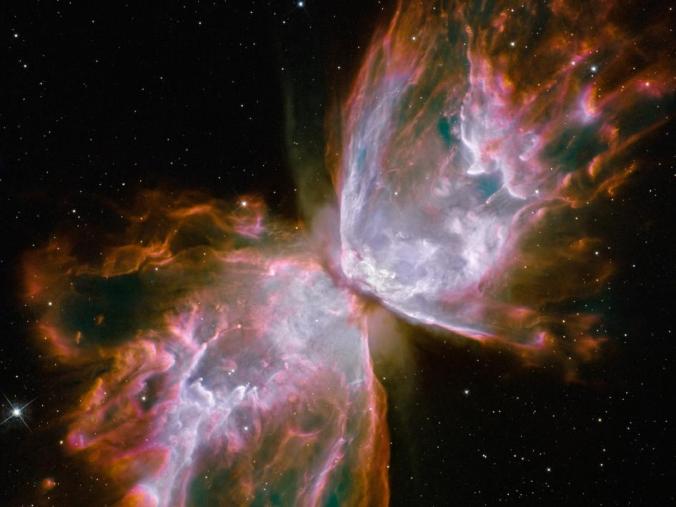
butterfly nebula