We are all the same

A doctor has the resources to help those who are injured or unwell, to make them comfortable and to set them on the path to healing and recovery.  Would it be wrong for a doctor to walk past a person injured and dying on the street and do nothing to help, even if the doctor didn’t know them or like them? 

We know it would be wrong for a doctor to not do what they were able to help someone who is suffering severely or dying through sickness or injury.  Yet doctors are only people like us so it must also be wrong too for us not to help someone who is dying through – for instance – malnutrition, or lack of clean water, or military oppression even if they are not on our doorstep.  It would be wrong of us not to make room in our country for those who would die from war or persecution in their home country.

Let’s not shirk our responsibilities to our fellow human beings.  Let’s remember that every single person is equally valuable and worthy of our love and care and do what we can to help and accommodate them. When we fall short of doing all we can, let’s recognise that that is our shortcoming.  Let’s not justify our inaction by claiming that they are somehow inferior to us, and that we ‘don’t want them here’.

The wonder of life: a slipped disc can heal itself!

I have just about recovered from damaging my back twice in succession.  Two lots of 6 weeks out of action and on constant painkillers has not been fun.  These days one expects that the doctors will just be able to fix stuff, but the ‘treatment’ available was basically take painkillers and when it’s feeling well enough do some exercises to strengthen it.

So it was down to me, or at least my body to fix itself.  Although I don’t think I had a slipped disc, with nothing much to do I spent some time on the internet to understand more about back problems and found that “The body’s defense mechanism can spontaneously retract, shrink, or eliminate disc herniation.” https://www.spine-health.com/blog/can-herniated-discs-heal-their-own

Just let that sink in for a moment. 

If my car has a worn joint, there is no way that it can heal itself.

If a computer program has a fault there is no way it can heal itself.

There is nothing that I personally can do to cause my back to heal.  It is ‘simply’ that my body has the ability to heal itself.  And if you look at how our bodies heal themselves, and how our immune systems work you will be astounded by the complexity of the processes.

Now I don’t want to question the process of evolution, but it is beyond me (or I believe beyond anyone) to explain how a completely unguided or undesigned process would lead to a mechanism within the body to heal a slipped disc.

And even if that’s not a challenge enough, isn’t it astonishing that the fabric of the universe; the raw elements (Hydrogen, Carbon, Oxygen etc) can combine together to create a living organism that contains within it the power to heal itself of a slipped disc?

We take these things for granted every day and grumble when our bodies don’t function as ‘normal’.  Isn’t it more appropriate to take a step back and let the wonder of what our bodies do do just sink in?  And maybe to thank the creator of the universe for the amazing gift of our lives?

Have a blessed day.

https://www.instagram.com/pixvalen/

How do we manage the pressure to worry and despair about what is going on in the world?

There is so much that we can see that is worrying, and that we can do nothing about.  (As I write this Los Angeles is suffering intense wildfires, Trump is threatening to take over Greenland, the wars in Ukraine and Gaza are still taking lives, global temperatures continue to rise…)  Yet if we didn’t look at our TVs, papers or phones we would know nothing of this – and surprisingly little is ‘in our face’ – we are not directly affected by most of the list above.

The secret is to realise that we are not God.  These things are beyond our power to control, but we are not helpless or hopeless – we can play our part using the prayer that Jesus taught us:

“May Your kingdom come; may Your will be done on earth – as it is in heaven”

We might reflect that what is going on actually is God’s will; his permissive will.  Throughout history greedy, power hungry bullies have oppressed ordinary people and we have ransacked the natural world.  Jesus was fully aware of the brutal Roman regime, but he didn’t overthrow it.  He healed people, focusing on the individuals around him – and we can do that too.  We can pray the Lord’s prayer and leave the state of the world in his hands, but then get on with interacting with those around us according to his will.  We don’t care less about the global situation, but we can worry less. And we can use our energy to influence our local communities instead.

After putting the world’s troubles in God’s hands, the Lord’s prayer allows us to ask for God’s heap meeting our own needs:  give us our food for the day, forgive our sins (as we forgive), don’t let us yield to temptation, save us from evil.  All of which do personally affect us day by day, and which will allow us to fulfil our daily purpose.

Jesus’ prayer is a powerful gift from God.

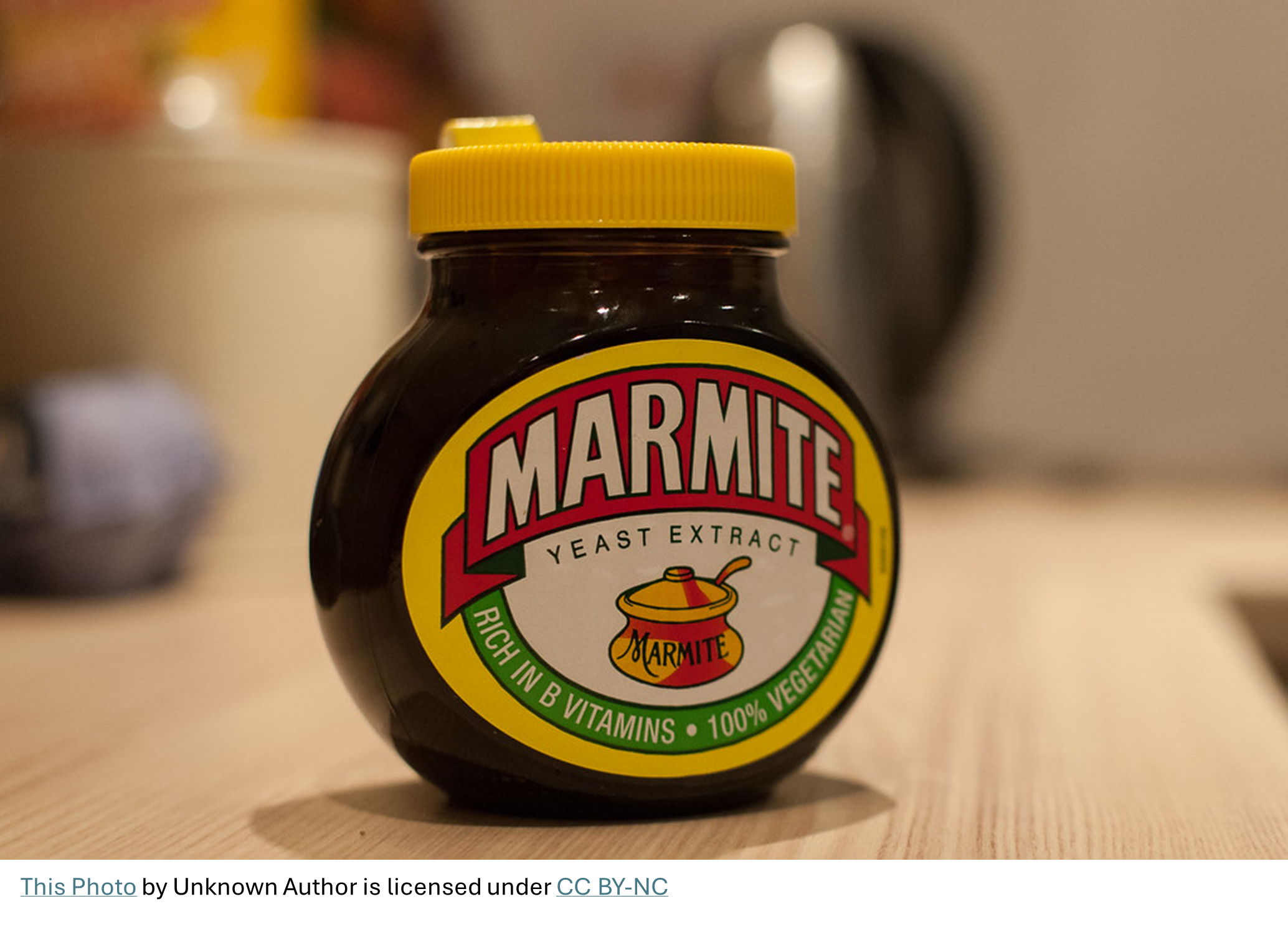
You wouldn’t hate someone because they like Marmite.

As decent human beings we accept that there are people who have different taste from ourselves. Society agrees that it would be wrong to hate someone because they liked (or disliked) Marmite for instance. We know that we should not shout abuse at them because of something that they have no control about.  Much of what we are is a result of our genes which have been honed through the process of evolution to provide a successful species, and it is generally accepted that it is not appropriate to judge someone on that basis.  Unfortunately, this is not a universal truth as we see for example when people consider other races to be ‘inferior’ – i.e. racist behaviour.  But society has agreed that this is unacceptable, and laws are drawn up in an effort to eliminate it.

And yet we seem to think it’s acceptable to mock, at best feel angry with and at worst hate those who hold different values to ourselves; the ‘left’ hates and mocks the ‘right’, and vice versa.  Just look at some of the memes that populate your social media stream.

I recently discovered that there is a strong genetic basis for our political leaning (left / right), and our ‘moral’ make-up.  We cannot help our ‘gut reaction’ to different actions or situations; it is largely defined by our genes.  And there are profound differences between the gut reaction of different people.

If we were to think about another person’s moral matrix in the same way that we think of someone who doesn’t like Marmite then might we start to treat them more considerately?

The book ‘The Righteous Mind’ by Jonathan Haidt describes how our gut reaction defines our response to a situation, and that we then use our reasoning to justify our gut reaction; rather than the other way round.  It takes a conscious effort for our reasoning to ‘train’ or change our response.  If we want to persuade someone else to our point of view, we have to earn their trust before explaining how things look to us.  It doesn’t help just criticising their ‘genetic’ opinion. 

And it’s also worth considering whether they might just have a point, and that there is a blind spot in our own thinking.  Maybe, we can reach a compromise or consensus on the best approach to an issue, combining the different viewpoints to get a full picture of a situation.  Maybe the diversity of points of view that evolved in successful societies and served us well for thousands of years might be worth resurrecting, rather than the present approach of division into ‘Marmite lovers’ and ‘Marmite haters’?  Think about that when you are about to ‘repost’ the latest mocking meme…

Covid Inquiry – lockdowns and saving lives.

When China introduced their strict lock-down I remember saying ‘That could never happen here’.  And when people on social media were saying ‘we’ve got to lock-down immediately’  I didn’t think it should – imprisoning the elderly in their homes for 3 months for no offense!

When my father died of prostate cancer after several years of suffering and treatment, I was relieved.  I was desperately sad and sat alone and cried to mourn the loss, but he was never going to be young and healthy again and his suffering was over.

Before my mother died I used to cry coming home from visiting her at the pointlessness of her days, she had no joy anymore and would sit on her bed looking out the window.  She would often say that she was ready to die, but her body kept holding on.  When she fell with a broken hip and was taken to hospital she signed a DNR.  She didn’t want to eat and only did when pressed by the kindly nurses.  When she died it was a relief but again desperately sad – but she was never going to be young and healthy again, and she had fulfilled her purpose.

The Covid inquiry is asking how many more lives could have been ‘saved’ by earlier lock-downs.   Would my mother or father’s lives have been ‘saved’ by extending them further?

In “Screwtape Letters” – letters from one demon to another CS Lewis writes “They, of course, do tend to regard death as the prime evil and survival as the greatest good. But that is because we (the demons) have taught them to do so.”  In his non-fictional writing Lewis points out that we have lost sight of the ‘true reality’ of God and the spiritual life.  In our earthly, material world everyone dies; it is just a question of when. 

In reality, it is not the length of our days but what we have striven to become on earth that matters – our character, or values, our loves.  Of course the death of a loved one is sad, but let’s have less of this ‘saving lives’ when we simply mean ‘extending lives’ and let’s focus more on reality.

——————————————

““Reality, in fact, is usually something you could not have guessed. That is one of the reasons I believe Christianity. It is a religion you could not have guessed. If it offered us just the kind of universe we had always expected, I should feel we were making it up. But, in fact, it is not the sort of thing anyone would have made up. It has just that queer twist about it that real things have. So let us leave behind all these boys’ philosophies–these over simple answers. The problem is not simple and the answer is not going to be simple either.”” ― C.S. Lewis

Good news!

Deep inside each of us we know that we ought to be good.  Perhaps it’s stronger than that, and we want to be good.  But we aren’t as good as we’d like to be, and we often disappoint ourselves and perhaps give up trying, and ignore our shortcomings – burying them in a busy and ‘important’ life.

Millions of years of ‘survival of the fittest’ evolution has honed our human nature to make sure that we thrive physically and materially, even if it is at the expense of others.  We want a better house, a better car, more money.  We want our country to be richer and have a better healthcare system than others.  We recognise that there are laws that we must obey, but we will find ways round them if we can if it improves our lot.  We might get angry about world situations; the dreadful behaviour of the Taliban, or Trump, or Putin, or global warming, or social injustice; demanding action from governments but perhaps being unwilling to actually do much, if anything ourselves.

In this environment, what is the relevance of and role of religion?  And what about God? And do They have anything to do with religion, or us?

Reliable historical texts describe that Jesus brought ‘good news’ to the people of Israel, and that he told his followers to take that good news to all nations.  The people he brought the good news to were probably not that different to us, although with less technology and material possessions; they had the same drives and motivations.  They felt the same disillusionments.  Yet many people were changed by the message he brought, transforming their lives and motivated to take his message to the world. 

So what was this ‘good news’ that Jesus brought, and why don’t we hear it today?

Basically, the good news was (and still is) that ‘You can be good, and this is what being good looks like.’

On top of that simple message, he brought us tools and techniques to help us, the primary one being the tool to free us from the ‘badness’ of our past.  Using his tools we can look forward to what we can become rather than being dragged back by our past mistakes. 

The tool that he offered was repentance; sincere regret and remorse.  But repentance alone is clearly not enough and might simply add a feeling of extreme guilt and worthlessness (who would want to subject themselves to that).  The ‘magic’ that Jesus brought was, and still is authoritative forgiveness.

Forgiveness only works if it is offered by someone with the authority to forgive; it doesn’t mean a thing if I forgive you for stealing, it needs a judge to do so.  In Jesus day the religious leaders recognised that ‘only God can forgive sins’ and so were angry that Jesus did so. 

Today, we don’t have the same understanding of God, and perhaps for us it is better to think of ‘infinite love’ or ‘infinite goodness’ instead of the God.  But how ever we look at it, the magic of Jesus clearly worked at the time and has continued to work ever since – if we repent and ask Jesus to forgive us then he does.

As I wrote in my book “Christianity – why bother?”:

“To live a rich and satisfying life in the future we have to accept that we made mistakes in the past.  We have to want to change for the better.  We have to want to wipe the slate clean and start again. And we do that by accepting God’s forgiveness.

It’s about accepting God’s unconditional love, and then working with Him to become who we are meant to be. And it starts with a decision to submit leadership of our life to Christ.

And this is freedom.

Freedom from the guilt of past sins.

Freedom to love God.

Freedom to love one another.

Freedom to stop sinning and to do what is right without worrying about the future.

Freedom to trust Jesus when he tells us that he has come to bring life in abundance.

Freedom from religious ritual.

In essence, that is the Good News of Christianity; that is the Gospel.”

And what is the role of religion?  Well religion should help us find this truth.  Religion should help us to understand who and what God is, and to help us see what ‘good’ looks like.  Unfortunately, much religion today seems to want to show what is good by living the opposite – a perverse sort of reverse psychology.  Nevertheless, there are many good and solid leaders and grass roots members of religions who are simply trying to tread a good path, trying to live graciously with one another.  Being part of such a community can be a great help and encouragement, and can bring companionship on our journey.  Spending an hour or two of ‘spiritual’ reflection once a week helps us maintain focus and direction.  So yes, there is still a role for religion.

On life, and death

Have you reached the point yet of wondering what happens when you die?  Perhaps the current pandemic will prompt more of us to think about this important question.  It is important because of the impact that the answer has on us whilst we are alive.

There is an unspoken assumption behind all the current fears and actions that death is a bad thing; that we must do whatever we can to extend life – even if the extended life comprises sitting in an armchair in a care home gazing out the window or watching daytime TV.  I use the term ‘extend’ deliberately instead of the more common term ‘save’ because we are all destined to die;  rescuing someone from drowning does not ‘save’ their life, it extends it.  But to what purpose?

Actually, it may be that rescuing someone from drowning does ‘save’ their life, in that the experience may cause them to turn from a previous pointless and self-centred existence to a life of love and purpose.  The fact that someone cared about them enough to rescue them may make them realise the importance of relationships, the importance of selflessness, the importance of love.

People who have gone through near death experiences often become dramatically changed, dedicating the rest of their lives to acts of loving kindness to others.  So it is indeed possible to save someone’s life. But it is the quality, value and purpose of the life that is saved rather than the biological state of being alive for ever.

We confuse the biological life with what I will call spiritual life.  An amoeba has biological life, a tree has biological life, and so does a virus.  But none of these have spiritual life.  They do not ‘experience’ life, they have not brain to sustain any form of consciousness and they simply live biologically.  There may be other forms of higher life (apes, dolphins) that can ‘experience’ life; I don’t know because I’m not one of them.  But I do know that I experience life.  When I eat a curry I ‘experience’ a taste, but even that is hard to pin down.

If you Google “The Qualia Problem” you will find a paper by Frank Jackson which states that:

“I think that there are certain features of the bodily sensations especially, but also of certain perceptual experiences, which no amount of purely physical information includes. Tell me everything physical there is to tell about what is going on in a living brain, the kind of states, their functional role, their relation to what goes on at other times and in other brains, and so on and so forth, and be I as clever as can be in fitting it all together, you won’t have told me about the hurtfulness of pains, the itchiness of itches, pangs of jealousy, or about the characteristic experience of tasting a lemon, smelling a rose, hearing a loud noise or seeing the sky.”

But whatever it means for me to experience the taste of the curry, I know that there is a ‘me’ to experience it.  It is that ‘me’, not the biological me which I long to preserve, whose ‘life’ I want to save.  And so the big question is, does that ‘me’, that spiritual me, cease to be when my physical body ceases to be?

If the spiritual ‘me’ will end when the biological me ends, there will be no ‘me’ to experience that I am dead.  Do not grieve for me, I will no longer exist.

Of course I will remain in your memory, and you will look back on your memories with joy and sadness – as with all memories.  They are not erased simply because I die; they are as real as they are today while I live.   But if extending my life gives me no ‘spiritual’ life at all, then any new memories will bring sadness in remembering my final days.  So what will be the value of extending my biological life when I have no spiritual life?  The preservation of my decaying body simply to avoid biological death will bring sadness to overshadow previous memories, and will in practice bring mourning forward before my death.

This may sound heartless, particularly if you have not yet lost your parents or other loved ones.  But before you condemn me, I have suffered loss.  I have lost a child, at birth.  I have lost both of my parents.  And I know the pain that the pointlessness of the latter days of their lives brought them.  My father knowing he had to suffer the pain of prostate cancer with no hope of end other than death; my mother wondering when the pointlessness would end, her daily routine seeing her sitting on her bed gazing out at the suburban street for hours.  I grieved over them all when they died, and the grief is still there of course, many years later, just less acute.

I am not heartless.  No.  I want to see people truly, spiritually ‘live’ whilst they have biological life.

But what if the spiritual ‘me’ continues to exist beyond death?  What if my purpose is indeed eternal?  And how can I know?

The crew of early sailing ships believed that there were other lands over the horizon.  Europeans believed that there must be a large land mass south of the equator before they found it.  And brave adventurous souls set off to find it.  Some came back and told others that it was true, and soon constant travel to and fro confirmed it.  That made it easy for those who had not been there to ‘know’ that Australia existed.

But it’s not quite the same with life beyond biological death.  Our bodies cease to function and eventually the flesh rots and we are left with a skeleton.  We don’t find dead people returning to re-inhabit their skeletons; there is no free travel between here and any ‘afterlife’.  At least, not that we are aware of.

Imagine for a moment a caterpillar.  It has a physical body, it eats and excretes, it moves around and (pretending for a moment that it has the capability) experiences the physical domain of the leaf.  And then, after it has grown and fattened up, it appears to die.  It becomes encased in a shell and the caterpillar’s physical form decays.  But it is still alive, rather than being dead, it is being transformed into something different.  The butterfly that emerges from the cocoon bears no resemblance to the caterpillar, and is not even constrained to living on the leaf.  A thing of beauty, it soars into the air and is a delight to see.  Yet it cannot return and tell the caterpillars who remain on the leaf that there is life beyond the cocoon.  Neither should we expect human spirits return to tell us what happens beyond biological death.

And yet… one did return.  No ordinary man, but a man who had turned the lives of those he met upside down;  A man who taught the secrets of true spiritual life to those who would listen – yet more than a great teacher;  A man who healed those who were physically ill by the touch of his hand, yet more than a great doctor;  A man who brought biological life back into a friend’s physical body after they had been buried in a tomb for three days;  A man who willingly surrendered his body to excruciating crucifixion and inevitable physical death and burial in a tomb.

Two days later, his tomb was empty.  Although his friends and more importantly his enemies searched everywhere for it, no body was to be found, just some folded grave clothes.  His enemies were desperate to find the body to disprove the claims of his closest friends that he was alive; that they had seen him, spoken with him, and touched him.

Madness we say – they must have imagined it.  And yet such a madness that they were willing to die rather than deny it.  Such a madness that they were filled with joy, and their lives were transformed;  freed from the greed and selfishness of their world – sharing all they had with one another, loving one another.  Such a madness that they began to understand the secrets their friend had taught them about what a true spiritual life looks like.  Such a madness that brought ‘life in abundance’, not just for them but for all who listened to their eye witness accounts and trusted and believed them.  A madness that has affected millions upon millions over the past 2000 years.

Our decision of what we believe happens when our bodies physically die has enormous impact on our lives whilst our physical bodies live. Do we trust in the eyewitness accounts of what happened to that man, and hope and expect  that spiritual life is not snuffed out with our decaying bodies?   Do we choose to believe that our spiritual selves will live on, no longer constrained to the two dimensional leaf of this world but soaring into the sky of eternity; that we will be transformed from caterpillars to butterflies.  Do we start putting into practice the words of wisdom that bring spiritual life today?

Madness?  Or the sanest decision that we ever make?  Do we trust or ignore the evidence?  Do we dare to find out?

The universe is so big and has been here so long …

Big Bang was about 14 billion years ago; the universe is older and bigger than we can possibly imagine.  Dinosaurs were on the earth for over a hundred million of years, a thousand times longer than the humans have been around. And looking at the population of the world today, as an individual among 9 billion people alive, In comparison with the totality of space and time, each individual is surely completely insignificant.

But… there is an alternative.

If God exists they must be bigger than all this, and older than all this and they must have had a reason to bring the universe into being and sustain it, and to wait while the stars and planets formed and reformed, life began and evolved, and  mankind emerged and developed.  And if, as many of us believe, they sent their son to teach us and to die for us then we move from being completely insignificant to enormously significant.

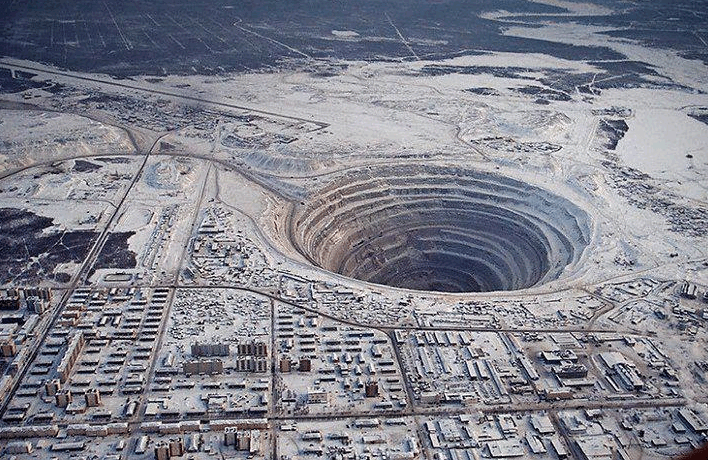
But perhaps it still seems an awful lot of effort for God, too much to believe perhaps. But think about the effort that we put in to the smallest of things used for enrich a very short period of time.  Think of how much time, energy and space goes into making a simple gold ring with a diamond on it, and getting it to a shop so that someone can buy it to propose an engagement.  Just compare the size of the gold and diamond mines with the end product – let alone all the work needed to refine, shape and manufacture the ring, and to transport it to the shop.  We are pleased to do all that, God’s work just takes things to a bigger scale…

Jesus teaching on workers pay

Jesus taught about the kingdom of God. In one example a wealthy man ensured that the workers all received enough pay for their needs, although it cost him more than it needed to. He knew that he would still have sufficient for himself.

If you are wealthy then this might be a good example to follow.

And if you are a worker, take heed too: if you are lucky enough to have a job, your needs are no different from the one who doesn’t.

The story is recorded in Matthew 20:

“For the Kingdom of Heaven is like the landowner who went out early one morning to hire workers for his vineyard. He agreed to pay the normal daily wage and sent them out to work.

“At nine o’clock in the morning he was passing through the marketplace and saw some people standing around doing nothing. So he hired them, telling them he would pay them whatever was right at the end of the day. So they went to work in the vineyard. At noon and again at three o’clock he did the same thing.

“At five o’clock that afternoon he was in town again and saw some more people standing around. He asked them, ‘Why haven’t you been working today?’

“They replied, ‘Because no one hired us.’

“The landowner told them, ‘Then go out and join the others in my vineyard.’

“That evening he told the foreman to call the workers in and pay them, beginning with the last workers first. When those hired at five o’clock were paid, each received a full day’s wage. 10 When those hired first came to get their pay, they assumed they would receive more. But they, too, were paid a day’s wage. 11 When they received their pay, they protested to the owner, 12 ‘Those people worked only one hour, and yet you’ve paid them just as much as you paid us who worked all day in the scorching heat.’

13 “He answered one of them, ‘Friend, I haven’t been unfair! Didn’t you agree to work all day for the usual wage? 14 Take your money and go. I wanted to pay this last worker the same as you. 15 Is it against the law for me to do what I want with my money? Should you be jealous because I am kind to others?’

16 “So those who are last now will be first then, and those who are first will be last.”

Excerpt from The Big Picture: “Am I Open Minded?”

As we start out ask yourself the question, “Am I open minded, ready to follow where evidence leads, with no preconceptions?”

Now I’m sure you’ve answered “yes” because none of us would like to admit otherwise, but actually, it may be impossible to start any investigation without preconceptions.   They are the motivation behind many investigations … the desire to obtain proof of what we already think about something.

Preconceptions are almost inherent in the scientific approach – we think of a theory, and then we investigate to test it.  If we are honest, we will admit that we like our theories and feel good when they are proved right.

Perhaps there is one preconception that I will allow at this stage; that each one of us matters. I matter. You matter.  Our friends and neighbours all matter.  If we don’t matter then there is no point in anything and it’s best not to think any deeper.  That road leads to despair.

If we are going to explore these questions fully we are going to have to consider questions of God, science, reason, history and more.  We are going to have to include objective data and subjective experience; objectivity keeps us from being deluded but it is the subjective that really matters to us.

Even if we try to think about an issue with an open mind, we nevertheless carry many assumptions that we don’t realise.  Speaking personally, my scientific education and engineering career have both instilled a basic assumption of materialism: the fabric of the universe is all there is.  When people talk about a spiritual dimension, is it just another material dimension that we can’t see?  And if there is a spiritual dimension, how can it interact with the physical universe?  Or if there isn’t a separate spiritual dimension then where does God exist?  These are not straightforward questions, but I’ve come to realise that they are valid.   I have had to challenge a lot of what I took simply as common sense and to open my mind to new possibilities.

It can be difficult to refresh our way of thinking, particularly if we are surrounded by others who have a similar outlook to ourselves.  In a recent discussion on European history with a university student he mentioned that such and such country was fascist.  It led me to ask what it is that makes the people there fascist.  Is it genetically programmed into each individual there?  If you took any one of them and brought them up elsewhere would they be fascist?  I think it likely that they wouldn’t.  They are fascist because everyone around them is fascist.  They are unconsciously trained to be fascists.

So what are we doing in our country?  What are we training ourselves to think like?  What assumptions do we hold, and are they valid?  Books such as The Science Delusion by Rupert Sheldrake[i] challenge many of the assumptions of the day.  He asks us to challenge our scientific dogmas, our blind assumptions.  Even if we end up thinking the same as we did before, we have a more solid basis for our beliefs if we go through the process of challenging our assumptions.

Implications

Whenever anyone is presenting a case we might ask ourselves, “If I were to accept what is being presented and agree with the author, what would be the implications for me?  How willing would I be to accept those implications?  Do I need to understand the implications before I start?”

Many parents choose not to have their babies tested for Down’s syndrome because they would not be willing to accept a termination of the pregnancy and so feel that there is no point in knowing before the child is born.  Others might need to understand all the implications before deciding; how accurate is the test, and what are the options available if the child tests positive? Still others might insist that they must have the test because they are not prepared to risk having a child with Down’s syndrome and would terminate the pregnancy if that were shown to be likely by the test.

This is a book that deals with questions of God.  This may worry some people. If they were to be convinced that God is real they would have to become the sort of bigoted judgemental fanatic that represents the worst face of religion.  They may think that they would need to join a religion and accept all that they are told without thinking, and be associated with all the religious atrocities of the past. Or that they will have to give up their Sunday morning lie-in and trot off to church with a bunch of hypocrites. If these thoughts resonate with you, take courage – it doesn’t have to be like that.

Fear

People can be frightened by the prospect of change, but often change is beneficial.  For instance, when redundancies are announced, there is a lot of fear in the workforce.  Some may have been in the same job for thirty years, and they simply don’t know anything else – how will they cope if they have to find another job?  And yet being forced to change jobs can be a most liberating and life-changing experience.  I recall hearing a report that those who remain behind after a round of redundancies are likely to be more stressed than those who have been made redundant.  They are still in the same job, but with increased fear of losing it and still in fear of change, whereas those who have left are now busy rebuilding their new lives and careers.  That’s not to say it’s easy to change, but a change in a job or a worldview can be very liberating.

Peer Pressure

Perhaps we don’t want to change our views because of what others might think of us.  We’ve probably aired our opinions sufficiently to our friends that any major change would be an embarrassment.   Or perhaps we live or work in a culture where there is only one accepted way of thinking.  We might find that we have to live a double life, adopting one attitude at work and another in private.  For instance, to progress a career as a scientist it is necessary to publish papers and learned articles.  Such articles are subject to peer review.  This process is in place to ensure that sound scientific information is published and that mistakes do not get propagated.  But the process inherently risks that only those papers that conform to the present scientific way of thinking are published.  If a scientist becomes too free thinking, then the peer review process may prevent his papers being published and his career may come to a grinding halt.  Reputation is essential, and doing anything that might lose it is risky.

An ambitious scientist may be fearful of embracing religion.  Religion allows that God might interfere with the workings of the world.  That might mean that the universe is not completely predictable, which would seem to undermine the basis of all the work of science.  Allowing the existence of God might mean that it will be impossible to have a complete scientific theory that predicts everything – which is challenging to anyone who invests their life in seeking it.

Similarly, in religious circles it can be damaging not only to one’s career but also to one’s life to challenge the current way of thinking.  Men and women have been labelled heretics and have been burnt at the stake for holding different religious beliefs.

Religious people may have a deep fear of science.  Apart from the vocal assertions made by some atheists that science has done away with God, there can be fear that science might undermine or even disprove certain traditions or beliefs that the given religion may hold dear, or even sacred.  A religious man may have invested so much in his religion that he’s lost the desire, and maybe even the ability, to be open to learning that some of what he’s been taught is incorrect.  Yet surely a truly godly man would be desperate to be corrected if he were misunderstanding God?  In her book Awesome God, Sara Maitland encourages religious people to embrace what can be learned from science:

Start with “God exists” and everything we can learn will tell us more about God.[ii]

So returning to the question, “Am I open minded, ready to follow where evidence leads, with no preconceptions?” we can see that it is almost impossible not to have preconceptions or preconditions.  A first step in challenging them is to consider how we came to believe them in the first place. How did we come to really know what we know?

[i] Rupert Sheldrake: The Science Delusion ISBN 978-1444727944

[ii] Sara Maitland: Awesome God: Creation, Commitment and Joy ISBN: 978-0281054190