The truth behind the Tory propaganda

I am not a politician.  I don’t know how to manipulate people to vote for me.  But I do know injustice when I see it, and I do know lies and deceit when I see it, and I have learnt to recognise logical fallacies when I read or hear them.  The Conservative government have taught me well.  Local election results show that the population has unfortunately not learnt the same lesson.

There is massive injustice in our nation.

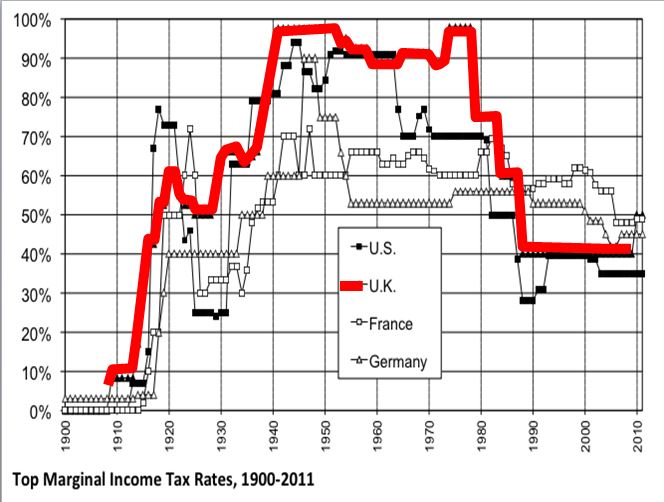
Look at the distribution of income (latest available figures)

What personal virtue led to the highest earners being paid ten or a hundred times more than those at the bottom?  It was all accident.  Accident of birth that gave them the attributes to succeed in business, or accident of birth that gave them the education and contacts that they needed.  But are they a hundred times more valuable people than the lower paid?  And as by accident they have more income, is it not right that they should give more money to the community? Yet the Conservative government wants them to pay less.  The Conservative government wants their wealth to increase, and wants to put control of our lives in their hands.

And look at the distribution of wealth.
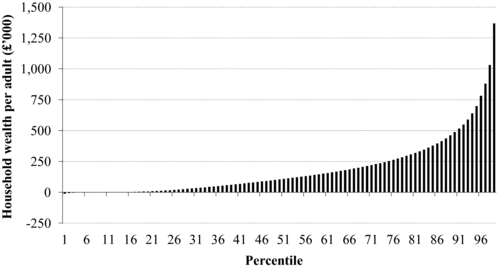
What personal virtue led to the inheritance of wealth or debt? None, it was all accident of birth.  Without wealth you cannot buy your own home without having to borrow.  You cannot start a business without having borrow.  You cannot have a university education without having to borrow.  And when you borrow without wealth you have to pay high rates of interest.

And look at the direction of taxes.
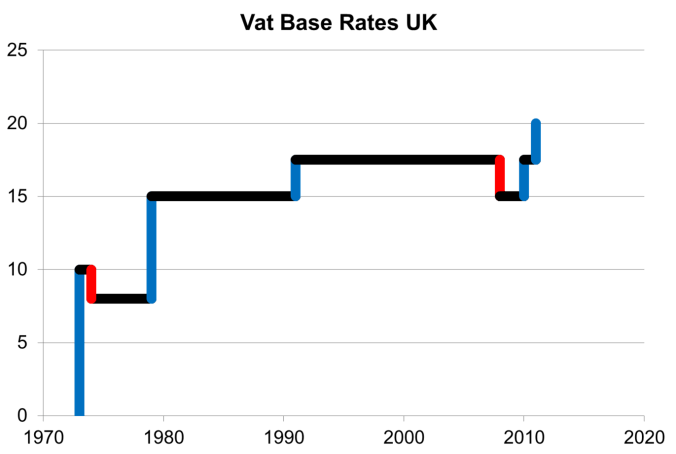
VAT rate changes


The Conservative governments have reduced tax on the highest earners, they have reduced inheritance tax on the wealthiest, they have increased VAT – tax that is paid by everyone – poor and rich alike.

Conservative values are to tax the poor and to increase the wealth of the wealthy.  And yet they manage to manipulate the press and the people to avoid these truths and focus on jingoistic slogans and false national pride.  Oh yes, they are very good politicians – but I have learnt to see though their smokescreen.  I have looked at the data instead of the rhetoric.  I have seen the unnecessary suffering that the Conservatives have caused.  And so I will vote for the party with compassionate and just policies.  Will you join me?

A Christian way to stimulate the economy.

Economic growth is seen as a good thing.  More economic activity generates more taxes and so allows the government more money to spend on healthcare, education, and welfare.  Society benefits from extra spend on these issues.

But forecasters say that economic growth is low and predicted values are reducing.  It is the government’s responsibility to try to improve economic growth.

The present chancellor also believes that it is beneficial for the government to ‘balance the books’.  In the 2016 budget the chancellor has said that it will be more difficult to ‘balance the books’ because ecomonic growth has slowed down.  He then goes on to propose tax reduction for the better off, and to reduce benefits to the poorest and most vulnerable. In proposing these policies, he is either ignoring or unaware of a fundamental principle:

If the poor have more money, they will spend it.  They need to buy the essentials – food, clothes, rent.  This puts money into the economy, which then grows.

If the rich have more money, they will save it.  They have no basic needs, and fear being poor in the future.  This removes money from the economy and growth slows.

If we follow the basic Christian principle of giving money to the poor, we stimulate the economy and things get better for everyone.  And you don’t have to be a Christian to do it.

The chancellor refuses to do this on our behalf, which makes it more difficult.  But if you have more money than you need, give some to the poor.

Here are some ways to do this:

  • If you are a landlord, charge less rent
  • Pay your taxes, and don’t look for tax loopholes
  • Leave bigger tips at restaurants,
  • Give to anyone who asks
  • Employ people instead of DIY, and pay a fair amount
  • Give to charities that help the poor and needy
  • Give to foodbanks
  • Financially support someone less well off than you are

Give it a try.  You will feel better for it, and it will make a difference.

Austerity is Working?

Austerity is Working” proclaims the headline in The Sunday Times.

Why does this make me angry?  Shouldn’t I be glad that this pain that we are ‘all’ going through is finally working?  After all, ‘we are all in this together’ so isn’t this encouragement to keep taking the treatment?

But what does ‘working’ mean?  Let’s look at some other headline news that I recall recently:

  • More people in work than ever before rely on state support to feed their families
  • Food banks opening and helping thousands (and bizarrely someone claimed that this was a sign of a civilized society, that a few good people try to make up for the ineptitude of the rich)
  • The “lost generation”: young people struggle to find work and purpose.

Is that what we mean by ‘working’?  Surely not.  Let’s look further:

  • 2500 bankers are going to get bonuses of over £1 million
  • 11% pay rise for MPs to take their salaries over £70thousand

If I were cynical I might think that the writer must be referring to the latter two examples.  But no, he is referring to the new god, “the economy”.  This “thing” that we have raised above basic humanity, above compassion, above “loving our neighbour as ourself”.

And who are the priests of this new god?  Not the small people.  Not those who suffered from losing all their savings in the banking crisis, or those whose money bailed out the banks.  Not those who have to pay the extra ‘bedroom tax’.  Not those who are now going to have to work to 66 or older just to feed themselves.  Not those who frequent the foodbanks and rely on state support.

The priesthood are the wealthy.

Compared to many, I am wealthy.  I could pay more tax and it would be no more than a minor inconvenience. But it makes me ashamed that we have a government who would rather tax the poor than risk offending the rich.  Why do we not have a government who would close the budget deficit through taxing the higher paid, or tackling obscene bonuses, and a rich class who would willingly support them?

I have not suffered at all in this economic crisis.  I continue not to suffer.  And neither do any of our MPs, or any of those who administer the economy.  Neither does Mr Johnson, who openly advocates greed as good.

I am ashamed, but helpless.  I cannot see any political party that would change things.  They all worship at the same altar.

I do what I can for those around me, and I’m sure you do to – but it’s not enough.  It’s time for a new politics.  It’s time for another Mandela, or Gandhi; time for a statesman not a politician.

The nation waits, but where is such a leader to be found?

—————————————————————

https://philhemsley.wordpress.com/2012/10/06/basic-economics/

https://philhemsley.wordpress.com/2013/12/27/austerity-is-working-ii/

Basic economics?

Have we forgotten what money is?  Money is a promise.  I do something helpful for you, but since you can’t do something helpful in return at the same time you promise to do something later.  Money is the lubricant that allows us to be helpful to each other but know that we will receive something helpful to us in return.  Banknotes carry the words “I promise to pay the bearer …”

This basic principle has been forgotten, and greed and fear leads people to collect more promises, or to put too high a price on their helpful work.  In an economic crisis people are afraid to use their promises, hoarding them instead.  Those who have made the promises are not able to redeem them, and to survive they have to make more promises – more than they are able to deliver.  Money, the lubricant, is taken out of the system and it stops working – try running your car without lubricant!

This presents an obvious solution to our present economic difficulties.  We should stop hoarding promises, and those who have lots of promises should allow others to discharge them.

What does that mean in practice?  Stop, or reduce what we save, and instead spend our money to give employment to others so that they don’t have to borrow to live.

A controversial suggestion to encourage this would be to change income tax to a saving tax.     If you earn a million and spend 900,000 then it is not taxed, but the 100,000 is taxed.  You can keep whatever you spent the 900,000 on, because that’s giving employment to others, who then give employment to others…..  it keeps the system lubricated.

But even without governmental tinkering we can all do our bit.  Be happy to buy what you need,  employ others instead of doing it yourself, give away the promises (money) that you don’t need.

Simple? Worth a try?

………………………………………………………………………………………………………………….

https://philhemsley.wordpress.com/2013/12/10/austerity-is-working/

https://philhemsley.wordpress.com/2013/12/27/austerity-is-working-ii/