Christianity, rules and regulations

Christianity is about freedom, yet we keep tying ourselves up with rules and rituals, and then feeling guilty when we break them.

It seems to be in our nature to want rules.  We want to be told what we can do and what we can’t do.  We don’t want to have to think.  Take driving for example.  We know that we shouldn’t go at high speed in built up areas, so why do we need to be told that we mustn’t go above 30 miles per hour?  What’s special about 30, why not 29, or 33?

Setting a rule is a way of avoiding guilt.  We prefer to pretend that we are not guilty rather than that accept we are guilty and ask for forgiveness.  If I go at 29 miles per hour and knock someone over, then you can’t accuse me of going too fast – I was within the speed limit.  I can say “it wasn’t my fault – it was the person who set the speed limit.”

This is living the Old Testament way: “Thou shalt not exceed 30 miles per hour in a built up zone”.

If we were to ask Jesus then he would say “don’t go so fast that you knock someone over”.  It’s a much tougher requirement, and means that there is no way we can escape our personal responsibility.  If we knock someone over it’s our fault and that’s that.  All we can do is to ask for forgiveness, to which he would reply “Are you really sorry? Are you going to change your driving habits so that you don’t do it again? Yes? Then I forgive you.”

Tougher, isn’t it?  I have to take full responsibility, and I have to be humble enough to admit that I was wrong and to ask for forgiveness.

Christians, as anyone else would, find it difficult trying to live a life which is totally without laws, but where the standard is perfection. There is no speed limit, but you are responsible if your driving harms someone. So we make up our own laws.  Some are moral, some are conventions or traditions.  Although Christianity is about freedom, we have tied ourselves up in chains again.

Everybody does it without realising it.  Have you ever been to a conference or meeting that runs over a couple of days.  On day one, we look round the room, and then choose a seat.  Next day, that’s our seat – we go straight there.  It’s easiest, it worked yesterday, but we’ve just made up a little law: “that’s where I sit”.  It’s OK to make up rules, so long as we don’t let the rule become more important than the issue it’s solving.  We need to keep remembering the reason behind the law.  Going 30 miles an hour in itself is not important; avoiding running someone over is the issue.  Christians need to be wary of our natural love of rules and laws; Jesus looks at the heart; do we want to do what is right or do we want just to keep the law?

…………………………………………………………

If you enjoyed this and like to read reasoned thinking, buy my book The Big Picture
Terry, and the wrong stuff.

Terry worked long hours.  True, he earned a good living, but he was generous too.  He tithed to the church, and gave to charities and good causes.   Once a friend of the family’s car failed it’s MOT and she couldn’t afford a new one, so Terry and his wife bought her one – Terry enjoyed hunting out a good model and fixing the minor faults that it had.

He was in a friendly church and a small group from the church met weekly too.  He would enjoy the evening meetings, although he couldn’t always get to them with work commitments.  One particularly busy week Terry’s small group leader told them that an elderly neighbour of his was having trouble keeping the garden up and suggested that the group all spend an evening or two clearing it up.  Looking at his calendar, Terry realised that this would be the only evening he would be in that week and suggested that they pay for a gardening firm to do the job.  “That’s not what I’m asking for” said the leader, “I was hoping it would be an act of love”.

The leader felt that Terry was offering the wrong stuff, and Terry felt that God didn’t want what he had to give.

Jesus sighed.  “Why don’t they listen to me?”  “Give whatever you can according to what you have.” (2 Corinthians 8:11)

Things that a Minimalist Christian does not have to believe – The Bible is the complete and perfect truth

I struggled to phrase the title of this post, but I’m talking about the attitude that because something is written in the Bible it must be taken as absolutely accurate and true. The Bible is often called the ‘Word of God’, and Christians are encouraged to study God’s Word, but the basis for such assertions is seldom presented.  St Paul referred to scriptures being ‘God breathed’, but if we think about it, what isn’t ‘God breathed’?  Can anything exist without God?

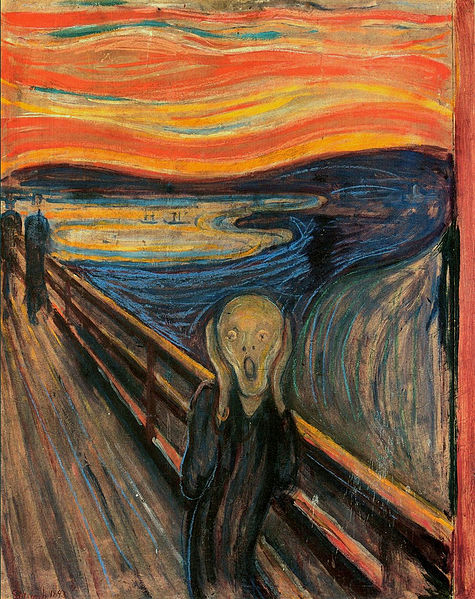
Bible study often takes the form of taking each sentence and trying to interpret it. This can lead to lengthy discussions about the translation of a particular word. It is trying to understand by dissection, but then risks missing the whole. It is similar perhaps to trying to understand the human being by examining each molecule, or ‘The Scream’ by examining a single brush stroke.

If we view the Bible as a collection of documents that were written by human beings describing their journey with God then we can understand why, for instance, different accounts of the same event may differ. We can understand that the meaning of any part must be discerned in the context of the day. We can understand that the writers might simply have got some things wrong. It was men who decided what the best books were to put in the Bible, and they made their decision based on sober judgement. But we should not now view the book as somehow having a magic spell on it that says that ‘this is God’s complete and unchallengeable word’.

There is immense value in the Bible, but I fear that modern Christians have been led to worship the Bible rather than God. It contains wisdom and encouragement, and is correctly used to support our growth rather than constrain it.

Oswald Chambers

If you’ve never come across him, I recommend Oswald Chambers.  I feel he has great insight into so much of life.  See http://utmost.org/ for daily thoughts.  From this morning:

“The golden rule to follow to obtain spiritual understanding is not one of intellectual pursuit, but one of obedience. If a person wants scientific knowledge, then intellectual curiosity must be his guide. But if he desires knowledge and insight into the teachings of Jesus Christ, he can only obtain it through obedience. If spiritual things seem dark and hidden to me, then I can be sure that there is a point of disobedience somewhere in my life. Intellectual darkness is the result of ignorance, but spiritual darkness is the result of something that I do not intend to obey.”

The Shamu Show

The crowd assembles for the Shamu show. Children eagerly seek out seats in the ‘soak zone’ whilst anxious parents cover up all valuable belongings to keep them dry.

Shamu is a killer whale who does marvellous tricks with his trainers, but the biggest thrill is when the whale leaps out of the water and splashes the first 12 rows of spectators.

Seats fill up quickly for about half an hour before the show. To keep people entertained there is a 50m x 20m screen behind the pool – a massive TV screen. There is a simple quiz, with questions shown on the screen whilst a camera (who knows where) picks out a member of the audience who then hold up one, two or three fingers to indicate the right answer.

The quiz is fun but trivial. What fascinates me is the response of the people when they see themselves on the big screen. Many smile and wave. The shy little girl slowly slips behind her Dad. The man idly picking his nose suddenly sees himself 10m high – starts – and whips his finger out of his nose and back down to his side.

How different it would feel to see ourselves live on the big screen. How differently we would behave. Yet perhaps we are already on the big screen – God’s big screen. How are we going to behave now? Which of our actions are going to please him and make him happy? Which are we going to stop in embarrassment? Are we going to wave and smile with joy, or are we going to crawl away and try to hide?

Let’s imagine we are always on God’s big screen, and let that help to guide what we do.

Stereoscopic vision

A few years ago there was quite a craze about magic-eye pictures. When you first see one of the pictures there are usually interesting colours and shapes, and you might like it just for that.

Then someone tells you that there is 3D picture of a train (or such thing) hidden in the picture.  You might respond with “don’t talk rubbish”, or you might look and look at the detail, turn it upside down, look at it in the mirror.  But you can’t find anything by yourself!

Your friend might give you some hints on how to find it.  You might follow their suggestion and still see nothing.  You challenge them that they are mistaken, but they insist that there is something there.  If you didn’t trust them or if they weren’t your friend then you’d give up looking.

But maybe you still trust them enough. You try harder, but that doesn’t work.  Then you just relax and gaze at it – and catch a glimpse!  Slowly you learn how to hold that glimpse and suddenly you can see there is a whole picture.  You learn to explore it, and see its wonder. Then something distracts you and it’s gone again.  But now you know…it’s waiting there for you to find next time.

We all see the wonder of the world, but we go through much of life not realising the big picture behind it.  We need someone to tell us it’s there, and to help us find it.  But we need to trust their intentions, and to be willing to feel embarrassed in our searching or else we will give up and perhaps even try to ridicule those who claim there is a God behind it, who claim that there is truth in Jesus’ teaching, that the holy spirit can guide and change our lives for the better.  If we are not ready to take the risk then we may dismiss the whole thing, but if we are ready to risk then perhaps we will indeed find something of great worth.

We need two eyes to see the magic eye picture.  If you look with only one you will never find it.  Perhaps we need two eyes to see the big picture of the universe:  The ‘material’ eye that sees the material world, the scientific discoveries, the wonder of life itself.  And the ‘spiritual’ eye that listens to the message of the love that God has for us through what he reveals to us, that discerns truth from falsehood, that sees another spiritual being in everyone we meet.

A rational look at heaven

A common view of heaven is that it is a reward for being good. Be good in this life and then you can go and have a ball in heaven – no longer having the restraint of having to pass the entrance exam. Indeed, some believe that when a martyr gets to heaven he is immediately met by seventy-two virgins and promised everlasting happiness.

Maybe our parents said things like ‘be nice or you won’t go to heaven’, in the same way that they might have said ‘do your homework or you won’t go to university’. Perhaps we grew up thinking that the final test will be to weigh our good deeds against our bad deeds, and if the scales tip the right way we get in.

I don’t know if you’ve seen the film ‘Meet Joe Black’. Joe is ‘Death’, come to claim a wealthy American who it seems has led a ‘good and honest life’. Joe takes a short holiday with the American before he takes him to his final destination. When it’s finally time to leave the American asks, “Do I need to worry where I’m going?” to which Joe replies, “A man like you…. No”. His reward is heaven. He got there by his own efforts and he deserved it!

Then there is Pascal’s wager. Put simply, if you believe in God and he exists then you get to heaven, if you believe and he doesn’t you simply cease to exist when you die – no negative consequences, so a safe thing to do. If you don’t believe in God and he doesn’t exist then you simply cease to exist when you die, but if you are wrong you suffer in hell – a serious negative consequence, not a safe thing to do. As I’ve written it there is the implication that if you believe in God you get to heaven, which some take as the ‘entry requirement’.

A friend likes to turn Pascal’s wager upside down and say something like, “If I don’t believe in God and find out heaven’s real then I get a double bonus as I haven’t had to do all the religious stuff and I get to heaven as well”

Then there is the ‘Christian’ view that we can all go to heaven because of Jesus dying on the cross; he has bought our entry, we don’t have to do anything.

But is heaven like any of these concepts? Let’s apply some reason to the question.

I don’t invite people to my house as a reward for them being good. I invite them because I like them.

I don’t feel I have a right to go to someone else’s house because I’ve been good. I only go if I have an invite, and because I want to get to know them better because I expect to like them.

Heaven is God’s house. Wouldn’t we expect a similar situation to apply to heaven? Isn’t it a cheek to expect to go to his house just because we’ve done good deeds? Isn’t it reasonable to only go if we want to get to meet God? Would we expect to treat God with less respect than we would treat our neighbours?

And what of this idea that once we get there we can just enjoy all the things we’ve given up to get there? Seventy-two virgins…. Yet I wonder if they would consider it heaven. And that’s really the point. Heaven is not set up for me as an individual to live in wanton pleasure to the detriment of everyone else. Heaven must be a place where everyone lives for the good of everyone else – otherwise it wouldn’t be heaven. When I helped in prison, the chaplain used to say ‘Sin can’t get into heaven’. If sin was allowed, it would be no different to here; it would not be heaven.

Therefore, if you or I want to hold on to our selfish ways, if we want to hold on to any of our ‘sin’ then we cannot be allowed to enter.

We need a transforming of our mind to be able to enjoy heaven; heaven would be ‘hell’ if we didn’t enjoy and thrive on being selfless and loving.

It’s not about ‘be good and go to heaven’. We need to be willing to undergo complete transformation of our way of thinking if we want to be fitted for heaven, we need a new ‘heart’. That’s what so much of Christ’s teaching was all about – how to be completely selfless and loving, putting others before oneself, preparing ourselves for heaven.

Feeling Gloomy? Breaking the spiral.

Cast your burden on the Lord and He will sustain you. (Psalm 55 v22)

It was shortly after Christmas a few years back, and I was feeling a little low.  I wrote the following:

“I remember writing before being a Christian that I didn’t feel like a sinner – but somehow now I feel more and more like one! I’m moody and irritable,  I’m gloomy, and when I’m despondent it’s hard for me to cheer up.  I selfishly want someone else to cheer me up for me – and I tend to sulk.  Then I realise this and think ‘well I’m not very nice am I!  I don’t deserve God’s love’  and then I get depressed – and I think, ‘I shouldn’t be depressed, God’s forgiven my sins’ and that makes it worse – because I haven’t!  and then I feel guilty about it – wallowing in self-pity!  Pathetic isn’t it.

And then I think, ‘this is all I  I  I  – what about other people.  Pull yourself together, and cheer yourself up’.  And then I think, ‘well isn’t this what God is meant to do?  Well my faith can’t be very good because I’m still miserable’,  and then I think ‘why do I have to keep thinking about these things – why can’t I just accept his love and let that be that.’

And how can I accept God’s love if I don’t do anything for him in return.  So I have to relearn that I don’t win God’s love through works – but through grace …..  and I’m back up a couple of paragraphs!”

I felt a bit better when my wife couldn’t stop laughing as she read this.  And then I prayed and ‘cast my burden on the Lord’.  I asked for His help.

And what happened?  Suddenly I found this conversation going on in my head – I was raising the points above, and instantly I’d get a reply! Something like

Me – “How can I accept your love?”

Reply – “Don’t be so stupid – you know I love you unconditionally”

Me – “But what do I do to deserve it?”

Reply – “Nothing – just accept it”

And so on for a little while, and then

Me – “is this me replying to myself or God talking to me”

Reply – “what do you think?”

Me – “but couldn’t I just have a little proof”

 And suddenly I felt a very brief but extremely powerful emotion – I can’t really describe it.  But suddenly I felt peaceful again.  And I know again that God’s there ready to pull me up out of the next trough.

 Thank you Lord for being so patient and so loving.