Our worldview is our way of dealing with reality. In exploring the truth we would like our evidence to be real. So it’s worth thinking about what “reality” actually means.
I consider myself to be ‘real’. I cannot be a figment of my imagination, because otherwise there would be no ‘me’ to imagine myself. Perhaps everything else is a figment of my imagination, perhaps even my body is a figment of my imagination, but I know (at least that part of me that is able to know) that I am real. Descartes captured this in his famous quotation that has been translated as “I think therefore I am”.
Alone, I am one person. If you were with me there would be two people. As more and more join us we would increase to 3, 4, 5, and so on. So what are 1, 2, 3, 4, and 5? They are a concept that represents something about something real. The number itself is not real. So, there may be 1, 2, 3, 4, or 5 men in a room, but there is never just ‘1’. Thinking further, we can have 1 man or even 0 men. But we can’t have “minus 1” men, or “minus 1000” men, yet mathematically that is perfectly possible. So are numbers, and hence the whole of mathematics ‘real’?
On a five pound note it says “I promise to pay the bearer the sum of five pounds”. So money represents a promise. In our bank account it’s perhaps quite reasonable to have £-1000 as our balance. We owe 1000 promises to someone else. Is a promise ‘real’? Is money ‘real’?
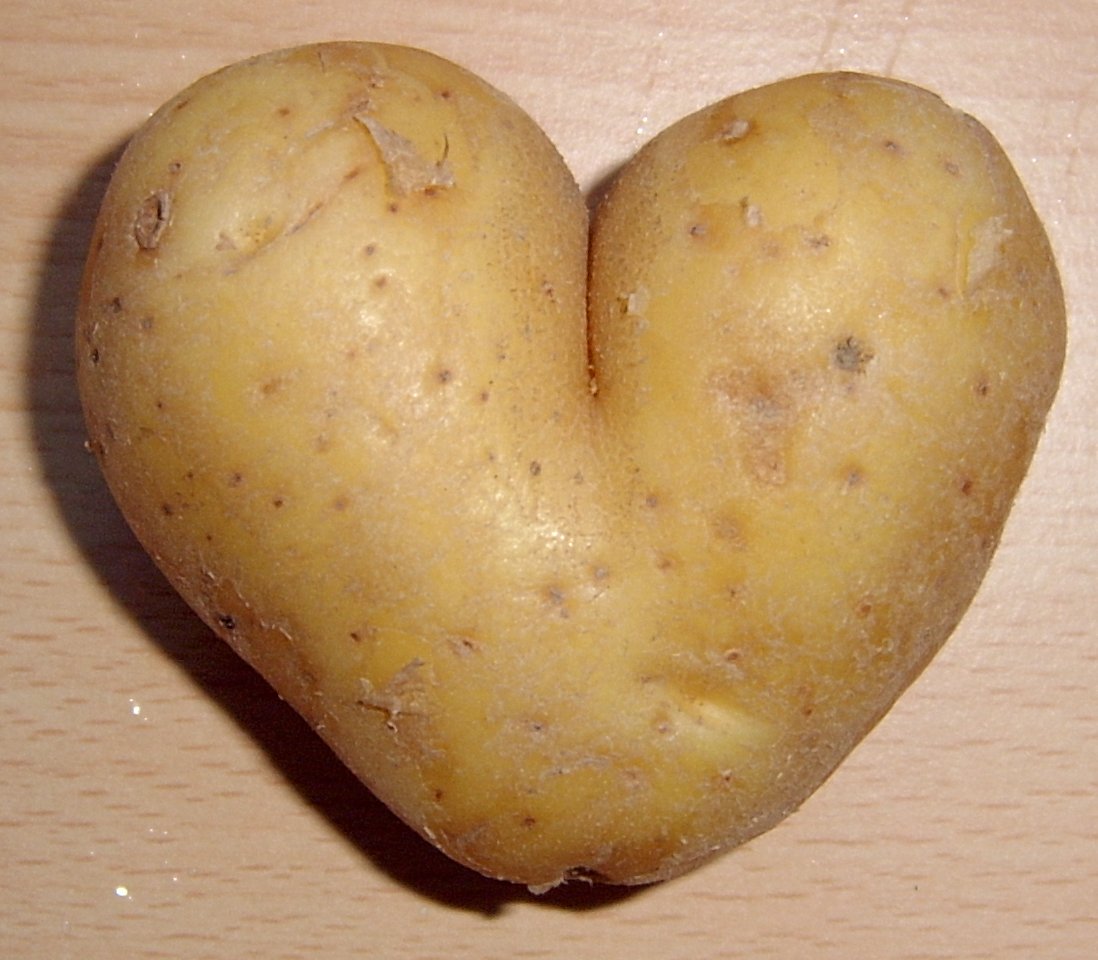
We use both the concept of numbers and the concept of money daily, and they are invaluable for helping society work. I want some potatoes for my dinner, so I use the concept of numbers to decide how many will fill my stomach, and I use the concept of money (promises) to give in exchange for your potatoes. And at some time in the future you will probably ‘call in’ that promise and ask someone else for a pair of trousers. Now you, I, the potatoes and the pair of trousers are what we would normally consider ‘real’, but are the numbers and the promises?
In the simple example above, we use mathematics (numbers) to represent a quantity of something real. When we do engineering or science, we think we are doing the same. We define not only ‘a potato’, but we define ‘properties’ of the potato; its mass, its volume, its temperature and so on. Then we use mathematics to quantify the amount of those properties; a 6 ounce potato for instance. So are the properties of the potato real? We know that a big potato travelling at a high speed will hurt more than a small potato travelling at low speed, so perhaps it is reasonable to think of the properties by themselves as ‘real’?
Once we have defined these properties and given them ‘units’ to allow us to quantify them (ounces in our example above) then we start to do experiments to see how the properties relate to each other. We might see how a given force acting on a potato of a given size causes its velocity to increase. Then we might carry out the same experiment on a bigger and smaller potato to see how the properties of force, mass, and velocity relate to each other. And we define further properties that help us do our sums more effectively (like ‘momentum’ … the mass multiplied by the velocity). Are those combined properties ‘real’, or simply concepts?
We can then capture these relationships in mathematical formulae, and we can do mathematical sums on them to predict what will happen in experiments that we have yet to carry out. We might have done all our experiments on a five ounce potato. We take our deduced formulae to work out what might happen with a ten ounce potato, and then we carry out the same experiments on a ten ounce potato to see if our predictions are right. And we find that the experiment will not quite tie up with our prediction, and so we think a bit more about the formula and whether we have left anything out of our experiment, and we come up with more complex and advanced formulae to predict what the ‘real’ potato will do in all circumstances. That is what we call science.
So are those complex formulae ‘real’? Is the inaccurate formula ‘not real’ but the more accurate formula ‘real’? If all the formulae are wrong, are none of them ‘real’? How can something wrong be real? If all of this is what science is, can science be real?
According to Richard Feynman (US educator & physicist (1918 – 1988)), a philosopher once said that ‘It is necessary for the very existence of science that the same conditions always produce the same results’. It is ingrained in us that each time we carry out the same experiment on the potato we get the same result, but what if we don’t? What if the potato just doesn’t behave in the same way? In that case can we claim mathematics or science to be true, or real? It may seem silly to suggest that the potato will not always behave in the same way, but that’s just conditioning on our part; our faith in this happening is so deep we are not aware of it.
We can perhaps believe that carrying out the same experiment on the same human being will not always give the same result; so what does that tell us? Are scientific statements on the behaviour of human beings are just informed guesses perhaps?
But let’s get back to mathematics and our friendly potato again. Imagine a light shining on a potato, which is now bouncing up and down on a spring (a bungee potato?). The shadow of the potato moves up and down on the wall with a changing speed but in a repeating pattern. Do the same thing with a potato on the spoke of a wheel that is rotating around a spindle and we find that the movement of the shadows of both are the same. We can use the same mathematical formula to describe how the shadow of each moves, but the ‘real’ objects are moving differently.
Many different forms of equations and mathematical models can be used to describe the motion. In one form, a concept of an ‘imaginary’ number is used, ‘i’ = the square root of minus 1. The name suggests that the number ‘i’ is not real, yet in one of our formulae it can be used to represent something that is ‘real’.
So what is real?
Does it matter?
What is my point?
The simple question of ‘what is real’ is not such a simple question after all. In our day-to-day lives we rely on our ‘common sense’ and freely decide some things are real and others not real (“I don’t think ghosts are real” for instance). Yet if we scratch below the surface, much of what we accept as real may not be so, and vice versa.
Atheists say that God is not real. But what does God being ‘real’ might actually mean? Perhaps the question is not quite as simple as we might think.
Scientific and mathematical equations may or may not be real in the sense of what our common sense tells us, but they are sufficiently real to have a massive effect on our lives. God may not be the same sort of ‘real’ that we would apply to a potato; although some claim that he has a massive effect on our lives. But we mustn’t therefore jump to the conclusion that therefore God must be the same sort of ‘real’ as a mathematical equation; there can perhaps be many forms of ‘real’.
 Thoughts from a Minimalist Christian