1 John 3:17-18 Beira

In March 2019 Cyclone Idai devastated much of Mozambique.  Local contacts identified that despite humanitarian relief being provided by major aid agencies many people were missing out – particularly the elderly – and in desperate need of help.  Privately sent funds were used by the team in Beira to provide emergency food hampers and water, and then to help repair and rebuild houses. This work highlighted the ongoing need for financial help.

In view of the clear and ongoing need and opportunity, and to build on this initial successful partnership, in the UK we established the charity “1 John 3:17-18 Beira”, and in Mozambique our partners have registered their project with the government: “Associacao Esperanca Aos Vulneravies” (Hope Association for the Vulnerable).

Each month a list of needs is created by the local team of volunteers in Beira (see photo), and those needs which can be funded are agreed.  1 John 3:17-18 Beira then sends the money.  At the end of each month a report is received confirming how the funds were used, and providing photographs of the work, ensuring accountability.

The charity currently supports around seventy of the poorest people with food and fuel.  We have built more than ten houses for those whose homes were demolished, and repaired many more. We support nursing students, apprentices, and those doing short term courses (IT, electrician, baking). We have provided business loans to around ten people. We have provided nearly a hundred fuel efficient stoves and planted over fifty trees.
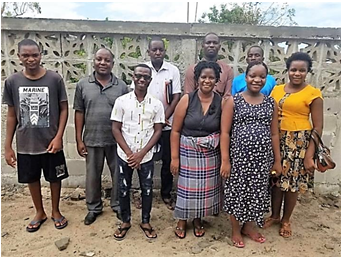
Members of Associacao Esperanca Aos Vulneravies

The local team are passionate to improve the chances for the poor.  At the most immediate level this involves providing food, fuel and medication for those who simply have no income. Blankets have been given to help keep warm at night in winter. Mosquito nets have been given out too.
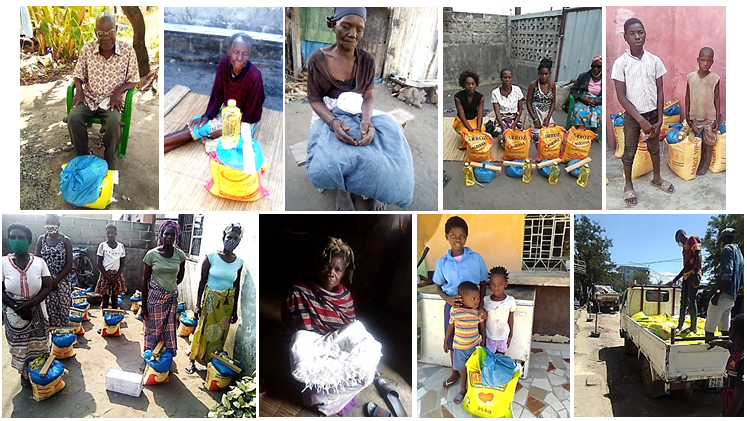
Some of the beneficiaries receiving food, oil, soap and blankets

Materials and where necessary labour are provided for repairing houses, adding cyclone protection measures and building new houses where homes have been destroyed.  Innovative and environmentally friendly approaches to construction are being investigated, such as using waste plastic bottles as building material.

Education and training, and earning a living

In addition the project is able to make grants for school fees and uniforms, and for training and apprenticeships. These often cost less than £50 each, but give the beneficiary a future. 

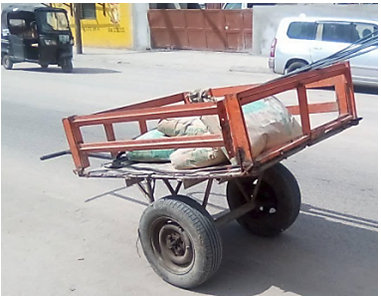
Small start-up business loans are made to pay for initial stock or in one case to buy a small cart to transport goods.  Again these loans are often less than £50, and the recipients pay back as they can so that funds can be used for future loans.
Environmental projects that help the community

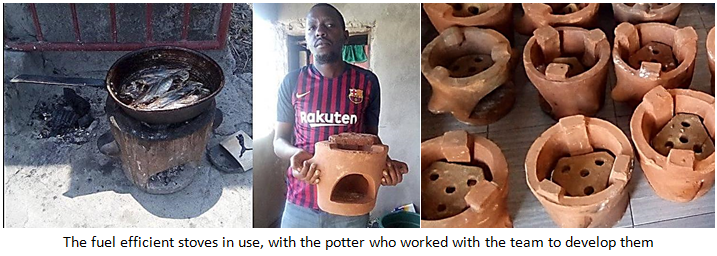
The team have worked with a local potter to design and manufacture efficient cooking stoves which not only save the user money by needing less charcoal, but also reduce CO2 emissions.  These cost under £3 each, and are sold to those who can afford them or given freely to those who cannot.
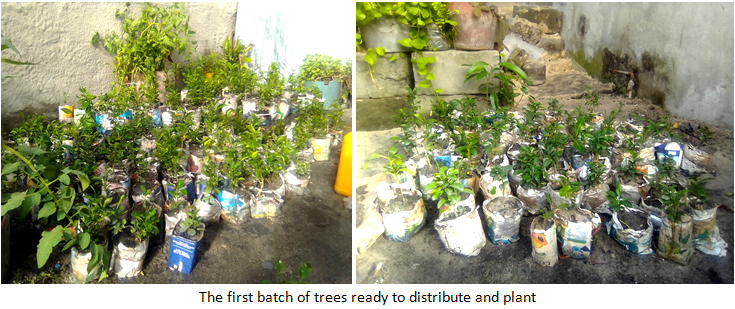
A tree planting project is just beginning, with a first batch of fifty five trees being planted costing a little over £1 each.  The local team would love to launch a programme of planting a million trees in Mozambique, in Beira and outside, and engaging pastors to encourage their members to plant trees.
The future

The Associacao Esperanca Aos Vulneravies members continue to identify people with needs, and since the registration of the project there are more people able to help in the work. 

In addition to continuing and growing the current work, we would like to provide toilets and drill wells for poorer communities.  Many living with HIV refuse to take medication, and so we would like to establish counselling support.

We have reached a state where the funding that we are providing needs to increase to keep pace with the project opportunities, and so we are asking people of goodwill to join us in sending funds to support projects which are making a real difference in the lives of fellow human beings in one of the poorest countries in the world.

If you wish to support the project, please contact us at 1john31718beira@gmail.com

Thank you.

Phil and Cathy Hemsley, and John McCoach.  Trustees, 1 John 3: 17-18 Beira
Christmas Joy?

Christmas is supposed to be a time of joy, yet my heart is torn by so much that is wrong in our world that it can be hard to find joy. 

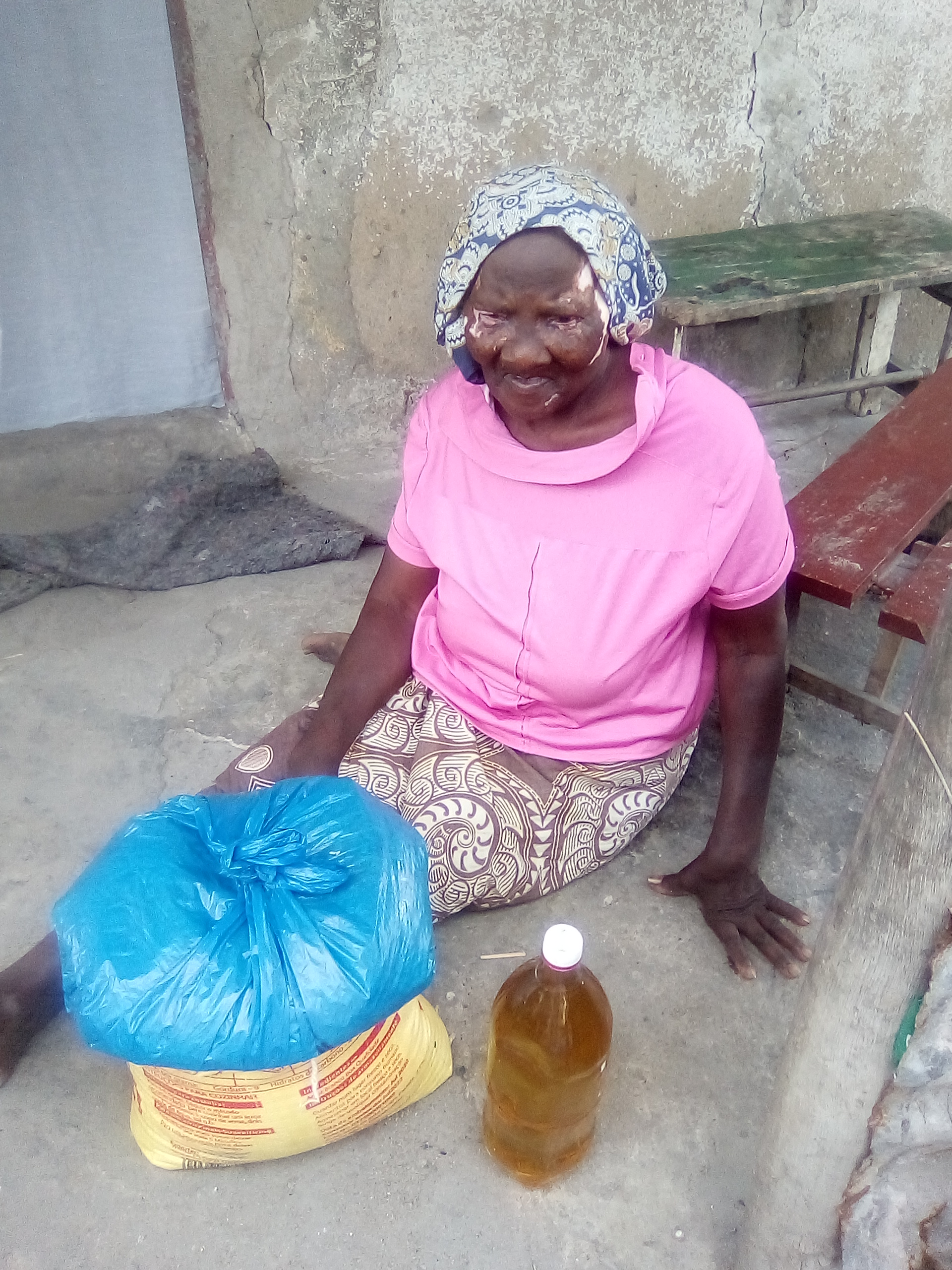
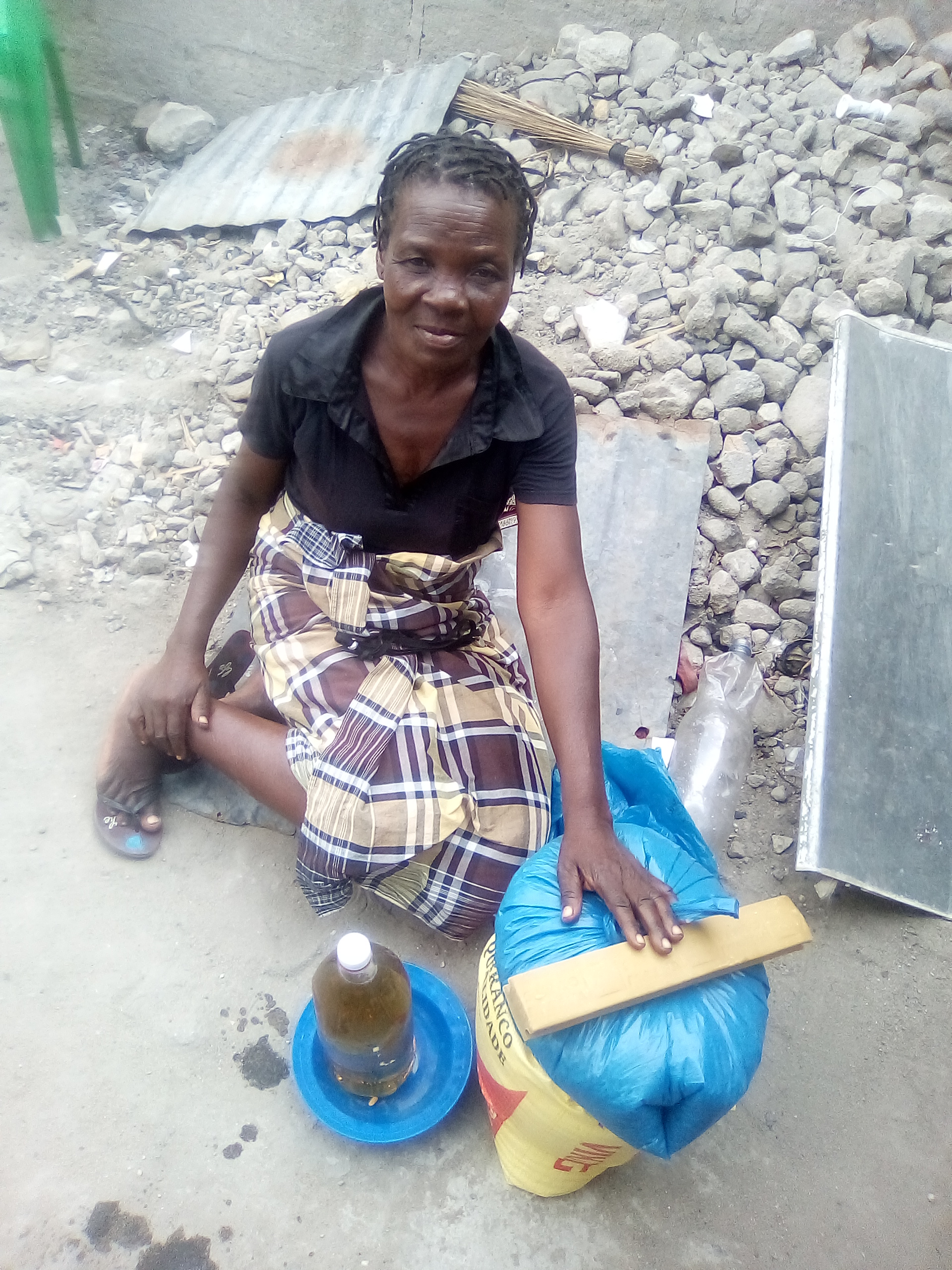
I was privileged to have visited Mozambique some years ago.  Having experienced a tiny glimpse of life there, I now regularly send money to help some of the poorest who live there.   This picture shows one lady with all that she has to live on for the next month:

Is she any less valuable human being than me, or you?  Does she matter less because she happens to have been born in a poor country?  Or because she’s black?  Isn’t that what we think deep down if we deny help to people in this situation?

It’s not just our government cutting back that matters.  What about each of us as individuals?  There is a line in a song “my Chinese take away would pay for someone’s drugs”  (medicines) – that is so true.   I know many people, quite a few now retired or close to retiring – university professors, doctors, professional engineers, teachers, civil servants – who have amassed significant amounts of money, own big houses, take expensive holidays.  Healthy pension funds and investments have secured a comfortable retirement – as our culture tells us that that is what we have to do.  

And yet this old lady has no such ‘essentials’.   She lives day to day in accommodation that we would not give space to in our garden, and is desperately grateful for a sack of rice and some cooking oil:

We in the ‘developed’ world are not deliberately evil, but we are ignorant.  We are ignorant of the life of the majority of the world.  We have money but are fearful of losing it.  We are taught to save for our rainy day, but we do that when so many others are already being flooded out by a deluge. 

It would be hypocritical of me to say we should sell all we have and give to the poor – although since Jesus said it, it is probably right.  But we can start to move in that direction.  It does not cause any discomfort if the total of our investments drop by (say) 10% when we still don’t think twice before having our Chinese takeaway – and yet I have found that joy comes from seeing the images of those who I have been able to help.  This person has something to eat because I chose to send some money.  That person can now put a tin sheet over the hole in the roof of their house because I chose to send some money.  When I  give, I feel no pain, only gain.  And yet it is still not ‘easy’ – still the pressures of sixty years of western capitalist propaganda take effort to resist.  It takes an act of will sometimes to give, but it is worth it.

Try it this Christmas?

May God bless us all.

Austerity is working? III

The world economy is in difficulty and has been for many years now.  Debt is embedded in the system: individuals owe money to banks (who live off lending them more), nations owe money to the financial markets. All measures of wealth show that the richest are getting richer and the poorest are getting poorer. (See Austerity is working II).

People agree that the ideal is not a flat distribution of wealth.  They think that the distribution of wealth favours the rich too much, but in reality it favours the rich much more than we realise:

wealth distribution

But is there a problem with this? It depends on your personal philosophy.

For instance, if I think it is right that one human being, through no effort of its own (e.g as a result of who its parents are and where they happen to live) should be 1 million times richer than another, then this data in itself will not worry me.

Similarly, if instead of comparing myself to those who have more income than me I compare myself to those with less then I will not enjoy any feelings of being ‘hard done by’.

Opinions vary, but it seems that around $50000 is an ideal income for happiness. http://www.learnvest.com/knowledge-center/the-price-of-happiness-50000-123/ and a 2012 UK headline stated that “Families need £36,800 to live acceptably, study says” http://www.bbc.co.uk/news/uk-18770783  Anyone earning more than that is likely to feel very comfortable.

So, in the rich West, most people are basically happy most of the time, cocooned by an income where financial concern is limited to sustaining the present level of comfort rather than worrying where the next meal is coming from.  Most of the time the inequality of wealth doesn’t really impact, apart from leading to a few grumbles and jealous thoughts about those who earn more than we do. Passivity rules until or unless a crisis occurs which affects us as individuals, and then we get to see how difficult the situation really is for those who the system exploits and tramples… the poorest.

As I said in my earlier post (Austerity is working?) the current crisis has not noticeably affected the rich.  Maybe there has been some mild discomfort for the better off, but the brunt of the austerity is taken, as usual, by the poorest.

Most of us realise that this is profoundly unjust.

Most of us want something to be done about this, but we look at our politicians and realise that they simply don’t understand.  They are not even in the ‘mild discomfort’ bracket, and simply cannot empathise with those who have NO money at all to feed their family; those who have to get the basics for survival from the multiplying food banks.  The people want the politicians to understand, hence petitions challenging MPs to experience living on low income:  http://www.change.org/en-GB/petitions/iain-duncan-smith-iain-duncan-smith-to-live-on-53-a-week

The gulf in understanding is emphasised when the rich Mayor of London advocates greed:

Johnson called for the rich to be hailed for their contribution to paying for public services as he said that the top 1% of earners contribute 30% of income tax. “That is an awful lot of schools and roads and hospitals that are being paid for by the super-rich. So why, I asked innocently, are they so despicable in the eyes of all decent British people? Surely they should be hailed like the Stakhanovites of Stalin’s Russia, who half-killed themselves, in the name of the people, by mining record tonnages of coal?”

The mayor added: “It seems to me that though it would be wrong to persecute the rich…. http://www.theguardian.com/politics/2013/nov/27/boris-johnson-thatcher-greed-good

What exacerbates the injustice is the despair that there is no hope of changing the system.  Those who have the power are those who benefit from the present system, and they have no intention of changing it.  The democratic process which in theory would allow the people to choose honourable and just leaders offers no serious alternative.  The traditional parties are basically indistinguishable, and so people begin to jump at any possibly credible alternative, such as the right wing UKIP party – not realising that the basis of the policies of UKIP is as flawed as the traditional parties.

And here we approach the reason for our problem. Economics works by trying to predict the behaviour of the masses to different financial laws and environments. And behaviour of the masses responds to the moral climate generated by the media and politicians. Changing the moral climate is a necessary part of the solution, but at present there are few trying to instigate the essential global climate change.

Governments are afraid of doing anything to damage the economy.  They will only introduce humane policies if the pressure against the injustices of the system becomes too strong: if there is sufficient discomfort that we ordinary people are jogged out of our passivity; and when the politicians are at risk of losing their power.  Today, ordinary people are stirring, but as yet they don’t see any way of ousting the politicians.  In the past, these sorts of frustration have led to revolution and bloodbath.

Is there any alternative?

For an answer I look at the most recent success of humanity over greed and selfishness.  I look at the transition from an evil apartheid regime ruling South Africa to a Rainbow Nation.  I look to what made the difference between a bloody revolution and a peaceful change.

Mandela realised that trying to force a powerful opponent who had suppressed and oppressed millions of fellow human beings to hand over power by violence would lead to immense human tragedy.  The mind-set of all oppressors includes fear of retribution, indeed, doesn’t justice demand retribution on the oppressor?  Doesn’t justice demand an angry and violent response to injustice?  That is the response of human nature.  And if you are like me, you will have an inner core of anger at the injustice in our country today.  It would feel right to ‘persecute the rich’, and the frustration at not being able to do so makes the anger and bitterness deeper.  We are justified in feeling that – justice demands a fairer system.

But that is not the way.  “An eye for an eye makes everyone blind”.

Mandela changed the hearts and minds of those in power.

The first step was to jog the world out of passivity, to show the world the oppression and to campaign for justice.  The South African government could no longer claim ignorance about their unjust position.  They realised that apartheid was untenable and so the barrier to change moved to one of fear of retribution if they were to lose power.  We see the beginnings of that same fear in Boris Johnson’s comment that “it would be wrong to persecute the rich” – but I think we are in the situation where world leaders are still convincing themselves that the present system is OK.  “Economic Apartheid” is working just fine!

Mandela’s second step was to graciously talk with those in power.  He was willing to forgive their past injustice, and to lead his followers to forgive.  He was not prepared to accept future injustice, future oppression of either the blacks or whites by the other group.  He presented the vision of a rainbow nation, and inspired both blacks and whites to embrace that vision.  Mandela gave up justified bitterness for the sake of the people, and he taught his nation to do the same.  We need to learn from his approach.

So where are we today?  We know that Economic Apartheid is unjust, but too many people have adopted the Johnson mantra ‘greed is good’, or are not sufficiently discomfited to shift from passivity.  There is not yet enough voice crying out against economic injustice, and there are too many who justify it or ignore it.  That needs to change.  You and I need to change.  We need to speak out.

Then we need a vision for a “Rainbow Economy”, and a change in mind-set that underpins it.  That will be the topic of a future post.

………………………………………………..

Related links:

https://philhemsley.wordpress.com/2013/12/10/austerity-is-working/

https://philhemsley.wordpress.com/2013/12/27/austerity-is-working-ii/

To ensure that you hear about the Rainbow Economy, click the ‘follow’ button.


A tribute to Pastor Antonia Bonga, who passed away on Friday night.

A man who I counted as a friend died on Friday night.

I first met Pastor Bonga in 2004 when I visited Mozambique for the first time.  He was running a center for street children called Casa Reom.  That visit was a turning point in my life, showing me many things: that we don’t need monetary richness to be rich, that it is better to do what is right today even if it risks an uncertain future, that most people live in far more difficult circumstances than we do in the West but can still be happy, and that God is close to the poor.

A few years ago he visited England, and sent us a short resume of his life:

 “I was born on 3rd February 1950 at Bawaze-Lampene, Marromeu, the son of Tomo Bonga and Carita. I was educated at Jaravura. My parents were very poor and they were only able to pay for my education up to grade 3.

When I was 18 I came to Beira where I worked during the day and went to a night school. The same year (1968) I was converted in the Apostolic Faith Mission, and was baptized in 1969. I got married and later on was ordained to be a deacon. I had a spiritual experience.

I have had 12 children, 8 of them have died so only 4 remain.

I went to Zimbabwe to Bible school, and when I came back to Mozambique was ordained to be a church pastor. I have planted 5 new churches.

In 1986, I did another bible course in Zimbabwe when I returned home things were worse. A civil war was causing difficulties among Mozambicans. In 1988 things had got so bad that even some of the church leaders were fighting over power.

In 1989, I met 5 missionaries with whom I shared my vision of ministering and planting new churches. The civil war was still going on and the government were harassing me. The government became my number one enemy. It was not easy to preach the word of God at this time. Eventually, God gave a solution to my difficulties. Later on, I founded my present church called “International Body of Christ church”. This started with meetings under a tree. Many people were laughing at the church and at me. Now the churches are all over Mozambique.

When I joined Youth With A Mission (YWAM), I did Discipleship Training (1993) and a Leadership Training programme (1997) in Zimbabwe.

In 2000 God touched my life and told me to care for the orphans and those living in difficult situations on the street. The same year I began leading the YWAM base in Beira.”

I visited Pastor Bonga and the Casa Reom project several times, and I wrote about one visit in my book ‘The Leap’:

When I came back from my last trip to Mozambique, my friend Pastor Bonga had just taken on the running of a second orphanage, with about forty children from ages 1 to 10.  He was asked to take it on, but was not given any money to pay for the running costs.  He couldn’t refuse when he’d been asked.  He couldn’t allow the children to be turned out onto the streets again.  What would happen to the one year old babies? He chose to do what was right, without considering the consequences; he left them up to God.

Pastor Bonga was not perfect, none of us are, but he pursued what his heart told him.  He persevered in extremely difficult circumstances, supported sometimes only by his love of God.  He died unexpectedly.  The evening before he died he had been meeting with others about a new project to help orphans in Nhamatanda, Mozambique.

He will be missed on this earth.