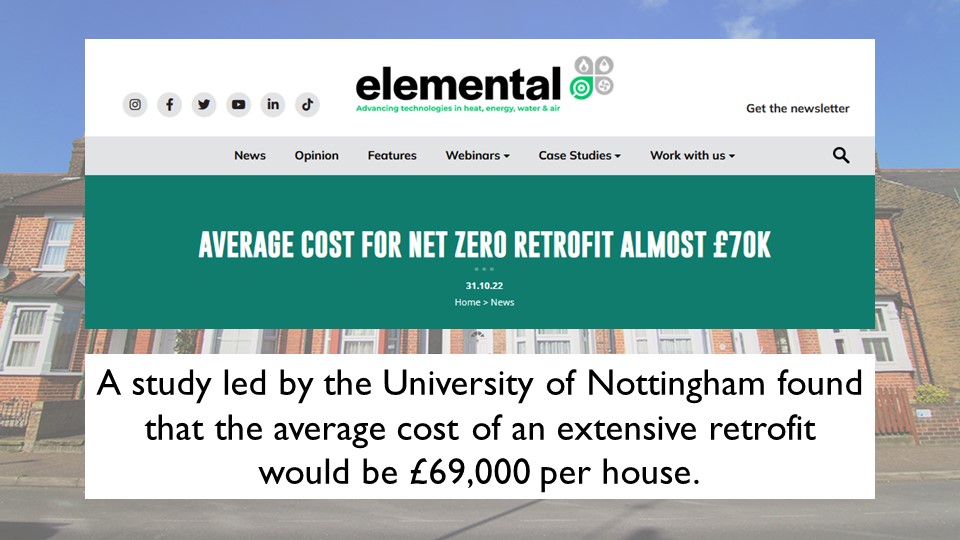
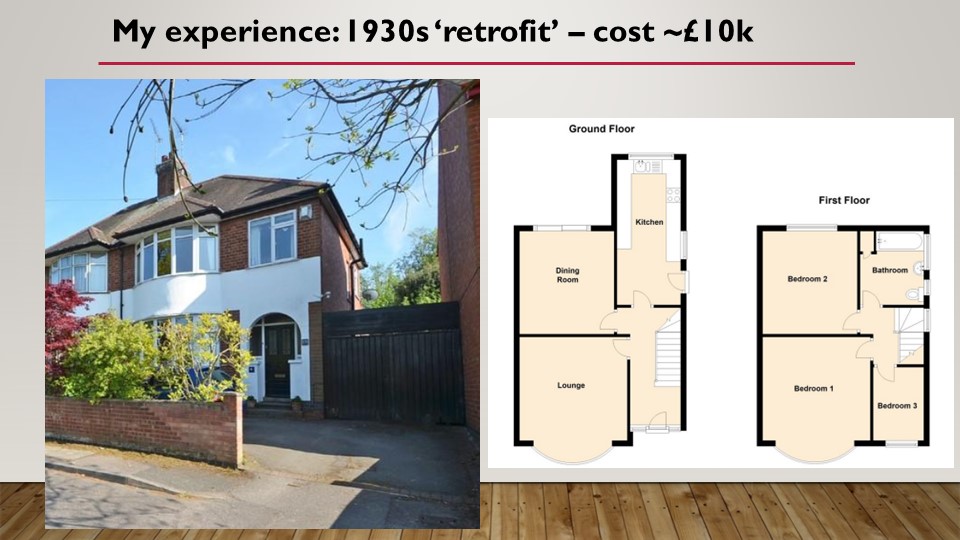
Headlines such as “Average cost for net zero retrofit almost £70k” make the task of CO2 reduction seem daunting or unaffordable. It doesn’t have to be that way. I describe affordable and available technologies that allowed me to make my home carbon neutral for around £10k, verified by detailed energy measurements over several years. The solutions also make living through increasingly frequent heat waves bearable and even comfortable.

Conventional wisdom and solutions suggest that cutting emissions is a hobby for the wealthy. Technological solutions are too expensive for the majority of householders. This is not true.
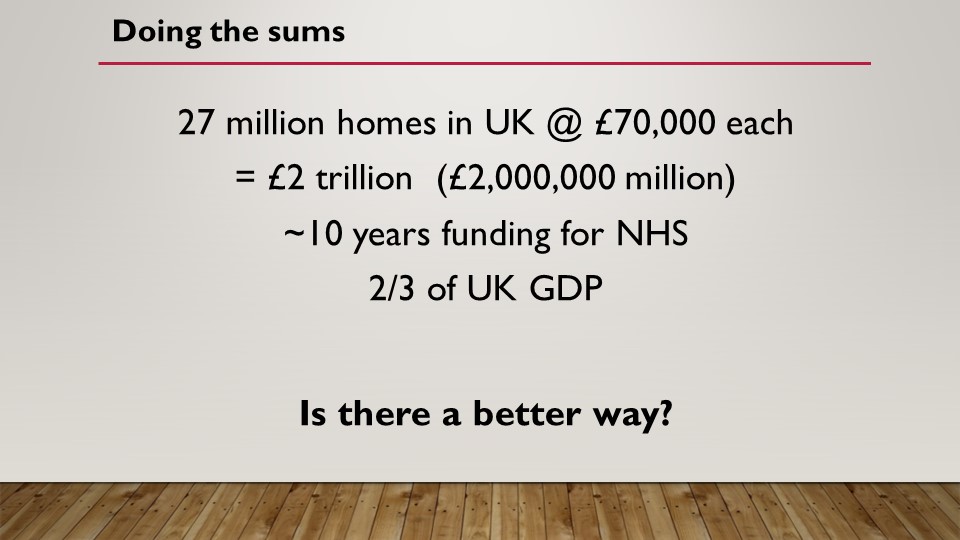
‘Conventional’ solutions are simply too expensive for individuals or the country to afford, but there is a better way.
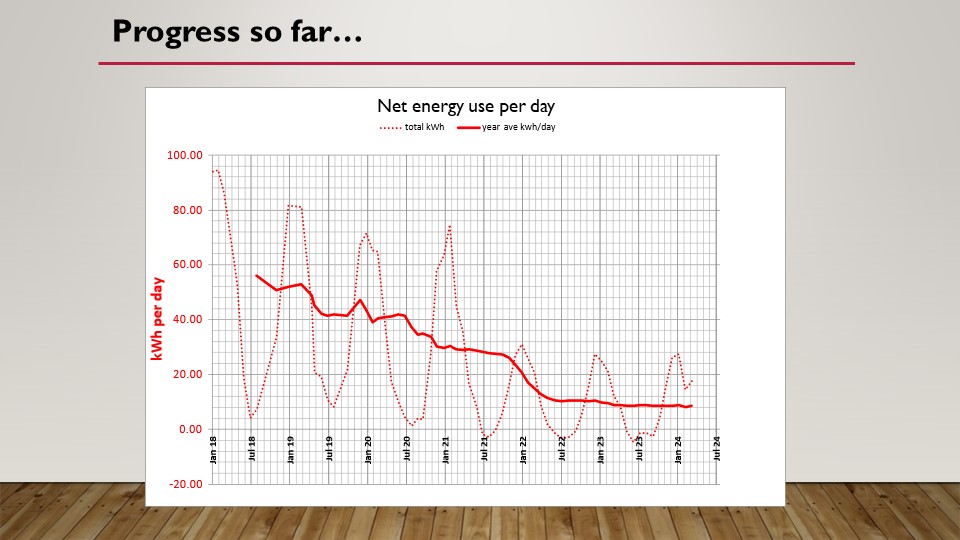
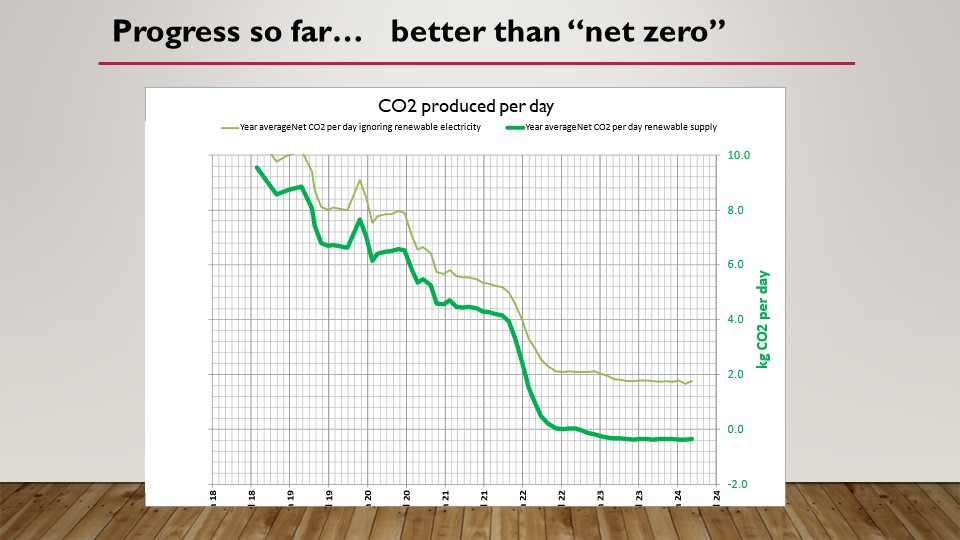
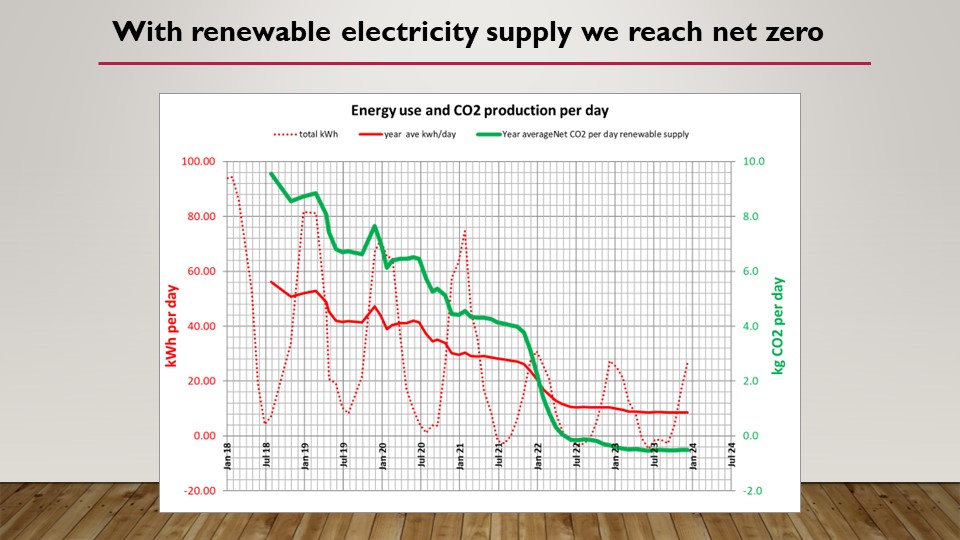
The chart below shows that if we count electricity from a renewable energy supply as zero emissions then we are better than net zero. If we count the carbon intensity of electricity at grid average then we have reduced our CO2 by 80%.
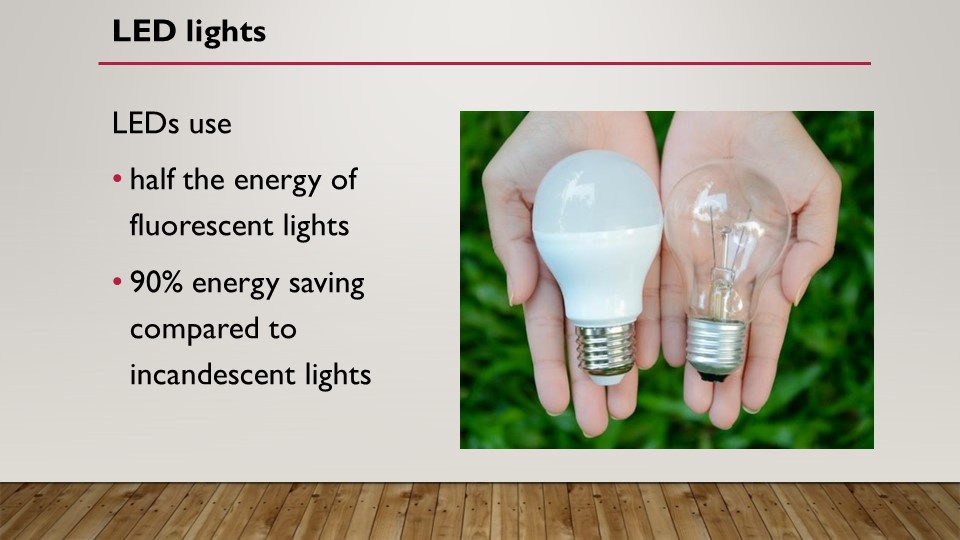
A quick win is to replace all lights by LED.
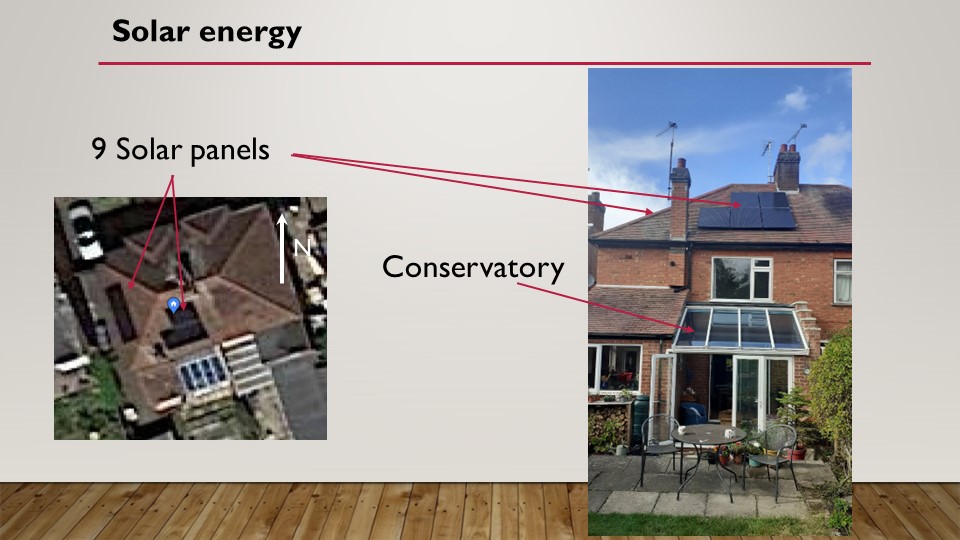
We installed solar panels without a battery early on, and the conservatory also captures solar energy (not included in the £10k as it was built for the space rather than energy reduction).
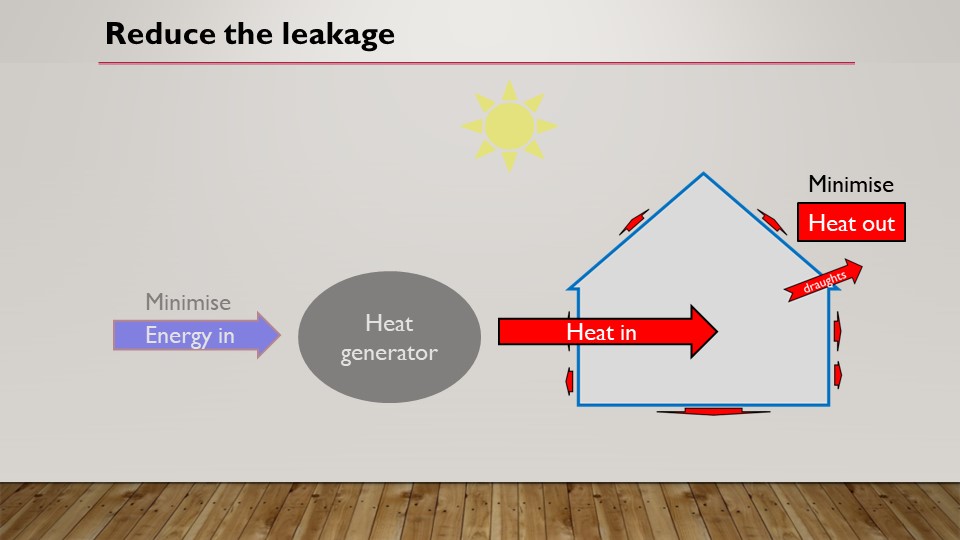
By far the biggest part of the energy footprint of a house is the heating. We need to minimise the energy in. We can do this by minimising the heat out and by optimising the efficiency of the heat generator (conventionally a boiler).

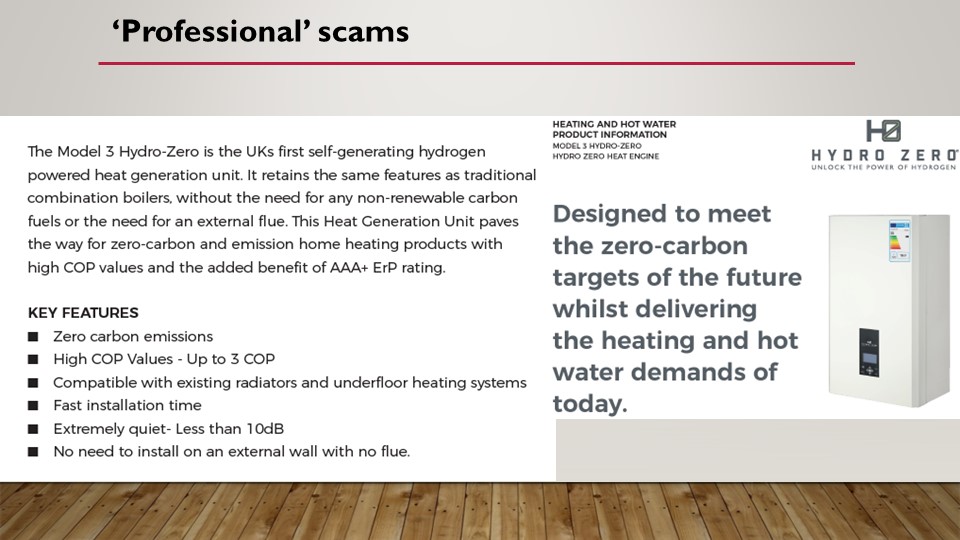
Lots of companies offer ‘wonder solutions’ online, but don’t be caught out by scams such as these:

Professionals have been ‘duped’ by rogue products such as the one below whose claims broke the first law of thermodynamics.
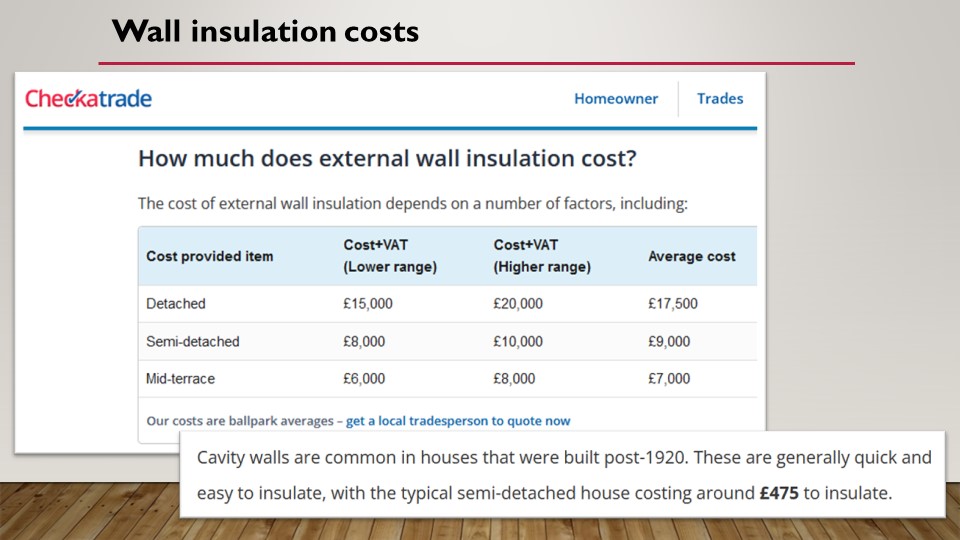
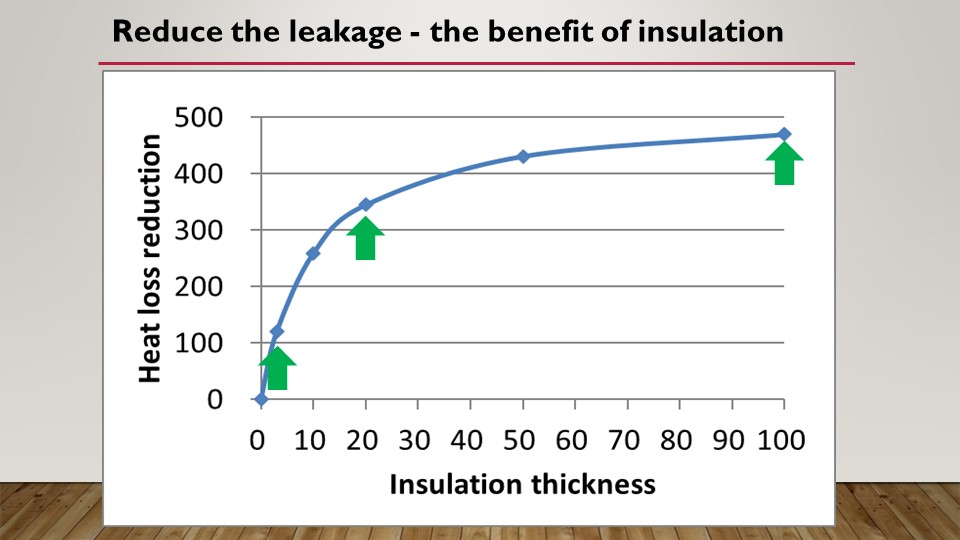
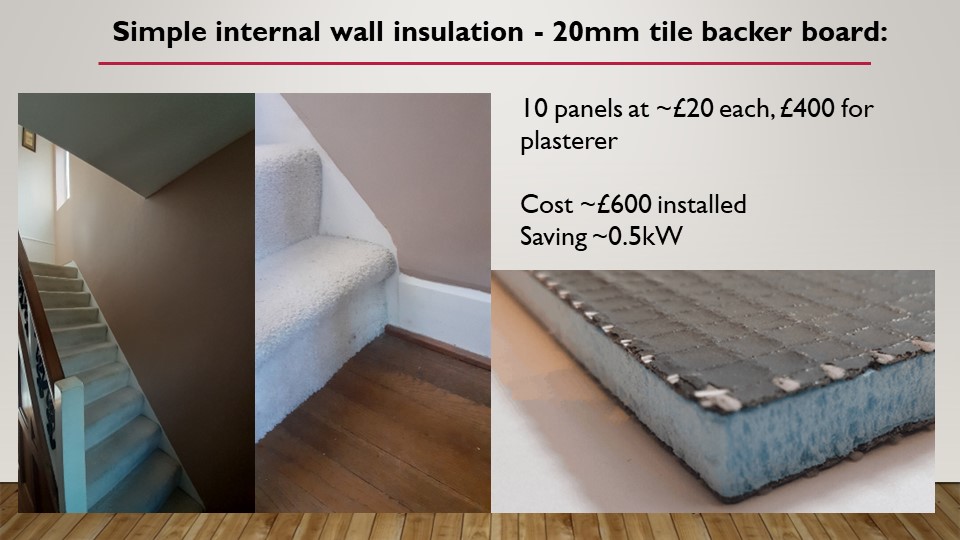
External wall insulation is just too expensive! Cavity wall insulation is great, and affordable, but a better solution is needed for solid walls. Physics tells us that there are decreasing returns from increasing the thickness of insulation. Just 20mm can be very effective.
Underfloor insulation is cheap from a material point of view, but disruptive and labour intensive. We needed to replace our joists and floorboards anyway so it was a cheap and obvious improvement. We tried two different insulation approaches – the solid insulation board was simplest and is the way I’d do it again.


The biggest benefit from double or triple glazing is the poor heat transfer between air and the surface of the glass, rather than the insulating property of glass or the air gap. We achieved this by a simple improvement to the original door glass and windows.

Curtains also reduce heat loss by the same mechanism. The thickness of the curtain material is less important than simply preventing the air passing from one side to another. The following temperature measurements either side of the curtain show the benefit when they are closed.

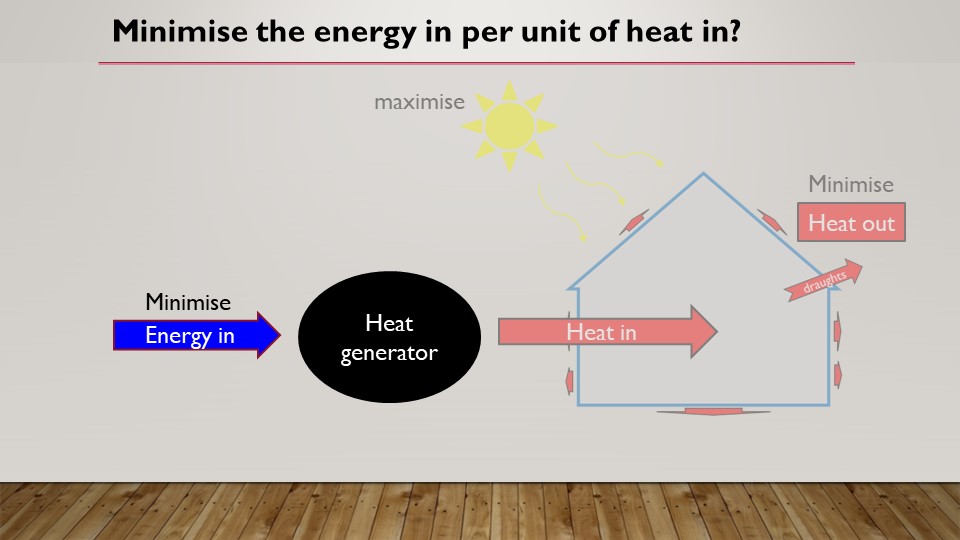
The biggest benefit in energy saving can come from choosing the best heat generator. The traditional approach is to use a gas boiler:

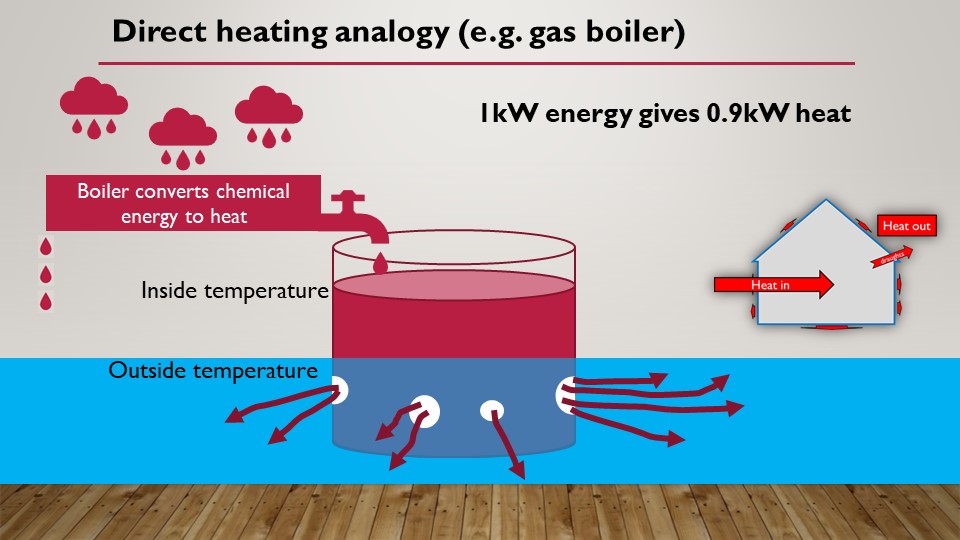
In contrast to converting chemical energy in the boiler to heat, a heat pump uses electrical energy to pump heat from the cold outside to the warm inside using the same thermodynamic process that cools the fridge and freezer in our kitchens.

Government promoted air to water heat pumps have a LOT of disadvantages, and will probably cost a little more to run than a gas boiler. No wonder they are not taking off!

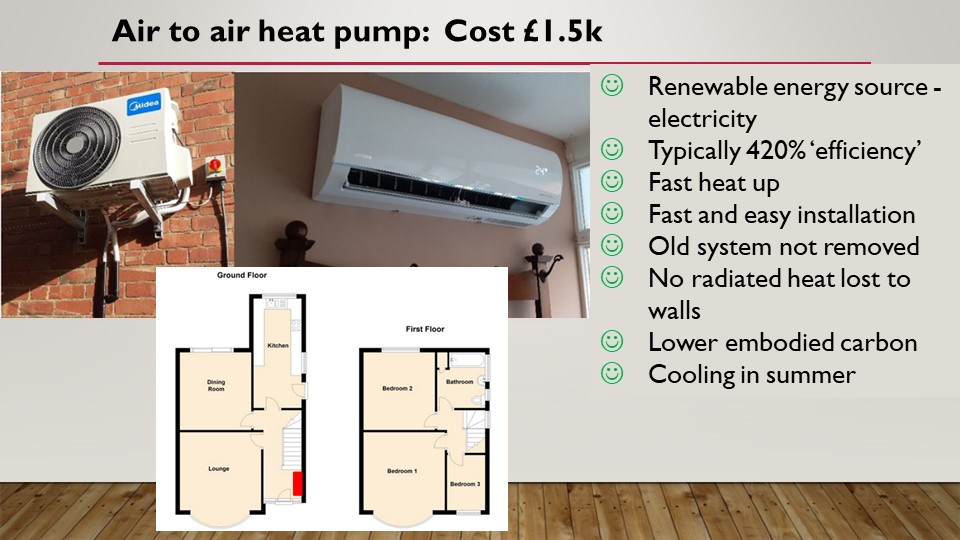
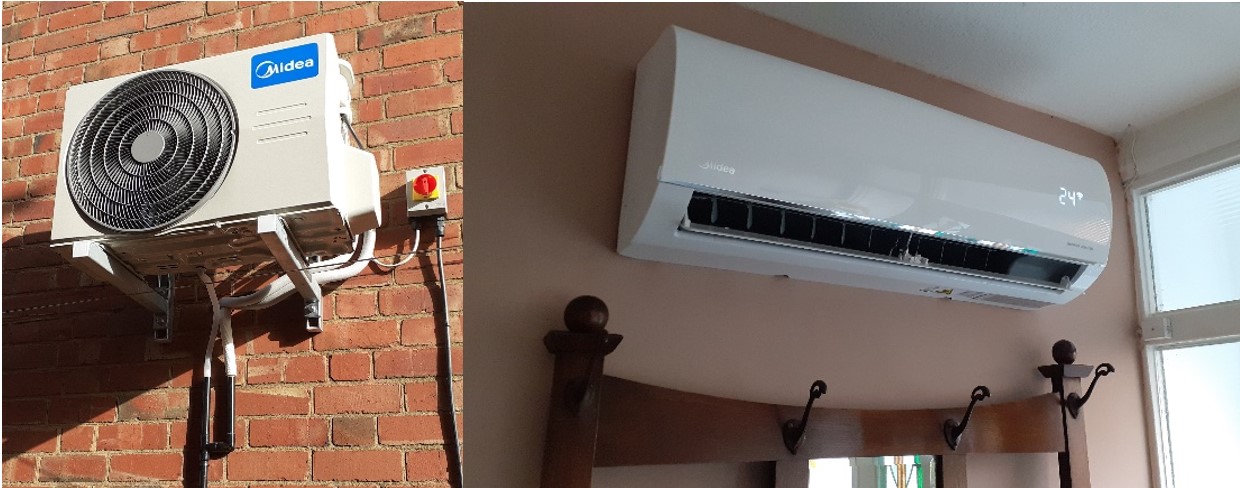
A far better alternative is a traditional air conditioning unit, which is an air to air heat pump – warming the air in the house directly and efficiently. It can be installed without touching the existing boiler and radiator system, which can be retained as a back-up.
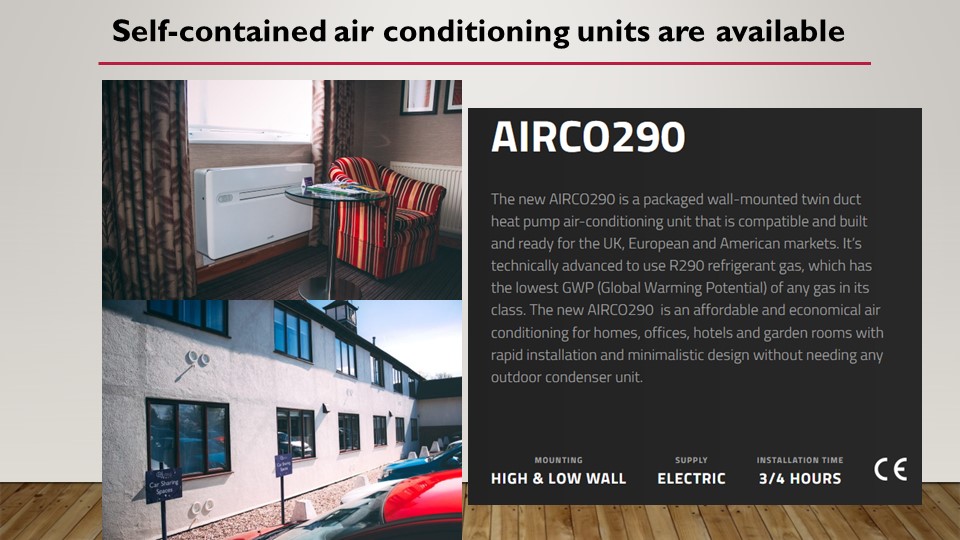
If you have nowhere to fit the outside unit of the heat pump, there are self contained units available that might solve the problem. They are slightly less efficient but are worth considering.
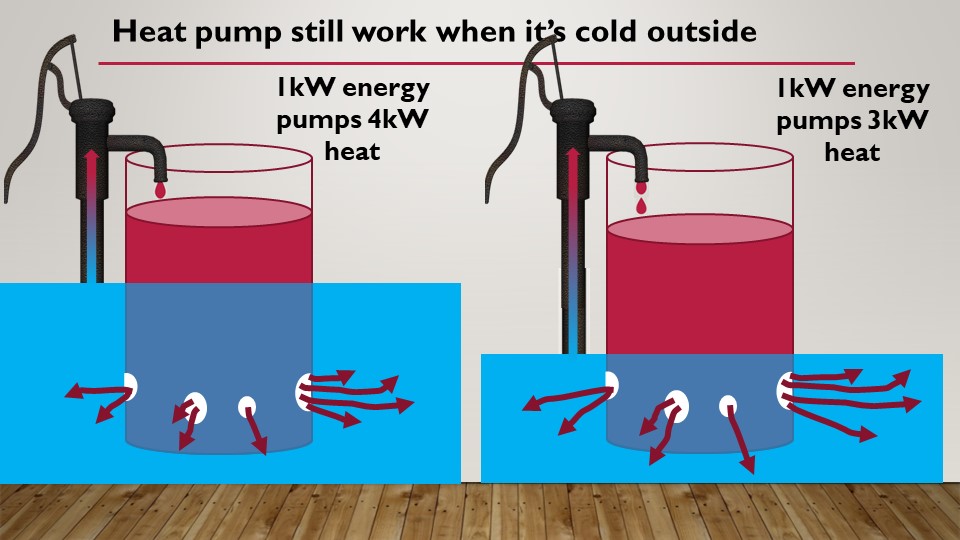
Don’t be misled by people who say heat pumps don’t work in cold weather. They do – although they will pump slightly less heat than in warm weather.
With any heating system, you will reach a point where you can’t get enough heat into the house to maintain the temperature.
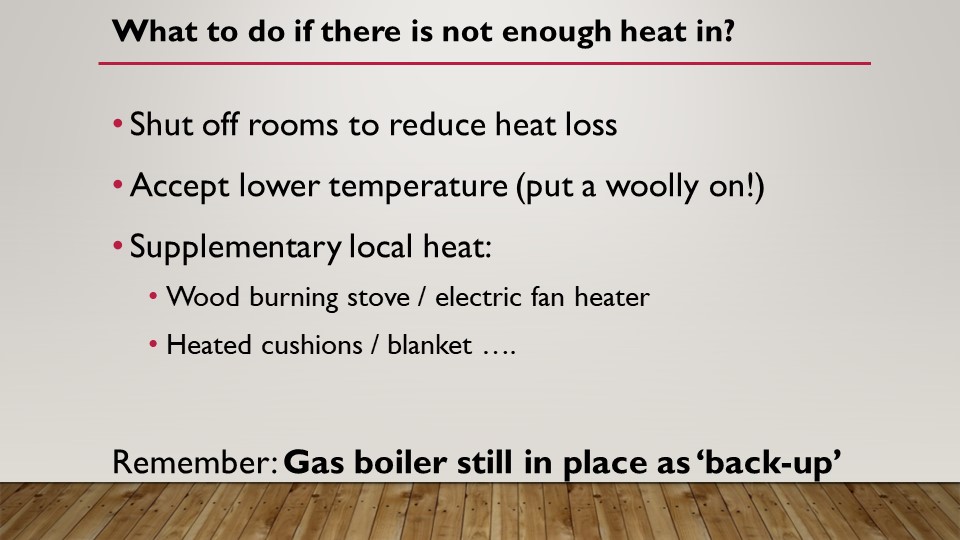
We fitted a DEFRA wood burning stove, and use waste wood that we season as fuel. This is carbon neutral as the wood would rot and give off it’s CO2 anyway.
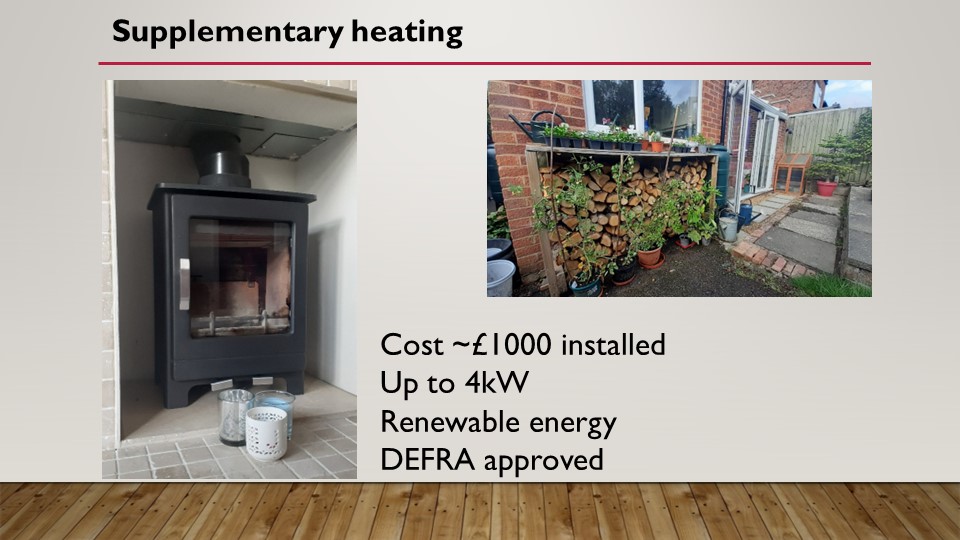
Energy measurements show that for the same heating demand (average outside temperature) the heat pump saves a large proportion of our energy – even when it is very cold. The total energy below includes heating, water heating, cooking, washing, TV etc. i.e. everything!
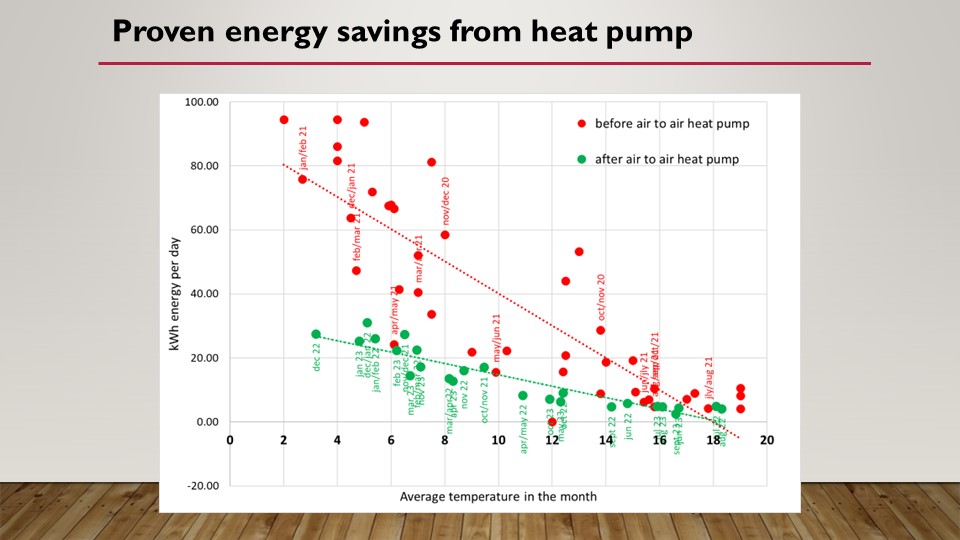

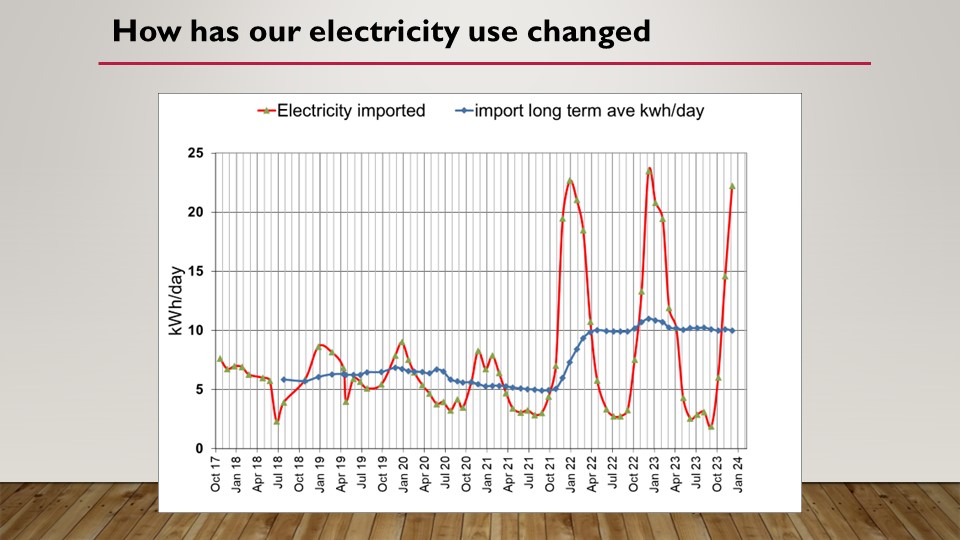
From the average daily gas and electricity use before and after the heat pump we can work out how much we have saved by fitting the air to air heat pump:

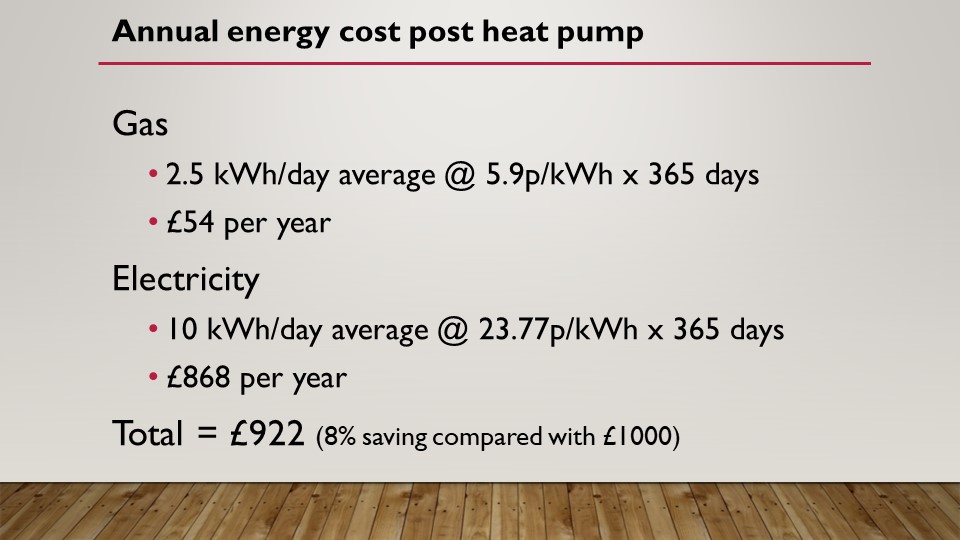
When buying a heat pump, it’s important to get the most efficient model. The cost difference will quickly pay back in energy savings, and the CO2 saving will be biggest.

Just a reminder of what can be done:

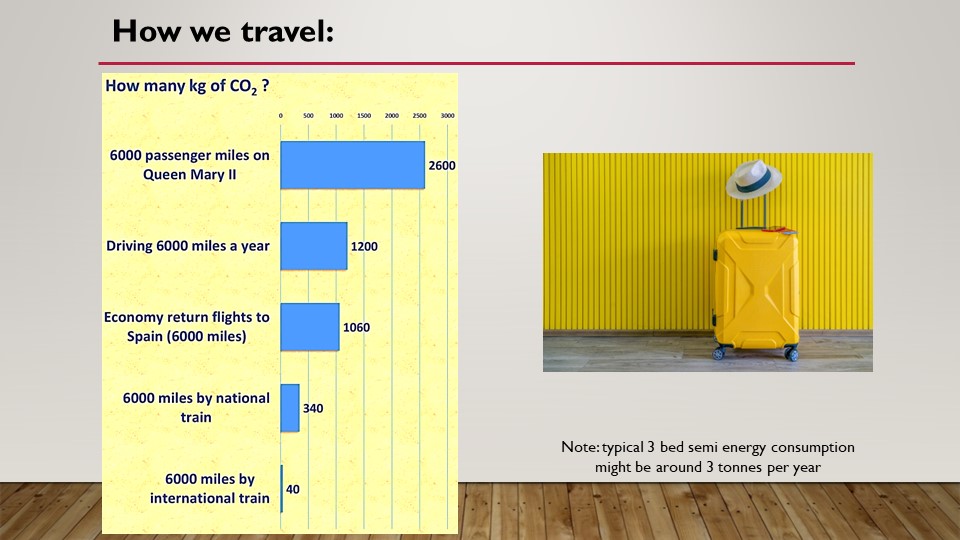
Housing is only a proportion of our CO2 footprint. The data below allows us to consider the benefit of changes to our life choices.

It’s a stark fact that those who are suffering most from our high CO2 production are those who produce least themselves and who are least able to bear the consequences. My wife and I run a small charity that sends funds to help some of the most vulnerable in Mozambique. A simple breeze block house can be life-changing, but will only cost around £1300. If you would like to join us in helping those in greatest need, or if you have simply found this helpful then please donate to the account below.


 Thoughts from a Minimalist Christian