Financial advice from Money Box Live, or Pope Francis?

I was listening to the radio program Money Box Live last week. They were talking about pensions. It seems that if you delay taking your pension for a year then the amount of your pension increases by about 10% per year when you do take it. I guess this is a government scheme to reduce spending on pensions today at the cost of increasing it in future years, perhaps when there may be another government in power – but that’s not the point of this article. The thing that caught my attention was that they got a mathematician to describe the best time to take your pension.

The longer you delay, the higher the pension when you take it, but the less time you take it for. So if you know when you are going to die (which you can look up in statistical tables) the mathematician was working out a time at which the total amount of money you receive reaches a maximum.

All very logical and calculable, so why am I writing about it? Because it is a symptom of the cancerous thinking that underlies so many decisions today:
Our goal is to maximise the money we get, even if we only get it on the day before we die.

We forget that the more we have, even when we don’t need it, the less there is for others.

We don’t consider that the schemes we invest our money in minimise costs, such as the wages of the lowly paid, or maximise income, such lending our money at high rates of interest.

We ignore the fact that making decisions on the basis of maximising our income reinforces the extremely unfair financial systems that we have today, where the rich are getting richer and the poor are getting poorer.

It is not easy to turn down opportunities to make more, or spend less. It is natural to want to buy the cheapest milk, or trainers, or energy – but each decision has its consequence.
When we invest to minimise our tax bill, we are placing the burden of paying for our public services on others. We are encouraging our government to introduce ‘austerity’ measures – “sanctioning” benefit claimants if they miss an appointment (in effect, fining them 100% of their income). We place the burden of balancing the government’s books on the poor.

My mother died last year. She didn’t spend the pension she received, and her investments grew, and we were surprised at the amount of money that she left. I have to decide what to do with the money I inherited. Money Box Live would tell me to invest to maximise my income. But I agree with Pope Francis, I reject that basis for my decisions. How about you?

A robust intellectual basis for Christianity is not enough.

I like to understand why things are like they are. As a child I was taught that science provides the answers that I needed.

When in later life I became a Christian I thought that there was a conflict between science and God, but for a while reconciled this with the idea that ‘God can do anything’. A simple idea, but science and faith was not an area that I really wanted to explore.

We are given the impression that ‘science knows’, but we just haven’t been told yet. About five years ago I decided to find out. What does science know? What does it still not know? Are there things it can never know? Taking everything into account, what story best fits all the facts, a godless universe or one with a God?

I adopted an analytical approach, but avoided the temptation to dig too deeply into details of each field. I just tried to understand the underlying principles sufficiently to see what they contribute to the big picture. I found that most people feel uncomfortable outside of their specialist field, that few seem willing to take the necessary overview.

Having read a couple of books like ‘The Edge of Evolution” by the Intelligent Design proponents I began thinking that it may be possible to prove God exists. But then I read secular books on the origins of life and realised that everyone accepts the remarkable unlikelihood of life but that it doesn’t provide irrefutable proof – there are alternative explanations such as the multiverse theory.

I needed to find out where the Bible came from; could I trust it, and if so, why? I researched the source of the NT documents in particular, and some of the gospel accounts that are excluded from the Bible (the Da Vinci code stuff). I realised that the gospel accounts are not trying to prove who Jesus was and what he did, but that they wouldn’t have been written if he hadn’t done some amazing things. The accounts are simply people trying to capture what happened for future generations. The Bible is not a spells book: “Do this and God will do that for you”.

I reached a number of conclusions about how to understand and respond to the big picture of what’s going on. Realising that everything requires a level of faith (including science of course), I suggest a response which recognises that many religious and scientific dogmas are unproven and unprovable – but unnecessary. I call the response “Minimalist Christianity”. I wrote up what I found in “The Big Picture”, found a publisher and then set about marketing my masterpiece.

There is a robust intellectual basis for Christianity, and I would commend it to others, but I recently realised that in exploring it I was falling into a bit of a trap. Because I have necessarily spent several years testing and probing, viewing things sceptically, I let my personal spiritual life become analytical too. My reasoning has shown that God exists, and that he must have a ‘personality’ and want to interact with each of us, but I have not really been responding to the real God – just developing an intellectual one.

We need to ‘get to know God’ as more than an idea; I need to follow my own advice! It is from the integrity of that relationship that the power to fulfil our purpose will flow. We need analysis to know that we can trust, but then we need to act on that trust to complete the experience. Having determined that the rock exists, we need to actively build the house of our life on it!

“Anyone who listens to my teaching and follows it is wise, like a person who builds a house on solid rock. Though the rain comes in torrents and the floodwaters rise and the winds beat against that house, it won’t collapse because it is built on bedrock.” Jesus circa 30AD

Direct from the San Francisco Book Review

The Big Picture – An Honest Examination of God, Science and Purpose
By P D Hemsley
eLectio Publishing, $4.99, 266 pages, Format: eBook

A former atheist/agnostic who gave God a chance offers open-minded readers this work which is both ambitious in scope and credible in approach: //The Big Picture: An Honest Examination of God, Science, and Purpose//.  Polarizing subject matter such as God and science, evolution, and intelligent design are revisited with the goal of gently challenging entrenched thinking on both sides.

Hemsley, a Chartered Engineer, “has lived on both sides of the faith fence.” His book is comparable to a technical presentation designed for a general audience. It is highly organized with stated goals, evidence, and the author’s conclusions. Fluid, straightforward writing helps the reader progress through several chapters or conclusions dealing with faith, science, purpose and design, quantum physics, free will, reason, Jesus, and more. Even so, those with less of a scientific bent will need to exercise their concentration skills in the scientific sections.

The strength of this book lies in complexity and compatibility. The chapters “Science Describes an Incredible Universe” and “The Universe Exhibits Design and Purpose” make for fascinating reading, especially the subsection where “challenged by the complexity of the biological machinery” Hemsley explores how a modern-day designer would engineer a human being and how long it would take. Additionally, the author’s version of the Genesis creation account featuring the compatibility of scientific discoveries and God’s design is an interesting interpretation to consider.

No emotional appeals are made to the atheist, agnostic, hardcore creationist, or plain honest seeker for a change in his or her worldview. In the words of the author, a self-described Minimalist Christian: “Whether you agree with my conclusion or not, I hope that many of the myths that currently inhibit so many of us will have been weakened or dispelled. I hope that a step can be taken towards finding purpose and experiencing life in abundance.”

http://citybookreview.com/the-big-picture-an-honest-examination-of-god-science-and-purpose/

Click HERE to buy a copy.

How to become a best-selling author

Ever since I was offered a publishing contract for “The Big Picture” I have been undergoing a transformation from an analytic and thoughtful writer to a bold marketer and salesman.

The success in finding a publisher was followed by an honest look at the book that I had written, and the realisation that it was rubbish! Well, not rubbish, but lots of scope for improvement.  So having taken some professional editorial advice from http://www.writersservices.com/editorial-services/editors-report I had an intense couple of months restructuring and redrafting.

After such surgery the book needed several re-reads to smooth out the knots.  Rather like combing tangled hair, each re-read/re-write improved the flow of the text and arguments.  And perhaps like combing hair, the job is never finished; you just have to stop sometime.

The title has changed a lot over the past three years.  It began as The Human Project, was The Minimalist Christian for a while, took and excursion into bizarre title such as The Myth of Reality, Sacrificing the Sacred Cows, and even You Need to Read This Book.  It settled on The Big Picture, basically because that’s what it is about!

The Big Picture includes a lot of references, and I learnt the hard way that you need to record the source of your information when you find it. Going back months later takes much longer, and sometime you just can’t remember where you found something.

Then the deadline is met, and it’s over to the publisher to put the text into the right format for both paperback and multiple e-book formats.

There is the excitement of what the cover should look like.  I am amazed at how inventive graphic designers can be.  I can be ‘tidy’ and make something look presentable, but there is a spark of inspiration that creates something I would never think of.

And finally, the mail arrives with “The Big Picture is live!”

Champagne moment.

But not for long.  There’s no point in having produced a brilliant book if nobody knows about it, and so I have to grasp my confidence in both hands and start to advertise.  But what works?  Do I spend £1-2000 on a Kirkus review and marketing package?  Do I put adverts in the major newspapers?  These are the big questions that face every new author.

It seems to me that someone has to have a reason to buy a book, and until there are some reviews then the reason will probably be personal connection.  So I let friends know, and work colleagues, and those who follow my blog, or twitter, or LinkedIn.  Remember this, if you are writing a book it has to be worth building up some sort of following and making connections on social media for a long time before you publish.

I got a lot of good feedback from the engineers that I work with in UK and overseas, and so I decided to experiment with an advert in Professional Engineering – a magazine with a circulation of over 60,000.  Being a Fellow of the IMechE I got a substantial discount on a quarter page advert which went live at the start of November.  I have to say that the response based on daily statistics from Amazon sales was astonishing and suggests that a total of zero people have bought the book as a result.  Remind me never to expect an advert to work again!  But then I have to remind myself, would I have bought from an advert? No.  So why should I expect anyone else to?

But the early sales are leading to some reviews, and so I can use those reviews to promote the book to others who don’t know me from Adam.  And they are encouraging! See for instance:

http://amzn.to/1ioJHWw

http://amzn.to/1amyFOb

http://amzn.to/1bV5HDV

And I think it’s important not to skimp on sending review copies to people who influence others.  What we need as unknown authors is as many people as possible telling other people that our book is worth reading.  So reviews and word of mouth recommendation are indeed important, and I’ve found that politely asking someone to recommend the book has never caused offense. Usually people are happy to oblige.

The other nice thing about reviews is that a good review can lift the spirit when the sales figures seem disappointing.  A good review tells me to keep going – it’s worth it!

So it seems to me that marketing takes a lot of perseverance and patience.  There are so many books out there that people are not going to find yours by chance. They need a reason to buy, and unless your book is aimed at budding authors and is called “How to become a best-selling author”, the reason to buy won’t be the title.

Having said all this, I’m still at an early stage and am not yet a best-selling author.  I’ll post again later when I’ve learnt more about what not to do!

Meanwhile, let me recommend an excellent book.  It’s by someone I’ve known all my life. It’s called The Big Picture…..

Have a great day.

The Big Picture - cover

“The Big Picture” – an honest examination of God, science and purpose – OUT NOW

“I recommend this book to all thinking people – we might just change the world.” 

“This book will definitely make you think and then think again. Hemsley did his research for this book, and I received many answers to questions I’ve pondered over the years.”

“it is a welcome relief to come across a book that presents such a broad and balanced overview”

“This book covers an considerable amount of territory in its 253 pages.”

The Big Picture is a much-needed book that allows the reader to consider the big questions of life without feeling bludgeoned to adopt the author’s opinion. The book explains basics of science, philosophy and religion in a straightforward manner.

It will encourage all those who want to live a good and purposeful life and would like a sound basis for doing so. Such readers may find a resonance with the teaching of Jesus and this book will explore whether we can trust what has been recorded in the gospel accounts, and whether the findings of science and a reasoned understanding of the Bible are consistent or contradictory.

Many books in the arena of science and faith are hostile and adversarial. The authors set up straw men of their opponent’s arguments, dismantle them and then preach their own arguments to their disciples. The author of The Big Picture recognises that there are intelligent atheists and intelligent believers, and that a case can always be made for whatever someone wants to believe. The reader is therefore treated with respect

ebook

paperback

Amazon UK

The Big Picture - cover

Things that a Minimalist Christian does not have to believe – The Bible is the complete and perfect truth

I struggled to phrase the title of this post, but I’m talking about the attitude that because something is written in the Bible it must be taken as absolutely accurate and true. The Bible is often called the ‘Word of God’, and Christians are encouraged to study God’s Word, but the basis for such assertions is seldom presented.  St Paul referred to scriptures being ‘God breathed’, but if we think about it, what isn’t ‘God breathed’?  Can anything exist without God?

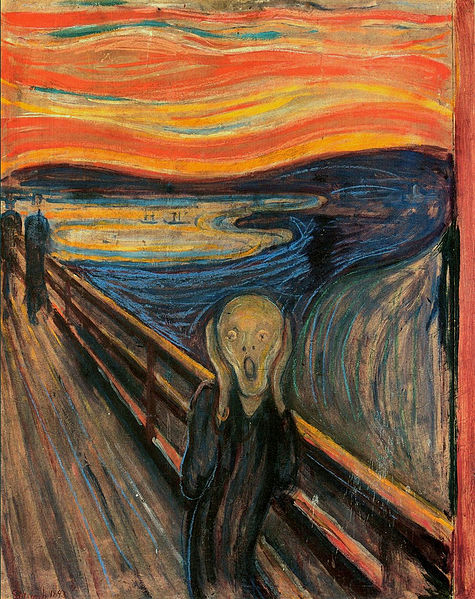
Bible study often takes the form of taking each sentence and trying to interpret it. This can lead to lengthy discussions about the translation of a particular word. It is trying to understand by dissection, but then risks missing the whole. It is similar perhaps to trying to understand the human being by examining each molecule, or ‘The Scream’ by examining a single brush stroke.

If we view the Bible as a collection of documents that were written by human beings describing their journey with God then we can understand why, for instance, different accounts of the same event may differ. We can understand that the meaning of any part must be discerned in the context of the day. We can understand that the writers might simply have got some things wrong. It was men who decided what the best books were to put in the Bible, and they made their decision based on sober judgement. But we should not now view the book as somehow having a magic spell on it that says that ‘this is God’s complete and unchallengeable word’.

There is immense value in the Bible, but I fear that modern Christians have been led to worship the Bible rather than God. It contains wisdom and encouragement, and is correctly used to support our growth rather than constrain it.

A rational look at heaven

A common view of heaven is that it is a reward for being good. Be good in this life and then you can go and have a ball in heaven – no longer having the restraint of having to pass the entrance exam. Indeed, some believe that when a martyr gets to heaven he is immediately met by seventy-two virgins and promised everlasting happiness.

Maybe our parents said things like ‘be nice or you won’t go to heaven’, in the same way that they might have said ‘do your homework or you won’t go to university’. Perhaps we grew up thinking that the final test will be to weigh our good deeds against our bad deeds, and if the scales tip the right way we get in.

I don’t know if you’ve seen the film ‘Meet Joe Black’. Joe is ‘Death’, come to claim a wealthy American who it seems has led a ‘good and honest life’. Joe takes a short holiday with the American before he takes him to his final destination. When it’s finally time to leave the American asks, “Do I need to worry where I’m going?” to which Joe replies, “A man like you…. No”. His reward is heaven. He got there by his own efforts and he deserved it!

Then there is Pascal’s wager. Put simply, if you believe in God and he exists then you get to heaven, if you believe and he doesn’t you simply cease to exist when you die – no negative consequences, so a safe thing to do. If you don’t believe in God and he doesn’t exist then you simply cease to exist when you die, but if you are wrong you suffer in hell – a serious negative consequence, not a safe thing to do. As I’ve written it there is the implication that if you believe in God you get to heaven, which some take as the ‘entry requirement’.

A friend likes to turn Pascal’s wager upside down and say something like, “If I don’t believe in God and find out heaven’s real then I get a double bonus as I haven’t had to do all the religious stuff and I get to heaven as well”

Then there is the ‘Christian’ view that we can all go to heaven because of Jesus dying on the cross; he has bought our entry, we don’t have to do anything.

But is heaven like any of these concepts? Let’s apply some reason to the question.

I don’t invite people to my house as a reward for them being good. I invite them because I like them.

I don’t feel I have a right to go to someone else’s house because I’ve been good. I only go if I have an invite, and because I want to get to know them better because I expect to like them.

Heaven is God’s house. Wouldn’t we expect a similar situation to apply to heaven? Isn’t it a cheek to expect to go to his house just because we’ve done good deeds? Isn’t it reasonable to only go if we want to get to meet God? Would we expect to treat God with less respect than we would treat our neighbours?

And what of this idea that once we get there we can just enjoy all the things we’ve given up to get there? Seventy-two virgins…. Yet I wonder if they would consider it heaven. And that’s really the point. Heaven is not set up for me as an individual to live in wanton pleasure to the detriment of everyone else. Heaven must be a place where everyone lives for the good of everyone else – otherwise it wouldn’t be heaven. When I helped in prison, the chaplain used to say ‘Sin can’t get into heaven’. If sin was allowed, it would be no different to here; it would not be heaven.

Therefore, if you or I want to hold on to our selfish ways, if we want to hold on to any of our ‘sin’ then we cannot be allowed to enter.

We need a transforming of our mind to be able to enjoy heaven; heaven would be ‘hell’ if we didn’t enjoy and thrive on being selfless and loving.

It’s not about ‘be good and go to heaven’. We need to be willing to undergo complete transformation of our way of thinking if we want to be fitted for heaven, we need a new ‘heart’. That’s what so much of Christ’s teaching was all about – how to be completely selfless and loving, putting others before oneself, preparing ourselves for heaven.

Things that matter to a Minimalist Christian – Hope!

Sometimes people will say things like “God would never forgive me for the things I’ve done”. They have given up on themselves, and they have no hope or expectation for the future. They recognise what they have done wrong in the past, and are trapped there, unable to break free.

Central to a Minimalist Christian is that this is simply not true. There is always hope, whatever you have done and whatever situation you find yourself in.

Think about the person who recognises that they have ‘sinned’ and done stuff that they feel cannot be forgiven. How can they know that they have hope? We read early in the gospel of Mark that “Jesus went into Galilee, where he preached God’s Good News. “The time promised by God has come at last!” he announced. “The Kingdom of God is near! Repent of your sins and believe the Good News!” from which we can conclude that it is Good News to recognise and wish we hadn’t carried out all the bad things we’ve done, and ‘repent’ of them. So the recognition of what we’ve done is a first and positive step.

Later in Mark, Jesus says that “I tell you the truth, all sin and blasphemy can be forgiven”.and at the end of Luke he says “There is forgiveness of sins for all who repent.” When Jesus says ‘all’ he means ‘all’. None of us are beyond God’s forgiveness. And we learn that Jesus has the authority to forgive when he comes across a man paralysed from birth. Jesus said to the paralyzed man, “My child, your sins are forgiven.” Later Jesus asks “Is it easier to say to the paralyzed man ‘Your sins are forgiven,’ or ‘Stand up, pick up your mat, and walk’? So I will prove to you that the Son of Man has the authority on earth to forgive sins.” Then Jesus turned to the paralyzed man and said, “Stand up, pick up your mat, and go home!” And the man jumped up, grabbed his mat, and walked out through the stunned onlookers. They were all amazed and praised God, exclaiming, “We’ve never seen anything like this before!” So Jesus has the authority to forgive sins, demonstrated by his power to perform miracles. However, he also delegates that authority to those who choose to follow him, for in John’s gospel he meets the disciples after he has been crucified and resurrected. Jesus breathed on them and said, “Receive the Holy Spirit. If you forgive anyone’s sins, they are forgiven. If you do not forgive them, they are not forgiven.” and we can know that his followers must forgive us because he explained it to Peter: Then Peter came to him and asked, “Lord, how often should I forgive someone who sins against me? Seven times?” “No, not seven times,” Jesus replied, “but seventy times seven! So, we can rest assured that if we have done bad things in the past, and we now regret them then we are forgiven as soon as we ask, and so we can move on in our lives with renewed hope for the future. And we can know that every time we mess up in the future and with regret ask once again for forgiveness that we will once again be forgiven. Jesus would not tell his followers to forgive ‘seventy seven’ times if he were not going to do that himself! But of course, if we don’t ask to be forgiven then we won’t receive forgiveness.

But suppose we are nearing the end of our lives. Is there any point in asking forgiveness, after all, we’re not going to be around much longer? Well yes! A Minimalist Christian knows that this life is not all that there is; there is a life to come. St Paul summarised this rather well when he said that if there is no resurrection of the dead, then Christ has not been raised either. And if Christ has not been raised, then all our preaching is useless, and your faith is useless. And we apostles would all be lying about God—for we have said that God raised Christ from the grave. But that can’t be true if there is no resurrection of the dead. And if there is no resurrection of the dead, then Christ has not been raised. And if Christ has not been raised, then your faith is useless and you are still guilty of your sins. In that case, all who have died believing in Christ are lost! And if our hope in Christ is only for this life, we are more to be pitied than anyone in the world. But in fact, Christ has been raised from the dead. He is the first of a great harvest of all who have died. So whatever stage of life we find ourselves in, there is always hope and always sense in asking for and receiving God’s forgiveness.

And Jesus tells a story of how a landowner hired workers throughout the day, some only working a short time. But at the end of the day they were all paid the same amount. This shows that it is never too late to choose to receive his forgiveness, and to receive it in full.


The people that Jesus spoke to understood this, and in response to receiving forgiveness and hope they wanted to know what to do what was right in the future. Jesus told them, “The most important commandment is this: ‘Listen, O Israel! The Lord our God is the one and only Lord. And you must love the Lord your God with all your heart, all your soul, all your mind, and all your strength.’ The second is equally important: ‘Love your neighbour as yourself.’ No other commandment is greater than these.” I’m not sure that anyone who recognises God as the creator and sustainer of the universe would argue with the first, and we all understand the second ‘golden rule’. But it’s nice to know that a good future is not a killjoy future.

Underpinning all of this hope is the knowledge that God loves each and every one of us. He demonstrated that love in such a powerful way, there can be no doubting it. As recorded in the gospel of John “God loved the world so much that he gave his one and only Son, so that everyone who believes in him will not perish but have eternal life. God sent his Son into the world not to judge the world, but to save the world through him. There is no judgement against anyone who believes in him. But anyone who does not believe in him has already been judged for not believing in God’s one and only Son. And the judgement is based on this fact: God’s light came into the world, but people loved the darkness more than the light, for their actions were evil. All who do evil hate the light and refuse to go near it for fear their sins will be exposed. But those who do what is right come to the light so others can see that they are doing what God wants.” Forgiveness and eternal life are freely available for anyone who wants them, but anyone who wants to keep living an evil life has already judged themselves; they will not seek forgiveness with a sorrowful heart and unless they ask they will not receive it.

So the bottom line is, whatever stage in life we are, no matter how much we’ve screwed up, no matter how unwilling we are to forgive ourselves, God will forgive us if we truly want him to and he will give us hope for the future.

If you feel you are worthless and if this speaks to you, give up your pride and self pity and just ask. And when you ask, know that you are forgiven. Embrace the hope that the future holds.


Things that matter to a Minimalist Christian – forgiving.

“Father forgive them, they don’t know what they are doing” cried Jesus as he hung there dying.  He’d just been betrayed, abused, spat upon, beaten, mocked, whipped, and nailed to a cross.

“Forgive us our sins, as we forgive those who sin against us” is a central part of the Lord’s Prayer.

“How many times must I forgive someone?” asked the disciples, to which Jesus’ reply said “as many times as they sin against you”.

Jesus was pretty hot on forgiveness.

Throughout the Bible there are instructions that we should forgive others, and examples of God forgiving us.

Why is this so important?  How does it square with our sense of justice and our rights?

We all agree that doing bad things deserves punishment; it’s justice isn’t it?  If you knock my tooth out then I should be allowed to knock your tooth out. If you steal from me then you should go to prison.  If you kill my wife you should be hanged.

The trouble is, punishment doesn’t actually fix anything.  It doesn’t fix my tooth if I knock yours out.  It doesn’t return my possessions if you go to prison.  It doesn’t return my wife if you are hanged.  The hurt is still there, even if justice is satisfied.  And when I meet your mother and see her grief after you’ve been hanged, does that make me feel any better?

Forgiveness is what allows us to move forward.

Forgiveness gives up our right to justice.  Forgiveness gives up our right to revenge.  Forgiveness frees us from the need to feel bitterness.  Forgiveness frees us from the need to be angry.

It is not always easy to forgive, although it gets easier with practice.  It is not something that our feelings naturally want to do. When we’ve been wronged, we keep replaying conversations in our head that justify why we have a right to feel hurt. We seek justice and if that’s not forthcoming, revenge.   Christ’s leadership and example doesn’t say it’s easy, but he says it’s essential for our wellbeing.  It wasn’t easy for him to hang from that cross and say ‘Father forgive them’, but it was essential.  Forgiveness is vitally important for the healing of the one who has been wronged.