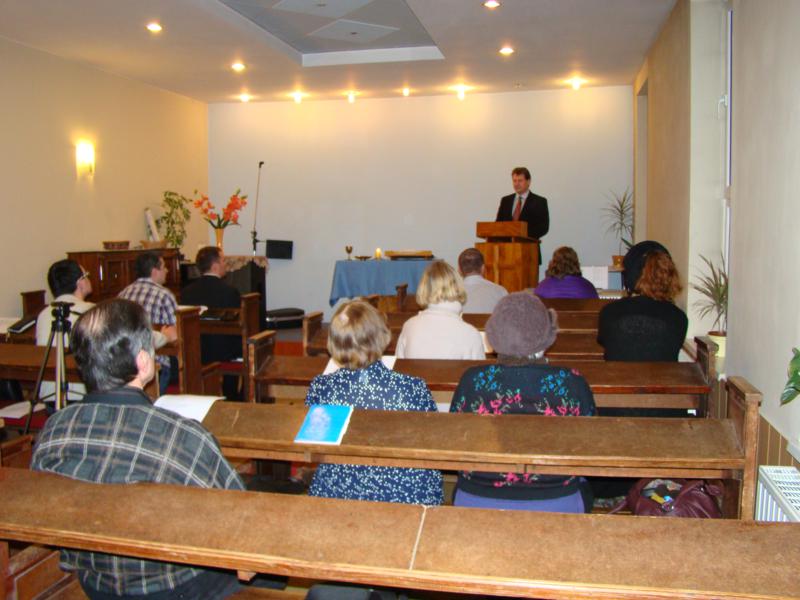
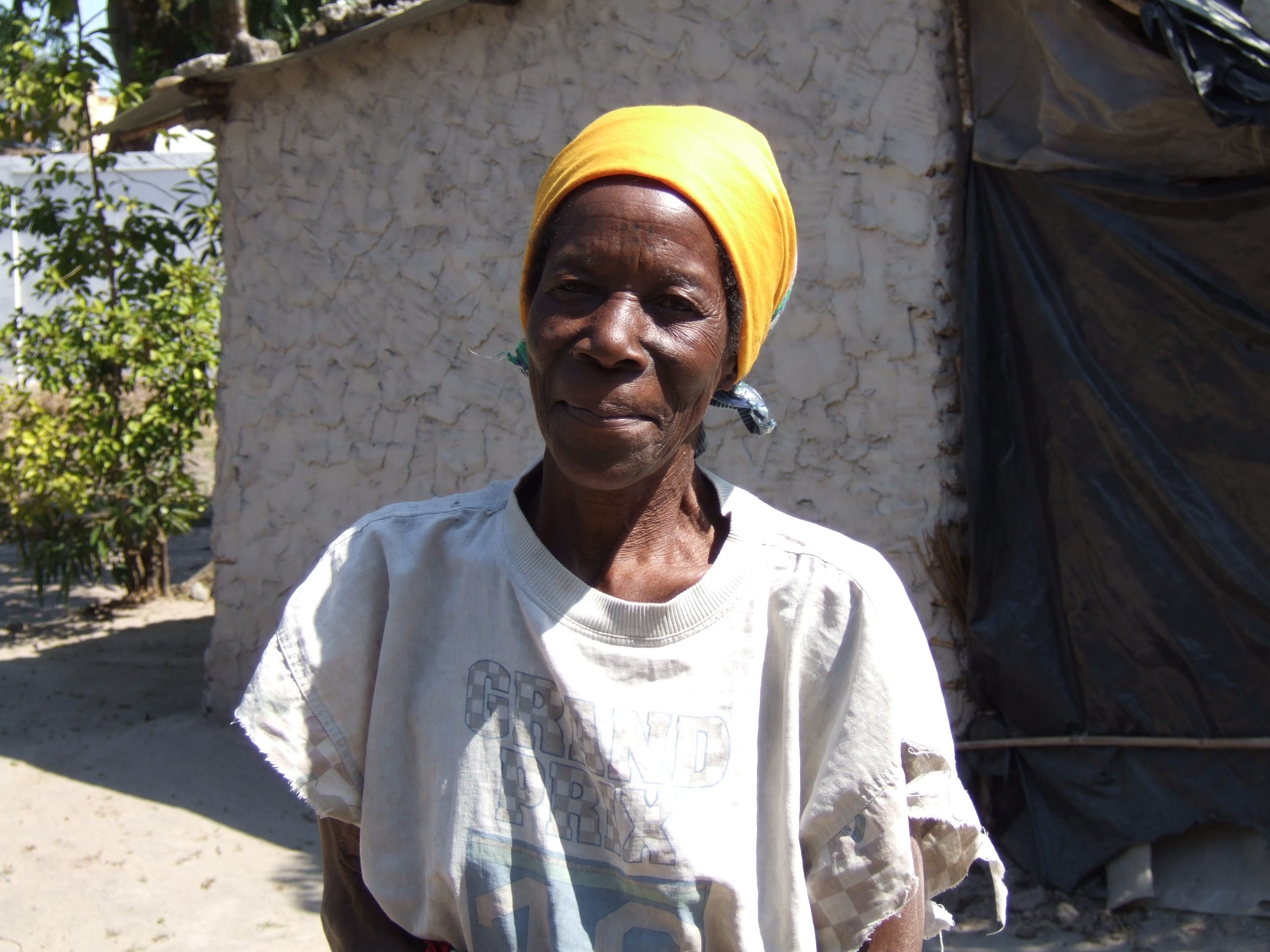
A tribute to Pastor Antonia Bonga, who passed away on Friday night.

A man who I counted as a friend died on Friday night.

I first met Pastor Bonga in 2004 when I visited Mozambique for the first time.  He was running a center for street children called Casa Reom.  That visit was a turning point in my life, showing me many things: that we don’t need monetary richness to be rich, that it is better to do what is right today even if it risks an uncertain future, that most people live in far more difficult circumstances than we do in the West but can still be happy, and that God is close to the poor.

A few years ago he visited England, and sent us a short resume of his life:

 “I was born on 3rd February 1950 at Bawaze-Lampene, Marromeu, the son of Tomo Bonga and Carita. I was educated at Jaravura. My parents were very poor and they were only able to pay for my education up to grade 3.

When I was 18 I came to Beira where I worked during the day and went to a night school. The same year (1968) I was converted in the Apostolic Faith Mission, and was baptized in 1969. I got married and later on was ordained to be a deacon. I had a spiritual experience.

I have had 12 children, 8 of them have died so only 4 remain.

I went to Zimbabwe to Bible school, and when I came back to Mozambique was ordained to be a church pastor. I have planted 5 new churches.

In 1986, I did another bible course in Zimbabwe when I returned home things were worse. A civil war was causing difficulties among Mozambicans. In 1988 things had got so bad that even some of the church leaders were fighting over power.

In 1989, I met 5 missionaries with whom I shared my vision of ministering and planting new churches. The civil war was still going on and the government were harassing me. The government became my number one enemy. It was not easy to preach the word of God at this time. Eventually, God gave a solution to my difficulties. Later on, I founded my present church called “International Body of Christ church”. This started with meetings under a tree. Many people were laughing at the church and at me. Now the churches are all over Mozambique.

When I joined Youth With A Mission (YWAM), I did Discipleship Training (1993) and a Leadership Training programme (1997) in Zimbabwe.

In 2000 God touched my life and told me to care for the orphans and those living in difficult situations on the street. The same year I began leading the YWAM base in Beira.”

I visited Pastor Bonga and the Casa Reom project several times, and I wrote about one visit in my book ‘The Leap’:

When I came back from my last trip to Mozambique, my friend Pastor Bonga had just taken on the running of a second orphanage, with about forty children from ages 1 to 10.  He was asked to take it on, but was not given any money to pay for the running costs.  He couldn’t refuse when he’d been asked.  He couldn’t allow the children to be turned out onto the streets again.  What would happen to the one year old babies? He chose to do what was right, without considering the consequences; he left them up to God.

Pastor Bonga was not perfect, none of us are, but he pursued what his heart told him.  He persevered in extremely difficult circumstances, supported sometimes only by his love of God.  He died unexpectedly.  The evening before he died he had been meeting with others about a new project to help orphans in Nhamatanda, Mozambique.

He will be missed on this earth.
Time to come alive!

As you walk round this weekend, look at the faces of those you pass.  Look perhaps at the men pushing the trolleys in Aldi, Asda or Sainsbury’s.  How many of them are lifeless, pursuing the daily trudge?  Then look in the mirror – are we the same?

Life is not meant to be like that.  We are made for life in abundance, life in all its fullness.  A great man once said “I have come that they may have life, and have it to the full.”

What does life in abundance mean?  Perhaps we should see what the man said.  When asked he answered: “‘Love the Lord your God with all your heart and with all your soul and with all your strength and with all your mind’; and, ‘Love your neighbour as yourself.'”

It’s not so much what you do as how you live that brings life in abundance.  It’s not so much climbing the mountain or sailing the seas – although I recommend both – it’s about choosing to love, every moment of every day, even in the aisles in Asda.

It’s been said “Find out what makes you come alive, and go and do it.” If you are not alive today, you need to follow that advice.  Perhaps you feel you don’t have the energy to love at the moment, perhaps your work is just so draining that it deadens you.  If so then it is worth looking for a change.  Perhaps there’s an addiction that you need to break; it’s possible, you can break it!

But the key to coming alive is love; positive, hardworking, determined expending of ourselves for the benefit of others.

Does injustice make you angry?  Don’t just grumble, go and do something about it. Come alive fighting it.

Does poverty make you angry? Don’t just grumble, go and do something about it. Come alive fighting it.

Does child abuse make you angry? Don’t just grumble, go and do something about it. Come alive fighting it.

Does the sex trade make you angry? Don’t just grumble, go and do something about it. Come alive fighting it.

Does human trafficking make you angry? Don’t just grumble, go and do something about it. Come alive fighting it.

Does the hopeless plight of teenagers make you angry? Don’t just grumble, go and do something about it. Come alive fighting it.

The list goes on.

St. Irenaeus said that “Man Fully Alive is the Glory of God”

It is time to come alive.


Jimmy Saville OBE – tribute to the sex trade.

Britain is offended, and rightly so, by the behaviour of Jimmy Saville, and by the collusion of those close to him who knew of his salacious deeds and did nothing.

But rather than spending our energy on the past, on a witch hunt from 30 years ago, can’t we direct our anger towards stamping out the same thing that is happening today?

Saville wasn’t born a sex fiend, he was trained.  And who trained him?  The same people who are training the men of Britain today: the porn industry.

It starts innocuously with that great British institution – the Page 3 girl.  And it leads on to the soft porn mags, or more effectively the internet.  And it grows to the depravity of the sex traffickers and the brothels.

Are you willing to do anything to turn the tide?  Here are some simple steps:

Remember the words of Martin Luther King:

“The greatest sins of our time are committed not by the few who have destroyed, but by the vast majority who sat idly by”


Tony

Tony was a man of action.  He had always enjoyed sport as a boy, and loved adventure books.   At work he would be frustrated by rules and regulations, red tape put in place just to avoid being blamed in case something went wrong.  Why didn’t people just get on and do what was needed?

Tony had committed his life to Christ.  He was convinced of the truth, read his bible daily and tried his best to follow Jesus teaching.  Jesus was his hero, and he was constantly challenged by what Jesus taught – but liberated too!  He went to church each week.

But somehow he often wondered what church was about.  He found the songs would have him singing words that didn’t represent how he felt towards Christ; love songs and adoration of Christ’s beauty, songs more about being ‘in love’ than selfless love.  He would look around at others who appeared in raptures of delight and wonder what was wrong with him.  He couldn’t help drifting off in the sermons, and couldn’t see what they had to do with his day-to-day life.

He often came away saddened; if church left him cold he presumed that he can’t have been a very good Christian!  Satan smiled, but Jesus led Tony to the verse:

Those who obey my commandments are the ones who love me. And because they love me, my Father will love them, and I will love them. (John 14:21)

“We love you Tony” he whispered.

Terry, and the wrong stuff.

Terry worked long hours.  True, he earned a good living, but he was generous too.  He tithed to the church, and gave to charities and good causes.   Once a friend of the family’s car failed it’s MOT and she couldn’t afford a new one, so Terry and his wife bought her one – Terry enjoyed hunting out a good model and fixing the minor faults that it had.

He was in a friendly church and a small group from the church met weekly too.  He would enjoy the evening meetings, although he couldn’t always get to them with work commitments.  One particularly busy week Terry’s small group leader told them that an elderly neighbour of his was having trouble keeping the garden up and suggested that the group all spend an evening or two clearing it up.  Looking at his calendar, Terry realised that this would be the only evening he would be in that week and suggested that they pay for a gardening firm to do the job.  “That’s not what I’m asking for” said the leader, “I was hoping it would be an act of love”.

The leader felt that Terry was offering the wrong stuff, and Terry felt that God didn’t want what he had to give.

Jesus sighed.  “Why don’t they listen to me?”  “Give whatever you can according to what you have.” (2 Corinthians 8:11)

The Wonky Car

“It’s all in the genes” the scientists say. “Your genetic make-up determines your shape, size, colour and even your behaviour.” Some people it seems are made good, and some evil. Well maybe things are not that clear-cut, but we can understand that in the same way that we have different physical features, we have different behavioural characteristics.

Imagine our body being like a car, and our soul being like the driver. We don’t all have identical cars; some of us might be given Rolls Royce models but others get a wonky car – you know the type – the steering wheel is loose, the brakes are useless and the engine is shot. We all have to drive these cars on a straight and narrow motorway; is it surprising that some of us have accidents? If you are in the wonky car, you might be working like anything to try to keep it on track whilst the guy in the Roller just puts it on cruise control, sits back and relaxes.

As we steer our way through life we are more likely to shout abuse at the wonky car than the Rolls, but when we reach our destination who is God going to be pleased with? The driver of the Rolls who continually cut in front of the wonky car? The driver of the Rolls who went slowly next to the wonky car to keep it going straight? The driver of the wonky car who reached the end despite all the difficulties?

So today, are you going to judge the driver by his car? Or by how many cars he bumps into? Who are you going to help keep on track – or are you going to make sure you get there first by cutting in front of everyone else?

Let’s leave the judgement to God, but let’s encourage and support those who need our help – even if they do keep meandering off track, bumping into us and hurting us. Let’s learn the grace and wisdom to look behind the car to the driver inside.

What do we do with our money?

Through no virtue of my own, I was born with skills that have allowed me to find a good job, and to manage my money. Before I was a Christian I thought that this was just good luck, and that I didn’t have to thank anyone for this. I could do with my money what I pleased (of course, in consultation with my wife!).

We have always had a joint bank account, but when she became a Christian many years before me, she suggested that we each have an additional private account which we can use completely as we please. I was happy with this, as I could then ‘treat’ myself without feeling guilty, and also it seemed to make the act of giving each other presents a bit more meaningful, and it allowed her to give money to charity without having to ask my permission.

I used to think myself reasonably charitable. I’d give to people in the street, and I gave a little to Macmillan nurses after my father died of cancer. I was probably like most of the rest of the country, quite happily giving less than 1% of my income away. And following worldly advice I set some financial targets for my life – I decided to have saved £100,000 by retirement age. (I have to admit I struggled to know what I was going to do with it, but it is something that you have to do, isn’t it).

On the road to becoming a Christian I read ‘challenging lifestyles’ by Nicky Gumbell. I decided that it was OK to give more away. I didn’t have to keep it all for myself for the future, and so I made a standing order from my bank to a Charity Card account, of a relatively small proportion of my income. Perhaps the surprising rate at which the amount I had in the account built up showed how little I was really giving away. But having that account meant that I had to give it away – and I found that really quite rewarding. “Now, who can I give this to” is quite a nice feeling. And I didn’t feel any poorer!

But when I first visited Mozambique I learned so much more!  It was so liberating to see how much closer people come to God when they have no money.  And if you put a Mozambican and an Englishman next to each other and dressed them the same, how would you know who was the richer?

But I also saw again the massive amount of good work that is not happening because of lack of money.  I wept when Pastor Caetano described how he had started the orphanage at the House of the Sparrow with all he had – how they don’t know each day where food is coming from, but God always provides.  Forty-seven children, being cared for and loved by a Christian pastor with nothing but what God provides.  I learned that God really cares what we do with our money.

If someone asks us to give to charity the first thought is, “Can we afford it?”  Of course we can – we still have so much more than the children in Mozambique.  Can we afford not to?  No, not unless we want to harden our hearts.

Do not store up riches for yourselves here on earth, where moths and rust destroy, and robbers break in and steal.  Instead, store up riches for yourselves in heaven, where moths and rust cannot destroy, and robbers cannot break in and steal. For your heart will always be where your riches are. (Matthew 6:19-21)

My experience is that my giving to charity has increased twenty-fold or more since choosing to follow Christ, and my financial savings goals have disappeared.  Where is the logic in saving for something that might be needed in the future when you can see something that is needed today?

Message from Mozambique

Here is a recent email from a Mozambican friend.  An example of Christ’s teaching.

Days ago, I was invited to visit some sick people in their houses here in Beira. My heart was so shocked with what I saw; most of them are HIV positive and widows. They have lost their husband because of HIV Aids.

Here in Africa, women are hundred percent dependents of their husbands to provide. When they lost their husbands, they lost hope as well, mostly if they find that are HIV Positive.

As we go where the person is living, and give him a hug, bring her water or medicines, or food for her young children, or take his hand, we too are making a bit of history: a powerful declaration of God’s love, a prophetic statement of his heart to people who often feel totally rejected by the church. The church cannot stay silent when faced with his issue.

Yes, there are still some churches here are rejecting HIV Positive people, still ignorant and a lot of stigma. 

I am a pastor; have to do it as an example to another brothers and sisters in Christ who are willing to do the same. 

An argument for, and definition of God.

I have started reading Anselm; interesting stuff. Not sure I’ve really got my head round it yet, but nevertheless let me try to paraphrase my understanding of his argument so far in a modern context:

We are all aware that there are ‘non-material’ things: love, justice, purpose, hope, belief, to name a few.  An act of love is carried-out through ‘love’, and an act of justice is carried-out through ‘justice’.  If love did not exist then one could not carry-out an act of love. And it is through ‘goodness’ that we are able to carry-out an act of love; without goodness we could not carry-out an act of love, or of justice, or…  Apart from goodness, all other non-material things are carried-out through goodness, and therefore goodness is the ultimate non-material thing, or ‘essence’ and it exists through itself.

We can also perceive that some acts are express more love than others; there can be great love, or great justice, or great goodness.  And we can imagine that for any great goodness there could be a goodness that is just a little greater … until we reach infinite goodness.  And so everything that is good in any way is within that infinite, or supreme goodness.

Everything exists through something, and we have seen that of things immaterial everything exists through supreme goodness.  But everything must exist through one thing.  If we imagine that there were more than one thing, then either there would be one thing through which the more than one thing were able to exist – which would then be the one thing, or they might exist through a ‘power to exist through oneself’ – which would then be the one thing, or they would exist mutually through each other – which defies reason.

The universe exists, and so it exists through something. Non-material things exist, and they exist through supreme goodness.  Therefore either the universe exists through supreme goodness, or supreme goodness exists through the universe.  But can supreme goodness exist through the universe?  We can conceive that there are other universes, but it is inconceivable that those other universes exist without supreme goodness; being non-material supreme goodness cannot be constrained within a material context.  Therefore it is impossible that supreme goodness exists through the universe, but the universe must exist through supreme goodness, and there can only be one supreme goodness –  which we define as God.

Related posts

https://philhemsley.wordpress.com/2013/04/14/proof-of-god/

https://philhemsley.wordpress.com/2012/12/29/the-god-of-science/


If God is all powerful, why doesn’t he stop all the fighting?

I wrote this when my delightful daughters were much younger; I hope that if they read this now it will make them smile ……

Parents can learn a lot from their children.

My children sometimes fight.  Sometimes one or other of them may exaggerate their wounds and try to get me to arbitrate as to who was to blame.  I hate to see them fighting and so have found myself drawn into trying to resolve and judge the issue.  However, I try not to blame one or the other because I love them both and recognize that it takes two to make an argument. However, it often ends up with both of them ‘hating’ me.  If I do arbitrate then the one who ‘wins’ soon forgets, but the loser then spirals into silent or vociferous anger and feeling of being unfairly treated.  As an arbitrator I cannot win!  Even as a peacekeeper I seldom win.  It is perhaps best to leave them to have their fight, and to be there to comfort whoever needs comforting.

Since we have free will, how can God intervene when he sees us fighting and causing suffering?  We would behave in just the same way as my children.  It would not be ‘fair’ if we were judged ‘against’, and if we were judged ‘for’ then we would simply accept the decision as our right, and go about our business.  He has given us the dignity of choice, but having done that he has necessarily limited the use of his power.

He lets us choose how to resolve the fight.  Jesus told us how to resolve the fight if we are prepared to listen.  Essentially – don’t worry about winning the argument – look for the plank in your own eye – think what you could have done better – be humble – turn the other cheek.  It’s not ‘fair’, but it works!  But when we ignore his advice then he’s still there to comfort whoever needs comforting.

Is it time to stop blaming God for all the things we do wrong to each other?  Instead, shall we recognise his love for us, and listen to his advice and find the fulfilment of living our lives as he intended?