Greece is on the verge of a great future – don’t throw it away!

What is it that defines a successful country? The wellbeing of the citizens, or the nation’s riches? The two are not the same.

Wellbeing: feeling loved and valued, health, happiness, contributing to society –these are the things that matter, that make us human. These do not come with national wealth but with equality and relationships – how people value and treat each other.

In the war, everyone was ‘in it together’ and although times were hard, apart from the obvious war wounds, people were healthy, valued and fulfilled. Society became much more equal. If Greece chooses to adopt a true attitude of unity (not like Cameron’s phony ‘Big Society’) where everyone looks out for each other, where those with more help out those with less – because they matter as fellow human beings – then Greece will thrive!

The worry is that Greece is so keen to stay in the “Euro” club that they will give up their wellbeing to do so. They are already feeling un-valued, un-loved and betrayed. They are dealing with institutions, but institutions don’t have a soul and don’t care about people, so why is Greece surprised. But they don’t have to shackle themselves to the rich man’s yoke to live well.

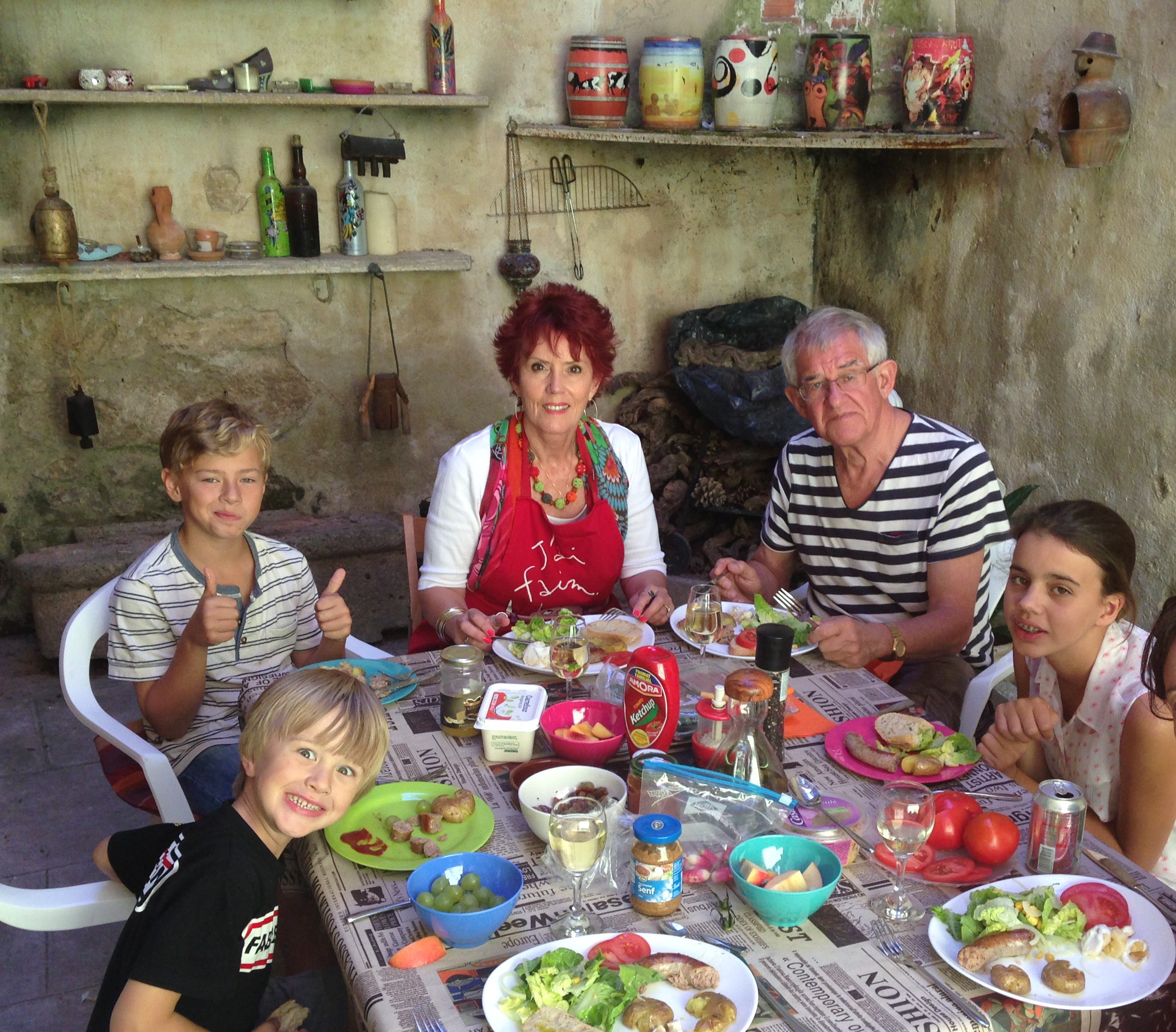
So long as there is food on the table and friends to eat it with, so long as their whole society unites in a common cause, they will thrive. But if they choose to be victims of the wealthy, if their society chooses to take what they can as individuals then they will indeed suffer. The richer Greeks will be materially fine but the poor will hurt, health for all will worsen, there will be riots and unrest, and productivity will reduce too – the signs are already there.

Greece is at a crossroads, but it’s not the crossroads reported in the press. It is a crossroads of its citizen’s attitude to each other. They can lead the world in showing how to be successful without being serfs to the economic barons. I hope that they choose wisely.

2014-09-01-13.09.24

Financial advice from Money Box Live, or Pope Francis?

I was listening to the radio program Money Box Live last week. They were talking about pensions. It seems that if you delay taking your pension for a year then the amount of your pension increases by about 10% per year when you do take it. I guess this is a government scheme to reduce spending on pensions today at the cost of increasing it in future years, perhaps when there may be another government in power – but that’s not the point of this article. The thing that caught my attention was that they got a mathematician to describe the best time to take your pension.

The longer you delay, the higher the pension when you take it, but the less time you take it for. So if you know when you are going to die (which you can look up in statistical tables) the mathematician was working out a time at which the total amount of money you receive reaches a maximum.

All very logical and calculable, so why am I writing about it? Because it is a symptom of the cancerous thinking that underlies so many decisions today:
Our goal is to maximise the money we get, even if we only get it on the day before we die.

We forget that the more we have, even when we don’t need it, the less there is for others.

We don’t consider that the schemes we invest our money in minimise costs, such as the wages of the lowly paid, or maximise income, such lending our money at high rates of interest.

We ignore the fact that making decisions on the basis of maximising our income reinforces the extremely unfair financial systems that we have today, where the rich are getting richer and the poor are getting poorer.

It is not easy to turn down opportunities to make more, or spend less. It is natural to want to buy the cheapest milk, or trainers, or energy – but each decision has its consequence.
When we invest to minimise our tax bill, we are placing the burden of paying for our public services on others. We are encouraging our government to introduce ‘austerity’ measures – “sanctioning” benefit claimants if they miss an appointment (in effect, fining them 100% of their income). We place the burden of balancing the government’s books on the poor.

My mother died last year. She didn’t spend the pension she received, and her investments grew, and we were surprised at the amount of money that she left. I have to decide what to do with the money I inherited. Money Box Live would tell me to invest to maximise my income. But I agree with Pope Francis, I reject that basis for my decisions. How about you?

There are no border controls on the Kingdom of God

Jesus taught that “the Kingdom of God is at hand”. But how do we get there? Do we need a passport, or apply for a visa? Do we have to pass an entrance test to become a citizen?
Anselm described God as supreme goodness, and John’s gospel tells us that God is love; “But anyone who does not love does not know God, for God is love. And if God is love, love is God.
But God is more than that, he has ‘person-ness’ that I describe in “Four steps of reason leading to a personal God” . So we can think of love as part of his realm, his kingdom. Therefore to live in love is to live in the Kingdom of God. Every act of goodness or love is by definition carried out in the Kingdom of God. Every time a person choses to act kindly to a neighbour, they are in the Kingdom of God. Every time they choose not to respond in a loving, good way they are choosing to live outside the Kingdom of God. It doesn’t matter whether they call themselves Christian, Moslem, Hindu or atheist – acting is love is acting in the Kingdom of God.
Because it is our choice whether we act, or live, in the Kingdom of God there are no border controls. God does not make any demands, or set any tests for those who want to live there. We simply decide. I choose to love, therefore by definition I choose to live in the Kingdom of God.
But by definition, if I choose to be selfish then I am not in the Kingdom of God, because selfishness is not love, and therefore is not part of the Kingdom of God. If I live selfishly, I am in the Kingdom of Me.
Clearly we move in and out of the Kingdom of God every hour of every day. Perhaps we all need to be a little more conscious of which Kingdom we want to live in.

“You can’t support them all can you?”

Let me start by start by confessing that I am writing this to myself as much as to anyone else, and particularly to those of us who call ourselves Christians. It covers the challenging topic of giving money. Often we say, or hear others say something like, “I won’t give to that charity. You can’t support them all, can you?”  It sounds reasonable, but is it correct? Christians believe that Jesus Christ gave everything for us. He gave his life that we might have a rich and satisfying life. We believe that there is guidance in the Bible on how to live such a life. Here are some passages:

“Give to those who ask, and don’t turn away from those who want to borrow.” “If you have two shirts, give one to the poor. If you have food, share it with those who are hungry.” “When you give to someone in need, don’t let your left hand know what your right hand is doing. Give your gifts in private, and your Father, who sees everything, will reward you. Looking at the man, Jesus felt genuine love for him. “There is still one thing you haven’t done,” he told him. “Go and sell all your possessions and give the money to the poor, and you will have treasure in heaven. Then come, follow me.”

The message appears to be that yes, we can support them all. I was discussing this with my wife after looking at the distribution of income on an earlier post. When would it be OK to say no, we are giving enough? I suggested that perhaps it was OK when our income net of giving was that of the lowest on the curve – the bottom 10%. If we expect people on the bottom 10% to live full and satisfying lives on their income, shouldn’t we be willing to do the same? Elsewhere in the bible is states that:  “Each one must give as he has decided in his heart, not reluctantly or under compulsion, for God loves a cheerful giver.”  So how does that fit with “sell all you have and give the money to the poor”? Perhaps it means that if we are unable to give cheerfully to anyone who asks then we need to work on our heart. Maybe we need to teach ourselves to love more. As well as listening to the advice on how to maximise our income, invest in schemes to give high interest and avoid paying tax, we need to be hearing that we can manage on less. We can still maximise our income, but to give more away instead of saving it for ourselves.  See also my post “The Wealthy are Redeemable” Yes, I am sure I am being hypocritical in writing this. But that does not make what I have written wrong. Let’s all ponder this in our hearts and see what we decide to do.

………………………………………………………………………

If you want some ideas, try these links:

http://5quidforlife.org.uk/

Home

feel free to add your own in the comments.  I’ll add them here when I get time.

I think I might be a panentheist – I hope it’s catching!

The ancient Celts knew a thing or two. They were not the wild fighters who the Sheriff of Nottingham brought in to drive Kevin Costner’s Robin Hood from his idyllic woodland village. They had a special understanding of the nature of things. According to “The Celtic Way” by Ian Bradley they held “a conviction that the presence of God was to be found throughout creation – in the physical elements of earth, rock and water, in plants trees and animals and in the wayward forces of wind and storm.”

Bradley goes on to say that “We are not in the world of pantheism here but in the much more subtle and suggestive realm of panentheism – the sense that God is found both within creation and outside it.”

Elsewhere I have written that God is ‘the laws of physics’ – it’s just another name for the thing which causes matter to behave in the way that it does. Without God/’the laws of physics’ there can be no matter – God and matter are not independent, and so matter is (part of) God. (see “Proof of God?”)

I have also noted that there are non-material things: love, justice, purpose etc. These must similarly be part of God – reflected in the Biblical passages which state that God is love. (see “An argument for, and definition of God”)

This understanding of the nature of God leads us to realise that you don’t need to go somewhere to meet God – he doesn’t live in church or a monastery – he is all around us, and within us, sustaining our physical bodies and our environment: “we are what we are through and within God”. (see “The God of Science”)

The Celts understood this. Not within the scientific context that I have described, but in the practical day-to-day knowledge of God. Perhaps we need to refresh our view and understanding of science to reflect this Celtic wisdom: science is simply the study of God!
There is no separate sacred / secular division, no God / nature division, no heaven / earth division; they are all part of God who is God of everything.


A robust intellectual basis for Christianity is not enough.

I like to understand why things are like they are. As a child I was taught that science provides the answers that I needed.

When in later life I became a Christian I thought that there was a conflict between science and God, but for a while reconciled this with the idea that ‘God can do anything’. A simple idea, but science and faith was not an area that I really wanted to explore.

We are given the impression that ‘science knows’, but we just haven’t been told yet. About five years ago I decided to find out. What does science know? What does it still not know? Are there things it can never know? Taking everything into account, what story best fits all the facts, a godless universe or one with a God?

I adopted an analytical approach, but avoided the temptation to dig too deeply into details of each field. I just tried to understand the underlying principles sufficiently to see what they contribute to the big picture. I found that most people feel uncomfortable outside of their specialist field, that few seem willing to take the necessary overview.

Having read a couple of books like ‘The Edge of Evolution” by the Intelligent Design proponents I began thinking that it may be possible to prove God exists. But then I read secular books on the origins of life and realised that everyone accepts the remarkable unlikelihood of life but that it doesn’t provide irrefutable proof – there are alternative explanations such as the multiverse theory.

I needed to find out where the Bible came from; could I trust it, and if so, why? I researched the source of the NT documents in particular, and some of the gospel accounts that are excluded from the Bible (the Da Vinci code stuff). I realised that the gospel accounts are not trying to prove who Jesus was and what he did, but that they wouldn’t have been written if he hadn’t done some amazing things. The accounts are simply people trying to capture what happened for future generations. The Bible is not a spells book: “Do this and God will do that for you”.

I reached a number of conclusions about how to understand and respond to the big picture of what’s going on. Realising that everything requires a level of faith (including science of course), I suggest a response which recognises that many religious and scientific dogmas are unproven and unprovable – but unnecessary. I call the response “Minimalist Christianity”. I wrote up what I found in “The Big Picture”, found a publisher and then set about marketing my masterpiece.

There is a robust intellectual basis for Christianity, and I would commend it to others, but I recently realised that in exploring it I was falling into a bit of a trap. Because I have necessarily spent several years testing and probing, viewing things sceptically, I let my personal spiritual life become analytical too. My reasoning has shown that God exists, and that he must have a ‘personality’ and want to interact with each of us, but I have not really been responding to the real God – just developing an intellectual one.

We need to ‘get to know God’ as more than an idea; I need to follow my own advice! It is from the integrity of that relationship that the power to fulfil our purpose will flow. We need analysis to know that we can trust, but then we need to act on that trust to complete the experience. Having determined that the rock exists, we need to actively build the house of our life on it!

“Anyone who listens to my teaching and follows it is wise, like a person who builds a house on solid rock. Though the rain comes in torrents and the floodwaters rise and the winds beat against that house, it won’t collapse because it is built on bedrock.” Jesus circa 30AD

“Je suis Nigerian”

They may not be white Europeans, and they may have done nothing to provoke the attack, but is it any less horrific?  Can the world do nothing to help?  Let us at least show that we care:  #jesuisnigerian

http://www.independent.co.uk/news/world/africa/nigerias-forgotten-massacre-2000-slaughtered-by-boko-haram-but-the-west-is-failing-to-help-9970355.html

http://www.vox.com/2015/1/10/7525199/nigeria-boko-haram-attack

http://www.aljazeera.com/news/africa/2015/01/boko-haram-massacre-toll-possibly-2000-201511004229409787.html

“Here, there be dragons”

Centuries ago many people used to live their entire lives within a few miles of where they were born. Occasionally travellers would pass through with tales of far-away places which held wonders, treasures and maybe ‘dragons’. But few would dare cross the borders surrounding their small world of familiarity.

Dragon-Linda_BlackWin24_JanssonNowadays many people again live their entire lives within a relatively small environment. Maybe it is not physical, since modern transportation puts the whole world within reach, but I’m speaking of relationships, culture and spirituality.

Our sphere of friends is gathered through encounters where we like to pass our time: work, the sports club, the toddler group or school, the pub. We meet like-minded people in comfortable environments and put down roots there. Occasional travellers pass through with tales of other lifestyles: we get peeps at them on the TV reality shows, a foreigner might join our band, or a tragedy might move us out of our comfortable world. But “few dare cross the borders of their small world of familiarity”, and most will lobby to maintain their personal utopia.

We understand how the world works through what we have learned through personal experience, the media and common sense.  With our Western worldview glasses we know such things as: the economy has to be healthy, everyone should be educated and democracy is the only system that works. And of course we should all have rights, to health, happiness and freedom, particularly freedom of speech. We seldom stop to question the basis on which we have decided that all of these ‘truths’ are correct. When we hear tales of other cultures we are fearful that they will invade our territory and bring unimaginable horrors and suffering.

But perhaps we are most fearful of uncharted spiritual seas. England used to be a Christian nation, although deeply divided between Protestant and Catholic, but has largely come to believe in Scientism; the religion that science can explain everything. It can be comforting to think that science can tell us why Grandma died, and to hope that in the future cancer will be conquered. Occasionally we will hear tales of a spiritual realm, something that is not simply made of ‘stuff’, and strangers will speak of God and tell us that we have a ‘soul’. A frequent response is to ignore such ramblings, or to accept that such things may be ‘okay’ for them, but I’m quite happy in my own ideas thank you very much.

Secretly, if we are bold enough to ask ourselves, we will admit that our small-world outlook is largely driven by fear. We are afraid that we will lose our basis for life, even if it doesn’t seem to be working too well for us at the moment. We would love to befriend those in different circles, experience different cultures, and reach a satisfying understanding of who we are spiritually; we yearn to find our soul and our purpose.

It is the beginning of a new year: 2015. Two thousand and fifteen years after a special baby was born. Who as a man spoke strange tales of a spiritual realm and a God. A man whose words gave us a rock to build our lives on. A man who willingly allowed himself to be crucified to show that death could not hold him – or us. A man who Christians call God. Perhaps it is time to take our courage in our hands and explore this strange new land? Many have gone there before, but few have returned with tales of dragons! Instead, they come back with stories of hope and fulfilled purpose; the promised land. Shall we go?

Do we worship the same God?

There is and can only be one God.

I am not going to defend that statement but to take it as read and see where it leads in the context of different religions.  If you don’t want to accept the statement, this post is not for you so please don’t waste your time and energy reading further.

There is and can only be one God.

That one God is love.  Without God there can be no love.  And so each and every act of love is an act of God.  If a Christian loves, that is God within them.  If a Moslem loves then that is God within them.  If an atheist loves that is God within them.

That one God created and sustained the universe. He sends the rain on the good and the bad.  His laws of science knit us together in our mother’s womb, allow us to experience the world, and present us with the alternatives of love or hate, good or evil.

That one God has made each of us as an individual.  Each of us is a ‘me’.  He has given us freedom to choose to love or hate, to be good or evil.  As individuals we choose.  If we choose to love we choose God whether we know it or not, whether we are Christian, Moslem, Hindu, atheist, agnostic or Jedi.

If someone prays to the single God, creator and sustainer of the universe, to the God who is love, the God who is goodness and power, does it matter what religion they are in?

If someone chooses love and goodness, does it matter what religion they are in?

What is religion? According to the Oxford dictionary it is:

“The belief in and worship of a superhuman controlling power, especially a personal God or gods”

and

“A particular system of faith and worship”

http://www.oxforddictionaries.com/definition/english/religion

A follower of one religion can challenge whether the “system of faith and worship” of another religion is accurate.  A Christian can reasonably challenge whether what Islam teaches about what is right and wrong is right – but can a Christian challenge which God a Moslem is praying to? Or vice versa?

Can a Christian say that a Moslem worships a different God?  Or can the Christian only say to the Moslem that “you don’t know God like I do”?

I don’t need to use Christians and Moslems for the example.  I could have used Evangelical and Liberal Christians, Protestants and Catholics.

I believe that the teaching of Christ is the best description of what God intends for each of us, and that Jesus life and death are the greatest demonstration of how God loves each and every one of us.  I can guide others to the same source of love and goodness that I have found, but am I to criticise and judge them if they do not understand the Bible in the same way that I do?  Isn’t my job to love, and aren’t I supposed to leave the judgement up to God?

Isn’t religions job to help me do my job?  Surely religion is not there to put obstacles in the way of me loving others?

What does God think of all the conflict that is caused by religious dogmatism about what he is like?  Does he simply want us to get on with loving Him, and loving our neighbour as ourselves?

Grace and love to you all.

The End of Evolution

Living things are amazingly complex and refined organisms.  Contained within our skin are muscles, organs, a nervous system, a circulatory system, an immune system, a digestive system, a reproductive system, a repair system, a growth system, and perhaps the most complex of all, a brain.

We are amazed and baffled by the latest smartphones and tablets, yet they are incredibly primitive compared with the brain.  Research has shown that there are more switches in a single brain than in the entire internet!  (http://www.cnet.com/news/human-brain-has-more-switches-than-all-computers-on-earth/ )

Yet all the complexity of the human body grows from a single cell.

One cell divides into two, then four, then eight.  On and on, dividing, specialising, growing and dying in a precise order to gradually construct the fully grown human being.  And the developing body self-programs the control systems and brain in a robust and repeatable process.

How can such a robust process happen?  Where are the instructions to tell the cells what to do?  Is it in the DNA?

There are 3 billion base pairs in human DNA.  Is it really possible that all the information necessary to grow and operate fifty trillion different cells over the entire lifespan of a human is fully encoded in the DNA of the original single cell?  Even if we used one base pair to define the position of each cell we are 10,000 times too short of information carrying capacity in the DNA.

But it’s worse than that.  In the DNA base pair system of numbering the letters CAGT are equivalent to numbers in base 4.  In base 10, the number fifty trillion (50,000,000,000,000) uses eleven characters, but in base 4 we would need 23 characters.  Our 3,000,000,000 DNA base pairs can only now specify 150,000,000 positions – 300,000 times less than we need just to define the position of each cell.

In addition to the position and type of cell, we are asking the DNA to carry the information to define the construction sequence and to program all of our behaviour patterns, our “operating system.”

What are the chances of that? Yet it happens.  Humans grow from a single cell every day.  Billions of us.

This sort of mathematics is often applied to the beginning of life, and show that the odds of forming even the simplest protein by chance are like looking for a single molecule in the whole mass of the earth. Yet it happened.

And how likely is the evolutionary process?  In their book The Origins of Life the authors John Maynard Smith and Eörs Szathmáry identify a number of what they call “Major Transitions” without which we would not exist such as:

  • From replicating molecules to populations of molecules in compartments
  • From independent replicators to chromosomes
  • From RNA as gene and enzyme to DNA as gene and protein as enzyme
  • From bacterial cells (prokaryotes) to cells with nuclei and organelles (eukaryotes)
  • From asexual clones to sexual populations
  • From single-celled organisms to animals, plants and fungi

What are the chances of that?  Yet it happened.

Here is a summary of the history of the earth and life on earth:

13.8 billion years ago: universe created

13.5 billion years ago: first stars form

5 billion years ago: the Sun forms, perhaps as a second or third generation star.

4.5 billion years ago: The earth formed as a molten mass. For the next 700 million years it was probably bombarded by large objects, and the energy of the collisions probably kept the earth molten up until…

3.8 billion years ago: earth crust solidified. Manufacture of pre-biotic chemicals needed for the life to exist

3.5 billion years ago: fossil evidence of cellular cyanobacteria.  .

1.5 billion years ago: first eukaryotic cells (cells with a nucleus) evident

1 billion years ago: first metaphytes (multicellular algae and higher plants)

500 million years ago: first metazoans (invertebrate and vertebrate animals)

1/4 million years ago: first homo-sapiens

Let’s put the evolutionary timeline into perspective of number of generations:

Bacteria typically reproduce every hour, so in the 3.5 billion years since cyanobacteria first emerged there have been about 35 trillion generations, although there seems to have been little evolutionary change in the 2 billion years before the first cells with a nucleus appeared.

Animals first emerged around 500 million years ago, and with a typical generation of 2 years implying around 250 million generations to move from the first animals to one with all of the complexity that we see in a human.

Against this backdrop, the evolutionary process has been incredibly fast; remember the extremely complex product that it has developed.  Yet it happened.

There are those who claim that all this happened as a result of sheer luck.

There are others for whom the following text seems to better describe things:

You made all the delicate, inner parts of my body and knit me together in my mother’s womb. Thank you for making me so wonderfully complex! Your workmanship is marvellous—how well I know it. You watched me as I was being formed in utter seclusion, as I was woven together in the dark of the womb.

For me, the findings of science hint strongly at a God who is continuously engaged in sustaining and interacting with the universe and life that he brought into being.  I find this fully consistent with the God that is revealed through a reasoned understanding of the Bible and demonstrated through the life of Christ.  I accept that it is not indisputably demonstrated, but I find the evidence sufficiently convincing to give my life as a result.

These issues are explored more fully in The Big Picture

See also:

https://philhemsley.wordpress.com/2012/06/03/evolution/

https://philhemsley.wordpress.com/2012/11/19/if-evolution-is-true/

https://philhemsley.wordpress.com/2013/03/03/information-dna-and-evolution/