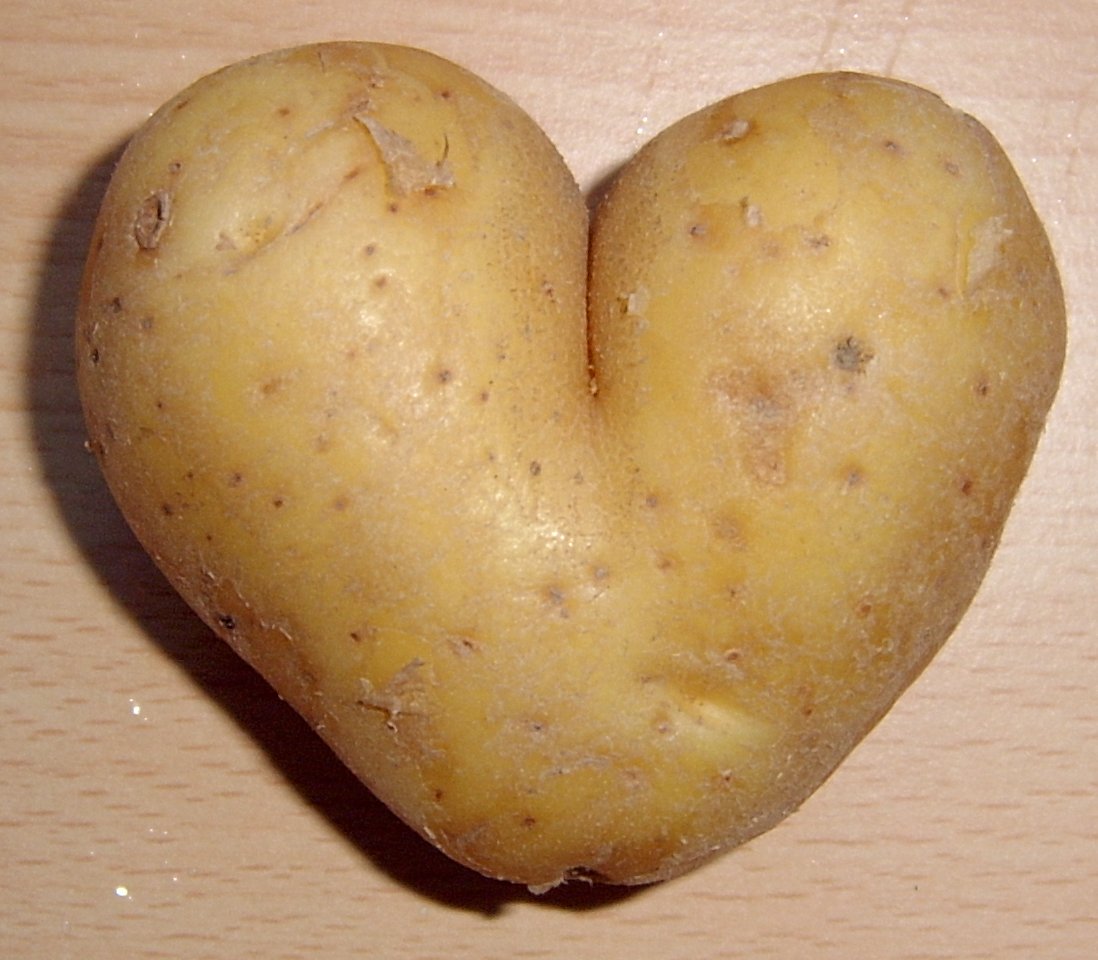
How far should we trust scientific prediction?

Scientific models can accurately predict behaviour of what we have measured. Popular science programmes imply that we can assume that what we haven’t measured is equally predictable.  Are they correct?

We can record data from all sorts of events.  A man walks to work, we can record how far he has got at which time, and we can plot a graph of it.  We can then derive an equation to fit a curve through the data points that we have recorded. Programs like excel do this automatically.  Some equations will fit the data very badly; others will match each point of data exactly.  So we now have some equations that match the data, but those equations do not predict what happened before and after we recorded our data.  They do not predict how the man got up and walked around his house before leaving for work, or how he sat on his chair for three hours before walking to get a coffee.  In this case it is easy to see that the equations are only valid as a model for the data that has been recorded.  We would be completely wrong to use them to predict all the walking that the man does in his life.

We have all seen a graphical representation of a sound.  Whenever any sound or noise is recorded it can be represented by a graph.  Once we have the raw data, it is possible to define equations that describe the shape of the data.  This is known as Fourier Analysis.  So, we have our raw data, and we have our equations, and we can find that the equations almost perfectly match the behaviour of the raw data.  In our Fourier analysis, we can take a short stretch of  completely random signal, and we can analyse it and model it with equations that match it almost perfectly.  But if we try to use those equations to predict the precise signal in the section of the noise before or after what we have analysed we will get completely the wrong answer.  The sort of shape will look similar, but the detail will be completely different.

Both of these are examples of what science does.  It records data and then it determines equations that match the data that has been recorded.  We use these equations to immense practical purpose and most of the time they hold true.  When measurement doesn’t match the equations then we tend to dismiss the measurement as faulty.  Nobody would believe me if I claim to have invented a perpetual motion machine!

However, we must recognise that we may simply be in a short stretch of ‘white noise’ and it would be bad science and bad logic to insist that our equations hold true outside of the domain in which they were developed and tested.  Commentaries about potential other universes,  events before Big Bang, or even events in the distant past of our own universe or planet fall into this category.  It is not an act of science, but an act of faith to assume that the behaviour of the material universe has always been and always will be the same, as that which we see today.

White-noise

Brian Cox’s “Wonders of life – what is life?” .. a review

Yesterday evening I watched the first in a new Brian Cox series on the wonders of life.  I was left with an uncomfortable feeling about the way the content was presented. In essence, the program shows very little science but a lot of metaphysical opinion. In essence it it propaganda.  As best as I can, I’ve transcribed phrases from the program in blue (thanks to iPlayer), to show what I mean.

“no matter how unscientific it sounds this, this idea that there is some kind of soul or spirit or animating force that makes us what we are that exists after our death is common.…. it ‘feels right’, it is hard to accept that you are … just something that emerges from an inanimate bag of stuff”.  This is filmed against the backdrop of smoky fires and gravestones where people are gathering to ‘connect with their dead relatives’. 

This section clearly communicates that spirituality is a magical force that is outside of science and is necessary to explain life – ‘spirit of the gaps’ – but that such an idea is wrong.  Although we might not like it we are just a bag of stuff (no explanation, but trust me, I’m a professor celebrity).

So this has set up the straw-man god that is not part of the natural world, but is outside of it, tinkering occasionally to start life through magical means.  No mention of a God who created and sustains the laws of physics themselves.

Feelings, and indeed we are ‘just something that emerges’ i.e. they have no meaning or purpose.  This is a metaphysical view that is essential if the idea of a purposeful God who set the universe in motion is abhorrent – yet the filming and presentation are designed to manipulate those same feelings.  This is not science, it is carefully crafted propaganda.

“if we are to say that science can explain everything about us then it is incumbent on science to answer the question what is it that animates living things what is it the difference between a piece of rock carved into a gravestone and me? …. For millennia, some form of spirituality has been evoked to explain what it means to be alive and how life began.  It is only recently that science has begun to answer these deepest of questions”  ,

Although the words don’t strictly say it, the message is clearly that science can explain life; no other explanation is necessary.  Again, the alternative is some magical force outside nature. The false dichotomy presented again (science OR spirituality) allows no space for a god who is consistent with scientific discovery, where scientific discovery allows us to learn more about God.  So science is getting busy and is providing the answers, which are:

  • Energy transforms from one form to another, and that caused and explains life – that is the reason we are here.  All life continues to be powered by the same process of transforming energy from one form to another.
  • We all have DNA, which is the “blueprint for life” and continues the organisation of the chemical processes from generation to generation, and shows that we have common ancestry with every other living things

“life is … a collection of chemical processes that harness flow of energy to create local islands of order…. Far from being some chance event ignited by some mystical spark the emergence of life on earth might have been the inevitable consequence of the laws of physics …. A living cosmos might be the only way our cosmos can be”

Mystical spark or science – the false dichotomy perpetuated.

The program focuses on a god of mysticism and magic, and appears not to know of the Christian God.

The God of Christianity is believed to be the creator of the universe, the cause of the Big Bang, the author of the laws of physics, the inventor and sustainer of a cosmos that has the inevitable consequence of producing life.  A God who cannot be seen – yet can be seen everywhere.  A God whose power has gifted us with the ability to feel and understand, and who gives meaning to each of us.  A God who is love; the love we feel is part of God rather than ‘just some emerging thing’.

It is frustrating when scientific programmes such as these don’t present a balanced view of the metaphysics.

Other posts which might be of interest:

https://philhemsley.wordpress.com/2013/04/07/god-miracles-and-the-laws-of-physics/

https://philhemsley.wordpress.com/2012/12/29/the-god-of-science/

https://philhemsley.wordpress.com/2013/04/14/proof-of-god/

https://philhemsley.wordpress.com/2012/06/21/an-argument-for-and-definition-of-god/


The God of Science

Neuroscientist Michael Graziano has speculated on the connection between the material and the spirit world.  His book “God Soul Mind Brain” has the stated aim to describe ‘the mechanistic understanding of the spirit world’.  With is background he makes the assumption that ‘mechanism’ is the reality and perception is the illusion.

“we do not perceive the world as it is, the brain constructs a simulated world”

“colour is not actually out there…. The same set of wavelengths may look green to you in a different context or grey or blue”

“We experience the model rather than the reality”

The statements are fascinating reminders of what the brain does: it constructs a simulated world, it provides the stimulus to allow the experience of colours, it somehow appears to create a model in our brains.

However, it is a false assumption that the mechanism is the reality and the perception is the illusion.   Accepting the assumption is like saying that the material pages of a book and the printed ink are the reality, and the story that the book tells or the information that it contains is not the reality.  Whist nobody would disagree that the book is the material and the story is not, which of them is the reality?

In a book, we read the words rather than perceiving the paper and letters and we construct in our imagination a picture and an experience based on the words and story within the book.  In the only scale of importance that matters to a human being, the book is the words, not the paper and ink.  War and Peace is a famous story, the paper that it was written on was just the framework for holding it. The story is eternal although the paper decays. To a human being, the story is the reality.

Consider a work of art; the material is not the masterpiece, it is merely a framework which holds the masterpiece.  The canvas and paint is meaningless, the picture is the meaning.

If we can free ourselves of the dogma of materialism then we can perhaps begin to consider that in the universe created from nothing, where particles are only potentialities until they are observed the reality is the experience, the qualia, the ‘I’, and that the material is just the skeleton for holding the reality.

The material universe is meaningless until it is perceived, the perception of it gives it meaning.

The butterfly nebula is beautiful when it is observed; without observation it is meaningless.

Two bags of chemicals are meaningless, but the intimate relationship between two people who are in love has immense meaning and purpose.

Is this so strange?  When we look at the quantum level of the material, there is no such thing as paper or ink.  There are particles and forces that we cannot understand.  They are outside of our ability to perceive, so we think of them as miniature versions of ping pong balls and sticks.  They are only potentialities until they are observed.  What we consider material reality is not really real, it performs its function only when it is perceived and observed.  So perhaps what we perceive as real day to day, the material world, is similarly non-material. Perhaps the only reality is our perception, our model.

So what of God in this?  Jesus spoke of God living in us and us in him.  Perhaps our material framework that holds us is part of God.  As Anselm wrote, everything is what it is through extreme goodness, through God, so we are what we are through and within God.  We are told that God is love, and that we are made in his image.  Jesus said that ‘if you have seen me, you have seen the father’; I don’t think he was talking about his flesh, but his ‘being’ – his ‘spirit’.  Our framework (our body and brain) is a small part of a material universe that is created and sustained by God.  If that universe is within God, part of God, then we too are ‘in him’, as he is ‘in us’.

And what of laws of physics, of evolution and biology?  We can create mathematical models of inanimate physical objects, and we can observe the behaviour of molecules and cells which seems to be beyond the possibility of simply responding to those physical laws – yet seems to be consistent, predictable, and purposeful. Within the framework where the universe is within and part of God there may be causes other than the laws of physics for the astonishing growth and development of the human being from the single cell; a God whose will ‘knits us together in our mother’s womb’. In the same way that our ‘will’ causes our hands to move, makes our choices, interacts with others, so God’s will can cause our bodies to grow and develop, to form our brain, to manufacture us as the masterpiece we are, our body being the receptacle for our spirit.

It is the non-material that motivates us, the non-material that leads to change, the non-material that makes our world like it is rather than a desolate moonscape.  The non-material is master over matter.  The non-material is the meaning, the meaning is the reality.

Who would disagree that there is a ‘spirit of Christmas’, all of society embracing a season of joy and giving.  People speak of the true spirit of Christmas; we know that there is something that transcends each of us as individuals.  It is part of the sprit that is God.

When we observe a beautiful woodland track, sunlight shining through the leaves to create a dappled light settling on a trickling stream, that beauty is part of the essence that is God.

When we listen to a sublime piece of music that moves us to tears, or an energising rock ballad that lifts our hearts with passion, that is part of God.

When we love someone, our love is part of the supreme love that is God.

When we meet friends in a party, in a community, that spirit of community is part of God’s spirit of community.

If we can appreciate that the greater reality is the spirit, and the material is just the framework then we can see God and the universe in a whole new light.  The universe can be considered the canvas for a cosmic work of art, a magnificent symphony of action and awe.  Life is a molecular dance of astonishing intricacy and beauty.  We are permitted to explore and understand through science.  We are permitted to glimpse the canvas and participate in the dance; characters created by the dance emerging as individual caring, loving, interacting beings partaking of some of the glory that is the story; individual masterpieces beyond the beautiful, whose reality is our character, our choices, our nature, our soul.  Creatures of purpose and with purpose.  Creatures honoured with the possibility of relating to our creator, the master artist, engineer, scientist, musician, teacher, parent, friend, but never are we his equal.

So this is the God of Science:  A God who was there before the universe began.  An un-created, creator God who gave ‘nothing’ the ability to become ‘something’.  A God who sustains, and maybe actually is, the very fabric of the universe. A God who actually is the laws of physics, who benevolently guides providence to bring life out of a set of chemicals.   A God who imbues the chemical dance that is us with the ability to feel, to taste, to see, to experience: love, joy, peace, fulfilment, intellectual challenge, selflessness, forgiveness, anger, hate, disgust, bitterness.  Perhaps even a God who is love, joy, peace, fulfilment…. But a God who allows us to experience both the good and the bad, and who allows us to choose to pursue that which is good, or that which is not.

Add to this the God revealed to us by Jesus Christ and we begin to understand the complete context.
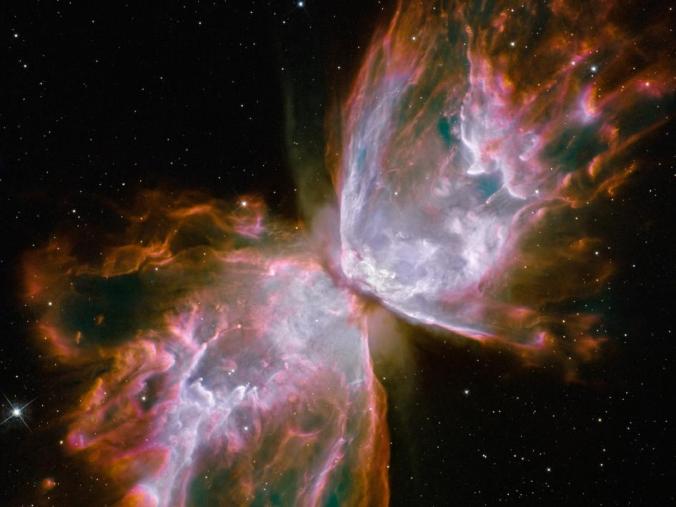
butterfly nebula

What IS reality?

Our worldview is our way of dealing with reality.  In exploring the truth we would like our evidence to be real. So it’s worth thinking about what “reality” actually means.

I consider myself to be ‘real’.  I cannot be a figment of my imagination, because otherwise there would be no ‘me’ to imagine myself.  Perhaps everything else is a figment of my imagination, perhaps even my body is a figment of my imagination, but I know (at least that part of me that is able to know) that I am real.  Descartes captured this in his famous quotation that has been translated as “I think therefore I am”.

Alone, I am one person.  If you were with me there would be two people.  As more and more join us we would increase to 3, 4, 5, and so on.  So what are 1, 2, 3, 4, and 5?  They are a concept that represents something about something real. The number itself is not real.  So, there may be 1, 2, 3, 4, or 5 men in a room, but there is never just ‘1’. Thinking further, we can have 1 man or even 0 men.  But we can’t have “minus 1” men, or “minus 1000” men, yet mathematically that is perfectly possible.  So are numbers, and hence the whole of mathematics ‘real’?

On a five pound note it says “I promise to pay the bearer the sum of five pounds”.  So money represents a promise.  In our bank account it’s perhaps quite reasonable to have £-1000 as our balance.  We owe 1000 promises to someone else.  Is a promise ‘real’?  Is money ‘real’?

We use both the concept of numbers and the concept of money daily, and they are invaluable for helping society work.  I want some potatoes for my dinner, so I use the concept of numbers to decide how many will fill my stomach, and I use the concept of money (promises) to give in exchange for your potatoes.  And at some time in the future you will probably ‘call in’ that promise and ask someone else for a pair of trousers.  Now you, I, the potatoes and the pair of trousers are what we would normally consider ‘real’, but are the numbers and the promises?

In the simple example above, we use mathematics (numbers) to represent a quantity of something real.  When we do engineering or science, we think we are doing the same.  We define not only ‘a potato’, but we define ‘properties’ of the potato; its mass, its volume, its temperature and so on.  Then we use mathematics to quantify the amount of those properties; a 6 ounce potato for instance.  So are the properties of the potato real? We know that a big potato travelling at a high speed will hurt more than a small potato travelling at low speed, so perhaps it is reasonable to think of the properties by themselves as ‘real’?

Once we have defined these properties and given them ‘units’ to allow us to quantify them (ounces in our example above) then we start to do experiments to see how the properties relate to each other. We might see how a given force acting on a potato of a given size causes its velocity to increase. Then we might carry out the same experiment on a bigger and smaller potato to see how the properties of force, mass, and velocity relate to each other.  And we define further properties that help us do our sums more effectively (like ‘momentum’ … the mass multiplied by the velocity).  Are those combined properties ‘real’, or simply concepts?

We can then capture these relationships in mathematical formulae, and we can do mathematical sums on them to predict what will happen in experiments that we have yet to carry out.  We might have done all our experiments on a five ounce potato.  We take our deduced formulae to work out what might happen with a ten ounce potato, and then we carry out the same experiments on a ten ounce potato to see if our predictions are right. And we find that the experiment will not quite tie up with our prediction, and so we think a bit more about the formula and whether we have left anything out of our experiment, and we come up with more complex and advanced formulae to predict what the ‘real’ potato will do in all circumstances.  That is what we call science.

So are those complex formulae ‘real’?  Is the inaccurate formula ‘not real’ but the more accurate formula ‘real’?  If all the formulae are wrong, are none of them ‘real’?  How can something wrong be real?  If all of this is what science is, can science be real?

According to Richard Feynman (US educator & physicist (1918 – 1988)), a philosopher once said that ‘It is necessary for the very existence of science that the same conditions always produce the same results’.  It is ingrained in us that each time we carry out the same experiment on the potato we get the same result, but what if we don’t? What if the potato just doesn’t behave in the same way? In that case can we claim mathematics or science to be true, or real?  It may seem silly to suggest that the potato will not always behave in the same way, but that’s just conditioning on our part; our faith in this happening is so deep we are not aware of it.

We can perhaps believe that carrying out the same experiment on the same human being will not always give the same result; so what does that tell us?  Are scientific statements on the behaviour of human beings are just informed guesses perhaps?

But let’s get back to mathematics and our friendly potato again. Imagine a light shining on a potato, which is now bouncing up and down on a spring (a bungee potato?).  The shadow of the potato moves up and down on the wall with a changing speed but in a repeating pattern.  Do the same thing with a potato on the spoke of a wheel that is rotating around a spindle and we find that the movement of the shadows of both are the same.  We can use the same mathematical formula to describe how the shadow of each moves, but the ‘real’ objects are moving differently.

Many different forms of equations and mathematical models can be used to describe the motion.  In one form, a concept of an ‘imaginary’ number is used, ‘i’ = the square root of minus 1.   The name suggests that the number ‘i’ is not real, yet in one of our formulae it can be used to represent something that is ‘real’.

So what is real?

Does it matter?

What is my point?

The simple question of ‘what is real’ is not such a simple question after all.  In our day-to-day lives we rely on our ‘common sense’ and freely decide some things are real and others not real (“I don’t think ghosts are real” for instance).  Yet if we scratch below the surface, much of what we accept as real may not be so, and vice versa.

Atheists say that God is not real.  But what does God being ‘real’ might actually mean?   Perhaps the question is not quite as simple as we might think.

Scientific and mathematical equations may or may not be real in the sense of what our common sense tells us, but they are sufficiently real to have a massive effect on our lives.  God may not be the same sort of ‘real’ that we would apply to a potato; although some claim that he has a massive effect on our lives.   But we mustn’t therefore jump to the conclusion that therefore God must be the same sort of ‘real’ as a mathematical equation; there can perhaps be many forms of ‘real’.

Awesome life!

As we age, we find that we can’t do all the things we used to.  I can’t hear as well as I could, and my eyes have reached the stage of needing vari-focal lenses. On the plus side though, we learn a lot too, and one thing we learn is that we don’t know as much as we thought we might when we were younger.  We learn to look more deeply at questions, perhaps because unlike a child who keeps asking ‘why’ we have learnt not to take answers on complete trust.

But when bits of our body stop working we begin to remember how amazing it is when they do, and to wonder if we really do understand all that’s going on in the universe.

Our bodies have incredible and almost unbelievable systems and components.  If someone were to describe how our bodies operate, I doubt that we would believe them but for the fact that we have seen them and we live in them …. and take them for granted!  There was a time when there was no life, and now there is ‘us’.  So my mind wandered:

  • Was there a time when our ancestors didn’t have all of the components and systems that we now have as humans?
  • Was there a time when they had all but one?
  • Was there a time when they had all but two?
  • Was there a time when our ancestors didn’t have blood?
  • When they didn’t have an immune system?
  • When they didn’t have nerve cells?
  • When they didn’t have joints in the skeleton?
  • When they didn’t have a heart?
  • When they didn’t have a blood clotting mechanism?
  • When they didn’t have a bone restructuring system?
  • When they didn’t have lungs?
  • When they didn’t have the little hairs in the lungs that clear out the mucus?
  • When they didn’t have mucus?

I don’t doubt that the answer is ‘yes’, but that further magnifies the amazing fact of our existence.

Not only do our present bodies have to grow in just the right sequence from the very first cell, but the process of developing to our present state must also have occurred in a sensibly ordered sequence. There would be no point in having a blood clotting mechanism without blood but an animal which has blood but no clotting mechanism would be rather fragile. Both mechanisms and components must have developed in parallel.  But the blood itself would be of little benefit without veins and arteries, and the veins and arteries would be of little benefit without the heart, and the heart would be of little benefit if it didn’t respond to the ‘operational needs’ of the body.

So we have a body that constructs itself in a way that at each stage of development it is fully operational (albeit in the controlled environment of the womb), and we have a generation to generation development process that ensures that each entity at each stage of its own development is operational in its own right.

I don’t doubt that this happens, and has happened over millennia.  I don’t have a problem with the principles that Darwin proposed.  But I do wonder if all this can happen just as a result of the properties of matter and the laws of physics.

Of course “the truth is out there” … but whether we can ever find out is another question….

Can God answer prayer in a universe that operates according to the laws of physics?

We believe that the universe operates according to the laws and equations of physics.  And then we ask, “if the behaviour of the universe is predictable according to the laws of physics, then is there any way in which God can ‘do’ anything; how can God answer prayer?”

Perhaps in the same way that we ‘do’ things?  As I type this, I am influencing the material world with my mind, with my will.  Although we all speculate based on different quantities of data, nobody knows how we do it.  We can trace pathways through the brain, down nerves and so on, but we still don’t know how ‘we’ operate with free will or exercise that free will.

Some claim that we don’t, that free will is a delusion.  But they don’t really believe it – we all behave as if we have a degree of free will.  Clearly we don’t decide everything our bodies do, but we still do decide some things.  We exercise our free will daily.  How could it be otherwise?  If free will were a delusion, then if we were truly able to believe that it were an illusion we would realise that there is no point to anything at all and we would give up all our searchings, all our science, all our religion  Yet we would not be able to give it up, because we would not have the free will to be able to!  And if someone claims that free will is a delusion, how have they come to that conclusion?  If they are correct then clearly they cannot have come to the conclusion themselves, but only had the delusion of coming to that conclusion …. So the claim that freewill is a delusion is contrary to all evidence, and by as outlined above completely un-provable.  It is outside of science and outside of reason.  Therefore if pursuit of the truth is to have any meaning then we must conclude that we have free will.

So in the same way that we, with our free will  can operate in the material world, controlled by the laws of physics, God too can operate.  There is thus no scientific reason to suppose that God cannot answer prayer. (If he exists of course!)