Supreme power and love indwelling all of space and time, or cheerless physics?

We live in an age of information. I know there is fake news, but there is a vast wealth of knowledge. You can find almost anything you need to know on-line.  Yet just a few decades ago nobody could even conceive of the internet.

It didn’t happen spontaneously. We got here through the hard work and inspiration of highly intelligent designers and visionaries.

Imagine now a vast cloud of molecules in space, the debris perhaps of an exploded star.  Just a collection of atoms and molecules: hydrogen, iron, oxygen, beryllium, carbon, nitrogen, silicone … a little bit of everything perhaps.  But a vast, lifeless, formless cloud drifting in space.

Imagine that there are no influences acting on the cloud of molecules apart from the forces of physics; gravity, weak and strong nuclear interaction, and electromagnetic forces.

We can imagine that those inanimate forces are sufficient to cause the molecule cloud to collapse into a star and some planets.  Over billions of years, gravity slowly pulls the gases together to form a solar system.

But can we imagine that those basic forces are sufficient to organise the lifeless cloud into a butterfly,  a magnolia tree or a human being?

Can we imagine that those basic forces are sufficient to organise the matter that they act on into the internet?  That the molecules organise themselves unaided into a smartphone, or the Mona Lisa, or a performance of Beethoven’s seventh symphony?

Take a molecule cloud, leave it completely alone for ten billion years, come back and you will find fitbits, contraceptive pills and life-forms intent on destroying themselves and each other.

Just through the laws of physics?

Intelligence creating itself, life with all its complexity spontaneously initiating and evolving.

Just through the laws of physics?

Love,  joy,  purpose existing without any material form that you can touch or measure.  Great stories and legends; “The Lord of the Rings” expressed in a myriad of forms…

All of these, with the only ingredients of a molecule cloud and the laws of physics.  Really?

Or is there something more? 

Something which indwells all of space and time, sustaining matter and the forces that act on it, imbuing form on the formless,  bestowing intelligence and ‘self’ on lifeforms, giving purpose to material and non-material reality.  Intelligence that gives intelligence.  Life that gives life? An eternal ‘something’, or ‘someone’ without cause but within everything?

If I put my pride aside, it seems to me that the universe, life, and love point to there being a supreme and eternal, creating, sustaining and loving God.

Not cheerless physics.

Image by David Mark from Pixabay

Before the universe began.

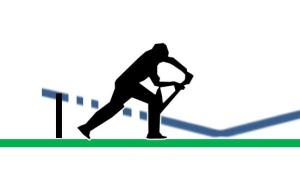
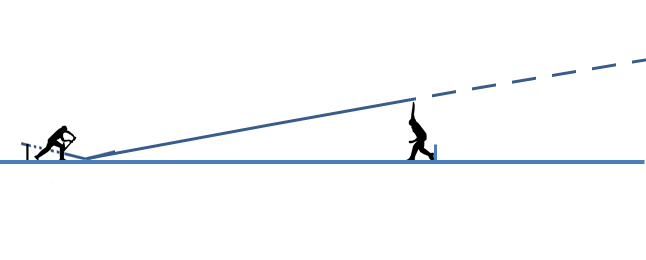
The bowler beats the bat and the ball hits the batsman’s pad.  There is a loud appeal and the umpire calls for ‘hawkeye’ to predict where the ball was going. Hawkeye is a system that tracks the flight of the ball and predicts, using the laws of physics, where the ball would have gone if the batsman’s pad had not got in the way.  The batsman’s innings depends on the prediction.Those same laws of physics and tracked trajectory of the ball can be run in reverse, to predict where the ball came from.  The prediction will be completely accurate back until the point when the ball left the bowler’s hand.  The prediction will extrapolate back a series of parabolas, to infinity.

It’s common sense.  Hawkeye makes valid predictions where the assumptions included in the model are correct.  But where the assumptions break down, the prediction will be wrong.  So it is with all science.  Where assumptions break down then science will be wrong.  We test our assumptions where we have data – back as far almost as the beginning of the universe, but we cannot test beyond there.  And so although science can make predictions of what was before the beginning of the universe, it would be wrong to believe them.  We have to accept that we don’t know, and can never know whether there was a ‘bowler’ or whether the ball came bouncing from infinity…

The headline of the following and similar articles are therefore completely misleading

Stephen Hawking Claims To Know What Happened Before The Big Bang

although the text is more accurate: “Hawking had previously said in one of his lectures that the events that occurred before the Big Bang have no consequences that can be observed, therefore they are not defined because there is no way to measure what happened…….  Even the amount of matter in the universe can be different to what it was before the Big Bang, as the Law of Conservation of Matter, will break down at the Big Bang.”  Hawking recognised that the laws of physics ‘change’ …. allowing the existence of the ‘bowler’.


Excerpt from The Big Picture: “Am I Open Minded?”

As we start out ask yourself the question, “Am I open minded, ready to follow where evidence leads, with no preconceptions?”

Now I’m sure you’ve answered “yes” because none of us would like to admit otherwise, but actually, it may be impossible to start any investigation without preconceptions.   They are the motivation behind many investigations … the desire to obtain proof of what we already think about something.

Preconceptions are almost inherent in the scientific approach – we think of a theory, and then we investigate to test it.  If we are honest, we will admit that we like our theories and feel good when they are proved right.

Perhaps there is one preconception that I will allow at this stage; that each one of us matters. I matter. You matter.  Our friends and neighbours all matter.  If we don’t matter then there is no point in anything and it’s best not to think any deeper.  That road leads to despair.

If we are going to explore these questions fully we are going to have to consider questions of God, science, reason, history and more.  We are going to have to include objective data and subjective experience; objectivity keeps us from being deluded but it is the subjective that really matters to us.

Even if we try to think about an issue with an open mind, we nevertheless carry many assumptions that we don’t realise.  Speaking personally, my scientific education and engineering career have both instilled a basic assumption of materialism: the fabric of the universe is all there is.  When people talk about a spiritual dimension, is it just another material dimension that we can’t see?  And if there is a spiritual dimension, how can it interact with the physical universe?  Or if there isn’t a separate spiritual dimension then where does God exist?  These are not straightforward questions, but I’ve come to realise that they are valid.   I have had to challenge a lot of what I took simply as common sense and to open my mind to new possibilities.

It can be difficult to refresh our way of thinking, particularly if we are surrounded by others who have a similar outlook to ourselves.  In a recent discussion on European history with a university student he mentioned that such and such country was fascist.  It led me to ask what it is that makes the people there fascist.  Is it genetically programmed into each individual there?  If you took any one of them and brought them up elsewhere would they be fascist?  I think it likely that they wouldn’t.  They are fascist because everyone around them is fascist.  They are unconsciously trained to be fascists.

So what are we doing in our country?  What are we training ourselves to think like?  What assumptions do we hold, and are they valid?  Books such as The Science Delusion by Rupert Sheldrake[i] challenge many of the assumptions of the day.  He asks us to challenge our scientific dogmas, our blind assumptions.  Even if we end up thinking the same as we did before, we have a more solid basis for our beliefs if we go through the process of challenging our assumptions.

Implications

Whenever anyone is presenting a case we might ask ourselves, “If I were to accept what is being presented and agree with the author, what would be the implications for me?  How willing would I be to accept those implications?  Do I need to understand the implications before I start?”

Many parents choose not to have their babies tested for Down’s syndrome because they would not be willing to accept a termination of the pregnancy and so feel that there is no point in knowing before the child is born.  Others might need to understand all the implications before deciding; how accurate is the test, and what are the options available if the child tests positive? Still others might insist that they must have the test because they are not prepared to risk having a child with Down’s syndrome and would terminate the pregnancy if that were shown to be likely by the test.

This is a book that deals with questions of God.  This may worry some people. If they were to be convinced that God is real they would have to become the sort of bigoted judgemental fanatic that represents the worst face of religion.  They may think that they would need to join a religion and accept all that they are told without thinking, and be associated with all the religious atrocities of the past. Or that they will have to give up their Sunday morning lie-in and trot off to church with a bunch of hypocrites. If these thoughts resonate with you, take courage – it doesn’t have to be like that.

Fear

People can be frightened by the prospect of change, but often change is beneficial.  For instance, when redundancies are announced, there is a lot of fear in the workforce.  Some may have been in the same job for thirty years, and they simply don’t know anything else – how will they cope if they have to find another job?  And yet being forced to change jobs can be a most liberating and life-changing experience.  I recall hearing a report that those who remain behind after a round of redundancies are likely to be more stressed than those who have been made redundant.  They are still in the same job, but with increased fear of losing it and still in fear of change, whereas those who have left are now busy rebuilding their new lives and careers.  That’s not to say it’s easy to change, but a change in a job or a worldview can be very liberating.

Peer Pressure

Perhaps we don’t want to change our views because of what others might think of us.  We’ve probably aired our opinions sufficiently to our friends that any major change would be an embarrassment.   Or perhaps we live or work in a culture where there is only one accepted way of thinking.  We might find that we have to live a double life, adopting one attitude at work and another in private.  For instance, to progress a career as a scientist it is necessary to publish papers and learned articles.  Such articles are subject to peer review.  This process is in place to ensure that sound scientific information is published and that mistakes do not get propagated.  But the process inherently risks that only those papers that conform to the present scientific way of thinking are published.  If a scientist becomes too free thinking, then the peer review process may prevent his papers being published and his career may come to a grinding halt.  Reputation is essential, and doing anything that might lose it is risky.

An ambitious scientist may be fearful of embracing religion.  Religion allows that God might interfere with the workings of the world.  That might mean that the universe is not completely predictable, which would seem to undermine the basis of all the work of science.  Allowing the existence of God might mean that it will be impossible to have a complete scientific theory that predicts everything – which is challenging to anyone who invests their life in seeking it.

Similarly, in religious circles it can be damaging not only to one’s career but also to one’s life to challenge the current way of thinking.  Men and women have been labelled heretics and have been burnt at the stake for holding different religious beliefs.

Religious people may have a deep fear of science.  Apart from the vocal assertions made by some atheists that science has done away with God, there can be fear that science might undermine or even disprove certain traditions or beliefs that the given religion may hold dear, or even sacred.  A religious man may have invested so much in his religion that he’s lost the desire, and maybe even the ability, to be open to learning that some of what he’s been taught is incorrect.  Yet surely a truly godly man would be desperate to be corrected if he were misunderstanding God?  In her book Awesome God, Sara Maitland encourages religious people to embrace what can be learned from science:

Start with “God exists” and everything we can learn will tell us more about God.[ii]

So returning to the question, “Am I open minded, ready to follow where evidence leads, with no preconceptions?” we can see that it is almost impossible not to have preconceptions or preconditions.  A first step in challenging them is to consider how we came to believe them in the first place. How did we come to really know what we know?

[i] Rupert Sheldrake: The Science Delusion ISBN 978-1444727944

[ii] Sara Maitland: Awesome God: Creation, Commitment and Joy ISBN: 978-0281054190
I think I might be a panentheist – I hope it’s catching!

The ancient Celts knew a thing or two. They were not the wild fighters who the Sheriff of Nottingham brought in to drive Kevin Costner’s Robin Hood from his idyllic woodland village. They had a special understanding of the nature of things. According to “The Celtic Way” by Ian Bradley they held “a conviction that the presence of God was to be found throughout creation – in the physical elements of earth, rock and water, in plants trees and animals and in the wayward forces of wind and storm.”

Bradley goes on to say that “We are not in the world of pantheism here but in the much more subtle and suggestive realm of panentheism – the sense that God is found both within creation and outside it.”

Elsewhere I have written that God is ‘the laws of physics’ – it’s just another name for the thing which causes matter to behave in the way that it does. Without God/’the laws of physics’ there can be no matter – God and matter are not independent, and so matter is (part of) God. (see “Proof of God?”)

I have also noted that there are non-material things: love, justice, purpose etc. These must similarly be part of God – reflected in the Biblical passages which state that God is love. (see “An argument for, and definition of God”)

This understanding of the nature of God leads us to realise that you don’t need to go somewhere to meet God – he doesn’t live in church or a monastery – he is all around us, and within us, sustaining our physical bodies and our environment: “we are what we are through and within God”. (see “The God of Science”)

The Celts understood this. Not within the scientific context that I have described, but in the practical day-to-day knowledge of God. Perhaps we need to refresh our view and understanding of science to reflect this Celtic wisdom: science is simply the study of God!
There is no separate sacred / secular division, no God / nature division, no heaven / earth division; they are all part of God who is God of everything.


Direct from the San Francisco Book Review

The Big Picture – An Honest Examination of God, Science and Purpose
By P D Hemsley
eLectio Publishing, $4.99, 266 pages, Format: eBook

A former atheist/agnostic who gave God a chance offers open-minded readers this work which is both ambitious in scope and credible in approach: //The Big Picture: An Honest Examination of God, Science, and Purpose//.  Polarizing subject matter such as God and science, evolution, and intelligent design are revisited with the goal of gently challenging entrenched thinking on both sides.

Hemsley, a Chartered Engineer, “has lived on both sides of the faith fence.” His book is comparable to a technical presentation designed for a general audience. It is highly organized with stated goals, evidence, and the author’s conclusions. Fluid, straightforward writing helps the reader progress through several chapters or conclusions dealing with faith, science, purpose and design, quantum physics, free will, reason, Jesus, and more. Even so, those with less of a scientific bent will need to exercise their concentration skills in the scientific sections.

The strength of this book lies in complexity and compatibility. The chapters “Science Describes an Incredible Universe” and “The Universe Exhibits Design and Purpose” make for fascinating reading, especially the subsection where “challenged by the complexity of the biological machinery” Hemsley explores how a modern-day designer would engineer a human being and how long it would take. Additionally, the author’s version of the Genesis creation account featuring the compatibility of scientific discoveries and God’s design is an interesting interpretation to consider.

No emotional appeals are made to the atheist, agnostic, hardcore creationist, or plain honest seeker for a change in his or her worldview. In the words of the author, a self-described Minimalist Christian: “Whether you agree with my conclusion or not, I hope that many of the myths that currently inhibit so many of us will have been weakened or dispelled. I hope that a step can be taken towards finding purpose and experiencing life in abundance.”

http://citybookreview.com/the-big-picture-an-honest-examination-of-god-science-and-purpose/

Click HERE to buy a copy.

Four steps of reason leading to a personal God

As I begin this post, I ask myself “Am I deciding what to write?”  You might think that a strange question with an obvious answer, but if I were to have a materialist view of things then I would struggle to answer with a ‘yes’.  At the heart of the problem is the question of whether I have free will or not.  Am I able to exert any choice on any decision (such as what to write) or is my action simply a result of the state of the molecules in my brain at the particular time when I think I am making a choice?

If there is nothing but matter, and matter behaves according to strict laws then there is no scope for me, or you, to make a free choice about anything.  Holders of the materialist view have argued that those who believe in free will need to demonstrate a mechanism before free will can be accepted to exist.

I do not subscribe to that view of things.  A bumblebee flies even if I am unable to demonstrate the mechanism.

Other disagreements with such a view are subjective.  Whilst I recognise that many of my actions might indeed be simply as a result of my brain state at a given time, I identify situations where I stop myself behaving according to ‘habit’ and consciously choose to behave differently.

From a practical viewpoint, our whole society is built on the basis that we have free will.  If I have no free will to be able to choose how to behave, then what right has society to imprison me for murder?  I would have had no choice but to kill my neighbour – it would have been an action that simply resulted from the chemical configuration in my brain at the time.

So for all practical and from all subjective points of view, I accept that we have free will.

That is step one; that we have free will.

The fact that I can call an opinion subjective inherently means that there is an “I” that is choosing to have an opinion.  Similarly, I speak about personal experience which requires there to be a person.  My personal subjective view is that there is indeed an “I” who is considering the facts and deciding what to write.  Descartes’ famous statement “I think therefore I am” argues that the only thing I know is that there is an “I” who thinks, and therefore “I” must exist – even if everything else is just my imagination.

So step two is that there is an “I” who exists.

The next thing to consider is how I exist (with the proviso that my physical being might be a delusion – but I still exist).   I exist because I have the ability to exist; something is causing me to exist.  I am not causing myself to exist, it is something apart from me that is ensuring that I exist.  Some might call that something ‘the laws of physics’, but I shall choose here to call that something God.

That is step three.  There is something that sustains me (and everything else) that can be called God.

The final step is to ask whether it is reasonable to imagine that this something (God) could sustain an “I”, who has free-will (which must operate outside the laws of physics) without itself having an “I-ness” to it.  Can the physical properties of a human being, which are sustained by God, ‘create’ an “I-ness” that God does not have itself?  Can “I-ness” be dependent on the sustaining power of God and yet above and separate from God?  And if not, then the power that sustains us must also have an “I-ness” about it.

Step four: the power that sustains us has itself the characteristics of “I-ness”: it is a person God.

A Masterpiece of Engineering

We think that we design pretty neat things these days.  We laugh at the man who said that the world would probably only need four or five computers.  Those of us who are old enough can remember when we did a sum on the newly invented pocket calculator that gave us the answer 0.7734, which said “hello” when we turned the calculator upside down.

But whilst researching my latest book I came across some pretty amazing statistics about a design that we all treat as commonplace – each and every human being.

Our 1.5kg brain comprises around 100 billion neurons, of 10,000 different types. Each neuron can have thousands of synapses (input connections from other neurons) and each synapse has perhaps a thousand molecular scale switches.  A single human brain is estimated to contain more switches than the entire internet.

Contained within our skin are around 650 muscles attached to over 200 bones, which vary in size from the femur in our thigh to the stirrup bone in the ear.  The muscle/bone combination is precise enough to paint a masterpiece, or to putt a golf ball twenty feet into a hole.

We have around 60,000 miles of veins and arteries and 1500 miles of pipes in our lungs.

Within our lymph nodes we have billions of B cells, each of which is different and each one defends against a particular very specific infection.

The list goes on – but you get the point.

Yet this whole complex organism is built from a single cell.

We begin as one single cell.  Within the cell is our DNA, the supposed blueprint for our manufacture.  We have a massive 3 billion base pairs (characters in the ‘code’) in our DNA. Yet there are around 50,000 billion different cells in the body.  Each cell is different, in function and in position – some nerve cells can be several feet long.  How can we imagine that there is enough information contained within our DNA to define our fully functioning body?

But we do start from just one cell.  And each cell only responds to the signals that cross the cell membrane.   As we develop, the cell is what it is as a result of its history – its ancestor cells.  And each of those cells only responded to the signals that crossed it’s membrane.  It’s like a massive pyramid, built the wrong way up – with the apex at the bottom.  The process is incredibly robust.  Look at identical twins.  Most of their development is as separate human beings and yet the final ‘product’ is identical.

A human being is truly a masterpiece of engineering.

Is it reasonable to state with certainty that this happened by chance?  Is it reasonable to assert that the properties of the sub-atomic particles in the universe are such that they behave in precisely the right way to manufacture you or I from a single cell by sheer luck? Or would that be a blind leap of faith?


See also:

https://philhemsley.wordpress.com/2013/03/03/information-dna-and-evolution/

https://philhemsley.wordpress.com/2012/09/17/the-dna-enigma/


Fear of science

There are millions of people spending their working life pushing forward scientific knowledge.  The breadth of knowledge discovered by the hands of so many scientists is beyond anyone’s comprehension.  Pronouncements by the scientific community have become almost the word of God.  Nobody has the evidence to question them. And yet…. sometimes they just don’t seem right.  They make us uneasy.  We fear that scientists have overstepped their knowledge, and often rightly so. We must not be afraid to voice our concerns, see for example https://philhemsley.wordpress.com/2013/11/22/mitochondrial-donation-some-concerns/

With so much knowledge out there, and so many people working on science, many in society have come to believe that science will eventually be able to answer every question.  “Eventually we will know everything about how the universe works. Science will allow us to live forever.  Technology will reverse global warming.  We will finally leave earth and colonise the solar system and universe.  Maybe we will even learn to travel through time itself, and finally we will be able to meet the maker of it all and ask why he made such a mess of things….”

Of course, many of these ideas come from science fiction, but literature influences our culture and outlook.  All of the ideas above seem reasonable extrapolations of where we have got to, and are often reinforced by the fantasizing of high profile scientists. http://www.dailymail.co.uk/sciencetech/article-1270531/Stephen-Hawking-backs-possibility-time-travel-millions-years-future.html

There is another group of people who have a different outlook. They believe that the literal explanation for everything that has happened, and prediction of everything that is going to happen in the future is written in a collection of books and manuscripts compiled from 2000-4000 years ago, called the Bible.  The first of these books describes how the world was created and populated with all the plants and animals as completely formed organisms. The whole process took just six days.  This literal interpretation of the book of Genesis will inevitably lead to a fear of science; “Will those millions of people prove my belief’s wrong?  Have I built my life on a lie?”

How can we overcome our fear of science?  How can we tame and control this beast, and stop it turning round and destroying us?

The only way to overcome our fears is to face them.  We need the courage to try to understand what science is and what it isn’t, what it can tell us and what it can’t.  We need to understand the assumptions behind all science.  We must not get lost in the detail, but we need to set the whole in context.  We need a guide.

Many of my posts on this blog are intended to help us think about scientific issues:

https://philhemsley.wordpress.com/2013/03/11/how-far-should-we-trust-scientific-prediction/

https://philhemsley.wordpress.com/2013/03/03/information-dna-and-evolution/

https://philhemsley.wordpress.com/2013/04/07/god-miracles-and-the-laws-of-physics/

and my book “The Big Picture” can equip the reader to begin to understand how to deal with science.  Reviewers seem to think it works:

https://www.goodreads.com/review/show/766354330

https://www.goodreads.com/review/show/767596412

There are other resources that help understand how we might deal with science, and I refer to many in the book.  But I hope that my years of spare time researching of these big questions will be of benefit to others, if only as a starting point for further discovery.

As I mentioned above,  if we are afraid of science, the best thing to do is to confront our fears.  And it’s best to confront them with a friendly guide.


The Big Picture – an honest examination of God, Science and Purpose

If you have wondered if science, faith and reason are compatible then this is a book for you.

The book explores how everything (including science) is based on faith of some sort.  It explains in understandable terms what science tells us (quantum physics, evolution, DNA, neuroscience etc), and what it can’t tell us, and presents some of the documentary and rational evidence for and basis of Christianity – useful if you want to base your outlook on information instead of propaganda.

The style is a combination of balanced data presentation and respectful discussion; you will not be brow-beaten into having to agree with the author!

Click on the book cover (right) to order your copy.

Proof of God?

A friend asked “Let us suppose it was absolutely certain there was no god but many people honestly believed there was – how different would the world look today?”

I could answer that if there was no God there would be no universe and no people to observe it.

Clearly, as we are both intelligent people we must be talking about something different when we say the word ‘god’.

The God that I conclude exists is a creator, and a God who sustains the universe.  Clearly the universe exists and continues to exist.  Ask a physicist why and he will probably say ‘because of the laws of physics’.  A rose is a rose by any other name, so at minimum my God is the laws of physics – we just choose to give it different names.

Perhaps my friend’s question is going beyond that definition of God.  Perhaps he is asking about a God who has ‘character’, a ‘me’-ness that I have.  (I know that I exist, there is an essence that is ‘me’).  What would things be like if there was not a God who had an essence of ‘me’?

It’s actually not easy to define what ‘I’ am.  Science of course shows that my brain has massively complex computational ability, but that doesn’t really help.  Literature and philosophy, and our daily experience tells me that there are things like love, joy, peace, thoughts, free will.  Let’s consider these as parts of ‘me’, and think – what if there were not a god who also had these characteristics.

But once again, the same sort of argument applies.  God is love, joy, peace.  Therefore without God there would be no love, joy or peace.  There would be no literature, there would be no mathematics, no equations, there would be not science.

Free will though is slightly different.  We know we have free will, and yet it is inexplicable by science.  It is inconsistent with the laws of physics.  Free will seems a bit of a paradox.  If God is the laws of physics, and free will is inconsistent with the laws of physics then how can that work?  A rational explanation is that free will is something that is a gift of God, that is not constrained by the laws of physics.  Therefore we begin to see what would be different in my friends question.  Without God we would have no free will, we would not be able to choose right from wrong, we would simply be robots who respond to stimuli.

But to explore the question further.  My last paragraph introduced right and wrong.  We know that there is right and wrong – even if we don’t always know what is right and what is wrong.  Right and wrong are different from free will, so let’s suppose that we were able to have free will but had no knowledge of right and wrong.  Clearly right and wrong exist.  Goodness and evil exist.  And yes, my definition of God includes ultimate goodness.  So without God we would have no constraint on what we do, we would simply live to serve ourselves.  The world would be governed simply by whoever was strongest.  We would be like most of the rest of the animal kingdom.  States like North Korea would be everywhere and left unchecked.  Anarchy would reign.  The world would be a very different place to live.

So have I proved God exists?  I think so (but I would) – simply because my definition of God includes everything that we know exists.  I define that it is not possible for anything to exist without God, and so anything which exists must be God.

My friend asked what if God didn’t exist but people believed that he did.  I hope that I have shown that such a question is not directly answerable, it is like the “can god make a thing so heavy that he cannot lift it” question, or “can God make something that doesn’t exist”.  But perhaps I’ve also been able to answer the questions behind the question.  Will it satisfy my friend?  I doubt it.  If any of us really doesn’t want to change our views then no amount of logical reasoning will make a difference.  But perhaps others will find the discussion interesting….

If you found this post interesting you might also like:

https://philhemsley.wordpress.com/2013/05/03/goodness-me/

https://philhemsley.wordpress.com/2012/12/29/the-god-of-science/

https://philhemsley.wordpress.com/2012/06/19/can-god-answer-prayer-in-a-universe-that-operates-according-to-the-laws-of-physics/