Christianity, rules and regulations

Christianity is about freedom, yet we keep tying ourselves up with rules and rituals, and then feeling guilty when we break them.

It seems to be in our nature to want rules.  We want to be told what we can do and what we can’t do.  We don’t want to have to think.  Take driving for example.  We know that we shouldn’t go at high speed in built up areas, so why do we need to be told that we mustn’t go above 30 miles per hour?  What’s special about 30, why not 29, or 33?

Setting a rule is a way of avoiding guilt.  We prefer to pretend that we are not guilty rather than that accept we are guilty and ask for forgiveness.  If I go at 29 miles per hour and knock someone over, then you can’t accuse me of going too fast – I was within the speed limit.  I can say “it wasn’t my fault – it was the person who set the speed limit.”

This is living the Old Testament way: “Thou shalt not exceed 30 miles per hour in a built up zone”.

If we were to ask Jesus then he would say “don’t go so fast that you knock someone over”.  It’s a much tougher requirement, and means that there is no way we can escape our personal responsibility.  If we knock someone over it’s our fault and that’s that.  All we can do is to ask for forgiveness, to which he would reply “Are you really sorry? Are you going to change your driving habits so that you don’t do it again? Yes? Then I forgive you.”

Tougher, isn’t it?  I have to take full responsibility, and I have to be humble enough to admit that I was wrong and to ask for forgiveness.

Christians, as anyone else would, find it difficult trying to live a life which is totally without laws, but where the standard is perfection. There is no speed limit, but you are responsible if your driving harms someone. So we make up our own laws.  Some are moral, some are conventions or traditions.  Although Christianity is about freedom, we have tied ourselves up in chains again.

Everybody does it without realising it.  Have you ever been to a conference or meeting that runs over a couple of days.  On day one, we look round the room, and then choose a seat.  Next day, that’s our seat – we go straight there.  It’s easiest, it worked yesterday, but we’ve just made up a little law: “that’s where I sit”.  It’s OK to make up rules, so long as we don’t let the rule become more important than the issue it’s solving.  We need to keep remembering the reason behind the law.  Going 30 miles an hour in itself is not important; avoiding running someone over is the issue.  Christians need to be wary of our natural love of rules and laws; Jesus looks at the heart; do we want to do what is right or do we want just to keep the law?

…………………………………………………………

If you enjoyed this and like to read reasoned thinking, buy my book The Big Picture
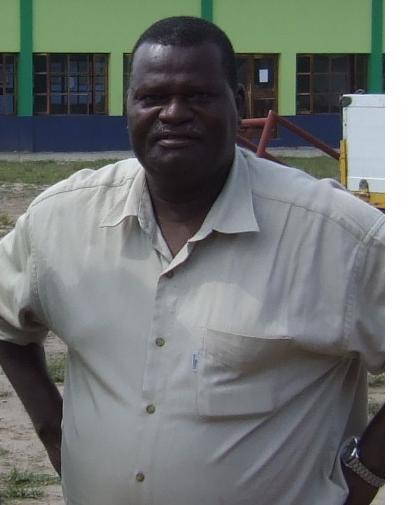
A tribute to Pastor Antonia Bonga, who passed away on Friday night.

A man who I counted as a friend died on Friday night.

I first met Pastor Bonga in 2004 when I visited Mozambique for the first time.  He was running a center for street children called Casa Reom.  That visit was a turning point in my life, showing me many things: that we don’t need monetary richness to be rich, that it is better to do what is right today even if it risks an uncertain future, that most people live in far more difficult circumstances than we do in the West but can still be happy, and that God is close to the poor.

A few years ago he visited England, and sent us a short resume of his life:

 “I was born on 3rd February 1950 at Bawaze-Lampene, Marromeu, the son of Tomo Bonga and Carita. I was educated at Jaravura. My parents were very poor and they were only able to pay for my education up to grade 3.

When I was 18 I came to Beira where I worked during the day and went to a night school. The same year (1968) I was converted in the Apostolic Faith Mission, and was baptized in 1969. I got married and later on was ordained to be a deacon. I had a spiritual experience.

I have had 12 children, 8 of them have died so only 4 remain.

I went to Zimbabwe to Bible school, and when I came back to Mozambique was ordained to be a church pastor. I have planted 5 new churches.

In 1986, I did another bible course in Zimbabwe when I returned home things were worse. A civil war was causing difficulties among Mozambicans. In 1988 things had got so bad that even some of the church leaders were fighting over power.

In 1989, I met 5 missionaries with whom I shared my vision of ministering and planting new churches. The civil war was still going on and the government were harassing me. The government became my number one enemy. It was not easy to preach the word of God at this time. Eventually, God gave a solution to my difficulties. Later on, I founded my present church called “International Body of Christ church”. This started with meetings under a tree. Many people were laughing at the church and at me. Now the churches are all over Mozambique.

When I joined Youth With A Mission (YWAM), I did Discipleship Training (1993) and a Leadership Training programme (1997) in Zimbabwe.

In 2000 God touched my life and told me to care for the orphans and those living in difficult situations on the street. The same year I began leading the YWAM base in Beira.”

I visited Pastor Bonga and the Casa Reom project several times, and I wrote about one visit in my book ‘The Leap’:

When I came back from my last trip to Mozambique, my friend Pastor Bonga had just taken on the running of a second orphanage, with about forty children from ages 1 to 10.  He was asked to take it on, but was not given any money to pay for the running costs.  He couldn’t refuse when he’d been asked.  He couldn’t allow the children to be turned out onto the streets again.  What would happen to the one year old babies? He chose to do what was right, without considering the consequences; he left them up to God.

Pastor Bonga was not perfect, none of us are, but he pursued what his heart told him.  He persevered in extremely difficult circumstances, supported sometimes only by his love of God.  He died unexpectedly.  The evening before he died he had been meeting with others about a new project to help orphans in Nhamatanda, Mozambique.

He will be missed on this earth.

Time to come alive!

As you walk round this weekend, look at the faces of those you pass.  Look perhaps at the men pushing the trolleys in Aldi, Asda or Sainsbury’s.  How many of them are lifeless, pursuing the daily trudge?  Then look in the mirror – are we the same?

Life is not meant to be like that.  We are made for life in abundance, life in all its fullness.  A great man once said “I have come that they may have life, and have it to the full.”

What does life in abundance mean?  Perhaps we should see what the man said.  When asked he answered: “‘Love the Lord your God with all your heart and with all your soul and with all your strength and with all your mind’; and, ‘Love your neighbour as yourself.'”

It’s not so much what you do as how you live that brings life in abundance.  It’s not so much climbing the mountain or sailing the seas – although I recommend both – it’s about choosing to love, every moment of every day, even in the aisles in Asda.

It’s been said “Find out what makes you come alive, and go and do it.” If you are not alive today, you need to follow that advice.  Perhaps you feel you don’t have the energy to love at the moment, perhaps your work is just so draining that it deadens you.  If so then it is worth looking for a change.  Perhaps there’s an addiction that you need to break; it’s possible, you can break it!

But the key to coming alive is love; positive, hardworking, determined expending of ourselves for the benefit of others.

Does injustice make you angry?  Don’t just grumble, go and do something about it. Come alive fighting it.

Does poverty make you angry? Don’t just grumble, go and do something about it. Come alive fighting it.

Does child abuse make you angry? Don’t just grumble, go and do something about it. Come alive fighting it.

Does the sex trade make you angry? Don’t just grumble, go and do something about it. Come alive fighting it.

Does human trafficking make you angry? Don’t just grumble, go and do something about it. Come alive fighting it.

Does the hopeless plight of teenagers make you angry? Don’t just grumble, go and do something about it. Come alive fighting it.

The list goes on.

St. Irenaeus said that “Man Fully Alive is the Glory of God”

It is time to come alive.


Tony

Tony was a man of action.  He had always enjoyed sport as a boy, and loved adventure books.   At work he would be frustrated by rules and regulations, red tape put in place just to avoid being blamed in case something went wrong.  Why didn’t people just get on and do what was needed?

Tony had committed his life to Christ.  He was convinced of the truth, read his bible daily and tried his best to follow Jesus teaching.  Jesus was his hero, and he was constantly challenged by what Jesus taught – but liberated too!  He went to church each week.

But somehow he often wondered what church was about.  He found the songs would have him singing words that didn’t represent how he felt towards Christ; love songs and adoration of Christ’s beauty, songs more about being ‘in love’ than selfless love.  He would look around at others who appeared in raptures of delight and wonder what was wrong with him.  He couldn’t help drifting off in the sermons, and couldn’t see what they had to do with his day-to-day life.

He often came away saddened; if church left him cold he presumed that he can’t have been a very good Christian!  Satan smiled, but Jesus led Tony to the verse:

Those who obey my commandments are the ones who love me. And because they love me, my Father will love them, and I will love them. (John 14:21)

“We love you Tony” he whispered.

Terry, and the wrong stuff.

Terry worked long hours.  True, he earned a good living, but he was generous too.  He tithed to the church, and gave to charities and good causes.   Once a friend of the family’s car failed it’s MOT and she couldn’t afford a new one, so Terry and his wife bought her one – Terry enjoyed hunting out a good model and fixing the minor faults that it had.

He was in a friendly church and a small group from the church met weekly too.  He would enjoy the evening meetings, although he couldn’t always get to them with work commitments.  One particularly busy week Terry’s small group leader told them that an elderly neighbour of his was having trouble keeping the garden up and suggested that the group all spend an evening or two clearing it up.  Looking at his calendar, Terry realised that this would be the only evening he would be in that week and suggested that they pay for a gardening firm to do the job.  “That’s not what I’m asking for” said the leader, “I was hoping it would be an act of love”.

The leader felt that Terry was offering the wrong stuff, and Terry felt that God didn’t want what he had to give.

Jesus sighed.  “Why don’t they listen to me?”  “Give whatever you can according to what you have.” (2 Corinthians 8:11)

Pete and Graham

Pete and Graham had worked with each other for years.  Pete went to church every week, a fact that Graham was unaware of.

“Hi Pete”, said Graham, “Did I see you coming out of the Christian book shop yesterday?”

“Yes, I was buying a Christening card for a friend.  I’m going to the Christening this weekend.”

“Ah, that explains it,” said Graham, “I didn’t imagine that you could be a Christian, after knowing you all these years!” said Graham smiling.

“No” mumbled Pete, embarrassed.

Graham went away just hoping that he could find someone to talk to about the lump that he’d got on his stomach, and the questions that the possibility of cancer and death had raised in his mind about whether God existed.

Pete went away ashamed, but after a day or two he felt better … after all God forgives everything (doesn’t he?).  Still, he found it rather hard in the singing that Sunday, “I will offer up my life ….”

Jesus sighed,  “was this the sort of forgiveness that I went through it all for?”

“But whoever disowns me before men, I will disown him before my Father in heaven.” Matthew 10:33

What do we do with our money?

Through no virtue of my own, I was born with skills that have allowed me to find a good job, and to manage my money. Before I was a Christian I thought that this was just good luck, and that I didn’t have to thank anyone for this. I could do with my money what I pleased (of course, in consultation with my wife!).

We have always had a joint bank account, but when she became a Christian many years before me, she suggested that we each have an additional private account which we can use completely as we please. I was happy with this, as I could then ‘treat’ myself without feeling guilty, and also it seemed to make the act of giving each other presents a bit more meaningful, and it allowed her to give money to charity without having to ask my permission.

I used to think myself reasonably charitable. I’d give to people in the street, and I gave a little to Macmillan nurses after my father died of cancer. I was probably like most of the rest of the country, quite happily giving less than 1% of my income away. And following worldly advice I set some financial targets for my life – I decided to have saved £100,000 by retirement age. (I have to admit I struggled to know what I was going to do with it, but it is something that you have to do, isn’t it).

On the road to becoming a Christian I read ‘challenging lifestyles’ by Nicky Gumbell. I decided that it was OK to give more away. I didn’t have to keep it all for myself for the future, and so I made a standing order from my bank to a Charity Card account, of a relatively small proportion of my income. Perhaps the surprising rate at which the amount I had in the account built up showed how little I was really giving away. But having that account meant that I had to give it away – and I found that really quite rewarding. “Now, who can I give this to” is quite a nice feeling. And I didn’t feel any poorer!

But when I first visited Mozambique I learned so much more!  It was so liberating to see how much closer people come to God when they have no money.  And if you put a Mozambican and an Englishman next to each other and dressed them the same, how would you know who was the richer?

But I also saw again the massive amount of good work that is not happening because of lack of money.  I wept when Pastor Caetano described how he had started the orphanage at the House of the Sparrow with all he had – how they don’t know each day where food is coming from, but God always provides.  Forty-seven children, being cared for and loved by a Christian pastor with nothing but what God provides.  I learned that God really cares what we do with our money.

If someone asks us to give to charity the first thought is, “Can we afford it?”  Of course we can – we still have so much more than the children in Mozambique.  Can we afford not to?  No, not unless we want to harden our hearts.

Do not store up riches for yourselves here on earth, where moths and rust destroy, and robbers break in and steal.  Instead, store up riches for yourselves in heaven, where moths and rust cannot destroy, and robbers cannot break in and steal. For your heart will always be where your riches are. (Matthew 6:19-21)

My experience is that my giving to charity has increased twenty-fold or more since choosing to follow Christ, and my financial savings goals have disappeared.  Where is the logic in saving for something that might be needed in the future when you can see something that is needed today?

Things that a Minimalist Christian does not have to believe – The Bible is the complete and perfect truth

I struggled to phrase the title of this post, but I’m talking about the attitude that because something is written in the Bible it must be taken as absolutely accurate and true. The Bible is often called the ‘Word of God’, and Christians are encouraged to study God’s Word, but the basis for such assertions is seldom presented.  St Paul referred to scriptures being ‘God breathed’, but if we think about it, what isn’t ‘God breathed’?  Can anything exist without God?

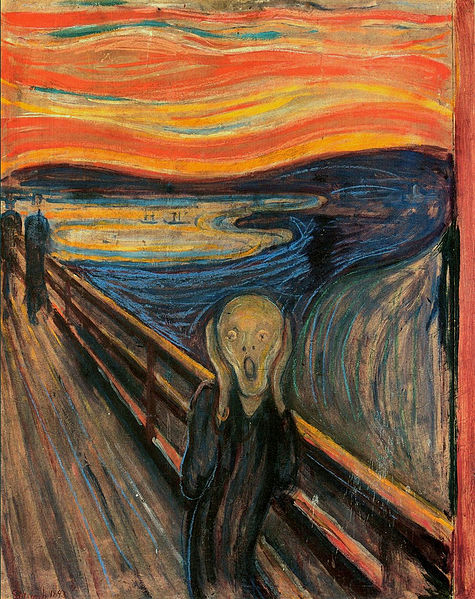
Bible study often takes the form of taking each sentence and trying to interpret it. This can lead to lengthy discussions about the translation of a particular word. It is trying to understand by dissection, but then risks missing the whole. It is similar perhaps to trying to understand the human being by examining each molecule, or ‘The Scream’ by examining a single brush stroke.

If we view the Bible as a collection of documents that were written by human beings describing their journey with God then we can understand why, for instance, different accounts of the same event may differ. We can understand that the meaning of any part must be discerned in the context of the day. We can understand that the writers might simply have got some things wrong. It was men who decided what the best books were to put in the Bible, and they made their decision based on sober judgement. But we should not now view the book as somehow having a magic spell on it that says that ‘this is God’s complete and unchallengeable word’.

There is immense value in the Bible, but I fear that modern Christians have been led to worship the Bible rather than God. It contains wisdom and encouragement, and is correctly used to support our growth rather than constrain it.

Stereoscopic vision

A few years ago there was quite a craze about magic-eye pictures. When you first see one of the pictures there are usually interesting colours and shapes, and you might like it just for that.

Then someone tells you that there is 3D picture of a train (or such thing) hidden in the picture.  You might respond with “don’t talk rubbish”, or you might look and look at the detail, turn it upside down, look at it in the mirror.  But you can’t find anything by yourself!

Your friend might give you some hints on how to find it.  You might follow their suggestion and still see nothing.  You challenge them that they are mistaken, but they insist that there is something there.  If you didn’t trust them or if they weren’t your friend then you’d give up looking.

But maybe you still trust them enough. You try harder, but that doesn’t work.  Then you just relax and gaze at it – and catch a glimpse!  Slowly you learn how to hold that glimpse and suddenly you can see there is a whole picture.  You learn to explore it, and see its wonder. Then something distracts you and it’s gone again.  But now you know…it’s waiting there for you to find next time.

We all see the wonder of the world, but we go through much of life not realising the big picture behind it.  We need someone to tell us it’s there, and to help us find it.  But we need to trust their intentions, and to be willing to feel embarrassed in our searching or else we will give up and perhaps even try to ridicule those who claim there is a God behind it, who claim that there is truth in Jesus’ teaching, that the holy spirit can guide and change our lives for the better.  If we are not ready to take the risk then we may dismiss the whole thing, but if we are ready to risk then perhaps we will indeed find something of great worth.

We need two eyes to see the magic eye picture.  If you look with only one you will never find it.  Perhaps we need two eyes to see the big picture of the universe:  The ‘material’ eye that sees the material world, the scientific discoveries, the wonder of life itself.  And the ‘spiritual’ eye that listens to the message of the love that God has for us through what he reveals to us, that discerns truth from falsehood, that sees another spiritual being in everyone we meet.

If God is all powerful, why doesn’t he stop all the fighting?

I wrote this when my delightful daughters were much younger; I hope that if they read this now it will make them smile ……

Parents can learn a lot from their children.

My children sometimes fight.  Sometimes one or other of them may exaggerate their wounds and try to get me to arbitrate as to who was to blame.  I hate to see them fighting and so have found myself drawn into trying to resolve and judge the issue.  However, I try not to blame one or the other because I love them both and recognize that it takes two to make an argument. However, it often ends up with both of them ‘hating’ me.  If I do arbitrate then the one who ‘wins’ soon forgets, but the loser then spirals into silent or vociferous anger and feeling of being unfairly treated.  As an arbitrator I cannot win!  Even as a peacekeeper I seldom win.  It is perhaps best to leave them to have their fight, and to be there to comfort whoever needs comforting.

Since we have free will, how can God intervene when he sees us fighting and causing suffering?  We would behave in just the same way as my children.  It would not be ‘fair’ if we were judged ‘against’, and if we were judged ‘for’ then we would simply accept the decision as our right, and go about our business.  He has given us the dignity of choice, but having done that he has necessarily limited the use of his power.

He lets us choose how to resolve the fight.  Jesus told us how to resolve the fight if we are prepared to listen.  Essentially – don’t worry about winning the argument – look for the plank in your own eye – think what you could have done better – be humble – turn the other cheek.  It’s not ‘fair’, but it works!  But when we ignore his advice then he’s still there to comfort whoever needs comforting.

Is it time to stop blaming God for all the things we do wrong to each other?  Instead, shall we recognise his love for us, and listen to his advice and find the fulfilment of living our lives as he intended?