How do we manage the pressure to worry and despair about what is going on in the world?

There is so much that we can see that is worrying, and that we can do nothing about.  (As I write this Los Angeles is suffering intense wildfires, Trump is threatening to take over Greenland, the wars in Ukraine and Gaza are still taking lives, global temperatures continue to rise…)  Yet if we didn’t look at our TVs, papers or phones we would know nothing of this – and surprisingly little is ‘in our face’ – we are not directly affected by most of the list above.

The secret is to realise that we are not God.  These things are beyond our power to control, but we are not helpless or hopeless – we can play our part using the prayer that Jesus taught us:

“May Your kingdom come; may Your will be done on earth – as it is in heaven”

We might reflect that what is going on actually is God’s will; his permissive will.  Throughout history greedy, power hungry bullies have oppressed ordinary people and we have ransacked the natural world.  Jesus was fully aware of the brutal Roman regime, but he didn’t overthrow it.  He healed people, focusing on the individuals around him – and we can do that too.  We can pray the Lord’s prayer and leave the state of the world in his hands, but then get on with interacting with those around us according to his will.  We don’t care less about the global situation, but we can worry less. And we can use our energy to influence our local communities instead.

After putting the world’s troubles in God’s hands, the Lord’s prayer allows us to ask for God’s heap meeting our own needs:  give us our food for the day, forgive our sins (as we forgive), don’t let us yield to temptation, save us from evil.  All of which do personally affect us day by day, and which will allow us to fulfil our daily purpose.

Jesus’ prayer is a powerful gift from God.

Living with Hope in the Climate Tragedy

There are different phases as a tragedy unfolds.  Perhaps like when someone is diagnosed with terminal disease.

First of all, there is ignorance – the problem is not known about.  The tragedy is ‘undercover’ and waiting to unfold.

Then there is awareness – maybe a doctor’s diagnosis, or a smoke alarm going off in the middle of the night

Then there is anguish – the understanding of what is to come suddenly becomes real, and heart wrenching.

  • Reading up on the illness
  • Realising that flames have taken hold
  • First picture of the invasion of Ukraine
  • Seeing an ancient woodland being torn up for HS2, or the Amazon being burned down for cattle farming
  • The disciples seeing Jesus arrested, tied up and carried off by the mob

We are desperate to do something, we want the tragedy to stop and do all we can to prevent it.  Even if what we do will make no difference, we need to do it – mopping someone’s brow, sitting by their bedside.  Throwing buckets of water on the flames.  Striking off an ear.

We get frustrated and angry with others who get in the way – holding us back from putting out the flames.  Setting regulations preventing us from even seeing our child suffering in hospital, let alone hugging them tightly.

The anguish grows the more we care.  If we hear of a distant acquaintance getting cancer we might say ‘ah well, that’s sad’, but if it’s our child, or our spouse it is like a kick in the stomach.

The anguish gnaws our heart and becomes almost unbearable.

And when we are in the middle of a crisis and we realise there is no hope, anguish turns to despair:

No matter what we do, Russian troops are still pounding Ukrainian cities with artillery.  No matter what we do, the cancer is spreading.  And Jesus is bound, beaten, and nailed to a cross – and we are helpless to do anything.  But we continue to try. And we cry out in despair, even though hope is gone.

And then it is finished.  Grief takes hold as we look on the result – the dead child, the burnt house, the destroyed city, the body taken down from the cross.

The mourning for what was, for what has been lost, for what could have been.

The feeling of purposelessness – what is the point of anything anymore?  Why bother?

Hope has gone.

We are in a global climate tragedy.  Humanity is destroying life on this planet. We are condemning future generations to extreme climate and weather events, to suffering, to rising sea levels, maybe to extinction.

It’s actually a multitude of mini tragedies.  Each goes through the same stages, but they are relentless. At the grieving stage of one, another is waiting.  And they combine into one big tragedy.

In the past few of years I have become more and more aware of the desperate situation that the world is in.  The relentless rise in CO2 and average temperature.  The worsening climate disasters and weather events.  The melting of glaciers, Greenland ice and the poles.  The extinctions, and destruction of life.

That took me deep into the anguish phase – prompting me to do what I can!

My wife and I have invested our money and made changes in our lifestyle to radically reduce our CO2 footprint – almost meat free diet, using the train instead of flying, insulating our house, fitting solar panels and a heat pump – our house is now carbon neutral! 

I invest a lot of time and energy trying to put the message across to others, researching the facts and trying to put them into simple terms.  There is some encouragement when we see others doing the same, and when we see vegan burgers that taste like meat, plant-based butter, and other replacements for meat produce.

But people still don’t realise the scale of change needed, or the urgency: 

According to a poll carried out in G20 countries the vast majority – 83% – said they wanted to do more to protect and restore nature. However, when asked what actions they would take, they prioritised increasing recycling and avoiding excess packaging. ‘Higher impact changes like diet change and flying less are consistently bottom of their list,’ said Sophie Thompson, part of the Ipsos MORI team that carried out the survey.”

I can see that the technology is available, but action is too slow.  The world still wants to follow the rules of financial justification.  And poor countries rightly want to experience the same quality of life that rich countries do, and so don’t want to sign up to CO2 targets.   Time is running out – it has already run out for several mini-tragedies, but there is little sense of urgency. 

The steady stream of cars and trucks, the rush to book flights after covid, the meat-fest menus, people buying multi-packs of plastic bottled water, the waste …. You can’t get away from it, the relentless ‘in your face’ inaction that says, “I don’t care”, but that I realise may simply be “I don’t know”.

I moved beyond anguish to despair.  And sometimes I have felt I need to give up completely; get a log cabin on the coast in Northumberland and watch the sea.

And then I realised that whatever I do, much more climate change will happen.  Even with all the current government pledges, global temperatures will continue to increase.  And to imagine that our institutions will honour climate commitments, or that individuals will change enough to prevent further deterioration is to delude ourselves.  But also, for the majority world to be dragged out of poverty to share the lifestyle that I have enjoyed since I was born will need increased carbon emissions.  Population will grow as better sanitation, medicine and housing allows people to live longer – consuming more energy through their lifetime.  Reading the signs shows that CO2 emissions will rise further, and global warming will go beyond 2 towards 3 degrees – or higher!  It’s going to happen and nothing I can do will stop it.

And I entered the grief phase.  Do we ever leave that phase?  We recognise what is lost, or what is destined to be lost and it saddens us deeply.  Accepting the loss, the grief means the intensity of feeling fades.  The loss is still there, and we are no longer frustrated and angry at our helplessness.  And we are changed. 

And where is God in this?

“Father, in our despair, in our grief, bring us hope.  Show us the hope we can bring to others.  Tell us what you want us to do.  And give us the courage we need to act.  Amen”

God’s hope comes from where it has always come – but we have forgotten it.

There is nothing I can do that will prevent climate change.

There is nothing I can do that will prevent the powerful having their way.

There is nothing I can do that will make the world good.

These are things that are beyond the power of the individual.  It has always been so, and in a world where many choose selfishness over goodness it will always be so. 

My individual goodness does not make the world good.  The omnipresence of the spirit of goodness acting in all individuals could make things good, if each individual were to respond.  We can see this – if only everyone was good, then the world would be a good place; it would be heaven!  And it is because ‘they’ are not good (we are not either!) we find ourselves responding with anger and frustration and are tempted to despair.  

In the battle for good to prevail we have a great ally in ‘The Law’.   Laws, enforced by appointed guardians, codify what we understand to be good.  The law limits the power of the selfish, those who don’t respond to the spirit of goodness.  The law tries to teach what is good behaviour – but the law is made by human hands trying to define goodness.  Human hands can be wrong.  Human hands can corrupt the law.  And so the law does not reach goodness.  Although we say that nobody is above the law, the law is not above goodness.  We cannot be fully good by following the law.

The law is a powerful tool towards preventing climate change, and towards preventing the powerful having their way.  It is good and necessary to have good laws, but those who have the power to make the law are also those who have personal interests to serve, and so they do not always make good laws.  And people do not always keep the law.

So where is hope?

Christian hope comes from the power of the spirit of God; from a bigger picture that we have forgotten. People in the past understood that there was a life to come, that this world is not all there is.  The bigger picture is that we are offered everlasting life, against which this world fades into nothing.  Everlasting life in a new world where everyone chooses to be and is truly good, in the presence of the spirit of goodness and love.

My wife Cathy writes that:

“humanity has always been up to its chest in its own mire, mistakes, and sin. Because we live relatively fulfilled lives, we can forget that most people did, and still do, endure lives of fear, pain, hunger, death, and drudgery. Consider the slums of Victorian England, the lives of medieval peasants, the wars and diseases that have stained our history. It has always been thus. The Bible shows that this is the story of humanity: drowned in our self-inflicted suffering, with no hope that we can rescue ourselves, but that somehow, beyond anything that we can possibly understand, God has intervened to initiate a great rescue plan. That at some point, the mess will be tidied up and ‘every tear will be dried’.”

Many passages in the Bible describe this hope:

‘Look! God’s dwelling-place is now among the people, and he will dwell with them. They will be his people, and God himself will be with them and be their God.  “He will wipe every tear from their eyes. There will be no more death” or mourning or crying or pain, for the old order of things has passed away.’

He who was seated on the throne said, ‘I am making everything new!’ Then he said, ‘Write this down, for these words are trustworthy and true.’

He said to me: ‘It is done. I am the Alpha and the Omega, the Beginning and the End. To the thirsty I will give water without cost from the spring of the water of life.  Those who are victorious will inherit all this, and I will be their God and they will be my children.

And from the apostle Peter:

Praise be to the God and Father of our Lord Jesus Christ! In his great mercy he has given us new birth into a living hope through the resurrection of Jesus Christ from the dead, and into an inheritance that can never perish, spoil, or fade. This inheritance is kept in heaven for you, who through faith are shielded by God’s power until the coming of the salvation that is ready to be revealed in the last time.  In all this you greatly rejoice, though now for a little while you may have had to suffer grief in all kinds of trials.  These have come so that the proven genuineness of your faith – of greater worth than gold, which perishes even though refined by fire – may result in praise, glory, and honour when Jesus Christ is revealed.  Though you have not seen him, you love him; and even though you do not see him now, you believe in him and are filled with an inexpressible and glorious joy, for you are receiving the end result of your faith, the salvation of your souls.

Cathy continues

“I find hope in the belief that every person is unique, loved, precious.  That every person has something incredibly valuable to offer to others, whether teaching, engineering, dancing, poetry, cooking, listening, encouraging, smiling, gardening… and that God wants everyone to have the chance to grow into their own potential.  So, as part of His rescue plan, the child that drowns in Pakistan will – somehow – be restored, healed, and given the chance to become its full self.

Furthermore, I think that the earth itself, and all that lives on it, is also valued and precious to God.  That the koala bears that died in the fires in Australia, the glaciers that have disappeared, the animals hunted to extinction, the trees killed by drought, the hedges uprooted, may also be restored.

But this isn’t a ‘pie in the sky’ hope that gives me an excuse to do nothing now. I believe that I am called to take part in this great plan, and that my actions; not flying abroad but taking the train, moving to a more plant based diet, donating to charities to help feed the poor or plant trees, turning down my heating thermostat, biking more; are part of a great unnoticed movement of rescue.

I think and hope that the kingdom of heaven, a kingdom of fairness and wisdom, will be established in a restored, peaceful, green earth; bursting with life and enjoyed by loved, healed and beautiful people living their lives to the full.  And I believe that my efforts towards that are not wasted.”

So there is hope in the future, and purpose in what we do now.  But in the now there is more than just duty and hope for the future. We can and need to find happiness, peace, and joy. I have found some secrets to this in a short book called ‘Finding Happiness’ by Abbot Christopher Jamison.  And even if we do not accept the Christian hope we can benefit from the wisdom of the ancients.

Considering the ideas of the philosopher Plato, he describes that “contemplation of the good and the beautiful is Platonic happiness”.  Taking time to really observe and to absorb into ones immediate being that which is good and beautiful draws out joy and wonder.  A form of worship is appreciating the beauty of an ever-changing landscape, the journey of a piece of music, the wholeness of a novel.  Goodness and beauty contemplated in every diverse opportunity, fought for against the pressures of the rush of daily life, brings peace, joy, and happiness.

This is what the Apostle Paul said too, ‘brothers and sisters, whatever is true, whatever is noble, whatever is right, whatever is pure, whatever is lovely, whatever is admirable—if anything is excellent or praiseworthy—think about such things.’

Abbot Christopher also tells us that “Happiness for Aristotle is ‘the activity of the soul expressing virtue’.  So in essence where Plato sees happiness as contemplation, Aristotle sees happiness as living virtuously.”  The call to action that Cathy described is thus not just a call of duty, but a call to happiness.  Living virtuously brings happiness. It will take courage, and effort, and perseverance.  It will test our reserves and frustrate us.  But as we persist in scrupulously examining our actions and our motives and seeking to live virtuously then we will begin and grow happiness in our lives.

Again, Paul wrote “For we are God’s handiwork, created in Christ Jesus to do good works, which God prepared in advance for us to do.”  Doing good deeds is part to becoming who we are.

We are not responsible for anyone’s behaviour but our own. That’s why the world is in the state it is – many choose the selfish path to death.  And as a consequence, we will experience global warming way beyond where it is today.  It is a tragedy, but it is the same tragedy that has been unfolding since the world began – the tragedy that many choose the path of selfishness.  But let us choose to be a people of hope.

Good news!

Deep inside each of us we know that we ought to be good.  Perhaps it’s stronger than that, and we want to be good.  But we aren’t as good as we’d like to be, and we often disappoint ourselves and perhaps give up trying, and ignore our shortcomings – burying them in a busy and ‘important’ life.

Millions of years of ‘survival of the fittest’ evolution has honed our human nature to make sure that we thrive physically and materially, even if it is at the expense of others.  We want a better house, a better car, more money.  We want our country to be richer and have a better healthcare system than others.  We recognise that there are laws that we must obey, but we will find ways round them if we can if it improves our lot.  We might get angry about world situations; the dreadful behaviour of the Taliban, or Trump, or Putin, or global warming, or social injustice; demanding action from governments but perhaps being unwilling to actually do much, if anything ourselves.

In this environment, what is the relevance of and role of religion?  And what about God? And do They have anything to do with religion, or us?

Reliable historical texts describe that Jesus brought ‘good news’ to the people of Israel, and that he told his followers to take that good news to all nations.  The people he brought the good news to were probably not that different to us, although with less technology and material possessions; they had the same drives and motivations.  They felt the same disillusionments.  Yet many people were changed by the message he brought, transforming their lives and motivated to take his message to the world. 

So what was this ‘good news’ that Jesus brought, and why don’t we hear it today?

Basically, the good news was (and still is) that ‘You can be good, and this is what being good looks like.’

On top of that simple message, he brought us tools and techniques to help us, the primary one being the tool to free us from the ‘badness’ of our past.  Using his tools we can look forward to what we can become rather than being dragged back by our past mistakes. 

The tool that he offered was repentance; sincere regret and remorse.  But repentance alone is clearly not enough and might simply add a feeling of extreme guilt and worthlessness (who would want to subject themselves to that).  The ‘magic’ that Jesus brought was, and still is authoritative forgiveness.

Forgiveness only works if it is offered by someone with the authority to forgive; it doesn’t mean a thing if I forgive you for stealing, it needs a judge to do so.  In Jesus day the religious leaders recognised that ‘only God can forgive sins’ and so were angry that Jesus did so. 

Today, we don’t have the same understanding of God, and perhaps for us it is better to think of ‘infinite love’ or ‘infinite goodness’ instead of the God.  But how ever we look at it, the magic of Jesus clearly worked at the time and has continued to work ever since – if we repent and ask Jesus to forgive us then he does.

As I wrote in my book “Christianity – why bother?”:

“To live a rich and satisfying life in the future we have to accept that we made mistakes in the past.  We have to want to change for the better.  We have to want to wipe the slate clean and start again. And we do that by accepting God’s forgiveness.

It’s about accepting God’s unconditional love, and then working with Him to become who we are meant to be. And it starts with a decision to submit leadership of our life to Christ.

And this is freedom.

Freedom from the guilt of past sins.

Freedom to love God.

Freedom to love one another.

Freedom to stop sinning and to do what is right without worrying about the future.

Freedom to trust Jesus when he tells us that he has come to bring life in abundance.

Freedom from religious ritual.

In essence, that is the Good News of Christianity; that is the Gospel.”

And what is the role of religion?  Well religion should help us find this truth.  Religion should help us to understand who and what God is, and to help us see what ‘good’ looks like.  Unfortunately, much religion today seems to want to show what is good by living the opposite – a perverse sort of reverse psychology.  Nevertheless, there are many good and solid leaders and grass roots members of religions who are simply trying to tread a good path, trying to live graciously with one another.  Being part of such a community can be a great help and encouragement, and can bring companionship on our journey.  Spending an hour or two of ‘spiritual’ reflection once a week helps us maintain focus and direction.  So yes, there is still a role for religion.

On life, and death

Have you reached the point yet of wondering what happens when you die?  Perhaps the current pandemic will prompt more of us to think about this important question.  It is important because of the impact that the answer has on us whilst we are alive.

There is an unspoken assumption behind all the current fears and actions that death is a bad thing; that we must do whatever we can to extend life – even if the extended life comprises sitting in an armchair in a care home gazing out the window or watching daytime TV.  I use the term ‘extend’ deliberately instead of the more common term ‘save’ because we are all destined to die;  rescuing someone from drowning does not ‘save’ their life, it extends it.  But to what purpose?

Actually, it may be that rescuing someone from drowning does ‘save’ their life, in that the experience may cause them to turn from a previous pointless and self-centred existence to a life of love and purpose.  The fact that someone cared about them enough to rescue them may make them realise the importance of relationships, the importance of selflessness, the importance of love.

People who have gone through near death experiences often become dramatically changed, dedicating the rest of their lives to acts of loving kindness to others.  So it is indeed possible to save someone’s life. But it is the quality, value and purpose of the life that is saved rather than the biological state of being alive for ever.

We confuse the biological life with what I will call spiritual life.  An amoeba has biological life, a tree has biological life, and so does a virus.  But none of these have spiritual life.  They do not ‘experience’ life, they have not brain to sustain any form of consciousness and they simply live biologically.  There may be other forms of higher life (apes, dolphins) that can ‘experience’ life; I don’t know because I’m not one of them.  But I do know that I experience life.  When I eat a curry I ‘experience’ a taste, but even that is hard to pin down.

If you Google “The Qualia Problem” you will find a paper by Frank Jackson which states that:

“I think that there are certain features of the bodily sensations especially, but also of certain perceptual experiences, which no amount of purely physical information includes. Tell me everything physical there is to tell about what is going on in a living brain, the kind of states, their functional role, their relation to what goes on at other times and in other brains, and so on and so forth, and be I as clever as can be in fitting it all together, you won’t have told me about the hurtfulness of pains, the itchiness of itches, pangs of jealousy, or about the characteristic experience of tasting a lemon, smelling a rose, hearing a loud noise or seeing the sky.”

But whatever it means for me to experience the taste of the curry, I know that there is a ‘me’ to experience it.  It is that ‘me’, not the biological me which I long to preserve, whose ‘life’ I want to save.  And so the big question is, does that ‘me’, that spiritual me, cease to be when my physical body ceases to be?

If the spiritual ‘me’ will end when the biological me ends, there will be no ‘me’ to experience that I am dead.  Do not grieve for me, I will no longer exist.

Of course I will remain in your memory, and you will look back on your memories with joy and sadness – as with all memories.  They are not erased simply because I die; they are as real as they are today while I live.   But if extending my life gives me no ‘spiritual’ life at all, then any new memories will bring sadness in remembering my final days.  So what will be the value of extending my biological life when I have no spiritual life?  The preservation of my decaying body simply to avoid biological death will bring sadness to overshadow previous memories, and will in practice bring mourning forward before my death.

This may sound heartless, particularly if you have not yet lost your parents or other loved ones.  But before you condemn me, I have suffered loss.  I have lost a child, at birth.  I have lost both of my parents.  And I know the pain that the pointlessness of the latter days of their lives brought them.  My father knowing he had to suffer the pain of prostate cancer with no hope of end other than death; my mother wondering when the pointlessness would end, her daily routine seeing her sitting on her bed gazing out at the suburban street for hours.  I grieved over them all when they died, and the grief is still there of course, many years later, just less acute.

I am not heartless.  No.  I want to see people truly, spiritually ‘live’ whilst they have biological life.

But what if the spiritual ‘me’ continues to exist beyond death?  What if my purpose is indeed eternal?  And how can I know?

The crew of early sailing ships believed that there were other lands over the horizon.  Europeans believed that there must be a large land mass south of the equator before they found it.  And brave adventurous souls set off to find it.  Some came back and told others that it was true, and soon constant travel to and fro confirmed it.  That made it easy for those who had not been there to ‘know’ that Australia existed.

But it’s not quite the same with life beyond biological death.  Our bodies cease to function and eventually the flesh rots and we are left with a skeleton.  We don’t find dead people returning to re-inhabit their skeletons; there is no free travel between here and any ‘afterlife’.  At least, not that we are aware of.

Imagine for a moment a caterpillar.  It has a physical body, it eats and excretes, it moves around and (pretending for a moment that it has the capability) experiences the physical domain of the leaf.  And then, after it has grown and fattened up, it appears to die.  It becomes encased in a shell and the caterpillar’s physical form decays.  But it is still alive, rather than being dead, it is being transformed into something different.  The butterfly that emerges from the cocoon bears no resemblance to the caterpillar, and is not even constrained to living on the leaf.  A thing of beauty, it soars into the air and is a delight to see.  Yet it cannot return and tell the caterpillars who remain on the leaf that there is life beyond the cocoon.  Neither should we expect human spirits return to tell us what happens beyond biological death.

And yet… one did return.  No ordinary man, but a man who had turned the lives of those he met upside down;  A man who taught the secrets of true spiritual life to those who would listen – yet more than a great teacher;  A man who healed those who were physically ill by the touch of his hand, yet more than a great doctor;  A man who brought biological life back into a friend’s physical body after they had been buried in a tomb for three days;  A man who willingly surrendered his body to excruciating crucifixion and inevitable physical death and burial in a tomb.

Two days later, his tomb was empty.  Although his friends and more importantly his enemies searched everywhere for it, no body was to be found, just some folded grave clothes.  His enemies were desperate to find the body to disprove the claims of his closest friends that he was alive; that they had seen him, spoken with him, and touched him.

Madness we say – they must have imagined it.  And yet such a madness that they were willing to die rather than deny it.  Such a madness that they were filled with joy, and their lives were transformed;  freed from the greed and selfishness of their world – sharing all they had with one another, loving one another.  Such a madness that they began to understand the secrets their friend had taught them about what a true spiritual life looks like.  Such a madness that brought ‘life in abundance’, not just for them but for all who listened to their eye witness accounts and trusted and believed them.  A madness that has affected millions upon millions over the past 2000 years.

Our decision of what we believe happens when our bodies physically die has enormous impact on our lives whilst our physical bodies live. Do we trust in the eyewitness accounts of what happened to that man, and hope and expect  that spiritual life is not snuffed out with our decaying bodies?   Do we choose to believe that our spiritual selves will live on, no longer constrained to the two dimensional leaf of this world but soaring into the sky of eternity; that we will be transformed from caterpillars to butterflies.  Do we start putting into practice the words of wisdom that bring spiritual life today?

Madness?  Or the sanest decision that we ever make?  Do we trust or ignore the evidence?  Do we dare to find out?

Liberating repentance – Acts 10; 34-43

I’m going to draw out from Acts 10; 34-43 what makes the Gospel transformational, and suggest how we can engage it more fully.

The short speech by Peter was made after he’d been summoned to meet a Roman centurion.  Peter willingly went to meet him after having had a vision where Peter was being told to eat food that Jews considered unclean.  In the vision he was told “What God has made clean, you must not call profane.”

Peter is describing what he learnt from the event, and it efficiently describes why  I am a Christian.

First of all Peter declares “I truly understand that God shows no partiality, but in every nation anyone who fears him and does what is right is acceptable to him.”  In short, God loves you and me equally to the Jews.  We are ALL allowed to share in the life giving message of the good news of Christ.

Peter then describes that he personally was witness to the facts that:

  • John baptised Jesus, at which point God anointed Jesus with the Holy Spirit
  • Jesus went around doing good and healing people
  • Jesus was crucified
  • Jesus was raised to life on the third day, and appeared to those selected to be his witnesses
  • Jesus told them to preach that He is the one who will judge the living and the dead
  • And finally that everyone who believes in Jesus will have their sins forgiven

The first four points bear witness to who Jesus was.  But I want to focus on the last two points. That Jesus will judge the living and the dead, and that everyone who believes will have their sins forgiven.

If we are honest, we’d rather not be judged at all.  Perhaps we are living quiet lives, keeping our head below the parapet.  We come to church on Sunday and we just want to be left alone until we die when we hope to go to heaven.

If we are to be judged, we don’t want our neighbours or friends judging us.  And when we see what the Tabloids say about people, we certainly don’t want society to judge us.

We probably get angry at anyone who dares to criticise us – “who are they to judge?  They’re no better than me! Hypocrites!”

What about Jesus judging us?

Jesus – the human incarnation of infinite goodness.

The one who gave every moment of his life to heal, teach and serve.

The one who allowed himself to be sacrificed by crucifixion, and still forgave those who nailed him to the cross.

Jesus.  We can’t be angry with Him – he’s certainly no hypocrite.  We can probably accept that he has the right to judge us, but maybe we are still not happy with the idea.

Deep down we know that if Jesus were to judge us he would see SUCH shortcomings in our lives.

  • Our petty grievances with our neighbours, with our fellow Christians
  • Our contentment to live in comfort whilst we know that there are others who have nothing
  • Our consumerism, looking for the cheapest product that then keeps the poorest in poverty and makes those in work put in more hours at lower pay than they can manage
  • Our readiness to get in our car to go anywhere, to take cheap overseas holidays, to travel on a whim, leading to overheating of our planet and the mass extinction of so many species

And that’s before we get to more obvious ‘sins’…

And yet we probably don’t ‘feel’ like sinners.

When I was on the cusp of becoming a Christian I had been told that I needed to ‘pray the sinner’s prayer’.  This is what I wrote in my journal:

I sit down – I’m not ready for kneeling yet – and start to read the prayer…

 “Dear lord I have sinned…”

 The trouble is…I don’t feel like a sinner.  Yes, I know that I could be a lot better than I am, but I just don’t feel it at the moment.  So I start to pray that God will help me to make the step from logic to feeling.  At least I try to do what I think praying is ….  I wonder if I’m doing it right.

I didn’t ‘feel’ like a sinner – but I recognised that I needed to.

If we don’t ‘feel’ our sin, then we need help.  We can pray, like I did, for God to help us make the step from logic to feeling.

A little later in my journal I wrote:

My daughter had organised her own birthday party, with half a dozen friends coming round for a ‘scary party’.  It was impressive to see them all dressed up as witches and devils (and a cat!?).  However, for some reason I was rather grumpy.  I didn’t get into the party spirit and got rather short with all the mess, and split drinks and so on.  I wasn’t very sympathetic when my daughter got upset that no-one was listening to her, and tried to explain that they couldn’t help it if they got distracted.  At the end of it I felt that I had let her down.  I don’t know if she noticed particularly, since it was rather a busy affair, but that was how I felt.  I felt like a sinner.  Was someone trying to tell me something?

But if we can ‘feel’ our sin, if we can let the Holy Spirit show us our shortcomings then we will surely fear his judgement.  That is in part what it means to fear God.

And recognising our sin is the start of healing.  When recognise what we are, when we see through our masks of self-justification, and we don’t like what we see!  We want to be different, we want to change.  That is what repentance is – honest assessment followed by determination to change.

I recently watched a TED talk by Eve Ensler, and activist for women.  She was talking on the profound power of an authentic apology.  She describes how her father abused her, but that he’d never apologised – never repented.  She describes the process of repentance.  In her words:

Apology is a sacred commitment. It requires complete honesty. It demands deep self-interrogation and time. It cannot be rushed. I discovered an apology has four steps, and, if you would, I’d like to take you through them. 

 The first is you have to say what, in detail, you did. Your accounting cannot be vague. “I’m sorry if I hurt you” or “I’m sorry if I sexually abused you” doesn’t cut it. You have to say what actually happened. “I came into the room in the middle of the night, and I pulled your underpants down.” “I belittled you because I was jealous of you and I wanted you to feel less.” The liberation is in the details. An apology is a remembering. It connects the past with the present. It says that what occurred actually did occur. 

 The second step is you have to ask yourself why. Survivors are haunted by the why. Why? Why would my father want to sexually abuse his eldest daughter? Why would he take my head and smash it against a wall? …..  My father had to live up to this impossible ideal, and so he was never allowed to be himself. He was never allowed to express tenderness or vulnerability, curiosity, doubt. He was never allowed to cry. And so he was forced to push all those feelings underground…

 Those suppressed feelings later became Shadowman, and he was out of control, and he eventually unleashed his torrent on me. 

 The third step is you have to open your heart and feel what your victim felt …. You have to let your heart break. You have to feel the horror and betrayal and the long-term impacts of your action on your victim. You have to sit with the suffering you have caused. 

 And, of course, the fourth step is taking responsibility for what you have done and making amends. 

 So, why would anyone want to go through such a gruelling and humbling process? Why would you want to rip yourself open? Because it is the only thing that will set yourself free.”

This is SO important.  This is what Jesus is talking about when he says “Repent of your sins and turn to God”

When we repent we still feel the guilt of our past mistakes.  I still feel angst thinking about that party.  And this is where the final point is Paul’s speech brings such freedom:

“Anyone who believes in Jesus will have their sins forgiven.”

Perhaps this seems a little unfair – what about someone who doesn’t ‘believe in Jesus’.  Are they not forgiven?  Well clearly they will not be able to believe that they are forgiven.  We have to believe that Jesus has the authority to forgive our sins in order to accept that forgiveness.

Maybe it’s actually more serious if we claim to believe in Jesus. We know the theory, but have we really repented?  Do we really know that freedom that we are forgiven?  How can we tell?

I actually found the TED talk above when I was looking for a quote about activism:

“An activist is someone who cannot help but fight for something.  That person is not usually motivated by the need for power, or money or fame.  But in fact is driven slightly mad by some injustice, some cruelty, some unfairness, so much so that he or she is compelled by some internal moral engine to make it better.”

So my question is, are we activists for Christ?  Have we repented and turned to God with such deep honesty that we “cannot help but fight for Him”, such that we are “compelled by some internal moral engine to make it better”

And if not, it’s time we did something about it.

Let’s pray that God shows us our sin, that we can understand why we do it, that we can feel what our ‘victims’ feel, that we take responsibility for it and that we commit to making amends.

That is the only thing that will set us free.

(Delivered as a sermon – January 2020)

Great Britain? I hope so.

Eighty years ago this nation was at a crisis.  Politicians of the day worked together for the good of Britain and Europe.  The monarch was respected and brought hope to the people suffering – visiting Coventry after the horrific bombings, addressing our nation and urging us to pull together to fight against fascist powers that were oppressing the poor, the weak and the scapegoat Jews.  It was a time where national values and pride meant doing the right thing for our neighbours.

Fast forward to today.  We have in power an unelected leader who is treating our Queen with contempt, as a tool to be used as he sees fit.  We see those in high office treat our honourable institution of parliament with utter disrespect – lounging on the front benches. New scapegoats are created.  Our traditions are trampled.  Unelected oligarchs and manipulators hold powerful positions.  The similarities with the fascist regimes that “Great” Britain united to defeat are startling.

We will have a general election soon.  It will be a test.  Has our nation abandoned the values that we once held dear, and for which men and women gave their lives in our finest hour?  Or will truth and goodness prevail?  This will not be an election about Brexit, but it will be a test of what we are as a nation.  It will be a test of our values.  I hope and pray that we will choose truth, justice and honour.

How should we respond to climate change? – A Christian perspective

The earth’s climate has seen dramatic change. Four and a half billion years ago, the earth was formed.  Its atmosphere had massively high levels of carbon dioxide, and there was very little oxygen.  Miraculously, life originated in this extremely hostile environment, and for the next one and a half billion years or so the cyanobacteria began cleaning up the atmosphere and enriching it with oxygen and allowing the formation of the protective ozone layer.

Over the next two billion years the beautifully designed process of evolution took those earliest forms of life and developed them into the staggering array of life that we take so readily for granted today.   Darwin hinted at the beauty of the process in the final paragraph of his book “the origin of species” when he wrote “There is grandeur in this view of life, with its several powers, having been originally breathed into a few forms or into one; and that, whilst this planet has gone cycling on according to the fixed law of gravity, from so simple a beginning endless forms most beautiful and most wonderful have been, and are being, evolved.”

So it is clear that man-made climate change will not destroy the planet, nor will it extinguish life.  But it will disrupt the extremely finely balanced ecosystem that sustains the human race.  That disruption will enlarge areas of local extinction of humans (desert regions), and in the extreme the whole planet could become unsuitable for human life.  Whilst wealthy countries are able to create local ‘microclimates’ with technology, for example air conditioning, people sentenced to live in the ‘natural’ local climate will inevitably suffer and may face extinction.  We already see an increase in suffering from natural disasters such as the cyclone Idai, and other increasingly destructive climactic events.

Greater parts of the world will become uninhabitable not just for humans, but for the cornucopia of other species who thrive in the environment that spawned us.  New species will emerge, but many of our present ‘friends’ will disappear.

The first book of the Bible describes how we were given the world to look after.  It is clear from the description above that if we don’t look after it then it will not be taken away from us, but we will be taken away from it.  This is reminiscent of the description of Adam and Eve being taken away from the Garden of Eden: the garden still thrives, but they were no longer in it.

God allows us to do things that harm us.  He doesn’t want us to, but he allows it.  Such action is called sin.  The basis of the Old Testament law was that God gave us rules that would bring us wellbeing, but our selfishness leads us to choose ways that harm ourselves and others.  Greed, lust, envy, and all the ‘sins’ damage both us and our neighbour.  Climate change is damaging to us and to our neighbour, and so the actions that leads to climate change are ‘sin’.  God permits us to damage the planet that sustains us, but it is not His will.  And disobeying the will of God is sin.  It is not good for us to do it!

There is not space here to fully discuss how we, through our actions are hurting God themselves, but we might empathise by imagining how we would feel if after giving a loved one a beautiful gift – perhaps a bunch of flowers,  we see them slowly trashing it, picking off one petal at a time.

So, how should we, as Christians, respond to the challenge of climate change?

First of all, we must recognise that it is real! (see for instance https://climate.nasa.gov/effects/)

Climate change is not the sin, but the consequence of our sin.  We need to reflect on what sins are the root cause of climate change.  Greed, selfishness, gluttony, envy will be high on our list, but a thorough examination of our lifestyle (in the context of and comparison with the other seven and a half billion people on the plant) must bring insight.

We then need to ‘repent of our sins and turn to God’.  There is surely enough evidence that we know that we are sinning, but we need to let the evidence sink into our hearts and truly convict us before we can honestly repent.  Until we reach that state then we might feel a little guilty but we will not have the power that comes from true repentance.  We need to be so convicted that we get on our knees, confess, and ask for forgiveness.

We must work with God to eliminate our sinful behaviour. We will need to be bold, counter-cultural and outrageously attractive in our approach.  We are Christ’s representatives, and our response has to mirror his character. And we must encourage our brothers and sisters to do the same.  Not only must we turn from our damaging practices, but we must do our utmost to relieve the suffering of those whose homes and livelihoods are ruined by the changing climate.  A radical change in our lifestyle must include loosening our grip on our wallets.

For example, we need to ask ourselves why we need to go to America, or China, or Australia for our holidays, for a speaking engagement, or for work.  99% of the world’s population cannot afford these luxuries – and yet many are closer to God than we are.  http://www.globalrichlist.com/

We have to challenge every decision of where we spend our money.  Should we always buy the cheapest, or should our buying decisions be made to minimise planetary damage?

We can make reparation for the damage caused by our personal sin.  We can ‘offset’ our carbon emissions, for example “Climate Stewards helps you to offset unavoidable carbon emissions by supporting community forestry, water filter and cookstove projects in the developing world”.  Some are beginning to do this for holidays or the odd long haul flight, but that is surely just lip-service.  Should we not examine our carbon emissions over our lifetime and offset them?  (see https://www.climatestewards.org/) At only £20 a tonne, many of us are in the privileged financial position to be able to do that.  There is real potential for tree planting projects to ‘buy some time’: https://www.sciencenews.org/article/planting-trees-could-buy-more-time-fight-climate-change-thought.  And churches can do the same, committing to offset past energy usage and adding carbon offset as a statutory spend each year.  It is much easier if we all make the commitment together.  Leadership from our Bishops can help here.

Those of us who live comfortably in brick houses in rural England can send financial assistance to those whose pole and dagga houses are swept away by floods or typhoon. (see https://www.christianaid.org.uk/emergencies/south-asia-floods-appeal)   As James says:  “Suppose you see a brother or sister who has no food or clothing, and you say, ‘Good-bye and have a good day; stay warm and eat well’—but then you don’t give that person any food or clothing. What good does that do?  So you see, faith by itself isn’t enough. Unless it produces good deeds, it is dead and useless.”  Communication is so good that we see our ‘brother or sister who has no food or clothing’ daily on our TV’s or computer screens.

We will of course fail to live up to our aspirations, but we can try. And when we fail, God’s grace will free us to try again.

And finally a thought about our legacy.  The younger generation are worried.  Environmental issues are at the top of their concerns.  And the younger generation tend not to know Christ.  We have a wonderful opportunity to bring them hope, both for a world to live in and from a God who loves them.  That is a far better legacy than bequeathing a scorching earth that is hardly able to sustain human life.

Let us be at the forefront of change, not dragging our feet but leading the way to a sustainable future.

We can all afford to help.

In the west, if our fence blows down we can usually afford to fix it without any worry.  In Mozambique, they have suffered a devastating cyclone, with 90% of Beira damaged or destroyed.

https://www.theguardian.com/world/2019/mar/19/cyclone-idai-worst-weather-disaster-to-hit-southern-hemisphere-mozambique-malawi

I was heavily involved in setting up the Casa Reom centre for street children.  It suffered severe damage.  Can you help them recover from this disaster?  Every little helps…

https://www.give.net/CycloneAppeal


The universe is so big and has been here so long …

Big Bang was about 14 billion years ago; the universe is older and bigger than we can possibly imagine.  Dinosaurs were on the earth for over a hundred million of years, a thousand times longer than the humans have been around. And looking at the population of the world today, as an individual among 9 billion people alive, In comparison with the totality of space and time, each individual is surely completely insignificant.

But… there is an alternative.

If God exists they must be bigger than all this, and older than all this and they must have had a reason to bring the universe into being and sustain it, and to wait while the stars and planets formed and reformed, life began and evolved, and  mankind emerged and developed.  And if, as many of us believe, they sent their son to teach us and to die for us then we move from being completely insignificant to enormously significant.

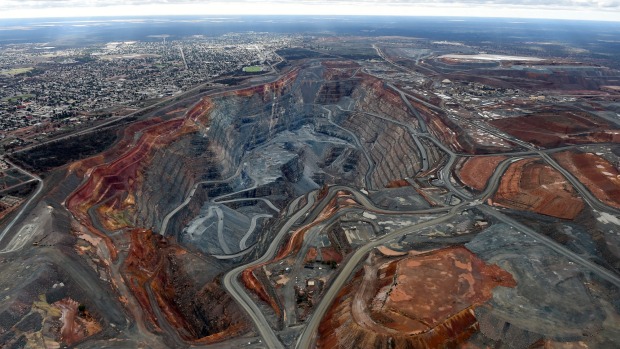
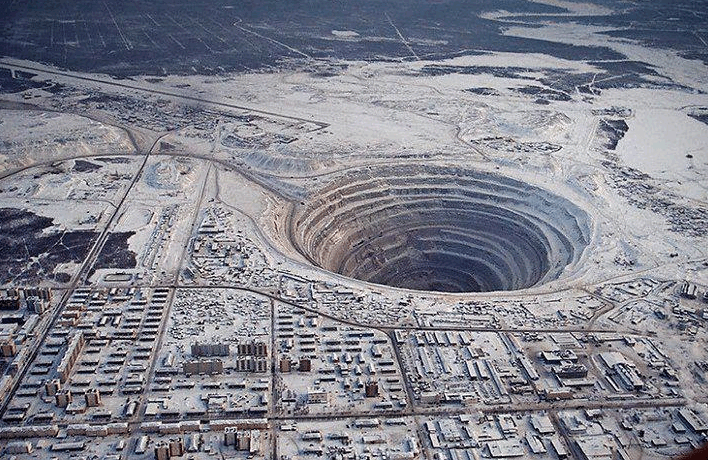
But perhaps it still seems an awful lot of effort for God, too much to believe perhaps. But think about the effort that we put in to the smallest of things used for enrich a very short period of time.  Think of how much time, energy and space goes into making a simple gold ring with a diamond on it, and getting it to a shop so that someone can buy it to propose an engagement.  Just compare the size of the gold and diamond mines with the end product – let alone all the work needed to refine, shape and manufacture the ring, and to transport it to the shop.  We are pleased to do all that, God’s work just takes things to a bigger scale…

Foreword to The Big Picture

Scientific discovery has brought material benefits and physical comfort to mankind.  The predictability of matter leads us to assume that it behaves according to fixed laws, and this belief has led engineers to develop tools and machinery to manipulate the environment, doctors to develop cures for many diseases, and farmers to grow crops with greatly increased yields.  Many of the scourges of previous times have been overcome leading, in the Western world at least, to longer lifetimes and better health.  However, this has also led to the belief that everything is predictable and controllable. If anything goes wrong (by which we mean it causes us distress or discomfort) then it must be fixable, and if it hasn’t been fixed it must be someone else’s fault.

Personal rights have grown, but personal responsibility has diminished.  Laws to protect the weak have bred the belief that it is the state’s job and not our individual duty to help out those less fortunate than ourselves.  Mechanisation that was supposed to give more leisure time has led to lost jobs and loss of purpose.  Competition and the shrinking of the geographical world has meant that there is someone, somewhere who will work harder or longer hours than we do, and the pressure grows to produce more for less.  The availability of loans means that goods can be obtained now if we promise to pay later.  To pay the loan we need a job.  Fear of job loss drives us to work longer hours and accept less pay. The purpose of life becomes to produce.  The mechanism which fuels demand and production is the economy.  The economy becomes the measure of the health of a nation.

Is that what it’s all about?

Is my value simply what I can produce?

Am I measured just by what I can earn?

If I retain the worldview that the economy is king then the implication is yes, but that doesn’t feel right.  I want to be valued and loved as a person.  I want a worldview that speaks to my heart and my mind and not just my wallet, and I want it to be based on sound thinking and evidence.

Science has brought great technological and medical benefits to mankind; cars, televisions, fridges, telephones, electricity and so on.  But science has also brought guns and bullets, pollution, global drug trafficking and job losses.  Science seems to dominate my life, telling me what I should or shouldn’t do to keep healthy, avoid risk and live longer, but it doesn’t tell me why I would want to live longer.  Science doesn’t give any purpose to my life.

Religion offers purpose, but it too seems to want to control me and dominate me.  Religion has been used as justification for many great atrocities: the Spanish Inquisition, child sacrifices, the Crusades.  Religious people seem to want to tell me how to behave, and to judge and criticise me, claiming to represent the will of God.

I want to know the truth.  I want to know what science can tell me about how the universe works, and perhaps where I came from.  I want the benefits that science can bring, but not at the cost of becoming a slave to its dictates.  I want to know why I am here, what my purpose in life is, or even if there is one.  If there is a God I want to know what He thinks. I want the benefit of knowing that I have a purpose, but not at the cost of becoming a slave to rules from another human being.

And so I investigate, weigh up evidence in all forms and seek a holistic worldview that works.  I have explored what we know from the physical and biological sciences, and I have researched historical evidence for God. I have tested what is actually known, and what is speculation, extrapolation or personal opinion and rhetoric.

This book presents my conclusions, and some of the evidence that brought me to draw them.  I offer what I believe is a consistent, healthy and constructive worldview based on sound evidence.  I’ve called it Minimalist Christianity.  Whether you agree with my conclusion or not, I hope that many of the myths that currently inhibit so many of us will have been weakened or dispelled.  I hope that a step can be taken towards finding purpose and experiencing life in abundance.