Tony

Tony was a man of action.  He had always enjoyed sport as a boy, and loved adventure books.   At work he would be frustrated by rules and regulations, red tape put in place just to avoid being blamed in case something went wrong.  Why didn’t people just get on and do what was needed?

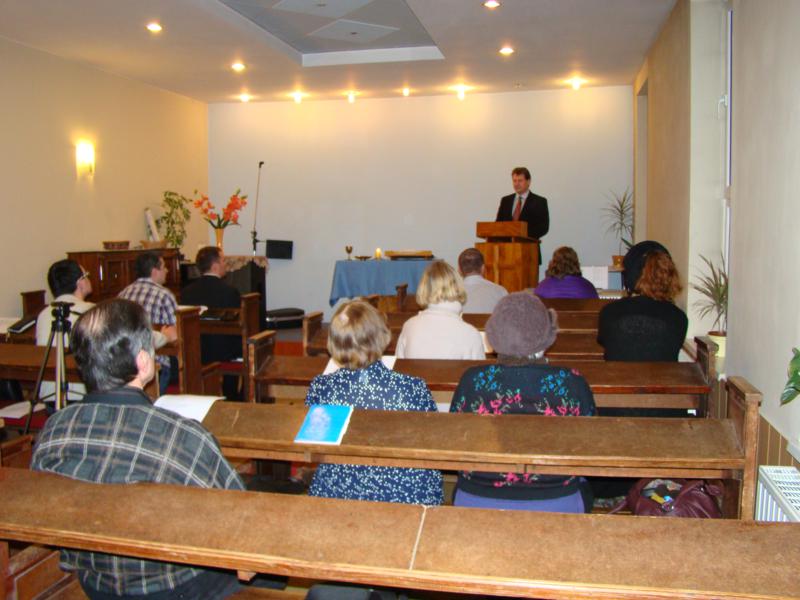
Tony had committed his life to Christ.  He was convinced of the truth, read his bible daily and tried his best to follow Jesus teaching.  Jesus was his hero, and he was constantly challenged by what Jesus taught – but liberated too!  He went to church each week.

But somehow he often wondered what church was about.  He found the songs would have him singing words that didn’t represent how he felt towards Christ; love songs and adoration of Christ’s beauty, songs more about being ‘in love’ than selfless love.  He would look around at others who appeared in raptures of delight and wonder what was wrong with him.  He couldn’t help drifting off in the sermons, and couldn’t see what they had to do with his day-to-day life.

He often came away saddened; if church left him cold he presumed that he can’t have been a very good Christian!  Satan smiled, but Jesus led Tony to the verse:

Those who obey my commandments are the ones who love me. And because they love me, my Father will love them, and I will love them. (John 14:21)

“We love you Tony” he whispered.

What do we do with our money?

Through no virtue of my own, I was born with skills that have allowed me to find a good job, and to manage my money. Before I was a Christian I thought that this was just good luck, and that I didn’t have to thank anyone for this. I could do with my money what I pleased (of course, in consultation with my wife!).

We have always had a joint bank account, but when she became a Christian many years before me, she suggested that we each have an additional private account which we can use completely as we please. I was happy with this, as I could then ‘treat’ myself without feeling guilty, and also it seemed to make the act of giving each other presents a bit more meaningful, and it allowed her to give money to charity without having to ask my permission.

I used to think myself reasonably charitable. I’d give to people in the street, and I gave a little to Macmillan nurses after my father died of cancer. I was probably like most of the rest of the country, quite happily giving less than 1% of my income away. And following worldly advice I set some financial targets for my life – I decided to have saved £100,000 by retirement age. (I have to admit I struggled to know what I was going to do with it, but it is something that you have to do, isn’t it).

On the road to becoming a Christian I read ‘challenging lifestyles’ by Nicky Gumbell. I decided that it was OK to give more away. I didn’t have to keep it all for myself for the future, and so I made a standing order from my bank to a Charity Card account, of a relatively small proportion of my income. Perhaps the surprising rate at which the amount I had in the account built up showed how little I was really giving away. But having that account meant that I had to give it away – and I found that really quite rewarding. “Now, who can I give this to” is quite a nice feeling. And I didn’t feel any poorer!

But when I first visited Mozambique I learned so much more!  It was so liberating to see how much closer people come to God when they have no money.  And if you put a Mozambican and an Englishman next to each other and dressed them the same, how would you know who was the richer?

But I also saw again the massive amount of good work that is not happening because of lack of money.  I wept when Pastor Caetano described how he had started the orphanage at the House of the Sparrow with all he had – how they don’t know each day where food is coming from, but God always provides.  Forty-seven children, being cared for and loved by a Christian pastor with nothing but what God provides.  I learned that God really cares what we do with our money.

If someone asks us to give to charity the first thought is, “Can we afford it?”  Of course we can – we still have so much more than the children in Mozambique.  Can we afford not to?  No, not unless we want to harden our hearts.

Do not store up riches for yourselves here on earth, where moths and rust destroy, and robbers break in and steal.  Instead, store up riches for yourselves in heaven, where moths and rust cannot destroy, and robbers cannot break in and steal. For your heart will always be where your riches are. (Matthew 6:19-21)

My experience is that my giving to charity has increased twenty-fold or more since choosing to follow Christ, and my financial savings goals have disappeared.  Where is the logic in saving for something that might be needed in the future when you can see something that is needed today?

Things that a Minimalist Christian does not have to believe – The Bible is the complete and perfect truth

I struggled to phrase the title of this post, but I’m talking about the attitude that because something is written in the Bible it must be taken as absolutely accurate and true. The Bible is often called the ‘Word of God’, and Christians are encouraged to study God’s Word, but the basis for such assertions is seldom presented.  St Paul referred to scriptures being ‘God breathed’, but if we think about it, what isn’t ‘God breathed’?  Can anything exist without God?

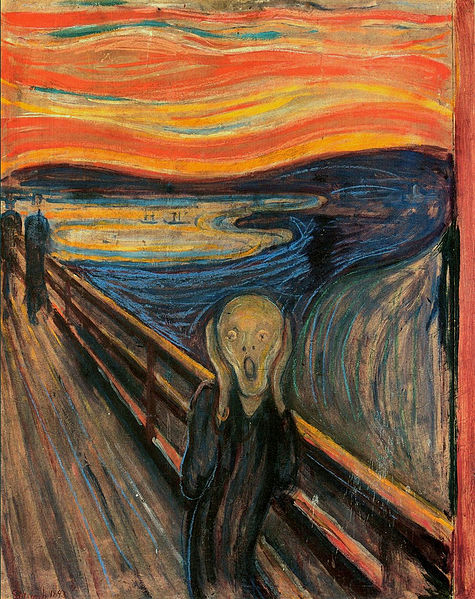
Bible study often takes the form of taking each sentence and trying to interpret it. This can lead to lengthy discussions about the translation of a particular word. It is trying to understand by dissection, but then risks missing the whole. It is similar perhaps to trying to understand the human being by examining each molecule, or ‘The Scream’ by examining a single brush stroke.

If we view the Bible as a collection of documents that were written by human beings describing their journey with God then we can understand why, for instance, different accounts of the same event may differ. We can understand that the meaning of any part must be discerned in the context of the day. We can understand that the writers might simply have got some things wrong. It was men who decided what the best books were to put in the Bible, and they made their decision based on sober judgement. But we should not now view the book as somehow having a magic spell on it that says that ‘this is God’s complete and unchallengeable word’.

There is immense value in the Bible, but I fear that modern Christians have been led to worship the Bible rather than God. It contains wisdom and encouragement, and is correctly used to support our growth rather than constrain it.

Oswald Chambers

If you’ve never come across him, I recommend Oswald Chambers.  I feel he has great insight into so much of life.  See http://utmost.org/ for daily thoughts.  From this morning:

“The golden rule to follow to obtain spiritual understanding is not one of intellectual pursuit, but one of obedience. If a person wants scientific knowledge, then intellectual curiosity must be his guide. But if he desires knowledge and insight into the teachings of Jesus Christ, he can only obtain it through obedience. If spiritual things seem dark and hidden to me, then I can be sure that there is a point of disobedience somewhere in my life. Intellectual darkness is the result of ignorance, but spiritual darkness is the result of something that I do not intend to obey.”

The Shamu Show

The crowd assembles for the Shamu show. Children eagerly seek out seats in the ‘soak zone’ whilst anxious parents cover up all valuable belongings to keep them dry.

Shamu is a killer whale who does marvellous tricks with his trainers, but the biggest thrill is when the whale leaps out of the water and splashes the first 12 rows of spectators.

Seats fill up quickly for about half an hour before the show. To keep people entertained there is a 50m x 20m screen behind the pool – a massive TV screen. There is a simple quiz, with questions shown on the screen whilst a camera (who knows where) picks out a member of the audience who then hold up one, two or three fingers to indicate the right answer.

The quiz is fun but trivial. What fascinates me is the response of the people when they see themselves on the big screen. Many smile and wave. The shy little girl slowly slips behind her Dad. The man idly picking his nose suddenly sees himself 10m high – starts – and whips his finger out of his nose and back down to his side.

How different it would feel to see ourselves live on the big screen. How differently we would behave. Yet perhaps we are already on the big screen – God’s big screen. How are we going to behave now? Which of our actions are going to please him and make him happy? Which are we going to stop in embarrassment? Are we going to wave and smile with joy, or are we going to crawl away and try to hide?

Let’s imagine we are always on God’s big screen, and let that help to guide what we do.

Stereoscopic vision

A few years ago there was quite a craze about magic-eye pictures. When you first see one of the pictures there are usually interesting colours and shapes, and you might like it just for that.

Then someone tells you that there is 3D picture of a train (or such thing) hidden in the picture.  You might respond with “don’t talk rubbish”, or you might look and look at the detail, turn it upside down, look at it in the mirror.  But you can’t find anything by yourself!

Your friend might give you some hints on how to find it.  You might follow their suggestion and still see nothing.  You challenge them that they are mistaken, but they insist that there is something there.  If you didn’t trust them or if they weren’t your friend then you’d give up looking.

But maybe you still trust them enough. You try harder, but that doesn’t work.  Then you just relax and gaze at it – and catch a glimpse!  Slowly you learn how to hold that glimpse and suddenly you can see there is a whole picture.  You learn to explore it, and see its wonder. Then something distracts you and it’s gone again.  But now you know…it’s waiting there for you to find next time.

We all see the wonder of the world, but we go through much of life not realising the big picture behind it.  We need someone to tell us it’s there, and to help us find it.  But we need to trust their intentions, and to be willing to feel embarrassed in our searching or else we will give up and perhaps even try to ridicule those who claim there is a God behind it, who claim that there is truth in Jesus’ teaching, that the holy spirit can guide and change our lives for the better.  If we are not ready to take the risk then we may dismiss the whole thing, but if we are ready to risk then perhaps we will indeed find something of great worth.

We need two eyes to see the magic eye picture.  If you look with only one you will never find it.  Perhaps we need two eyes to see the big picture of the universe:  The ‘material’ eye that sees the material world, the scientific discoveries, the wonder of life itself.  And the ‘spiritual’ eye that listens to the message of the love that God has for us through what he reveals to us, that discerns truth from falsehood, that sees another spiritual being in everyone we meet.

An argument for, and definition of God.

I have started reading Anselm; interesting stuff. Not sure I’ve really got my head round it yet, but nevertheless let me try to paraphrase my understanding of his argument so far in a modern context:

We are all aware that there are ‘non-material’ things: love, justice, purpose, hope, belief, to name a few.  An act of love is carried-out through ‘love’, and an act of justice is carried-out through ‘justice’.  If love did not exist then one could not carry-out an act of love. And it is through ‘goodness’ that we are able to carry-out an act of love; without goodness we could not carry-out an act of love, or of justice, or…  Apart from goodness, all other non-material things are carried-out through goodness, and therefore goodness is the ultimate non-material thing, or ‘essence’ and it exists through itself.

We can also perceive that some acts are express more love than others; there can be great love, or great justice, or great goodness.  And we can imagine that for any great goodness there could be a goodness that is just a little greater … until we reach infinite goodness.  And so everything that is good in any way is within that infinite, or supreme goodness.

Everything exists through something, and we have seen that of things immaterial everything exists through supreme goodness.  But everything must exist through one thing.  If we imagine that there were more than one thing, then either there would be one thing through which the more than one thing were able to exist – which would then be the one thing, or they might exist through a ‘power to exist through oneself’ – which would then be the one thing, or they would exist mutually through each other – which defies reason.

The universe exists, and so it exists through something. Non-material things exist, and they exist through supreme goodness.  Therefore either the universe exists through supreme goodness, or supreme goodness exists through the universe.  But can supreme goodness exist through the universe?  We can conceive that there are other universes, but it is inconceivable that those other universes exist without supreme goodness; being non-material supreme goodness cannot be constrained within a material context.  Therefore it is impossible that supreme goodness exists through the universe, but the universe must exist through supreme goodness, and there can only be one supreme goodness –  which we define as God.

Related posts

https://philhemsley.wordpress.com/2013/04/14/proof-of-god/

https://philhemsley.wordpress.com/2012/12/29/the-god-of-science/


Can God answer prayer in a universe that operates according to the laws of physics?

We believe that the universe operates according to the laws and equations of physics.  And then we ask, “if the behaviour of the universe is predictable according to the laws of physics, then is there any way in which God can ‘do’ anything; how can God answer prayer?”

Perhaps in the same way that we ‘do’ things?  As I type this, I am influencing the material world with my mind, with my will.  Although we all speculate based on different quantities of data, nobody knows how we do it.  We can trace pathways through the brain, down nerves and so on, but we still don’t know how ‘we’ operate with free will or exercise that free will.

Some claim that we don’t, that free will is a delusion.  But they don’t really believe it – we all behave as if we have a degree of free will.  Clearly we don’t decide everything our bodies do, but we still do decide some things.  We exercise our free will daily.  How could it be otherwise?  If free will were a delusion, then if we were truly able to believe that it were an illusion we would realise that there is no point to anything at all and we would give up all our searchings, all our science, all our religion  Yet we would not be able to give it up, because we would not have the free will to be able to!  And if someone claims that free will is a delusion, how have they come to that conclusion?  If they are correct then clearly they cannot have come to the conclusion themselves, but only had the delusion of coming to that conclusion …. So the claim that freewill is a delusion is contrary to all evidence, and by as outlined above completely un-provable.  It is outside of science and outside of reason.  Therefore if pursuit of the truth is to have any meaning then we must conclude that we have free will.

So in the same way that we, with our free will  can operate in the material world, controlled by the laws of physics, God too can operate.  There is thus no scientific reason to suppose that God cannot answer prayer. (If he exists of course!)

Things that a Minimalist Christian does not have to take literally – The Genesis account of Creation

The Genesis account of the creation of the world, universe, plants, animals and man is read by some as a literal description of how it actually happened.  There may be many reasons for such thinking:

  • New atheists like Richard Dawkins have fed the lie that evolution proves that there is no God (which any intelligent scientist with integrity will realise is false).  Since the new atheists are so unpleasant in their behaviour, nobody wants to associate with any of their views.
  • Having been told that the Bible is inerrant, or infallible and don’t know how else to interpret the text.
  • Not having explored or understood the evidence for evolution.

St Augustine in the AD300’s identified some of the problems with the literal interpretation:

It was awkward when Christians talked as if the Bible offered an alternative explanation of the world in rivalry to that of astronomers and other natural scientists.  It made them and their faith look foolish, and obscured the really important matters on which Christians had much to say.  (Augustine, A Very Short Introduction)

In the book “Creation or Evolution, Do we have to choose? http://www.amazon.co.uk/Creation-Evolution-Do-Have-Choose/dp/1854247468 Alexander clearly demonstrates that evolution is fully consistent with Genesis, so long as one interprets and understands Genesis in context.

So, a Minimalist Christian does not need to believe the literal interpretation of Genesis creation account, but does believe that God exists, brought the universe into being and sustains it.

Read more about this in The Big Picture.

Related links

https://philhemsley.wordpress.com/2012/06/03/evolution/

https://philhemsley.wordpress.com/2013/03/03/information-dna-and-evolution/

https://philhemsley.wordpress.com/2012/11/19/if-evolution-is-true/