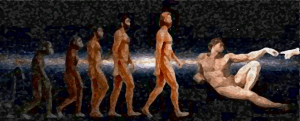
Foreword to The Big Picture

Scientific discovery has brought material benefits and physical comfort to mankind.  The predictability of matter leads us to assume that it behaves according to fixed laws, and this belief has led engineers to develop tools and machinery to manipulate the environment, doctors to develop cures for many diseases, and farmers to grow crops with greatly increased yields.  Many of the scourges of previous times have been overcome leading, in the Western world at least, to longer lifetimes and better health.  However, this has also led to the belief that everything is predictable and controllable. If anything goes wrong (by which we mean it causes us distress or discomfort) then it must be fixable, and if it hasn’t been fixed it must be someone else’s fault.

Personal rights have grown, but personal responsibility has diminished.  Laws to protect the weak have bred the belief that it is the state’s job and not our individual duty to help out those less fortunate than ourselves.  Mechanisation that was supposed to give more leisure time has led to lost jobs and loss of purpose.  Competition and the shrinking of the geographical world has meant that there is someone, somewhere who will work harder or longer hours than we do, and the pressure grows to produce more for less.  The availability of loans means that goods can be obtained now if we promise to pay later.  To pay the loan we need a job.  Fear of job loss drives us to work longer hours and accept less pay. The purpose of life becomes to produce.  The mechanism which fuels demand and production is the economy.  The economy becomes the measure of the health of a nation.

Is that what it’s all about?

Is my value simply what I can produce?

Am I measured just by what I can earn?

If I retain the worldview that the economy is king then the implication is yes, but that doesn’t feel right.  I want to be valued and loved as a person.  I want a worldview that speaks to my heart and my mind and not just my wallet, and I want it to be based on sound thinking and evidence.

Science has brought great technological and medical benefits to mankind; cars, televisions, fridges, telephones, electricity and so on.  But science has also brought guns and bullets, pollution, global drug trafficking and job losses.  Science seems to dominate my life, telling me what I should or shouldn’t do to keep healthy, avoid risk and live longer, but it doesn’t tell me why I would want to live longer.  Science doesn’t give any purpose to my life.

Religion offers purpose, but it too seems to want to control me and dominate me.  Religion has been used as justification for many great atrocities: the Spanish Inquisition, child sacrifices, the Crusades.  Religious people seem to want to tell me how to behave, and to judge and criticise me, claiming to represent the will of God.

I want to know the truth.  I want to know what science can tell me about how the universe works, and perhaps where I came from.  I want the benefits that science can bring, but not at the cost of becoming a slave to its dictates.  I want to know why I am here, what my purpose in life is, or even if there is one.  If there is a God I want to know what He thinks. I want the benefit of knowing that I have a purpose, but not at the cost of becoming a slave to rules from another human being.

And so I investigate, weigh up evidence in all forms and seek a holistic worldview that works.  I have explored what we know from the physical and biological sciences, and I have researched historical evidence for God. I have tested what is actually known, and what is speculation, extrapolation or personal opinion and rhetoric.

This book presents my conclusions, and some of the evidence that brought me to draw them.  I offer what I believe is a consistent, healthy and constructive worldview based on sound evidence.  I’ve called it Minimalist Christianity.  Whether you agree with my conclusion or not, I hope that many of the myths that currently inhibit so many of us will have been weakened or dispelled.  I hope that a step can be taken towards finding purpose and experiencing life in abundance.

Christmas – the start of a tragedy?

We have just celebrated Remembrance Day, and we are in the lead up to another day  of remembering an event that modern philosophy would view as tragic.  Jesus Christ was born specifically with the deliberate destiny of dying a horrific death by crucifixion.  The culmination of his life’s purpose was to die, painfully and alone.  And yet Christmas is a joyful event celebrating his birth.  And his life was not tragic, nor heroic, but marvellous and loving.

At first sight this does not make sense, but only if we come at the event with the wrong assumptions.  To make sense we need to grasp that:

  • This was God himself choosing to become human, living as we live, suffering as we suffer, and importantly, doing himself what was required rather than imposing on another.
  • To do this, God must care deeply about us
  • Suffering is not necessarily bad. It can be necessary to achieve the best
  • Death is not the end, but a doorway to something better
  • It is not possible for us to live a perfect life
  • God / Jesus chose to die to allow us to forgive ourselves for our past, and to choose to live his way … even if it may lead to what the world sees as hardship and suffering

There is so much more that we need to learn, that we have forgotten in this modern age.  Use this Christmas to begin your journey of discovery.


More than a General Election

8th June 2017 was so much more than just a General Election.  I am writing this on June 9th with a joyful heart.  I give thanks that Love, Joy, Peace, Kindness, Gentleness, Faithfulness, Patience, Goodness and Self Control are not dead. But I am also aware that neither are hatred, anguish, fear, selfishness, aggression, betrayal, impatience, evil and knee-jerk responses.

The things on the first list are “the fruit of the spirit”, those on the second list are natural human responses to situations.  We have all experienced both lists – giving and receiving – and we know that the first list brings life, the second brings despair.

I have learned that the first list is not just fruit of the spirit, it is God within us– whether we recognise it as him or not.  God is love, and love is God.  God is joy and joy is God….  When we experience love, we are experiencing God.

The second list describes the absence of God.  Hatred is the absence of love, anguish is the absence of peace…

Yesterday showed that God is still present in us.  But it also showed that we can behave in very selfish ways. Many of us have selfish habits and responses that we cannot control, and think that we cannot get rid of.  Believe me, we can conquer them! Talk to me privately if you want to know more.

Politics is important, but much of politics is about making the best of a bad job.  It is about managing a dysfunctional society which tends to the natural human response.  But I have a great hope.  I hope that we can bring transformation to society.  Let us strive to exercise and experience Love, Joy, Peace, Kindness, Gentleness, Faithfulness, Patience, Goodness and Self Control.  Let us choose God within us.

“Sorry Jesus, you got it wrong”

Two children are in a fight, and when we separate them both point at the other and shout “well he started it”.  We might respond “well even if he did, you carried it on!”

But as we grow older we forget to apply Christ’s simple but profound wisdom to our own lives.

 “You have heard the law that says, ‘Love your neighbour and hate your enemy. But I say, love your enemies!  Pray for those who persecute you! In that way, you will be acting as true children of your Father in heaven. For he gives his sunlight to both the evil and the good, and he sends rain on the just and the unjust alike. If you love only those who love you, what reward is there for that? Even corrupt tax collectors do that much. If you are kind only to your friends, how are you different from anyone else? Even pagans do that.

 But you are to be perfect, even as your Father in heaven is perfect.”

Of course, as we become adults our disputes are less likely to be over schoolboy issues.  We might have a ‘neighbour from hell’ who takes advantage of us and tramples over our ‘rights’.  And when we respond in kind, and when the conflict escalates we say ‘well he started it’.  And perhaps ‘who are you to criticise what I do?’.

When,  was a Christian,e find ourselves in this sort of situation, do we respond by justifying our actions? Do we argue that Jesus’ teaching is wrong and doesn’t apply to our case?  Or do we admit that we are in the wrong, perhaps too tired or weak to do what we should.  Do we accept that we are falling short of his instruction to be ‘perfect’ (i.e. do we repent) and humbly ask him to work with us to correct this flaw in our character?

If we look elsewhere at Jesus’ wisdom we find that he has already given guidance on how to love our enemy.  Again, we have a choice of arguing that he must have got it wrong, or we can choose to work with him to try to follow his words:

“You have heard the law that says the punishment must match the injury: ‘An eye for an eye, and a tooth for a tooth.’ But I say, do not resist an evil person! If someone slaps you on the right cheek, offer the other cheek also. If you are sued in court and your shirt is taken from you, give your coat, too.  If a soldier demands that you carry his gear for a mile, carry it two miles. Give to those who ask, and don’t turn away from those who want to borrow.”

 “But I say, if you are even angry with someone, you are subject to judgment! If you call someone an idiot, you are in danger of being brought before the court. And if you curse someone, you are in danger of the fires of hell.  “So if you are presenting a sacrifice at the altar in the Temple and you suddenly remember that someone has something against you, leave your sacrifice there at the altar. Go and be reconciled to that person. Then come and offer your sacrifice to God.”

None of us are yet perfect and we all fall short of Jesus standard.  But the critical question is, do we want to be perfect?  Do we want to change and allow Jesus sacrifice and grace wash us clean.

If we want to hold on to our hatred, anger and right to hit back at our neighbour then Jesus cannot help us.  A pastor often told me “Sin cannot get into heaven” … if we want to hold on to our sin, we can do – but we could not be allowed into heaven; we would spoil it for everyone else.  If we choose to hold on to our hatred then we are choosing to separate ourselves from the infinite goodness that is God.

To be clear, I am not judging or criticising anyone who finds themselves in a difficult situation with an enemy. None of us know how we would respond if we were in someone else’s shoes.  None of us can tell another to remove the speck from their eye!  Judgement is for God alone.  But hopefully this post points out simply and lovingly what Jesus tells us.

“the Lord has told you what is good, and this is what he requires of you: to do what is right, to love mercy, and to walk humbly with your God.”

Immigrants!

“A business man was coming back from a sales trip overseas.  His flight was delayed and he managed only to get the last train back to where his car was parked at the station.  It was late at night, and as he took his keys to open his car he was set upon by robbers.  They beat him up, stole his keys, wallet and computer, and left him lying there in the station car park.

The car park was quiet, for it was late at night and he lay there, hunched up and groaning in pain.

Another late train drew in. The first into the car park was a wealthy land owner and landlord.  He saw the man lying there and muttered under his breath about how drug addicts were spreading everywhere.  As he clicked the central locking on his 4×4 he made a mental not to write to the leader of the council about cleaning addicts out of the area.

The next person into the car park was a middle classed lady coming back from a day shopping.  She looked across at the man, and in the dark assumed that he was one of the homeless, turning to drink to drown his sorrows.  She kept her distance; she was worried for her own safety.  Why doesn’t the government do something to help these people she thought to herself.  I might have to think about voting for one of the other parties next time.

No more trains came in, but later that night an immigrant was walking by on his way to his night shift at an out of town warehouse and distribution centre.  He saw the man still slumped there, and went across to him.  He saw the state of the man, and tried his best to bandage the wounds and make him comfortable, wrapping his own coat around him and giving him a sip from the hot drink he’d brought with him to keep out the cold on the walk home.  He called the emergency services and waited with the man for the two hours until they came.  Finally some paramedics arrived and told the immigrant that they would now look after the business man and that he should go on his way.

He walked the two miles to his warehouse job, but when he arrived the supervisor berated him for lateness and summarily dismissed him.  His story of helping the injured man was treated as such – a story made up to cover his laziness, and he was told that he was a shirker who should go back to his own country.  He sadly walked back to his shared room, wondering how to break the news to his family, and worrying about how he would now be able to afford this month’s rent.”

Which of these people was making our nation great again?

A contemporary Genesis

One morning I felt the inspiration to write a modern version of the Genesis account of creation, incorporating and alluding to the scientific discoveries of recent times.  I hope that nobody chooses to take offence:

Before the beginning of time and matter in our universe, there was God.  Of his works other than our universe we know nothing, but of his works in this universe we have learned much through the gift of our intellect. Of all his purpose in our universe we can know only what he has chosen to reveal to us, and he has revealed that we were his purpose.  One purpose alone or one purpose among many is not for us to know.

God chose to create this universe.  He created time, and then he tore nothingness into matter and antimatter, and in that great explosion from nothing he caused there to be an excess of matter over antimatter.  And he causes matter to interact with matter through invisible forces acting across nothingness. And ripples of that rending apart of nothing remain until this day for us to observe with wonder.

Since God knows his plans, he chooses to cause matter to behave in a consistent way. He allows the tiniest particles to behave in individually unpredictable ways, but in community he causes them to follow his chosen laws.  In the presence of spirit, whether God’s own or that of humans or other spiritual beings, God allows his laws to be suspended.  God continues to sustain and guide his creation, acting as and when he chooses and allowing individuals to choose how to act.

And so for billions of years, although years were yet to be invented, the universe unrolled according to the laws that God had chosen.  Particles formed into atoms, atoms formed into great stars and stars drew together into galaxies.  The first stars grew to such a size that the interaction between the matter and the forces caused great energy and the explosion of the stars, and in those explosions new atoms were formed.  God was making the building blocks of life, the carbon and the oxygen atoms.  Out of those explosions, and according to God’s laws of interaction new stars formed, and planets were formed around those stars.

One of those planets, the earth, had the right conditions for the next phase in God’s plan.  The planet was at first a molten mass, bombarded from space by asteroids and meteors as the turmoil of the formation of the particular sun and galaxy subsided.  A crust was formed on the molten mass, and a gaseous atmosphere formed above the crust.  In that atmosphere and on the crust, the carbon, hydrogen and oxygen atoms joined to form more complex short molecules.  When the time was right, these short molecules formed into long chain molecules.  These very special molecules continued to work according to the laws that God had chosen for the atoms and particles.  The molecules had different purposes, some formed into cell membranes, some formed into little molecular machines, and some formed into very long instruction chains.  And God caused them to be combined into what we today would call cells, and God had given them the mechanism to multiply in number.

To the first cells he gave the task of changing the atmosphere of the earth.  Using the energy of the nearest star, the sun, the cells separated oxygen from carbon dioxide and pumped the oxygen into the atmosphere.  For more than a billion years the cells carried out their task of preparing the atmosphere of the earth, getting ready for the more complex organisms that were next on his plan.

When conditions were right, the individual cells formed into groups or communities that were dependant on each other, where each cell in the group performed slightly different functions and so the new organism was able to both become larger but also to perform more complex functions.  God gave the individual cells the means to evolve a mechanism that would carry the instructions for each cell in the group to perform its function, and to respond to the communications from other cells within the group.  And so, multicellular organisms were formed.

The instructions embedded in each of these cells ran to billions of characters in length.  The mechanisms of the cell and these instructions were both necessary for the cells to operate and grow, and to reproduce from generation to generation.  God didn’t plan to make all organisms identical, so he designed ways and means of bringing variation to the offspring of the organisms.  He allowed “random” variations due to inaccurate copying, and he caused deliberate mixing of the instructions in one organism with another, requiring separate organisms to come together in order to create the next generation.  The organisms themselves thus had to live in partnership and community to survive.

So God had established a process of growing a wide diversity of organisms of increasing functionality that relied on each other to survive and thrive.  Whilst each individual organism would be allowed to behave in an individual way, only those that were successful in progressing God’s plan survived and reproduced.  God chose to allow a process of competition to develop the organisms as he wanted; a process which required individual capability and cooperation between individual cells within an organism, and between organisms of the same type.  Through this phase of God’s plan he used the law of “survival of the fittest” to perfect each organism, and to select which organisms to perfect.  The organisms didn’t know anything of right and wrong.

But that was not the end of God’s purpose, although it took billions of years to accomplish.  His plans were greater than that, for there to be beings in his likeness; beings that would design and create, but more than that, beings that would know right from wrong, beings that would love, spiritual beings that would know and seek God himself.

So he selected one of the organisms and he planted his spirit in that organism and gave it an awareness of God himself, and he gave that organism the ability to know what is right and what is wrong, and he gave that organism the ability to choose to do what is right or what is wrong.  That organism is mankind, the pinnacle of God’s creation. 

You might not be ready to accept this new account. Certainly it is not literally correct, but maybe it is more relevant to today’s society in the same way that the original Genesis was relevant to the society of its day.  It conveys that all of us are spiritual and material beings, willed by God as the culmination of a creative process of unimaginable complexity spanning billions of years, following the creation of time itself.  Mankind: created with the opportunity to know God and to relate to him, but allowed the alternative of rejecting and ignoring him.

Excerpt from “The Big Picture – an honest examination of God, Science and Purpose”

evolution

David Bowie – The Hysteria, the Sorrow, the Frustration and the Hope

A clear thinking article.

theweeflea's avatarTheWeeFlea.com

This is my article on David Bowie in Christian Today   – it is slightly amended because I wanted to tidy up a couple of things.  The article came as a result of a conversation with my wife, Annabel, as she gave me a lift down to the church.  And then all these ideas just popped into my head, so I wrote them down and quite surprizingly it has gone, as they say, ‘viral’.  There are so many ‘Bowies’ out there – who need to hear the Good News!  As always comments appreciated.

Its great that The Scotsman has put much of this on their website!

And The Herald

David Bowie’s death, grief, and the frustration of a society that has nothing to offer the lonely

It was a shock. Of course it was. Make your coffee, switch on the radio and you hear Life on Mars on Radio 4. What…

View original post 1,353 more words

A morning prayer for the wealthy

Dear Lord,

Father, Son and Holy Spirit,

Thank you for bringing me safely through another night and for the promise of a new day.
Thank you for blessing me with health, wealth and good friends, and thank you for my family.

Thank you for the blessings that I can bring to others. Forgive me please for the times when I have not acted as you would wish, and please strengthen and encourage me to carry out your will in the future. Guide my steps to places and people who I can bless, and form in my heart the desire and will to be that blessing. Let me feel joy at the good that I have been able to do in your name.

It is hard to be joyful when there is evil confronting us each day, sustained by misguided beliefs and the cold hard hearts of so many.

Yet all good things come from you and are part of you, so please help me to know you, love you and enjoy your presence. Please lift my spirit to worship and praise you, and to appreciate your gifts to me. Please be present with me every moment of the day and night, filling me with your goodness and keeping me from harm. Please protect those who I love, and heal those who are suffering in body, mind and spirit.

In this cruel and selfish world, I ask that you work in all people to draw us to love you with all our heart, mind, soul and strength, and to love our neighbour as ourselves.

Please correct the growing culture of inequality where we, your children, believe others to be less important and valuable than we are. Help us to see each human being as our brother or sister, parent or child, and to love them as such.

Father, let your spirit drench this land as the wind and rain of winter. Convince the people in this nation of your existence, bring us to see our sin, and to repentance and forgiveness. Draw us close to you.

And please mould your church to feed us with the bread of life and to help us praise you as you deserve. Please remove the barriers that we put in the way of people who would follow you, forgive our mistakes and guide our actions to properly serve you and those we live among.

I ask all this in Jesus’ name, for I believe and trust that this is your will.

Amen

Two shirts at Christmas?

Friends on Facebook know that I often share posts highlighting injustice.  And I have written blog posts prompted by claims that ‘austerity’  is working.  But in the face of injustice, with a government that shows no sign of compassion, and with years to the next general election, doesn’t this just breed despair and helplessness: “It’s too big a problem, and what can a single human being do to change things?” So why do I speak out about injustice?

  • To grumble and whinge?  No
  • To cry out for change? Yes
  • To educate that it is indeed injustice? Yes
  • To encourage readers to ask “what can I do?” Definitely.

Many years ago a wise man said “If you have two shirts, give one to the poor. If you have food, share it with those who are hungry.”   He was speaking in a time of great injustice, under a government that brooked no dissent.  There was no changing the system, but he was calling every person to make a difference.  He was challenging the culture of the day.  That is what I hope to achieve.

I choose not to follow the culture of self-interest and greed endemic today, where we are expected to make all decisions on the basis of maximising our personal income. I try to make life decisions on what is good and right, and that includes recognising that I have “two shirts”.  I long for the wealthy to recognise the same.

But where does the strength come from to be counter-culture?  It does not come from the media, or from political leadership.  It comes from the one that the wise man served.

Do you want to make a difference?  Then begin.  Choose goodness.  Choose love.  Transfer your allegiance from the culture of selfishness to the one who is supreme goodness; the one whose birthday the world is celebrating.

Have a great Christmas!

two shirts

“Christianity – Why Bother?” … out now

Belief in God is claimed to be on the decline, and many cannot see a reason to question whether God might exist. What would be the point? Why make the effort? That is why “Christianity, Why Bother?” deserves a read. It answers the question that its title asks.

The book discusses some of the misconceptions of Christianity, and then moves on to examine the basis for belief and explains some of the practical and day-to-day benefits of being a Christian. The author shares some of his experiences since he became a Christian at the age of forty. The aim is simply to address the question, “why bother?”

Christianity why bother cover

Click here to buy on Amazon.