Christianity, rules and regulations

Christianity is about freedom, yet we keep tying ourselves up with rules and rituals, and then feeling guilty when we break them.

It seems to be in our nature to want rules.  We want to be told what we can do and what we can’t do.  We don’t want to have to think.  Take driving for example.  We know that we shouldn’t go at high speed in built up areas, so why do we need to be told that we mustn’t go above 30 miles per hour?  What’s special about 30, why not 29, or 33?

Setting a rule is a way of avoiding guilt.  We prefer to pretend that we are not guilty rather than that accept we are guilty and ask for forgiveness.  If I go at 29 miles per hour and knock someone over, then you can’t accuse me of going too fast – I was within the speed limit.  I can say “it wasn’t my fault – it was the person who set the speed limit.”

This is living the Old Testament way: “Thou shalt not exceed 30 miles per hour in a built up zone”.

If we were to ask Jesus then he would say “don’t go so fast that you knock someone over”.  It’s a much tougher requirement, and means that there is no way we can escape our personal responsibility.  If we knock someone over it’s our fault and that’s that.  All we can do is to ask for forgiveness, to which he would reply “Are you really sorry? Are you going to change your driving habits so that you don’t do it again? Yes? Then I forgive you.”

Tougher, isn’t it?  I have to take full responsibility, and I have to be humble enough to admit that I was wrong and to ask for forgiveness.

Christians, as anyone else would, find it difficult trying to live a life which is totally without laws, but where the standard is perfection. There is no speed limit, but you are responsible if your driving harms someone. So we make up our own laws.  Some are moral, some are conventions or traditions.  Although Christianity is about freedom, we have tied ourselves up in chains again.

Everybody does it without realising it.  Have you ever been to a conference or meeting that runs over a couple of days.  On day one, we look round the room, and then choose a seat.  Next day, that’s our seat – we go straight there.  It’s easiest, it worked yesterday, but we’ve just made up a little law: “that’s where I sit”.  It’s OK to make up rules, so long as we don’t let the rule become more important than the issue it’s solving.  We need to keep remembering the reason behind the law.  Going 30 miles an hour in itself is not important; avoiding running someone over is the issue.  Christians need to be wary of our natural love of rules and laws; Jesus looks at the heart; do we want to do what is right or do we want just to keep the law?

…………………………………………………………

If you enjoyed this and like to read reasoned thinking, buy my book The Big Picture

Pete and Graham

Pete and Graham had worked with each other for years.  Pete went to church every week, a fact that Graham was unaware of.

“Hi Pete”, said Graham, “Did I see you coming out of the Christian book shop yesterday?”

“Yes, I was buying a Christening card for a friend.  I’m going to the Christening this weekend.”

“Ah, that explains it,” said Graham, “I didn’t imagine that you could be a Christian, after knowing you all these years!” said Graham smiling.

“No” mumbled Pete, embarrassed.

Graham went away just hoping that he could find someone to talk to about the lump that he’d got on his stomach, and the questions that the possibility of cancer and death had raised in his mind about whether God existed.

Pete went away ashamed, but after a day or two he felt better … after all God forgives everything (doesn’t he?).  Still, he found it rather hard in the singing that Sunday, “I will offer up my life ….”

Jesus sighed,  “was this the sort of forgiveness that I went through it all for?”

“But whoever disowns me before men, I will disown him before my Father in heaven.” Matthew 10:33

The Wonky Car

“It’s all in the genes” the scientists say. “Your genetic make-up determines your shape, size, colour and even your behaviour.” Some people it seems are made good, and some evil. Well maybe things are not that clear-cut, but we can understand that in the same way that we have different physical features, we have different behavioural characteristics.

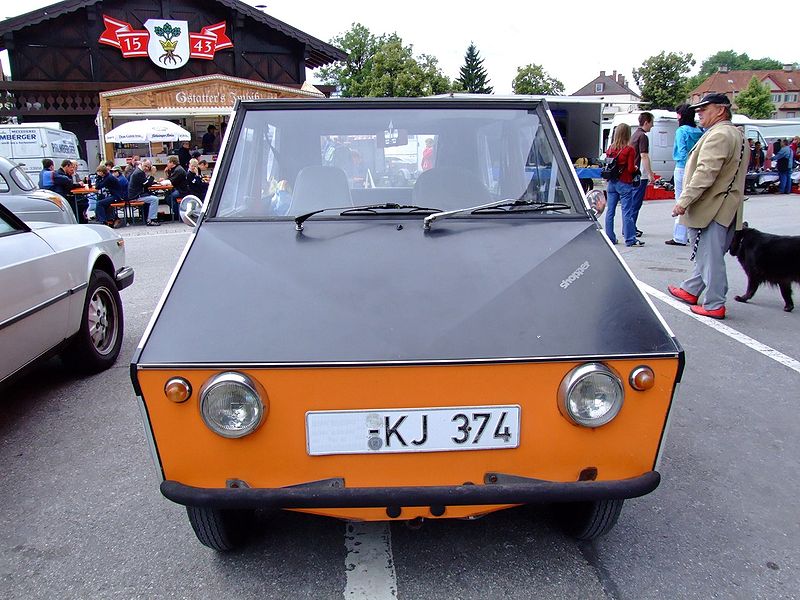
Imagine our body being like a car, and our soul being like the driver. We don’t all have identical cars; some of us might be given Rolls Royce models but others get a wonky car – you know the type – the steering wheel is loose, the brakes are useless and the engine is shot. We all have to drive these cars on a straight and narrow motorway; is it surprising that some of us have accidents? If you are in the wonky car, you might be working like anything to try to keep it on track whilst the guy in the Roller just puts it on cruise control, sits back and relaxes.

As we steer our way through life we are more likely to shout abuse at the wonky car than the Rolls, but when we reach our destination who is God going to be pleased with? The driver of the Rolls who continually cut in front of the wonky car? The driver of the Rolls who went slowly next to the wonky car to keep it going straight? The driver of the wonky car who reached the end despite all the difficulties?

So today, are you going to judge the driver by his car? Or by how many cars he bumps into? Who are you going to help keep on track – or are you going to make sure you get there first by cutting in front of everyone else?

Let’s leave the judgement to God, but let’s encourage and support those who need our help – even if they do keep meandering off track, bumping into us and hurting us. Let’s learn the grace and wisdom to look behind the car to the driver inside.

If God is all powerful, why doesn’t he stop all the fighting?

I wrote this when my delightful daughters were much younger; I hope that if they read this now it will make them smile ……

Parents can learn a lot from their children.

My children sometimes fight.  Sometimes one or other of them may exaggerate their wounds and try to get me to arbitrate as to who was to blame.  I hate to see them fighting and so have found myself drawn into trying to resolve and judge the issue.  However, I try not to blame one or the other because I love them both and recognize that it takes two to make an argument. However, it often ends up with both of them ‘hating’ me.  If I do arbitrate then the one who ‘wins’ soon forgets, but the loser then spirals into silent or vociferous anger and feeling of being unfairly treated.  As an arbitrator I cannot win!  Even as a peacekeeper I seldom win.  It is perhaps best to leave them to have their fight, and to be there to comfort whoever needs comforting.

Since we have free will, how can God intervene when he sees us fighting and causing suffering?  We would behave in just the same way as my children.  It would not be ‘fair’ if we were judged ‘against’, and if we were judged ‘for’ then we would simply accept the decision as our right, and go about our business.  He has given us the dignity of choice, but having done that he has necessarily limited the use of his power.

He lets us choose how to resolve the fight.  Jesus told us how to resolve the fight if we are prepared to listen.  Essentially – don’t worry about winning the argument – look for the plank in your own eye – think what you could have done better – be humble – turn the other cheek.  It’s not ‘fair’, but it works!  But when we ignore his advice then he’s still there to comfort whoever needs comforting.

Is it time to stop blaming God for all the things we do wrong to each other?  Instead, shall we recognise his love for us, and listen to his advice and find the fulfilment of living our lives as he intended?

Things that matter to a Minimalist Christian – Hope!

Sometimes people will say things like “God would never forgive me for the things I’ve done”. They have given up on themselves, and they have no hope or expectation for the future. They recognise what they have done wrong in the past, and are trapped there, unable to break free.

Central to a Minimalist Christian is that this is simply not true. There is always hope, whatever you have done and whatever situation you find yourself in.

Think about the person who recognises that they have ‘sinned’ and done stuff that they feel cannot be forgiven. How can they know that they have hope? We read early in the gospel of Mark that “Jesus went into Galilee, where he preached God’s Good News. “The time promised by God has come at last!” he announced. “The Kingdom of God is near! Repent of your sins and believe the Good News!” from which we can conclude that it is Good News to recognise and wish we hadn’t carried out all the bad things we’ve done, and ‘repent’ of them. So the recognition of what we’ve done is a first and positive step.

Later in Mark, Jesus says that “I tell you the truth, all sin and blasphemy can be forgiven”.and at the end of Luke he says “There is forgiveness of sins for all who repent.” When Jesus says ‘all’ he means ‘all’. None of us are beyond God’s forgiveness. And we learn that Jesus has the authority to forgive when he comes across a man paralysed from birth. Jesus said to the paralyzed man, “My child, your sins are forgiven.” Later Jesus asks “Is it easier to say to the paralyzed man ‘Your sins are forgiven,’ or ‘Stand up, pick up your mat, and walk’? So I will prove to you that the Son of Man has the authority on earth to forgive sins.” Then Jesus turned to the paralyzed man and said, “Stand up, pick up your mat, and go home!” And the man jumped up, grabbed his mat, and walked out through the stunned onlookers. They were all amazed and praised God, exclaiming, “We’ve never seen anything like this before!” So Jesus has the authority to forgive sins, demonstrated by his power to perform miracles. However, he also delegates that authority to those who choose to follow him, for in John’s gospel he meets the disciples after he has been crucified and resurrected. Jesus breathed on them and said, “Receive the Holy Spirit. If you forgive anyone’s sins, they are forgiven. If you do not forgive them, they are not forgiven.” and we can know that his followers must forgive us because he explained it to Peter: Then Peter came to him and asked, “Lord, how often should I forgive someone who sins against me? Seven times?” “No, not seven times,” Jesus replied, “but seventy times seven! So, we can rest assured that if we have done bad things in the past, and we now regret them then we are forgiven as soon as we ask, and so we can move on in our lives with renewed hope for the future. And we can know that every time we mess up in the future and with regret ask once again for forgiveness that we will once again be forgiven. Jesus would not tell his followers to forgive ‘seventy seven’ times if he were not going to do that himself! But of course, if we don’t ask to be forgiven then we won’t receive forgiveness.

But suppose we are nearing the end of our lives. Is there any point in asking forgiveness, after all, we’re not going to be around much longer? Well yes! A Minimalist Christian knows that this life is not all that there is; there is a life to come. St Paul summarised this rather well when he said that if there is no resurrection of the dead, then Christ has not been raised either. And if Christ has not been raised, then all our preaching is useless, and your faith is useless. And we apostles would all be lying about God—for we have said that God raised Christ from the grave. But that can’t be true if there is no resurrection of the dead. And if there is no resurrection of the dead, then Christ has not been raised. And if Christ has not been raised, then your faith is useless and you are still guilty of your sins. In that case, all who have died believing in Christ are lost! And if our hope in Christ is only for this life, we are more to be pitied than anyone in the world. But in fact, Christ has been raised from the dead. He is the first of a great harvest of all who have died. So whatever stage of life we find ourselves in, there is always hope and always sense in asking for and receiving God’s forgiveness.

And Jesus tells a story of how a landowner hired workers throughout the day, some only working a short time. But at the end of the day they were all paid the same amount. This shows that it is never too late to choose to receive his forgiveness, and to receive it in full.


The people that Jesus spoke to understood this, and in response to receiving forgiveness and hope they wanted to know what to do what was right in the future. Jesus told them, “The most important commandment is this: ‘Listen, O Israel! The Lord our God is the one and only Lord. And you must love the Lord your God with all your heart, all your soul, all your mind, and all your strength.’ The second is equally important: ‘Love your neighbour as yourself.’ No other commandment is greater than these.” I’m not sure that anyone who recognises God as the creator and sustainer of the universe would argue with the first, and we all understand the second ‘golden rule’. But it’s nice to know that a good future is not a killjoy future.

Underpinning all of this hope is the knowledge that God loves each and every one of us. He demonstrated that love in such a powerful way, there can be no doubting it. As recorded in the gospel of John “God loved the world so much that he gave his one and only Son, so that everyone who believes in him will not perish but have eternal life. God sent his Son into the world not to judge the world, but to save the world through him. There is no judgement against anyone who believes in him. But anyone who does not believe in him has already been judged for not believing in God’s one and only Son. And the judgement is based on this fact: God’s light came into the world, but people loved the darkness more than the light, for their actions were evil. All who do evil hate the light and refuse to go near it for fear their sins will be exposed. But those who do what is right come to the light so others can see that they are doing what God wants.” Forgiveness and eternal life are freely available for anyone who wants them, but anyone who wants to keep living an evil life has already judged themselves; they will not seek forgiveness with a sorrowful heart and unless they ask they will not receive it.

So the bottom line is, whatever stage in life we are, no matter how much we’ve screwed up, no matter how unwilling we are to forgive ourselves, God will forgive us if we truly want him to and he will give us hope for the future.

If you feel you are worthless and if this speaks to you, give up your pride and self pity and just ask. And when you ask, know that you are forgiven. Embrace the hope that the future holds.

Things that matter to a Minimalist Christian – forgiving.

“Father forgive them, they don’t know what they are doing” cried Jesus as he hung there dying.  He’d just been betrayed, abused, spat upon, beaten, mocked, whipped, and nailed to a cross.

“Forgive us our sins, as we forgive those who sin against us” is a central part of the Lord’s Prayer.

“How many times must I forgive someone?” asked the disciples, to which Jesus’ reply said “as many times as they sin against you”.

Jesus was pretty hot on forgiveness.

Throughout the Bible there are instructions that we should forgive others, and examples of God forgiving us.

Why is this so important?  How does it square with our sense of justice and our rights?

We all agree that doing bad things deserves punishment; it’s justice isn’t it?  If you knock my tooth out then I should be allowed to knock your tooth out. If you steal from me then you should go to prison.  If you kill my wife you should be hanged.

The trouble is, punishment doesn’t actually fix anything.  It doesn’t fix my tooth if I knock yours out.  It doesn’t return my possessions if you go to prison.  It doesn’t return my wife if you are hanged.  The hurt is still there, even if justice is satisfied.  And when I meet your mother and see her grief after you’ve been hanged, does that make me feel any better?

Forgiveness is what allows us to move forward.

Forgiveness gives up our right to justice.  Forgiveness gives up our right to revenge.  Forgiveness frees us from the need to feel bitterness.  Forgiveness frees us from the need to be angry.

It is not always easy to forgive, although it gets easier with practice.  It is not something that our feelings naturally want to do. When we’ve been wronged, we keep replaying conversations in our head that justify why we have a right to feel hurt. We seek justice and if that’s not forthcoming, revenge.   Christ’s leadership and example doesn’t say it’s easy, but he says it’s essential for our wellbeing.  It wasn’t easy for him to hang from that cross and say ‘Father forgive them’, but it was essential.  Forgiveness is vitally important for the healing of the one who has been wronged.