Pete and Graham

Pete and Graham had worked with each other for years.  Pete went to church every week, a fact that Graham was unaware of.

“Hi Pete”, said Graham, “Did I see you coming out of the Christian book shop yesterday?”

“Yes, I was buying a Christening card for a friend.  I’m going to the Christening this weekend.”

“Ah, that explains it,” said Graham, “I didn’t imagine that you could be a Christian, after knowing you all these years!” said Graham smiling.

“No” mumbled Pete, embarrassed.

Graham went away just hoping that he could find someone to talk to about the lump that he’d got on his stomach, and the questions that the possibility of cancer and death had raised in his mind about whether God existed.

Pete went away ashamed, but after a day or two he felt better … after all God forgives everything (doesn’t he?).  Still, he found it rather hard in the singing that Sunday, “I will offer up my life ….”

Jesus sighed,  “was this the sort of forgiveness that I went through it all for?”

“But whoever disowns me before men, I will disown him before my Father in heaven.” Matthew 10:33

What do we do with our money?

Through no virtue of my own, I was born with skills that have allowed me to find a good job, and to manage my money. Before I was a Christian I thought that this was just good luck, and that I didn’t have to thank anyone for this. I could do with my money what I pleased (of course, in consultation with my wife!).

We have always had a joint bank account, but when she became a Christian many years before me, she suggested that we each have an additional private account which we can use completely as we please. I was happy with this, as I could then ‘treat’ myself without feeling guilty, and also it seemed to make the act of giving each other presents a bit more meaningful, and it allowed her to give money to charity without having to ask my permission.

I used to think myself reasonably charitable. I’d give to people in the street, and I gave a little to Macmillan nurses after my father died of cancer. I was probably like most of the rest of the country, quite happily giving less than 1% of my income away. And following worldly advice I set some financial targets for my life – I decided to have saved £100,000 by retirement age. (I have to admit I struggled to know what I was going to do with it, but it is something that you have to do, isn’t it).

On the road to becoming a Christian I read ‘challenging lifestyles’ by Nicky Gumbell. I decided that it was OK to give more away. I didn’t have to keep it all for myself for the future, and so I made a standing order from my bank to a Charity Card account, of a relatively small proportion of my income. Perhaps the surprising rate at which the amount I had in the account built up showed how little I was really giving away. But having that account meant that I had to give it away – and I found that really quite rewarding. “Now, who can I give this to” is quite a nice feeling. And I didn’t feel any poorer!

But when I first visited Mozambique I learned so much more!  It was so liberating to see how much closer people come to God when they have no money.  And if you put a Mozambican and an Englishman next to each other and dressed them the same, how would you know who was the richer?

But I also saw again the massive amount of good work that is not happening because of lack of money.  I wept when Pastor Caetano described how he had started the orphanage at the House of the Sparrow with all he had – how they don’t know each day where food is coming from, but God always provides.  Forty-seven children, being cared for and loved by a Christian pastor with nothing but what God provides.  I learned that God really cares what we do with our money.

If someone asks us to give to charity the first thought is, “Can we afford it?”  Of course we can – we still have so much more than the children in Mozambique.  Can we afford not to?  No, not unless we want to harden our hearts.

Do not store up riches for yourselves here on earth, where moths and rust destroy, and robbers break in and steal.  Instead, store up riches for yourselves in heaven, where moths and rust cannot destroy, and robbers cannot break in and steal. For your heart will always be where your riches are. (Matthew 6:19-21)

My experience is that my giving to charity has increased twenty-fold or more since choosing to follow Christ, and my financial savings goals have disappeared.  Where is the logic in saving for something that might be needed in the future when you can see something that is needed today?

Things that a Minimalist Christian does not have to believe – The Bible is the complete and perfect truth

I struggled to phrase the title of this post, but I’m talking about the attitude that because something is written in the Bible it must be taken as absolutely accurate and true. The Bible is often called the ‘Word of God’, and Christians are encouraged to study God’s Word, but the basis for such assertions is seldom presented.  St Paul referred to scriptures being ‘God breathed’, but if we think about it, what isn’t ‘God breathed’?  Can anything exist without God?

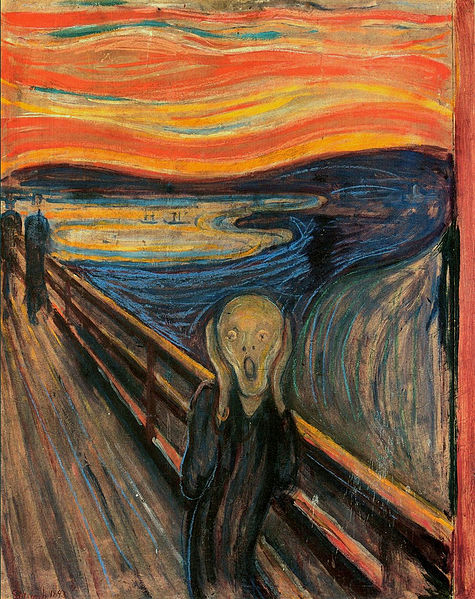
Bible study often takes the form of taking each sentence and trying to interpret it. This can lead to lengthy discussions about the translation of a particular word. It is trying to understand by dissection, but then risks missing the whole. It is similar perhaps to trying to understand the human being by examining each molecule, or ‘The Scream’ by examining a single brush stroke.

If we view the Bible as a collection of documents that were written by human beings describing their journey with God then we can understand why, for instance, different accounts of the same event may differ. We can understand that the meaning of any part must be discerned in the context of the day. We can understand that the writers might simply have got some things wrong. It was men who decided what the best books were to put in the Bible, and they made their decision based on sober judgement. But we should not now view the book as somehow having a magic spell on it that says that ‘this is God’s complete and unchallengeable word’.

There is immense value in the Bible, but I fear that modern Christians have been led to worship the Bible rather than God. It contains wisdom and encouragement, and is correctly used to support our growth rather than constrain it.

Oswald Chambers

If you’ve never come across him, I recommend Oswald Chambers.  I feel he has great insight into so much of life.  See http://utmost.org/ for daily thoughts.  From this morning:

“The golden rule to follow to obtain spiritual understanding is not one of intellectual pursuit, but one of obedience. If a person wants scientific knowledge, then intellectual curiosity must be his guide. But if he desires knowledge and insight into the teachings of Jesus Christ, he can only obtain it through obedience. If spiritual things seem dark and hidden to me, then I can be sure that there is a point of disobedience somewhere in my life. Intellectual darkness is the result of ignorance, but spiritual darkness is the result of something that I do not intend to obey.”

What IS reality?

Our worldview is our way of dealing with reality.  In exploring the truth we would like our evidence to be real. So it’s worth thinking about what “reality” actually means.

I consider myself to be ‘real’.  I cannot be a figment of my imagination, because otherwise there would be no ‘me’ to imagine myself.  Perhaps everything else is a figment of my imagination, perhaps even my body is a figment of my imagination, but I know (at least that part of me that is able to know) that I am real.  Descartes captured this in his famous quotation that has been translated as “I think therefore I am”.

Alone, I am one person.  If you were with me there would be two people.  As more and more join us we would increase to 3, 4, 5, and so on.  So what are 1, 2, 3, 4, and 5?  They are a concept that represents something about something real. The number itself is not real.  So, there may be 1, 2, 3, 4, or 5 men in a room, but there is never just ‘1’. Thinking further, we can have 1 man or even 0 men.  But we can’t have “minus 1” men, or “minus 1000” men, yet mathematically that is perfectly possible.  So are numbers, and hence the whole of mathematics ‘real’?

On a five pound note it says “I promise to pay the bearer the sum of five pounds”.  So money represents a promise.  In our bank account it’s perhaps quite reasonable to have £-1000 as our balance.  We owe 1000 promises to someone else.  Is a promise ‘real’?  Is money ‘real’?

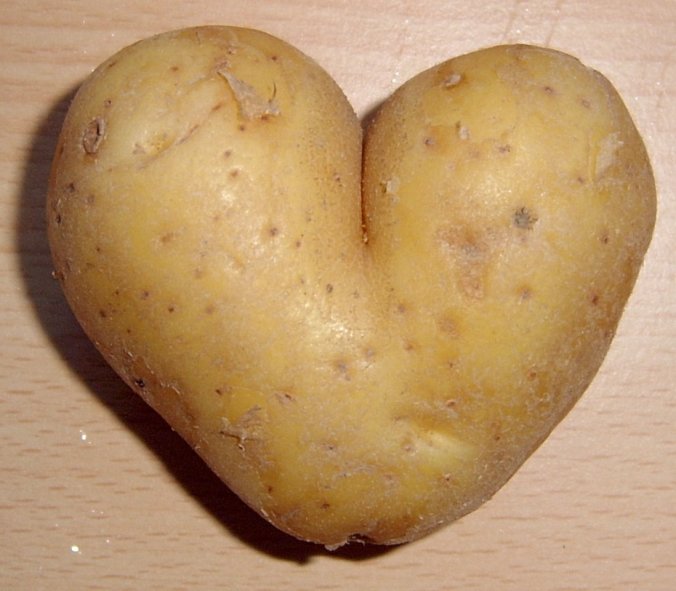
We use both the concept of numbers and the concept of money daily, and they are invaluable for helping society work.  I want some potatoes for my dinner, so I use the concept of numbers to decide how many will fill my stomach, and I use the concept of money (promises) to give in exchange for your potatoes.  And at some time in the future you will probably ‘call in’ that promise and ask someone else for a pair of trousers.  Now you, I, the potatoes and the pair of trousers are what we would normally consider ‘real’, but are the numbers and the promises?

In the simple example above, we use mathematics (numbers) to represent a quantity of something real.  When we do engineering or science, we think we are doing the same.  We define not only ‘a potato’, but we define ‘properties’ of the potato; its mass, its volume, its temperature and so on.  Then we use mathematics to quantify the amount of those properties; a 6 ounce potato for instance.  So are the properties of the potato real? We know that a big potato travelling at a high speed will hurt more than a small potato travelling at low speed, so perhaps it is reasonable to think of the properties by themselves as ‘real’?

Once we have defined these properties and given them ‘units’ to allow us to quantify them (ounces in our example above) then we start to do experiments to see how the properties relate to each other. We might see how a given force acting on a potato of a given size causes its velocity to increase. Then we might carry out the same experiment on a bigger and smaller potato to see how the properties of force, mass, and velocity relate to each other.  And we define further properties that help us do our sums more effectively (like ‘momentum’ … the mass multiplied by the velocity).  Are those combined properties ‘real’, or simply concepts?

We can then capture these relationships in mathematical formulae, and we can do mathematical sums on them to predict what will happen in experiments that we have yet to carry out.  We might have done all our experiments on a five ounce potato.  We take our deduced formulae to work out what might happen with a ten ounce potato, and then we carry out the same experiments on a ten ounce potato to see if our predictions are right. And we find that the experiment will not quite tie up with our prediction, and so we think a bit more about the formula and whether we have left anything out of our experiment, and we come up with more complex and advanced formulae to predict what the ‘real’ potato will do in all circumstances.  That is what we call science.

So are those complex formulae ‘real’?  Is the inaccurate formula ‘not real’ but the more accurate formula ‘real’?  If all the formulae are wrong, are none of them ‘real’?  How can something wrong be real?  If all of this is what science is, can science be real?

According to Richard Feynman (US educator & physicist (1918 – 1988)), a philosopher once said that ‘It is necessary for the very existence of science that the same conditions always produce the same results’.  It is ingrained in us that each time we carry out the same experiment on the potato we get the same result, but what if we don’t? What if the potato just doesn’t behave in the same way? In that case can we claim mathematics or science to be true, or real?  It may seem silly to suggest that the potato will not always behave in the same way, but that’s just conditioning on our part; our faith in this happening is so deep we are not aware of it.

We can perhaps believe that carrying out the same experiment on the same human being will not always give the same result; so what does that tell us?  Are scientific statements on the behaviour of human beings are just informed guesses perhaps?

But let’s get back to mathematics and our friendly potato again. Imagine a light shining on a potato, which is now bouncing up and down on a spring (a bungee potato?).  The shadow of the potato moves up and down on the wall with a changing speed but in a repeating pattern.  Do the same thing with a potato on the spoke of a wheel that is rotating around a spindle and we find that the movement of the shadows of both are the same.  We can use the same mathematical formula to describe how the shadow of each moves, but the ‘real’ objects are moving differently.

Many different forms of equations and mathematical models can be used to describe the motion.  In one form, a concept of an ‘imaginary’ number is used, ‘i’ = the square root of minus 1.   The name suggests that the number ‘i’ is not real, yet in one of our formulae it can be used to represent something that is ‘real’.

So what is real?

Does it matter?

What is my point?

The simple question of ‘what is real’ is not such a simple question after all.  In our day-to-day lives we rely on our ‘common sense’ and freely decide some things are real and others not real (“I don’t think ghosts are real” for instance).  Yet if we scratch below the surface, much of what we accept as real may not be so, and vice versa.

Atheists say that God is not real.  But what does God being ‘real’ might actually mean?   Perhaps the question is not quite as simple as we might think.

Scientific and mathematical equations may or may not be real in the sense of what our common sense tells us, but they are sufficiently real to have a massive effect on our lives.  God may not be the same sort of ‘real’ that we would apply to a potato; although some claim that he has a massive effect on our lives.   But we mustn’t therefore jump to the conclusion that therefore God must be the same sort of ‘real’ as a mathematical equation; there can perhaps be many forms of ‘real’.

Stereoscopic vision

A few years ago there was quite a craze about magic-eye pictures. When you first see one of the pictures there are usually interesting colours and shapes, and you might like it just for that.

Then someone tells you that there is 3D picture of a train (or such thing) hidden in the picture.  You might respond with “don’t talk rubbish”, or you might look and look at the detail, turn it upside down, look at it in the mirror.  But you can’t find anything by yourself!

Your friend might give you some hints on how to find it.  You might follow their suggestion and still see nothing.  You challenge them that they are mistaken, but they insist that there is something there.  If you didn’t trust them or if they weren’t your friend then you’d give up looking.

But maybe you still trust them enough. You try harder, but that doesn’t work.  Then you just relax and gaze at it – and catch a glimpse!  Slowly you learn how to hold that glimpse and suddenly you can see there is a whole picture.  You learn to explore it, and see its wonder. Then something distracts you and it’s gone again.  But now you know…it’s waiting there for you to find next time.

We all see the wonder of the world, but we go through much of life not realising the big picture behind it.  We need someone to tell us it’s there, and to help us find it.  But we need to trust their intentions, and to be willing to feel embarrassed in our searching or else we will give up and perhaps even try to ridicule those who claim there is a God behind it, who claim that there is truth in Jesus’ teaching, that the holy spirit can guide and change our lives for the better.  If we are not ready to take the risk then we may dismiss the whole thing, but if we are ready to risk then perhaps we will indeed find something of great worth.

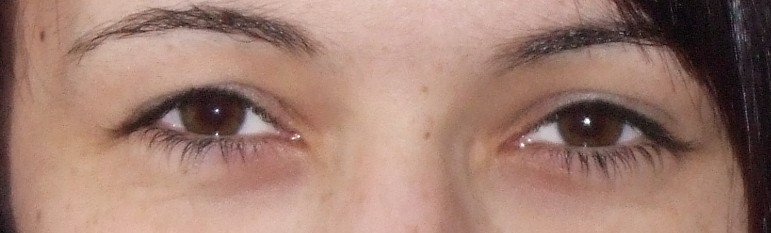
We need two eyes to see the magic eye picture.  If you look with only one you will never find it.  Perhaps we need two eyes to see the big picture of the universe:  The ‘material’ eye that sees the material world, the scientific discoveries, the wonder of life itself.  And the ‘spiritual’ eye that listens to the message of the love that God has for us through what he reveals to us, that discerns truth from falsehood, that sees another spiritual being in everyone we meet.

Message from Mozambique

Here is a recent email from a Mozambican friend.  An example of Christ’s teaching.

Days ago, I was invited to visit some sick people in their houses here in Beira. My heart was so shocked with what I saw; most of them are HIV positive and widows. They have lost their husband because of HIV Aids.

Here in Africa, women are hundred percent dependents of their husbands to provide. When they lost their husbands, they lost hope as well, mostly if they find that are HIV Positive.

As we go where the person is living, and give him a hug, bring her water or medicines, or food for her young children, or take his hand, we too are making a bit of history: a powerful declaration of God’s love, a prophetic statement of his heart to people who often feel totally rejected by the church. The church cannot stay silent when faced with his issue.

Yes, there are still some churches here are rejecting HIV Positive people, still ignorant and a lot of stigma. 

I am a pastor; have to do it as an example to another brothers and sisters in Christ who are willing to do the same. 

Awesome life!

As we age, we find that we can’t do all the things we used to.  I can’t hear as well as I could, and my eyes have reached the stage of needing vari-focal lenses. On the plus side though, we learn a lot too, and one thing we learn is that we don’t know as much as we thought we might when we were younger.  We learn to look more deeply at questions, perhaps because unlike a child who keeps asking ‘why’ we have learnt not to take answers on complete trust.

But when bits of our body stop working we begin to remember how amazing it is when they do, and to wonder if we really do understand all that’s going on in the universe.

Our bodies have incredible and almost unbelievable systems and components.  If someone were to describe how our bodies operate, I doubt that we would believe them but for the fact that we have seen them and we live in them …. and take them for granted!  There was a time when there was no life, and now there is ‘us’.  So my mind wandered:

  • Was there a time when our ancestors didn’t have all of the components and systems that we now have as humans?
  • Was there a time when they had all but one?
  • Was there a time when they had all but two?
  • Was there a time when our ancestors didn’t have blood?
  • When they didn’t have an immune system?
  • When they didn’t have nerve cells?
  • When they didn’t have joints in the skeleton?
  • When they didn’t have a heart?
  • When they didn’t have a blood clotting mechanism?
  • When they didn’t have a bone restructuring system?
  • When they didn’t have lungs?
  • When they didn’t have the little hairs in the lungs that clear out the mucus?
  • When they didn’t have mucus?

I don’t doubt that the answer is ‘yes’, but that further magnifies the amazing fact of our existence.

Not only do our present bodies have to grow in just the right sequence from the very first cell, but the process of developing to our present state must also have occurred in a sensibly ordered sequence. There would be no point in having a blood clotting mechanism without blood but an animal which has blood but no clotting mechanism would be rather fragile. Both mechanisms and components must have developed in parallel.  But the blood itself would be of little benefit without veins and arteries, and the veins and arteries would be of little benefit without the heart, and the heart would be of little benefit if it didn’t respond to the ‘operational needs’ of the body.

So we have a body that constructs itself in a way that at each stage of development it is fully operational (albeit in the controlled environment of the womb), and we have a generation to generation development process that ensures that each entity at each stage of its own development is operational in its own right.

I don’t doubt that this happens, and has happened over millennia.  I don’t have a problem with the principles that Darwin proposed.  But I do wonder if all this can happen just as a result of the properties of matter and the laws of physics.

Of course “the truth is out there” … but whether we can ever find out is another question….

A rational look at heaven

A common view of heaven is that it is a reward for being good. Be good in this life and then you can go and have a ball in heaven – no longer having the restraint of having to pass the entrance exam. Indeed, some believe that when a martyr gets to heaven he is immediately met by seventy-two virgins and promised everlasting happiness.

Maybe our parents said things like ‘be nice or you won’t go to heaven’, in the same way that they might have said ‘do your homework or you won’t go to university’. Perhaps we grew up thinking that the final test will be to weigh our good deeds against our bad deeds, and if the scales tip the right way we get in.

I don’t know if you’ve seen the film ‘Meet Joe Black’. Joe is ‘Death’, come to claim a wealthy American who it seems has led a ‘good and honest life’. Joe takes a short holiday with the American before he takes him to his final destination. When it’s finally time to leave the American asks, “Do I need to worry where I’m going?” to which Joe replies, “A man like you…. No”. His reward is heaven. He got there by his own efforts and he deserved it!

Then there is Pascal’s wager. Put simply, if you believe in God and he exists then you get to heaven, if you believe and he doesn’t you simply cease to exist when you die – no negative consequences, so a safe thing to do. If you don’t believe in God and he doesn’t exist then you simply cease to exist when you die, but if you are wrong you suffer in hell – a serious negative consequence, not a safe thing to do. As I’ve written it there is the implication that if you believe in God you get to heaven, which some take as the ‘entry requirement’.

A friend likes to turn Pascal’s wager upside down and say something like, “If I don’t believe in God and find out heaven’s real then I get a double bonus as I haven’t had to do all the religious stuff and I get to heaven as well”

Then there is the ‘Christian’ view that we can all go to heaven because of Jesus dying on the cross; he has bought our entry, we don’t have to do anything.

But is heaven like any of these concepts? Let’s apply some reason to the question.

I don’t invite people to my house as a reward for them being good. I invite them because I like them.

I don’t feel I have a right to go to someone else’s house because I’ve been good. I only go if I have an invite, and because I want to get to know them better because I expect to like them.

Heaven is God’s house. Wouldn’t we expect a similar situation to apply to heaven? Isn’t it a cheek to expect to go to his house just because we’ve done good deeds? Isn’t it reasonable to only go if we want to get to meet God? Would we expect to treat God with less respect than we would treat our neighbours?

And what of this idea that once we get there we can just enjoy all the things we’ve given up to get there? Seventy-two virgins…. Yet I wonder if they would consider it heaven. And that’s really the point. Heaven is not set up for me as an individual to live in wanton pleasure to the detriment of everyone else. Heaven must be a place where everyone lives for the good of everyone else – otherwise it wouldn’t be heaven. When I helped in prison, the chaplain used to say ‘Sin can’t get into heaven’. If sin was allowed, it would be no different to here; it would not be heaven.

Therefore, if you or I want to hold on to our selfish ways, if we want to hold on to any of our ‘sin’ then we cannot be allowed to enter.

We need a transforming of our mind to be able to enjoy heaven; heaven would be ‘hell’ if we didn’t enjoy and thrive on being selfless and loving.

It’s not about ‘be good and go to heaven’. We need to be willing to undergo complete transformation of our way of thinking if we want to be fitted for heaven, we need a new ‘heart’. That’s what so much of Christ’s teaching was all about – how to be completely selfless and loving, putting others before oneself, preparing ourselves for heaven.

Feeling Gloomy? Breaking the spiral.

Cast your burden on the Lord and He will sustain you. (Psalm 55 v22)

It was shortly after Christmas a few years back, and I was feeling a little low.  I wrote the following:

“I remember writing before being a Christian that I didn’t feel like a sinner – but somehow now I feel more and more like one! I’m moody and irritable,  I’m gloomy, and when I’m despondent it’s hard for me to cheer up.  I selfishly want someone else to cheer me up for me – and I tend to sulk.  Then I realise this and think ‘well I’m not very nice am I!  I don’t deserve God’s love’  and then I get depressed – and I think, ‘I shouldn’t be depressed, God’s forgiven my sins’ and that makes it worse – because I haven’t!  and then I feel guilty about it – wallowing in self-pity!  Pathetic isn’t it.

And then I think, ‘this is all I  I  I  – what about other people.  Pull yourself together, and cheer yourself up’.  And then I think, ‘well isn’t this what God is meant to do?  Well my faith can’t be very good because I’m still miserable’,  and then I think ‘why do I have to keep thinking about these things – why can’t I just accept his love and let that be that.’

And how can I accept God’s love if I don’t do anything for him in return.  So I have to relearn that I don’t win God’s love through works – but through grace …..  and I’m back up a couple of paragraphs!”

I felt a bit better when my wife couldn’t stop laughing as she read this.  And then I prayed and ‘cast my burden on the Lord’.  I asked for His help.

And what happened?  Suddenly I found this conversation going on in my head – I was raising the points above, and instantly I’d get a reply! Something like

Me – “How can I accept your love?”

Reply – “Don’t be so stupid – you know I love you unconditionally”

Me – “But what do I do to deserve it?”

Reply – “Nothing – just accept it”

And so on for a little while, and then

Me – “is this me replying to myself or God talking to me”

Reply – “what do you think?”

Me – “but couldn’t I just have a little proof”

 And suddenly I felt a very brief but extremely powerful emotion – I can’t really describe it.  But suddenly I felt peaceful again.  And I know again that God’s there ready to pull me up out of the next trough.

 Thank you Lord for being so patient and so loving.