There are different phases as a tragedy unfolds. Perhaps like when someone is diagnosed with terminal disease.
First of all, there is ignorance – the problem is not known about. The tragedy is ‘undercover’ and waiting to unfold.
Then there is awareness – maybe a doctor’s diagnosis, or a smoke alarm going off in the middle of the night
Then there is anguish – the understanding of what is to come suddenly becomes real, and heart wrenching.
- Reading up on the illness
- Realising that flames have taken hold
- First picture of the invasion of Ukraine
- Seeing an ancient woodland being torn up for HS2, or the Amazon being burned down for cattle farming
- The disciples seeing Jesus arrested, tied up and carried off by the mob
We are desperate to do something, we want the tragedy to stop and do all we can to prevent it. Even if what we do will make no difference, we need to do it – mopping someone’s brow, sitting by their bedside. Throwing buckets of water on the flames. Striking off an ear.
We get frustrated and angry with others who get in the way – holding us back from putting out the flames. Setting regulations preventing us from even seeing our child suffering in hospital, let alone hugging them tightly.
The anguish grows the more we care. If we hear of a distant acquaintance getting cancer we might say ‘ah well, that’s sad’, but if it’s our child, or our spouse it is like a kick in the stomach.
The anguish gnaws our heart and becomes almost unbearable.
And when we are in the middle of a crisis and we realise there is no hope, anguish turns to despair:
No matter what we do, Russian troops are still pounding Ukrainian cities with artillery. No matter what we do, the cancer is spreading. And Jesus is bound, beaten, and nailed to a cross – and we are helpless to do anything. But we continue to try. And we cry out in despair, even though hope is gone.
And then it is finished. Grief takes hold as we look on the result – the dead child, the burnt house, the destroyed city, the body taken down from the cross.
The mourning for what was, for what has been lost, for what could have been.
The feeling of purposelessness – what is the point of anything anymore? Why bother?
Hope has gone.
We are in a global climate tragedy. Humanity is destroying life on this planet. We are condemning future generations to extreme climate and weather events, to suffering, to rising sea levels, maybe to extinction.
It’s actually a multitude of mini tragedies. Each goes through the same stages, but they are relentless. At the grieving stage of one, another is waiting. And they combine into one big tragedy.
In the past few of years I have become more and more aware of the desperate situation that the world is in. The relentless rise in CO2 and average temperature. The worsening climate disasters and weather events. The melting of glaciers, Greenland ice and the poles. The extinctions, and destruction of life.
That took me deep into the anguish phase – prompting me to do what I can!
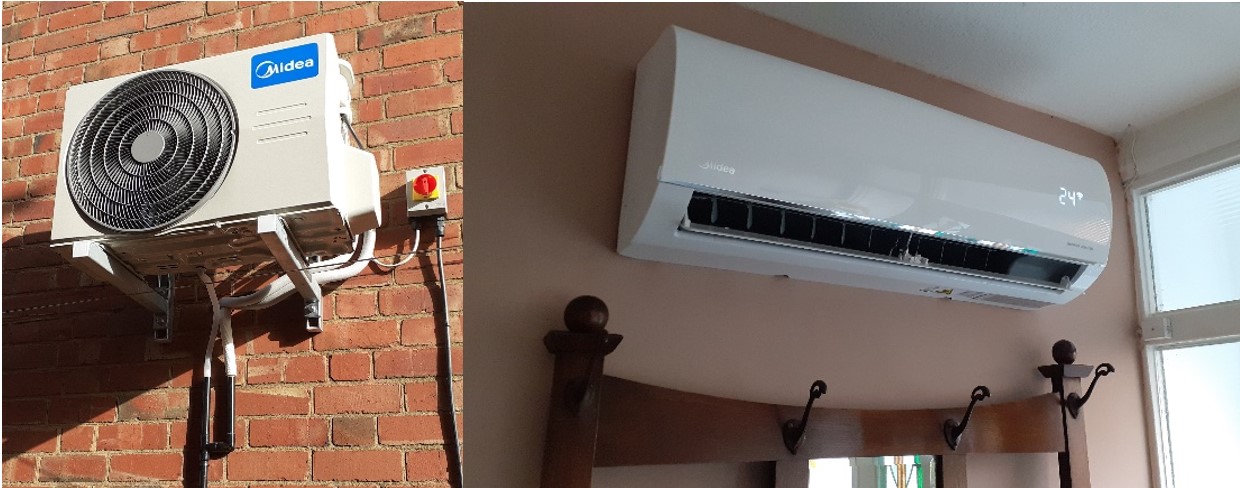
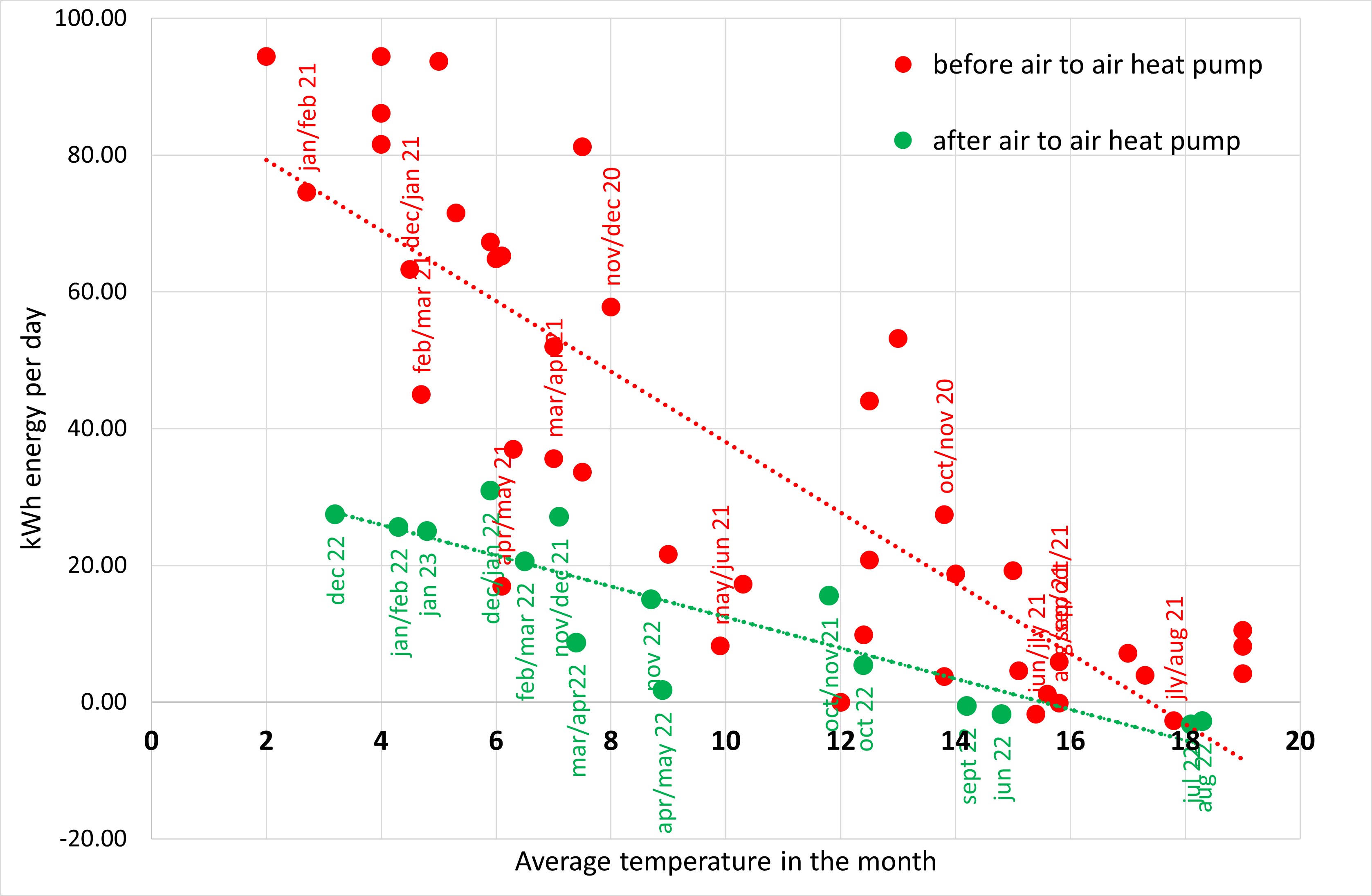
My wife and I have invested our money and made changes in our lifestyle to radically reduce our CO2 footprint – almost meat free diet, using the train instead of flying, insulating our house, fitting solar panels and a heat pump – our house is now carbon neutral!
I invest a lot of time and energy trying to put the message across to others, researching the facts and trying to put them into simple terms. There is some encouragement when we see others doing the same, and when we see vegan burgers that taste like meat, plant-based butter, and other replacements for meat produce.
But people still don’t realise the scale of change needed, or the urgency:
According to a poll carried out in G20 countries the vast majority – 83% – said they wanted to do more to protect and restore nature. However, when asked what actions they would take, they prioritised increasing recycling and avoiding excess packaging. ‘Higher impact changes like diet change and flying less are consistently bottom of their list,’ said Sophie Thompson, part of the Ipsos MORI team that carried out the survey.”
I can see that the technology is available, but action is too slow. The world still wants to follow the rules of financial justification. And poor countries rightly want to experience the same quality of life that rich countries do, and so don’t want to sign up to CO2 targets. Time is running out – it has already run out for several mini-tragedies, but there is little sense of urgency.
The steady stream of cars and trucks, the rush to book flights after covid, the meat-fest menus, people buying multi-packs of plastic bottled water, the waste …. You can’t get away from it, the relentless ‘in your face’ inaction that says, “I don’t care”, but that I realise may simply be “I don’t know”.
I moved beyond anguish to despair. And sometimes I have felt I need to give up completely; get a log cabin on the coast in Northumberland and watch the sea.
And then I realised that whatever I do, much more climate change will happen. Even with all the current government pledges, global temperatures will continue to increase. And to imagine that our institutions will honour climate commitments, or that individuals will change enough to prevent further deterioration is to delude ourselves. But also, for the majority world to be dragged out of poverty to share the lifestyle that I have enjoyed since I was born will need increased carbon emissions. Population will grow as better sanitation, medicine and housing allows people to live longer – consuming more energy through their lifetime. Reading the signs shows that CO2 emissions will rise further, and global warming will go beyond 2 towards 3 degrees – or higher! It’s going to happen and nothing I can do will stop it.
And I entered the grief phase. Do we ever leave that phase? We recognise what is lost, or what is destined to be lost and it saddens us deeply. Accepting the loss, the grief means the intensity of feeling fades. The loss is still there, and we are no longer frustrated and angry at our helplessness. And we are changed.
And where is God in this?
“Father, in our despair, in our grief, bring us hope. Show us the hope we can bring to others. Tell us what you want us to do. And give us the courage we need to act. Amen”
God’s hope comes from where it has always come – but we have forgotten it.
There is nothing I can do that will prevent climate change.
There is nothing I can do that will prevent the powerful having their way.
There is nothing I can do that will make the world good.
These are things that are beyond the power of the individual. It has always been so, and in a world where many choose selfishness over goodness it will always be so.
My individual goodness does not make the world good. The omnipresence of the spirit of goodness acting in all individuals could make things good, if each individual were to respond. We can see this – if only everyone was good, then the world would be a good place; it would be heaven! And it is because ‘they’ are not good (we are not either!) we find ourselves responding with anger and frustration and are tempted to despair.
In the battle for good to prevail we have a great ally in ‘The Law’. Laws, enforced by appointed guardians, codify what we understand to be good. The law limits the power of the selfish, those who don’t respond to the spirit of goodness. The law tries to teach what is good behaviour – but the law is made by human hands trying to define goodness. Human hands can be wrong. Human hands can corrupt the law. And so the law does not reach goodness. Although we say that nobody is above the law, the law is not above goodness. We cannot be fully good by following the law.
The law is a powerful tool towards preventing climate change, and towards preventing the powerful having their way. It is good and necessary to have good laws, but those who have the power to make the law are also those who have personal interests to serve, and so they do not always make good laws. And people do not always keep the law.
So where is hope?
Christian hope comes from the power of the spirit of God; from a bigger picture that we have forgotten. People in the past understood that there was a life to come, that this world is not all there is. The bigger picture is that we are offered everlasting life, against which this world fades into nothing. Everlasting life in a new world where everyone chooses to be and is truly good, in the presence of the spirit of goodness and love.
My wife Cathy writes that:
“humanity has always been up to its chest in its own mire, mistakes, and sin. Because we live relatively fulfilled lives, we can forget that most people did, and still do, endure lives of fear, pain, hunger, death, and drudgery. Consider the slums of Victorian England, the lives of medieval peasants, the wars and diseases that have stained our history. It has always been thus. The Bible shows that this is the story of humanity: drowned in our self-inflicted suffering, with no hope that we can rescue ourselves, but that somehow, beyond anything that we can possibly understand, God has intervened to initiate a great rescue plan. That at some point, the mess will be tidied up and ‘every tear will be dried’.”
Many passages in the Bible describe this hope:
‘Look! God’s dwelling-place is now among the people, and he will dwell with them. They will be his people, and God himself will be with them and be their God. “He will wipe every tear from their eyes. There will be no more death” or mourning or crying or pain, for the old order of things has passed away.’
He who was seated on the throne said, ‘I am making everything new!’ Then he said, ‘Write this down, for these words are trustworthy and true.’
He said to me: ‘It is done. I am the Alpha and the Omega, the Beginning and the End. To the thirsty I will give water without cost from the spring of the water of life. Those who are victorious will inherit all this, and I will be their God and they will be my children.
And from the apostle Peter:
Praise be to the God and Father of our Lord Jesus Christ! In his great mercy he has given us new birth into a living hope through the resurrection of Jesus Christ from the dead, and into an inheritance that can never perish, spoil, or fade. This inheritance is kept in heaven for you, who through faith are shielded by God’s power until the coming of the salvation that is ready to be revealed in the last time. In all this you greatly rejoice, though now for a little while you may have had to suffer grief in all kinds of trials. These have come so that the proven genuineness of your faith – of greater worth than gold, which perishes even though refined by fire – may result in praise, glory, and honour when Jesus Christ is revealed. Though you have not seen him, you love him; and even though you do not see him now, you believe in him and are filled with an inexpressible and glorious joy, for you are receiving the end result of your faith, the salvation of your souls.
Cathy continues
“I find hope in the belief that every person is unique, loved, precious. That every person has something incredibly valuable to offer to others, whether teaching, engineering, dancing, poetry, cooking, listening, encouraging, smiling, gardening… and that God wants everyone to have the chance to grow into their own potential. So, as part of His rescue plan, the child that drowns in Pakistan will – somehow – be restored, healed, and given the chance to become its full self.
Furthermore, I think that the earth itself, and all that lives on it, is also valued and precious to God. That the koala bears that died in the fires in Australia, the glaciers that have disappeared, the animals hunted to extinction, the trees killed by drought, the hedges uprooted, may also be restored.
But this isn’t a ‘pie in the sky’ hope that gives me an excuse to do nothing now. I believe that I am called to take part in this great plan, and that my actions; not flying abroad but taking the train, moving to a more plant based diet, donating to charities to help feed the poor or plant trees, turning down my heating thermostat, biking more; are part of a great unnoticed movement of rescue.
I think and hope that the kingdom of heaven, a kingdom of fairness and wisdom, will be established in a restored, peaceful, green earth; bursting with life and enjoyed by loved, healed and beautiful people living their lives to the full. And I believe that my efforts towards that are not wasted.”
So there is hope in the future, and purpose in what we do now. But in the now there is more than just duty and hope for the future. We can and need to find happiness, peace, and joy. I have found some secrets to this in a short book called ‘Finding Happiness’ by Abbot Christopher Jamison. And even if we do not accept the Christian hope we can benefit from the wisdom of the ancients.
Considering the ideas of the philosopher Plato, he describes that “contemplation of the good and the beautiful is Platonic happiness”. Taking time to really observe and to absorb into ones immediate being that which is good and beautiful draws out joy and wonder. A form of worship is appreciating the beauty of an ever-changing landscape, the journey of a piece of music, the wholeness of a novel. Goodness and beauty contemplated in every diverse opportunity, fought for against the pressures of the rush of daily life, brings peace, joy, and happiness.
This is what the Apostle Paul said too, ‘brothers and sisters, whatever is true, whatever is noble, whatever is right, whatever is pure, whatever is lovely, whatever is admirable—if anything is excellent or praiseworthy—think about such things.’
Abbot Christopher also tells us that “Happiness for Aristotle is ‘the activity of the soul expressing virtue’. So in essence where Plato sees happiness as contemplation, Aristotle sees happiness as living virtuously.” The call to action that Cathy described is thus not just a call of duty, but a call to happiness. Living virtuously brings happiness. It will take courage, and effort, and perseverance. It will test our reserves and frustrate us. But as we persist in scrupulously examining our actions and our motives and seeking to live virtuously then we will begin and grow happiness in our lives.
Again, Paul wrote “For we are God’s handiwork, created in Christ Jesus to do good works, which God prepared in advance for us to do.” Doing good deeds is part to becoming who we are.
We are not responsible for anyone’s behaviour but our own. That’s why the world is in the state it is – many choose the selfish path to death. And as a consequence, we will experience global warming way beyond where it is today. It is a tragedy, but it is the same tragedy that has been unfolding since the world began – the tragedy that many choose the path of selfishness. But let us choose to be a people of hope.
 Thoughts from a Minimalist Christian