Foreword to The Big Picture

Scientific discovery has brought material benefits and physical comfort to mankind.  The predictability of matter leads us to assume that it behaves according to fixed laws, and this belief has led engineers to develop tools and machinery to manipulate the environment, doctors to develop cures for many diseases, and farmers to grow crops with greatly increased yields.  Many of the scourges of previous times have been overcome leading, in the Western world at least, to longer lifetimes and better health.  However, this has also led to the belief that everything is predictable and controllable. If anything goes wrong (by which we mean it causes us distress or discomfort) then it must be fixable, and if it hasn’t been fixed it must be someone else’s fault.

Personal rights have grown, but personal responsibility has diminished.  Laws to protect the weak have bred the belief that it is the state’s job and not our individual duty to help out those less fortunate than ourselves.  Mechanisation that was supposed to give more leisure time has led to lost jobs and loss of purpose.  Competition and the shrinking of the geographical world has meant that there is someone, somewhere who will work harder or longer hours than we do, and the pressure grows to produce more for less.  The availability of loans means that goods can be obtained now if we promise to pay later.  To pay the loan we need a job.  Fear of job loss drives us to work longer hours and accept less pay. The purpose of life becomes to produce.  The mechanism which fuels demand and production is the economy.  The economy becomes the measure of the health of a nation.

Is that what it’s all about?

Is my value simply what I can produce?

Am I measured just by what I can earn?

If I retain the worldview that the economy is king then the implication is yes, but that doesn’t feel right.  I want to be valued and loved as a person.  I want a worldview that speaks to my heart and my mind and not just my wallet, and I want it to be based on sound thinking and evidence.

Science has brought great technological and medical benefits to mankind; cars, televisions, fridges, telephones, electricity and so on.  But science has also brought guns and bullets, pollution, global drug trafficking and job losses.  Science seems to dominate my life, telling me what I should or shouldn’t do to keep healthy, avoid risk and live longer, but it doesn’t tell me why I would want to live longer.  Science doesn’t give any purpose to my life.

Religion offers purpose, but it too seems to want to control me and dominate me.  Religion has been used as justification for many great atrocities: the Spanish Inquisition, child sacrifices, the Crusades.  Religious people seem to want to tell me how to behave, and to judge and criticise me, claiming to represent the will of God.

I want to know the truth.  I want to know what science can tell me about how the universe works, and perhaps where I came from.  I want the benefits that science can bring, but not at the cost of becoming a slave to its dictates.  I want to know why I am here, what my purpose in life is, or even if there is one.  If there is a God I want to know what He thinks. I want the benefit of knowing that I have a purpose, but not at the cost of becoming a slave to rules from another human being.

And so I investigate, weigh up evidence in all forms and seek a holistic worldview that works.  I have explored what we know from the physical and biological sciences, and I have researched historical evidence for God. I have tested what is actually known, and what is speculation, extrapolation or personal opinion and rhetoric.

This book presents my conclusions, and some of the evidence that brought me to draw them.  I offer what I believe is a consistent, healthy and constructive worldview based on sound evidence.  I’ve called it Minimalist Christianity.  Whether you agree with my conclusion or not, I hope that many of the myths that currently inhibit so many of us will have been weakened or dispelled.  I hope that a step can be taken towards finding purpose and experiencing life in abundance.

The End of Evolution

Living things are amazingly complex and refined organisms.  Contained within our skin are muscles, organs, a nervous system, a circulatory system, an immune system, a digestive system, a reproductive system, a repair system, a growth system, and perhaps the most complex of all, a brain.

We are amazed and baffled by the latest smartphones and tablets, yet they are incredibly primitive compared with the brain.  Research has shown that there are more switches in a single brain than in the entire internet!  (http://www.cnet.com/news/human-brain-has-more-switches-than-all-computers-on-earth/ )

Yet all the complexity of the human body grows from a single cell.

One cell divides into two, then four, then eight.  On and on, dividing, specialising, growing and dying in a precise order to gradually construct the fully grown human being.  And the developing body self-programs the control systems and brain in a robust and repeatable process.

How can such a robust process happen?  Where are the instructions to tell the cells what to do?  Is it in the DNA?

There are 3 billion base pairs in human DNA.  Is it really possible that all the information necessary to grow and operate fifty trillion different cells over the entire lifespan of a human is fully encoded in the DNA of the original single cell?  Even if we used one base pair to define the position of each cell we are 10,000 times too short of information carrying capacity in the DNA.

But it’s worse than that.  In the DNA base pair system of numbering the letters CAGT are equivalent to numbers in base 4.  In base 10, the number fifty trillion (50,000,000,000,000) uses eleven characters, but in base 4 we would need 23 characters.  Our 3,000,000,000 DNA base pairs can only now specify 150,000,000 positions – 300,000 times less than we need just to define the position of each cell.

In addition to the position and type of cell, we are asking the DNA to carry the information to define the construction sequence and to program all of our behaviour patterns, our “operating system.”

What are the chances of that? Yet it happens.  Humans grow from a single cell every day.  Billions of us.

This sort of mathematics is often applied to the beginning of life, and show that the odds of forming even the simplest protein by chance are like looking for a single molecule in the whole mass of the earth. Yet it happened.

And how likely is the evolutionary process?  In their book The Origins of Life the authors John Maynard Smith and Eörs Szathmáry identify a number of what they call “Major Transitions” without which we would not exist such as:

  • From replicating molecules to populations of molecules in compartments
  • From independent replicators to chromosomes
  • From RNA as gene and enzyme to DNA as gene and protein as enzyme
  • From bacterial cells (prokaryotes) to cells with nuclei and organelles (eukaryotes)
  • From asexual clones to sexual populations
  • From single-celled organisms to animals, plants and fungi

What are the chances of that?  Yet it happened.

Here is a summary of the history of the earth and life on earth:

13.8 billion years ago: universe created

13.5 billion years ago: first stars form

5 billion years ago: the Sun forms, perhaps as a second or third generation star.

4.5 billion years ago: The earth formed as a molten mass. For the next 700 million years it was probably bombarded by large objects, and the energy of the collisions probably kept the earth molten up until…

3.8 billion years ago: earth crust solidified. Manufacture of pre-biotic chemicals needed for the life to exist

3.5 billion years ago: fossil evidence of cellular cyanobacteria.  .

1.5 billion years ago: first eukaryotic cells (cells with a nucleus) evident

1 billion years ago: first metaphytes (multicellular algae and higher plants)

500 million years ago: first metazoans (invertebrate and vertebrate animals)

1/4 million years ago: first homo-sapiens

Let’s put the evolutionary timeline into perspective of number of generations:

Bacteria typically reproduce every hour, so in the 3.5 billion years since cyanobacteria first emerged there have been about 35 trillion generations, although there seems to have been little evolutionary change in the 2 billion years before the first cells with a nucleus appeared.

Animals first emerged around 500 million years ago, and with a typical generation of 2 years implying around 250 million generations to move from the first animals to one with all of the complexity that we see in a human.

Against this backdrop, the evolutionary process has been incredibly fast; remember the extremely complex product that it has developed.  Yet it happened.

There are those who claim that all this happened as a result of sheer luck.

There are others for whom the following text seems to better describe things:

You made all the delicate, inner parts of my body and knit me together in my mother’s womb. Thank you for making me so wonderfully complex! Your workmanship is marvellous—how well I know it. You watched me as I was being formed in utter seclusion, as I was woven together in the dark of the womb.

For me, the findings of science hint strongly at a God who is continuously engaged in sustaining and interacting with the universe and life that he brought into being.  I find this fully consistent with the God that is revealed through a reasoned understanding of the Bible and demonstrated through the life of Christ.  I accept that it is not indisputably demonstrated, but I find the evidence sufficiently convincing to give my life as a result.

These issues are explored more fully in The Big Picture

See also:

https://philhemsley.wordpress.com/2012/06/03/evolution/

https://philhemsley.wordpress.com/2012/11/19/if-evolution-is-true/

https://philhemsley.wordpress.com/2013/03/03/information-dna-and-evolution/


“A good robot is hard to find”

I came across this article, and it reminded me how amazing the animal world is, and in particular human beings.  It only took  250 million generations since the first fossil evidence of animals to evolve a human, and each one is built from a single fertilised egg.

http://www.computerworld.com/s/article/9249079/A_good_robot_is_hard_to_find_or_build?pageNumber=1


A Masterpiece of Engineering

We think that we design pretty neat things these days.  We laugh at the man who said that the world would probably only need four or five computers.  Those of us who are old enough can remember when we did a sum on the newly invented pocket calculator that gave us the answer 0.7734, which said “hello” when we turned the calculator upside down.

But whilst researching my latest book I came across some pretty amazing statistics about a design that we all treat as commonplace – each and every human being.

Our 1.5kg brain comprises around 100 billion neurons, of 10,000 different types. Each neuron can have thousands of synapses (input connections from other neurons) and each synapse has perhaps a thousand molecular scale switches.  A single human brain is estimated to contain more switches than the entire internet.

Contained within our skin are around 650 muscles attached to over 200 bones, which vary in size from the femur in our thigh to the stirrup bone in the ear.  The muscle/bone combination is precise enough to paint a masterpiece, or to putt a golf ball twenty feet into a hole.

We have around 60,000 miles of veins and arteries and 1500 miles of pipes in our lungs.

Within our lymph nodes we have billions of B cells, each of which is different and each one defends against a particular very specific infection.

The list goes on – but you get the point.

Yet this whole complex organism is built from a single cell.

We begin as one single cell.  Within the cell is our DNA, the supposed blueprint for our manufacture.  We have a massive 3 billion base pairs (characters in the ‘code’) in our DNA. Yet there are around 50,000 billion different cells in the body.  Each cell is different, in function and in position – some nerve cells can be several feet long.  How can we imagine that there is enough information contained within our DNA to define our fully functioning body?

But we do start from just one cell.  And each cell only responds to the signals that cross the cell membrane.   As we develop, the cell is what it is as a result of its history – its ancestor cells.  And each of those cells only responded to the signals that crossed it’s membrane.  It’s like a massive pyramid, built the wrong way up – with the apex at the bottom.  The process is incredibly robust.  Look at identical twins.  Most of their development is as separate human beings and yet the final ‘product’ is identical.

A human being is truly a masterpiece of engineering.

Is it reasonable to state with certainty that this happened by chance?  Is it reasonable to assert that the properties of the sub-atomic particles in the universe are such that they behave in precisely the right way to manufacture you or I from a single cell by sheer luck? Or would that be a blind leap of faith?


See also:

https://philhemsley.wordpress.com/2013/03/03/information-dna-and-evolution/

https://philhemsley.wordpress.com/2012/09/17/the-dna-enigma/


Fear of science

There are millions of people spending their working life pushing forward scientific knowledge.  The breadth of knowledge discovered by the hands of so many scientists is beyond anyone’s comprehension.  Pronouncements by the scientific community have become almost the word of God.  Nobody has the evidence to question them. And yet…. sometimes they just don’t seem right.  They make us uneasy.  We fear that scientists have overstepped their knowledge, and often rightly so. We must not be afraid to voice our concerns, see for example https://philhemsley.wordpress.com/2013/11/22/mitochondrial-donation-some-concerns/

With so much knowledge out there, and so many people working on science, many in society have come to believe that science will eventually be able to answer every question.  “Eventually we will know everything about how the universe works. Science will allow us to live forever.  Technology will reverse global warming.  We will finally leave earth and colonise the solar system and universe.  Maybe we will even learn to travel through time itself, and finally we will be able to meet the maker of it all and ask why he made such a mess of things….”

Of course, many of these ideas come from science fiction, but literature influences our culture and outlook.  All of the ideas above seem reasonable extrapolations of where we have got to, and are often reinforced by the fantasizing of high profile scientists. http://www.dailymail.co.uk/sciencetech/article-1270531/Stephen-Hawking-backs-possibility-time-travel-millions-years-future.html

There is another group of people who have a different outlook. They believe that the literal explanation for everything that has happened, and prediction of everything that is going to happen in the future is written in a collection of books and manuscripts compiled from 2000-4000 years ago, called the Bible.  The first of these books describes how the world was created and populated with all the plants and animals as completely formed organisms. The whole process took just six days.  This literal interpretation of the book of Genesis will inevitably lead to a fear of science; “Will those millions of people prove my belief’s wrong?  Have I built my life on a lie?”

How can we overcome our fear of science?  How can we tame and control this beast, and stop it turning round and destroying us?

The only way to overcome our fears is to face them.  We need the courage to try to understand what science is and what it isn’t, what it can tell us and what it can’t.  We need to understand the assumptions behind all science.  We must not get lost in the detail, but we need to set the whole in context.  We need a guide.

Many of my posts on this blog are intended to help us think about scientific issues:

https://philhemsley.wordpress.com/2013/03/11/how-far-should-we-trust-scientific-prediction/

https://philhemsley.wordpress.com/2013/03/03/information-dna-and-evolution/

https://philhemsley.wordpress.com/2013/04/07/god-miracles-and-the-laws-of-physics/

and my book “The Big Picture” can equip the reader to begin to understand how to deal with science.  Reviewers seem to think it works:

https://www.goodreads.com/review/show/766354330

https://www.goodreads.com/review/show/767596412

There are other resources that help understand how we might deal with science, and I refer to many in the book.  But I hope that my years of spare time researching of these big questions will be of benefit to others, if only as a starting point for further discovery.

As I mentioned above,  if we are afraid of science, the best thing to do is to confront our fears.  And it’s best to confront them with a friendly guide.


Mitochondrial donation – some concerns

The UK government has decided to consult publicly on the introduction of regulations to allow mitochondrial donation.

I suspect that at the majority of people in the UK have no idea what mitochondrial donation is, what the risks and technical issues are, or what the ethical considerations might be. I wasn’t until very recently!

This short note attempts to give a very brief introduction to the concept and raise some considerations that might inform the discussion.  It is not an expert paper – I am not an expert, but it is an overview to prompt further thought and discussion by the majority of UK citizens, who are also not experts.  A source of information on the topic is “Novel techniques for the prevention of mitochondrial DNA disorders: an ethical review”.

What is Mitochondrial donation?

The majority of human DNA is contained in the cell nucleus, however some is contained in the mothers mitochondria – so called Mitochondrial DNA.  Mutations or abnormalities in mitochondrial DNA (as in all DNA) can lead to disorders in the developing offspring.  Since these disorders are due to the DNA, they are not curable.

“They are progressive, can be very seriously debilitating and disabling. They may also cause miscarriage and stillbirth, death in babies, children and young people, or severe symptoms which onset in adulthood. The symptoms and the age and severity at which they are experienced vary widely between patients, which can make diagnosis difficult. Mitochondrial disorders may affect one organ at a time – for example resulting in blindness or heart failure – or may affect several areas of the body at the same time. Mothers can pass on mitochondrial disorders without having experienced symptoms themselves, which in some cases may mean that they are not aware that they carry mutated mitochondrial DNA that can cause disorders in their children.”[i]

Mitochondria are separate ‘bags’ within a cell, and so can be separated and removed from a cell.  They can be transferred from cell to cell, and so in theory the mitochondria from a parent whose DNA is abnormal can be removed and then replaced with mitochondria from another person who has normal DNA.  The new cell then contains DNA from the female nucleus donor and the father, and a small proportion of DNA from the mitochondria donor.

As with all new technology, implementation is far more difficult than the theory.  However, experimenters believe they are making progress.  Around 30 children worldwide have been born using a technique whereby mitochondria from a donor are injected into the mother cell, providing an excess of mitochondria, in effect trying to dilute the faulty mitochondria.  These trials have indicated a higher than normal incidence of Turners Syndrome (which resulted in miscarriage and a termination), a lack of ovarian development at puberty and short stature.  It may be associated with problems with major organs and mild learning difficulties.

What are some of the risks?

What loving person cannot want to improve the life of another in the best way they can?  If I were a scientist researching mitochondrial diseases I would use all of my expertise to try to find solutions.  In my own job as a design engineer I am continually striving to improve our product, and I sometimes get immensely frustrated by the procedures and processes that are put in place to make sure that new developments are as risk free as possible.  New concepts that I think are very likely to work are often years in development and testing before being introduced into a machine.  But I accept the situation because of the consequences of something going wrong.  A similar situation must apply with Mitochondrial donation.

The amount of testing and refinement that is needed with a new technology depends on the impact if it goes wrong.  Let’s consider some of the impacts if mitochondrial donation were to go wrong.

  • Being genetic, the outcome of the genetic manipulation will be permanently in the gene pool of the descendants.  Our knowledge of how DNA works is still very limited.  Only a few years ago scientists labelled most of the human DNA as ‘junk’, but now controversial recent research is showing that what was previously written off as junk may be important in helping each cell become the type of cell that it needs to be.[ii]  There must be a risk that future generations will suffer unknown and unpredictable consequences of ‘unnatural’ DNA mixing.
  • We really don’t understand how DNA forms our developing body.  We know that a single DNA change can make the difference between a fruit fly having two or four wings, but we don’t know how that happens.  Humans comprise 50 trillion cells, yet our DNA string only contains 3 billion base pairs. That’s more than 10,000 cells per base pair.  We don’t know exactly how so few DNA base pairs can manufacture such a complex entity as a human, although applying engineering principles we can infer that the cell itself must be an intelligent component.[iii]  How will that cell respond to the modified mitochondrial DNA from a donor?  Would it be like running Microsoft software on an Apple computer?
  • The body has evolved to reject unviable embryos.  The trials mentioned above showed that this happens.  Might mitochondrial donation lead to an increase in miscarriages and terminations?  Would the stress and damage to the mother and couple exceed the risk of mitochondrial disease?
  • If mitochondrial donation techniques were to become widespread, but only effective for a proportion cases, what would be the consequence on those parents who still have ‘disabled’ children?  Would the emotional strain be even greater than today?  Would society shun or blame them for having disabled children?
  • We learnt above that often a mother will not know that she has a disorder.  For such parents mitochondrial donation will not be an option, unless there is a universal screening program.  What would be the social and emotional impacts of such a program?

Questioning our assumptions

These are of course only a few of the questions that need to be considered.  However, perhaps it is also important to consider the cultural assumptions that we might be unknowingly making when considering the issues.

A parent will always want the best for their children.  If one were to ask any couple, “would you like a healthy or unhealthy child” then I cannot imagine any couple opting for the latter. However, if you were to ask the parent of a disabled child, “would you rather have Julie or not have Julie” the responses would not be so clear-cut.  If you were to ask “would you rather have Julie but that Julie was not disabled” then the responses would probably lean towards the not disabled Julie.

Anyone who loves others would love to see them fully healthy, intelligent, happy, hard-working, fulfilled, loving and loved, friendly, etc. etc.  Whilst the attributes and character traits of an individual are interlinked, they are not directly and positively correlated.  Health doesn’t lead to happiness.  Intelligence doesn’t lead to being loving or loved.  So we must be wary of concluding that it would have been better if Julie had been born healthy.  She may be more loved, more fulfilled and happier being disabled than she would have been if she had been healthy.  Would Stephen Hawking have become the great physicist that he is if he had not been disabled?

We assume that a long life is better than a short life.  Is this correct?  How do older people think about this?  Are the years in our life more important than the life in our years?

Are we convinced that the end of this life is the end of everything?  If not, then why do we want to keep people from dying? Is it for their sake or ours?

What aspects of life are important, what we produce or the relationships we forge?

Is suffering always a bad thing?  What does evidence suggest?  Would South Africa have successfully transitioned from apartheid to democracy without Mandela suffering years of imprisonment?

In conclusion

This short post was prompted by the UK government’s intention to introduce regulations to allow mitochondrial donation.

We need to question that intention.  This is not an issue to approach lightly and quickly.  Consideration goes beyond the term of a single parliament, and beyond single countries.  I do not feel comfortable that our government, elected by only a small proportion of the population, seems to be intent on adopting a technology which could have severe consequences.

What do you think?

The Big Picture – an honest examination of God, Science and Purpose

If you have wondered if science, faith and reason are compatible then this is a book for you.

The book explores how everything (including science) is based on faith of some sort.  It explains in understandable terms what science tells us (quantum physics, evolution, DNA, neuroscience etc), and what it can’t tell us, and presents some of the documentary and rational evidence for and basis of Christianity – useful if you want to base your outlook on information instead of propaganda.

The style is a combination of balanced data presentation and respectful discussion; you will not be brow-beaten into having to agree with the author!

Click on the book cover (right) to order your copy.

Information, DNA and evolution.

Many of those who are interested in the subject of evolution and life point out that the genetic code is a tremendous carrier of information, and often raise the question of where that information comes from. 

Intuitively we know that there is more information in, say, a recipe for baking a cake than in the statement that “it is raining”, but it is difficult to intuitively define or quantify information.

Information is something that can be transmitted from ‘A’ to ‘B’ (through space or time or whatever) which gives ‘B’ the ability to know something that they didn’t know before.  Information conveys some meaning.

By itself a steady white light shone from A to B can only convey a tiny bit of information, perhaps only that “there is a light at A”.  And if the light flashes once per second it might convey that “there is a light at A that flashes once per second”.  With the addition of a decoder, say a lighthouse signal book, a regularly flashing light might convey the information that “that is Portland Bill lighthouse”.  However, in that case the additional information that “Portland Bill light transmits such and such a sequence of flashes” has already been transmitted, and so perhaps it’s more accurate to say that the flashing light ‘activates’ the previously transmitted information, or that the previously transmitted information ‘decodes’ the information in the flashing light.

Often information needs to be transmitted from A to B in a secure way so that ‘C’ and ‘D’ cannot understand it.  i.e the information from A cannot be activated by anyone other than B.  The goal is to make the information without the decoder or ‘key’ indecipherable.  In that case, what might seem to be a string of random letters does actually contain a vast amount of information.  Yet without the decoder, the highly informative signal and the string of random letters look very similar; in practice both signals have the same potential to carry information.  Consider the following strings of letters and spaces:

  1. life exists on earth
  2. hLif eexist so neart
  3. kudw wzuara ib wlerg
  4. ne wvkdmtfcng cdjvgd

It is easy to see that the second contains the same information as the first, but with the letters moved one space to the right, with the spaces kept in the same place.

The third sentence is less obviously not random, but there is a hint that it might convey the same information in that the word lengths are the same.  After a little time sat at a typewriter one might realise that the key is to type the letter to the right of the one in the sequence above on a standard UK keyboard.

The fourth sentence is indeed random.

When C or D intercepts a string of letters from A then they may attempt to decode the string without knowing the key.  For short strings this becomes impossible, but for longer strings it may be possible to find repeating patterns for instance that can be matched to known phrases.  We might look for the most common letter in the string and assume that it is the letter ‘e’ for instance, and so on.  And then we judge whether we have broken the code by whether the resulting new string of letters has any meaning.  But once again, C or D must be able to recognise the meaning when they see it.  They must for instance know the language that A and B speak – so they too have received some prior information by another route.

We can represent a string of DNA bases by a string of letters (we have immediately introduced a ‘code’ that needs a decoder by doing this of course).

From our scientific experimentation we have discovered that many of these strings contain information.  We have for example found that the machinery within the cell is able to convert the DNA string into proteins: the cell is able to decode the DNA.  Knowing that DNA is a code has led to a lot of effort aimed at identifying what it does; at decoding it. The first step has been trying to identify the complete code – hence the human Genome project.  Once the complete string has been generated then we can try to decode it.

According to the Human Genome Project website (http://www.ornl.gov/sci/techresources/Human_Genome/project/info.shtml) less than 2% of the complete string of human DNA actually contains the codes that define the amino acid sequences in proteins.  About half of the genome contains repeating sequences that don’t code for protein, and are often called ‘junk’ DNA; since it was unknown what they do, the initial response was to reject them as junk.  However, as the above-referenced site states: “Deriving meaningful knowledge from the DNA sequence will define research through the coming decades to inform our understanding of biological systems. This enormous task will require the expertise and creativity of tens of thousands of scientists from varied disciplines in both the public and private sectors worldwide.” Indeed, recent research by the Encode project suggests that most of the DNA is indeed useful, not for making proteins but being involved in controlling the process.

As an aside, the techniques used in the human genome project have been applied to identifying the bacteria that caused the Black Death. It seems that the DNA of bacteria that caused the Black Death is not so different from plague bacteria around today; perhaps we should be worried….  http://www.nature.com/nature/journal/vaop/ncurrent/full/nature10549.html

A question often asked is, “where does all the information come from?”

Much of what we do generates information.  Forensic science is highly developed at decoding clues to determine the likely course of events in criminal cases.  North American Indian trackers can follow people for many miles based on the information left by footprints.  Air crash investigators read the information left on the debris to try to determine what caused a given disaster.  The information is physically recorded in the ‘clues’, and our knowledge and intelligence is able to ‘activate’ the information.  In many cases the information can be traced back eventually to an intelligent source, although that cannot be concluded when for example decoding the information held in geological rock formations.

However, whilst all of these activities generate information, they are basically one-off events that need to be deciphered.  None generates the sort of information found in this sentence for instance.  None generate information in a code-like format of information; none generate a sequence of instructions.

In all of our daily experience of instructional information transfer, of codes and deciphering, the information has been generated by an intelligent mind.  So the question behind the question is, “is the information contained in the DNA code generated by an intelligent source?”

It is argued that an unintelligent machine cannot generate more information than is inherently within the machine.  For example, can we imagine a computer program coming up with an equation that has not been already programmed into it?  And it is then argued that the cell is a molecular machine and so unable to generate more information than is contained within it and hence there must be an external Intelligent Designer that has generated and implanted the information in the cell.  However, I don’t find these arguments thorough.

A cellular machine operates within an environment, so if for example a mutation causes a change in the information contained then the survival or death of the mutated cell will add the information that the mutation was good or bad; the good mutation survives and the bad fails and more information is added to the DNA. It seems to me that this is a perfectly adequate explanation for the generation of the information in DNA, and is completely consistent with the type of God I describe in “The God of Science”

Brian Cox’s “Wonders of life – what is life?” .. a review

Yesterday evening I watched the first in a new Brian Cox series on the wonders of life.  I was left with an uncomfortable feeling about the way the content was presented. In essence, the program shows very little science but a lot of metaphysical opinion. In essence it it propaganda.  As best as I can, I’ve transcribed phrases from the program in blue (thanks to iPlayer), to show what I mean.

“no matter how unscientific it sounds this, this idea that there is some kind of soul or spirit or animating force that makes us what we are that exists after our death is common.…. it ‘feels right’, it is hard to accept that you are … just something that emerges from an inanimate bag of stuff”.  This is filmed against the backdrop of smoky fires and gravestones where people are gathering to ‘connect with their dead relatives’. 

This section clearly communicates that spirituality is a magical force that is outside of science and is necessary to explain life – ‘spirit of the gaps’ – but that such an idea is wrong.  Although we might not like it we are just a bag of stuff (no explanation, but trust me, I’m a professor celebrity).

So this has set up the straw-man god that is not part of the natural world, but is outside of it, tinkering occasionally to start life through magical means.  No mention of a God who created and sustains the laws of physics themselves.

Feelings, and indeed we are ‘just something that emerges’ i.e. they have no meaning or purpose.  This is a metaphysical view that is essential if the idea of a purposeful God who set the universe in motion is abhorrent – yet the filming and presentation are designed to manipulate those same feelings.  This is not science, it is carefully crafted propaganda.

“if we are to say that science can explain everything about us then it is incumbent on science to answer the question what is it that animates living things what is it the difference between a piece of rock carved into a gravestone and me? …. For millennia, some form of spirituality has been evoked to explain what it means to be alive and how life began.  It is only recently that science has begun to answer these deepest of questions”  ,

Although the words don’t strictly say it, the message is clearly that science can explain life; no other explanation is necessary.  Again, the alternative is some magical force outside nature. The false dichotomy presented again (science OR spirituality) allows no space for a god who is consistent with scientific discovery, where scientific discovery allows us to learn more about God.  So science is getting busy and is providing the answers, which are:

  • Energy transforms from one form to another, and that caused and explains life – that is the reason we are here.  All life continues to be powered by the same process of transforming energy from one form to another.
  • We all have DNA, which is the “blueprint for life” and continues the organisation of the chemical processes from generation to generation, and shows that we have common ancestry with every other living things

“life is … a collection of chemical processes that harness flow of energy to create local islands of order…. Far from being some chance event ignited by some mystical spark the emergence of life on earth might have been the inevitable consequence of the laws of physics …. A living cosmos might be the only way our cosmos can be”

Mystical spark or science – the false dichotomy perpetuated.

The program focuses on a god of mysticism and magic, and appears not to know of the Christian God.

The God of Christianity is believed to be the creator of the universe, the cause of the Big Bang, the author of the laws of physics, the inventor and sustainer of a cosmos that has the inevitable consequence of producing life.  A God who cannot be seen – yet can be seen everywhere.  A God whose power has gifted us with the ability to feel and understand, and who gives meaning to each of us.  A God who is love; the love we feel is part of God rather than ‘just some emerging thing’.

It is frustrating when scientific programmes such as these don’t present a balanced view of the metaphysics.

Other posts which might be of interest:

https://philhemsley.wordpress.com/2013/04/07/god-miracles-and-the-laws-of-physics/

https://philhemsley.wordpress.com/2012/12/29/the-god-of-science/

https://philhemsley.wordpress.com/2013/04/14/proof-of-god/

https://philhemsley.wordpress.com/2012/06/21/an-argument-for-and-definition-of-god/


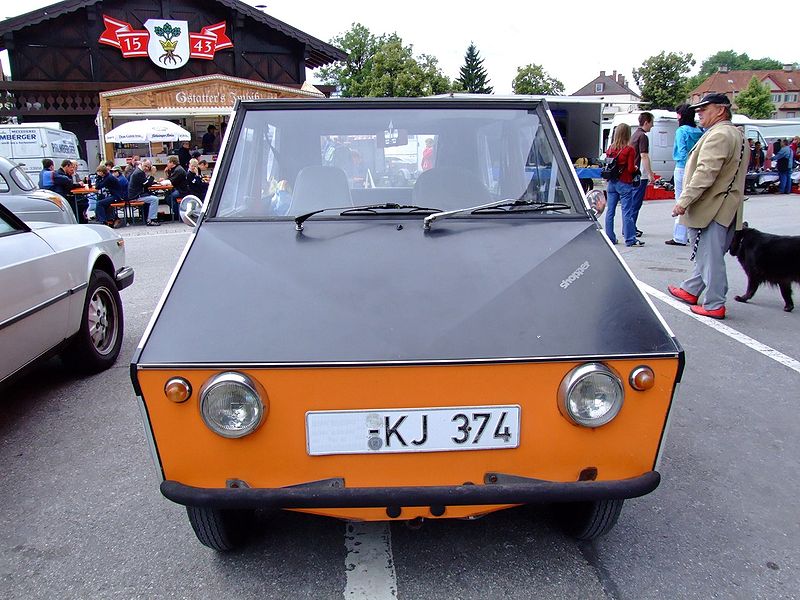
The Wonky Car

“It’s all in the genes” the scientists say. “Your genetic make-up determines your shape, size, colour and even your behaviour.” Some people it seems are made good, and some evil. Well maybe things are not that clear-cut, but we can understand that in the same way that we have different physical features, we have different behavioural characteristics.

Imagine our body being like a car, and our soul being like the driver. We don’t all have identical cars; some of us might be given Rolls Royce models but others get a wonky car – you know the type – the steering wheel is loose, the brakes are useless and the engine is shot. We all have to drive these cars on a straight and narrow motorway; is it surprising that some of us have accidents? If you are in the wonky car, you might be working like anything to try to keep it on track whilst the guy in the Roller just puts it on cruise control, sits back and relaxes.

As we steer our way through life we are more likely to shout abuse at the wonky car than the Rolls, but when we reach our destination who is God going to be pleased with? The driver of the Rolls who continually cut in front of the wonky car? The driver of the Rolls who went slowly next to the wonky car to keep it going straight? The driver of the wonky car who reached the end despite all the difficulties?

So today, are you going to judge the driver by his car? Or by how many cars he bumps into? Who are you going to help keep on track – or are you going to make sure you get there first by cutting in front of everyone else?

Let’s leave the judgement to God, but let’s encourage and support those who need our help – even if they do keep meandering off track, bumping into us and hurting us. Let’s learn the grace and wisdom to look behind the car to the driver inside.