“The Big Picture” – an honest examination of God, science and purpose – OUT NOW

“I recommend this book to all thinking people – we might just change the world.” 

“This book will definitely make you think and then think again. Hemsley did his research for this book, and I received many answers to questions I’ve pondered over the years.”

“it is a welcome relief to come across a book that presents such a broad and balanced overview”

“This book covers an considerable amount of territory in its 253 pages.”

The Big Picture is a much-needed book that allows the reader to consider the big questions of life without feeling bludgeoned to adopt the author’s opinion. The book explains basics of science, philosophy and religion in a straightforward manner.

It will encourage all those who want to live a good and purposeful life and would like a sound basis for doing so. Such readers may find a resonance with the teaching of Jesus and this book will explore whether we can trust what has been recorded in the gospel accounts, and whether the findings of science and a reasoned understanding of the Bible are consistent or contradictory.

Many books in the arena of science and faith are hostile and adversarial. The authors set up straw men of their opponent’s arguments, dismantle them and then preach their own arguments to their disciples. The author of The Big Picture recognises that there are intelligent atheists and intelligent believers, and that a case can always be made for whatever someone wants to believe. The reader is therefore treated with respect

ebook

paperback

Amazon UK

The Big Picture - cover

Richard Miles – Archaeology: A Secret History

The description of this program on iPlayer is “Archaeologist Richard Miles presents a series charting the history of the breakthroughs and watersheds in our long quest to understand our ancient past. He begins by going back 2,000 years to explore how archaeology began by trying to prove a biblical truth – a quest that soon got archaeologists into dangerous water.”

Unfortunately the tone and style of presentation of the program was similar to the description.  The program frequently asserts that there is conflict between Archaeology and Biblical truth, and implies that Archaeology has proved the Bible to be wrong.  The church is presented as a dogma bound institution that can only consider that everything in the Bible is to be taken literally.  The church’s only contact with scientific methods was to use them to show that the world was created a few thousand years ago.  Isn’t he aware that different parts of the Bible are written in different genre’s?  Would he think that if archaeology could prove that there wasn’t a good Samaritan then that must show that Jesus was lying when he told the parable?  Does he think that Christians really believe that the Genesis account is to be taken literally?  As far back as the early fifth century St Augustine was forthright in his criticism of literal interpretation of Genesis.

The presenter, Dr Miles, frequently implies that archaeologists were ‘in dangerous water’ by thinking – thinking is something that is presumably not allowed by the church.  Doesn’t he know that many of the greatest minds have been and continue to be Christians?  Even the greatest secular scientists realize that questions of God are not trivial.

Dr Miles  appears dismissive of the approach of looking for evidence to support a theory (Empress Helena seeking for evidence of Jesus’ crucifixion) – isn’t he aware that this is precisely the scientific method – build a large Hadron collider to look for a Higgs bosun for instance?  

Dr Miles seems far happier to find something and then simply guess what it might mean.  He appeared disappointed that the speculations of John Frayre (sp?) who ‘instinctively knew’ that the triangular objects had been made by human hand were not immediately adopted.

So for me, the undercurrent of generating a false conflict between God and Archaeology/Science, and the implied rejection of ‘belief’ spoilt what could otherwise have been an interesting and enjoyable program.  I am disappointed that the BBC feel the need to generate some sort of conflict or controversy in so much of their programming.

Related posts:

https://philhemsley.wordpress.com/2012/04/29/things-that-a-minimalist-christian-does-not-have-to-believe-the-genesis-account-of-creation/

https://philhemsley.wordpress.com/2012/06/21/an-argument-for-and-definition-of-god/

https://philhemsley.wordpress.com/2013/03/11/how-far-should-we-trust-scientific-prediction/

A vision and purpose for 2013

In the 2011 UK census, nearly 60% of the population want to be recognised as Christian.  Many other surveys show that the proportion of the population who regularly attend church services is between 5% and 15%.  (Tearfund report on churchgoing 2007, http://www.eauk.org/church/research-and-statistics/english-church-census.cfm, Religious Trends – Brieley)

This data shows that there are 45 – 55% of the UK population who want to be associated with Christianity but are not being supported by the various churches in the country.  To my mind this is not an acceptable situation.  Something must change.

The popular representation of Christians is that we are uncaring unloving people:  We are sexist, not allowing women bishops.  We are homophobic, not allowing gay marriage or gay clergy.  We are ignorant – ignoring scientific data and insisting that the world is 6000 years old and was created in six days.  We are hypocrites and child molesters.  We instantly jump to judge everyone else’s behaviour whilst being just as bad ourselves.  Our bottom line is that “you are going to Hell if you don’t believe what I believe”.  Of course, that’s complete b*****cks, but it certainly doesn’t encourage anyone to explore what Christianity is actually about.  I wrote my first book “The Leap” to address some of these issues.

So there is an image barrier that prevents the 55% exploring their spiritual roots.  But there are many other barriers. To name a few:

  • long working hours leave people exhausted (Nearly 20% of men and 6% of women work over 49 hours per week – 2011 census).  We want to relax and do something enjoyable at the weekend and the image of sitting in a cold uncomfortable church pew is not very attractive.
  • entertainment is at our fingertips in the comfort of our own homes, we don’t want to go to the trouble of going out.
  • nearly 50% of the population live alone (2011 census).  There’s all the housework to do. The barrier of going out alone can be immense, loneliness is a hard habit to break

Jesus came to bring life in abundance.  We are missing out!  We catch glimpses of what life in abundance might be in the spirit of the Olympics,  in the national celebrations and street parties of the Jubilee.  Neighbours got to know each other, perhaps speaking for the first time in years.  The hearts of the people in this nation are good – look at the response when Claire Squires died – nearly £1million donated. http://www.justgiving.com/Claire-Squires2

The church in the UK needs to provide opportunities for this spirit (which is a reflection of the spirit of God within all of us) to grow, for individuals to explore and develop their spiritual side, their humanity.

We need to fight against the materialist mindset that tells us we are simply a bunch of chemicals.

We need to fight against the economic mindset that tells use we are just consumers, human resources, a drain on the economy.

We need to free and inspire the hearts and minds of every man, woman and child to love one another, forgive one another, and love God – with all our hearts, minds and souls.

Let’s go for it! Let 2013 be a year we remember.

Christianity, rules and regulations

Christianity is about freedom, yet we keep tying ourselves up with rules and rituals, and then feeling guilty when we break them.

It seems to be in our nature to want rules.  We want to be told what we can do and what we can’t do.  We don’t want to have to think.  Take driving for example.  We know that we shouldn’t go at high speed in built up areas, so why do we need to be told that we mustn’t go above 30 miles per hour?  What’s special about 30, why not 29, or 33?

Setting a rule is a way of avoiding guilt.  We prefer to pretend that we are not guilty rather than that accept we are guilty and ask for forgiveness.  If I go at 29 miles per hour and knock someone over, then you can’t accuse me of going too fast – I was within the speed limit.  I can say “it wasn’t my fault – it was the person who set the speed limit.”

This is living the Old Testament way: “Thou shalt not exceed 30 miles per hour in a built up zone”.

If we were to ask Jesus then he would say “don’t go so fast that you knock someone over”.  It’s a much tougher requirement, and means that there is no way we can escape our personal responsibility.  If we knock someone over it’s our fault and that’s that.  All we can do is to ask for forgiveness, to which he would reply “Are you really sorry? Are you going to change your driving habits so that you don’t do it again? Yes? Then I forgive you.”

Tougher, isn’t it?  I have to take full responsibility, and I have to be humble enough to admit that I was wrong and to ask for forgiveness.

Christians, as anyone else would, find it difficult trying to live a life which is totally without laws, but where the standard is perfection. There is no speed limit, but you are responsible if your driving harms someone. So we make up our own laws.  Some are moral, some are conventions or traditions.  Although Christianity is about freedom, we have tied ourselves up in chains again.

Everybody does it without realising it.  Have you ever been to a conference or meeting that runs over a couple of days.  On day one, we look round the room, and then choose a seat.  Next day, that’s our seat – we go straight there.  It’s easiest, it worked yesterday, but we’ve just made up a little law: “that’s where I sit”.  It’s OK to make up rules, so long as we don’t let the rule become more important than the issue it’s solving.  We need to keep remembering the reason behind the law.  Going 30 miles an hour in itself is not important; avoiding running someone over is the issue.  Christians need to be wary of our natural love of rules and laws; Jesus looks at the heart; do we want to do what is right or do we want just to keep the law?

…………………………………………………………

If you enjoyed this and like to read reasoned thinking, buy my book The Big Picture

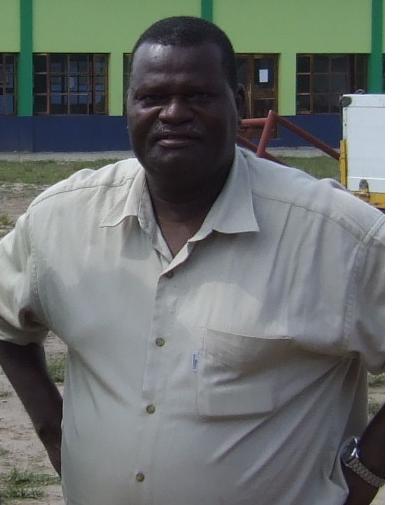
A tribute to Pastor Antonia Bonga, who passed away on Friday night.

A man who I counted as a friend died on Friday night.

I first met Pastor Bonga in 2004 when I visited Mozambique for the first time.  He was running a center for street children called Casa Reom.  That visit was a turning point in my life, showing me many things: that we don’t need monetary richness to be rich, that it is better to do what is right today even if it risks an uncertain future, that most people live in far more difficult circumstances than we do in the West but can still be happy, and that God is close to the poor.

A few years ago he visited England, and sent us a short resume of his life:

 “I was born on 3rd February 1950 at Bawaze-Lampene, Marromeu, the son of Tomo Bonga and Carita. I was educated at Jaravura. My parents were very poor and they were only able to pay for my education up to grade 3.

When I was 18 I came to Beira where I worked during the day and went to a night school. The same year (1968) I was converted in the Apostolic Faith Mission, and was baptized in 1969. I got married and later on was ordained to be a deacon. I had a spiritual experience.

I have had 12 children, 8 of them have died so only 4 remain.

I went to Zimbabwe to Bible school, and when I came back to Mozambique was ordained to be a church pastor. I have planted 5 new churches.

In 1986, I did another bible course in Zimbabwe when I returned home things were worse. A civil war was causing difficulties among Mozambicans. In 1988 things had got so bad that even some of the church leaders were fighting over power.

In 1989, I met 5 missionaries with whom I shared my vision of ministering and planting new churches. The civil war was still going on and the government were harassing me. The government became my number one enemy. It was not easy to preach the word of God at this time. Eventually, God gave a solution to my difficulties. Later on, I founded my present church called “International Body of Christ church”. This started with meetings under a tree. Many people were laughing at the church and at me. Now the churches are all over Mozambique.

When I joined Youth With A Mission (YWAM), I did Discipleship Training (1993) and a Leadership Training programme (1997) in Zimbabwe.

In 2000 God touched my life and told me to care for the orphans and those living in difficult situations on the street. The same year I began leading the YWAM base in Beira.”

I visited Pastor Bonga and the Casa Reom project several times, and I wrote about one visit in my book ‘The Leap’:

When I came back from my last trip to Mozambique, my friend Pastor Bonga had just taken on the running of a second orphanage, with about forty children from ages 1 to 10.  He was asked to take it on, but was not given any money to pay for the running costs.  He couldn’t refuse when he’d been asked.  He couldn’t allow the children to be turned out onto the streets again.  What would happen to the one year old babies? He chose to do what was right, without considering the consequences; he left them up to God.

Pastor Bonga was not perfect, none of us are, but he pursued what his heart told him.  He persevered in extremely difficult circumstances, supported sometimes only by his love of God.  He died unexpectedly.  The evening before he died he had been meeting with others about a new project to help orphans in Nhamatanda, Mozambique.

He will be missed on this earth.
Time to come alive!

As you walk round this weekend, look at the faces of those you pass.  Look perhaps at the men pushing the trolleys in Aldi, Asda or Sainsbury’s.  How many of them are lifeless, pursuing the daily trudge?  Then look in the mirror – are we the same?

Life is not meant to be like that.  We are made for life in abundance, life in all its fullness.  A great man once said “I have come that they may have life, and have it to the full.”

What does life in abundance mean?  Perhaps we should see what the man said.  When asked he answered: “‘Love the Lord your God with all your heart and with all your soul and with all your strength and with all your mind’; and, ‘Love your neighbour as yourself.'”

It’s not so much what you do as how you live that brings life in abundance.  It’s not so much climbing the mountain or sailing the seas – although I recommend both – it’s about choosing to love, every moment of every day, even in the aisles in Asda.

It’s been said “Find out what makes you come alive, and go and do it.” If you are not alive today, you need to follow that advice.  Perhaps you feel you don’t have the energy to love at the moment, perhaps your work is just so draining that it deadens you.  If so then it is worth looking for a change.  Perhaps there’s an addiction that you need to break; it’s possible, you can break it!

But the key to coming alive is love; positive, hardworking, determined expending of ourselves for the benefit of others.

Does injustice make you angry?  Don’t just grumble, go and do something about it. Come alive fighting it.

Does poverty make you angry? Don’t just grumble, go and do something about it. Come alive fighting it.

Does child abuse make you angry? Don’t just grumble, go and do something about it. Come alive fighting it.

Does the sex trade make you angry? Don’t just grumble, go and do something about it. Come alive fighting it.

Does human trafficking make you angry? Don’t just grumble, go and do something about it. Come alive fighting it.

Does the hopeless plight of teenagers make you angry? Don’t just grumble, go and do something about it. Come alive fighting it.

The list goes on.

St. Irenaeus said that “Man Fully Alive is the Glory of God”

It is time to come alive.


Tony

Tony was a man of action.  He had always enjoyed sport as a boy, and loved adventure books.   At work he would be frustrated by rules and regulations, red tape put in place just to avoid being blamed in case something went wrong.  Why didn’t people just get on and do what was needed?

Tony had committed his life to Christ.  He was convinced of the truth, read his bible daily and tried his best to follow Jesus teaching.  Jesus was his hero, and he was constantly challenged by what Jesus taught – but liberated too!  He went to church each week.

But somehow he often wondered what church was about.  He found the songs would have him singing words that didn’t represent how he felt towards Christ; love songs and adoration of Christ’s beauty, songs more about being ‘in love’ than selfless love.  He would look around at others who appeared in raptures of delight and wonder what was wrong with him.  He couldn’t help drifting off in the sermons, and couldn’t see what they had to do with his day-to-day life.

He often came away saddened; if church left him cold he presumed that he can’t have been a very good Christian!  Satan smiled, but Jesus led Tony to the verse:

Those who obey my commandments are the ones who love me. And because they love me, my Father will love them, and I will love them. (John 14:21)

“We love you Tony” he whispered.

Pete and Graham

Pete and Graham had worked with each other for years.  Pete went to church every week, a fact that Graham was unaware of.

“Hi Pete”, said Graham, “Did I see you coming out of the Christian book shop yesterday?”

“Yes, I was buying a Christening card for a friend.  I’m going to the Christening this weekend.”

“Ah, that explains it,” said Graham, “I didn’t imagine that you could be a Christian, after knowing you all these years!” said Graham smiling.

“No” mumbled Pete, embarrassed.

Graham went away just hoping that he could find someone to talk to about the lump that he’d got on his stomach, and the questions that the possibility of cancer and death had raised in his mind about whether God existed.

Pete went away ashamed, but after a day or two he felt better … after all God forgives everything (doesn’t he?).  Still, he found it rather hard in the singing that Sunday, “I will offer up my life ….”

Jesus sighed,  “was this the sort of forgiveness that I went through it all for?”

“But whoever disowns me before men, I will disown him before my Father in heaven.” Matthew 10:33