Is it possible to be a Christian and right wing?

It’s not complicated.  Jesus said “Those who accept my commandments and obey them are the ones who love me.”

And what are His commandments?

“‘You must love the Lord your God with all your heart, all your soul, and all your mind.’ This is the first and greatest commandment. A second is equally important: ‘Love your neighbor as yourself.’ The entire law and all the demands of the prophets are based on these two commandments.”

and here are some more details:

“If you lend only to those who can repay you, why should you get credit? …  Lend to them without expecting to be repaid”

“Give to those who ask, and don’t turn away from those who want to borrow”

How does this square with austerity measures imposed by the wealthy on the poor?

Just asking…..

How each of us can help the poorest find somewhere to live

Here’s an article I wrote, just published in Church Times:

https://www.churchtimes.co.uk/articles/2016/29-april/comment/opinion/use-what-power-you-have-to-help-the-poor

A contemporary Genesis

One morning I felt the inspiration to write a modern version of the Genesis account of creation, incorporating and alluding to the scientific discoveries of recent times.  I hope that nobody chooses to take offence:

Before the beginning of time and matter in our universe, there was God.  Of his works other than our universe we know nothing, but of his works in this universe we have learned much through the gift of our intellect. Of all his purpose in our universe we can know only what he has chosen to reveal to us, and he has revealed that we were his purpose.  One purpose alone or one purpose among many is not for us to know.

God chose to create this universe.  He created time, and then he tore nothingness into matter and antimatter, and in that great explosion from nothing he caused there to be an excess of matter over antimatter.  And he causes matter to interact with matter through invisible forces acting across nothingness. And ripples of that rending apart of nothing remain until this day for us to observe with wonder.

Since God knows his plans, he chooses to cause matter to behave in a consistent way. He allows the tiniest particles to behave in individually unpredictable ways, but in community he causes them to follow his chosen laws.  In the presence of spirit, whether God’s own or that of humans or other spiritual beings, God allows his laws to be suspended.  God continues to sustain and guide his creation, acting as and when he chooses and allowing individuals to choose how to act.

And so for billions of years, although years were yet to be invented, the universe unrolled according to the laws that God had chosen.  Particles formed into atoms, atoms formed into great stars and stars drew together into galaxies.  The first stars grew to such a size that the interaction between the matter and the forces caused great energy and the explosion of the stars, and in those explosions new atoms were formed.  God was making the building blocks of life, the carbon and the oxygen atoms.  Out of those explosions, and according to God’s laws of interaction new stars formed, and planets were formed around those stars.

One of those planets, the earth, had the right conditions for the next phase in God’s plan.  The planet was at first a molten mass, bombarded from space by asteroids and meteors as the turmoil of the formation of the particular sun and galaxy subsided.  A crust was formed on the molten mass, and a gaseous atmosphere formed above the crust.  In that atmosphere and on the crust, the carbon, hydrogen and oxygen atoms joined to form more complex short molecules.  When the time was right, these short molecules formed into long chain molecules.  These very special molecules continued to work according to the laws that God had chosen for the atoms and particles.  The molecules had different purposes, some formed into cell membranes, some formed into little molecular machines, and some formed into very long instruction chains.  And God caused them to be combined into what we today would call cells, and God had given them the mechanism to multiply in number.

To the first cells he gave the task of changing the atmosphere of the earth.  Using the energy of the nearest star, the sun, the cells separated oxygen from carbon dioxide and pumped the oxygen into the atmosphere.  For more than a billion years the cells carried out their task of preparing the atmosphere of the earth, getting ready for the more complex organisms that were next on his plan.

When conditions were right, the individual cells formed into groups or communities that were dependant on each other, where each cell in the group performed slightly different functions and so the new organism was able to both become larger but also to perform more complex functions.  God gave the individual cells the means to evolve a mechanism that would carry the instructions for each cell in the group to perform its function, and to respond to the communications from other cells within the group.  And so, multicellular organisms were formed.

The instructions embedded in each of these cells ran to billions of characters in length.  The mechanisms of the cell and these instructions were both necessary for the cells to operate and grow, and to reproduce from generation to generation.  God didn’t plan to make all organisms identical, so he designed ways and means of bringing variation to the offspring of the organisms.  He allowed “random” variations due to inaccurate copying, and he caused deliberate mixing of the instructions in one organism with another, requiring separate organisms to come together in order to create the next generation.  The organisms themselves thus had to live in partnership and community to survive.

So God had established a process of growing a wide diversity of organisms of increasing functionality that relied on each other to survive and thrive.  Whilst each individual organism would be allowed to behave in an individual way, only those that were successful in progressing God’s plan survived and reproduced.  God chose to allow a process of competition to develop the organisms as he wanted; a process which required individual capability and cooperation between individual cells within an organism, and between organisms of the same type.  Through this phase of God’s plan he used the law of “survival of the fittest” to perfect each organism, and to select which organisms to perfect.  The organisms didn’t know anything of right and wrong.

But that was not the end of God’s purpose, although it took billions of years to accomplish.  His plans were greater than that, for there to be beings in his likeness; beings that would design and create, but more than that, beings that would know right from wrong, beings that would love, spiritual beings that would know and seek God himself.

So he selected one of the organisms and he planted his spirit in that organism and gave it an awareness of God himself, and he gave that organism the ability to know what is right and what is wrong, and he gave that organism the ability to choose to do what is right or what is wrong.  That organism is mankind, the pinnacle of God’s creation. 

You might not be ready to accept this new account. Certainly it is not literally correct, but maybe it is more relevant to today’s society in the same way that the original Genesis was relevant to the society of its day.  It conveys that all of us are spiritual and material beings, willed by God as the culmination of a creative process of unimaginable complexity spanning billions of years, following the creation of time itself.  Mankind: created with the opportunity to know God and to relate to him, but allowed the alternative of rejecting and ignoring him.

Excerpt from “The Big Picture – an honest examination of God, Science and Purpose”
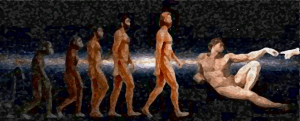
evolution

A Christian way to stimulate the economy.

Economic growth is seen as a good thing.  More economic activity generates more taxes and so allows the government more money to spend on healthcare, education, and welfare.  Society benefits from extra spend on these issues.

But forecasters say that economic growth is low and predicted values are reducing.  It is the government’s responsibility to try to improve economic growth.

The present chancellor also believes that it is beneficial for the government to ‘balance the books’.  In the 2016 budget the chancellor has said that it will be more difficult to ‘balance the books’ because ecomonic growth has slowed down.  He then goes on to propose tax reduction for the better off, and to reduce benefits to the poorest and most vulnerable. In proposing these policies, he is either ignoring or unaware of a fundamental principle:

If the poor have more money, they will spend it.  They need to buy the essentials – food, clothes, rent.  This puts money into the economy, which then grows.

If the rich have more money, they will save it.  They have no basic needs, and fear being poor in the future.  This removes money from the economy and growth slows.

If we follow the basic Christian principle of giving money to the poor, we stimulate the economy and things get better for everyone.  And you don’t have to be a Christian to do it.

The chancellor refuses to do this on our behalf, which makes it more difficult.  But if you have more money than you need, give some to the poor.

Here are some ways to do this:

  • If you are a landlord, charge less rent
  • Pay your taxes, and don’t look for tax loopholes
  • Leave bigger tips at restaurants,
  • Give to anyone who asks
  • Employ people instead of DIY, and pay a fair amount
  • Give to charities that help the poor and needy
  • Give to foodbanks
  • Financially support someone less well off than you are

Give it a try.  You will feel better for it, and it will make a difference.

David Bowie – The Hysteria, the Sorrow, the Frustration and the Hope

A clear thinking article.

theweeflea's avatarTheWeeFlea.com

This is my article on David Bowie in Christian Today   – it is slightly amended because I wanted to tidy up a couple of things.  The article came as a result of a conversation with my wife, Annabel, as she gave me a lift down to the church.  And then all these ideas just popped into my head, so I wrote them down and quite surprizingly it has gone, as they say, ‘viral’.  There are so many ‘Bowies’ out there – who need to hear the Good News!  As always comments appreciated.

Its great that The Scotsman has put much of this on their website!

And The Herald

David Bowie’s death, grief, and the frustration of a society that has nothing to offer the lonely

It was a shock. Of course it was. Make your coffee, switch on the radio and you hear Life on Mars on Radio 4. What…

View original post 1,353 more words

God is fair, the economy isn’t, we can do our bit.

Mankind has established a system that breeds injustice. Wealth sucks money from the poor. Those with money enjoy luxury whilst those without struggle to survive.

God is not like that. He is just and fair. The Apostle Peter writes, “This faith was given to you because of the justice and fairness of God”. Faith is available to all, rich or poor.

God is fair. “He gives his sunlight to both the evil and the good, and he sends rain on the just and the unjust alike.” In God’s kingdom, rich and poor are treated fairly.

God is just. In God’s kingdom rich and poor will receive the justice they deserve.

The poor will receive justice for suffering under the unfair economic system of this world. But the actions of the rich sustain that system.

It is so ingrained in our culture to maximise our income that we forget that the more we gain we gain the more someone else loses. Let’s remember.

Let’s question each financial decision to make sure it will reduce the unfairness of the system:  Does it move money from the poor to the rich, or does it help the poor?

“Looking at the man, Jesus felt genuine love for him. “There is still one thing you haven’t done,” he told him. “Go and sell all your possessions and give the money to the poor, and you will have treasure in heaven. Then come, follow me.” At this the man’s face fell, and he went away sad, for he had many possessions. Jesus looked around and said to his disciples, “How hard it is for the rich to enter the Kingdom of God!”

It is hard to go against the flow, but if we choose to reinforce an unfair monetary system, why should we expect to escape justice?

A morning prayer for the wealthy

Dear Lord,

Father, Son and Holy Spirit,

Thank you for bringing me safely through another night and for the promise of a new day.
Thank you for blessing me with health, wealth and good friends, and thank you for my family.

Thank you for the blessings that I can bring to others. Forgive me please for the times when I have not acted as you would wish, and please strengthen and encourage me to carry out your will in the future. Guide my steps to places and people who I can bless, and form in my heart the desire and will to be that blessing. Let me feel joy at the good that I have been able to do in your name.

It is hard to be joyful when there is evil confronting us each day, sustained by misguided beliefs and the cold hard hearts of so many.

Yet all good things come from you and are part of you, so please help me to know you, love you and enjoy your presence. Please lift my spirit to worship and praise you, and to appreciate your gifts to me. Please be present with me every moment of the day and night, filling me with your goodness and keeping me from harm. Please protect those who I love, and heal those who are suffering in body, mind and spirit.

In this cruel and selfish world, I ask that you work in all people to draw us to love you with all our heart, mind, soul and strength, and to love our neighbour as ourselves.

Please correct the growing culture of inequality where we, your children, believe others to be less important and valuable than we are. Help us to see each human being as our brother or sister, parent or child, and to love them as such.

Father, let your spirit drench this land as the wind and rain of winter. Convince the people in this nation of your existence, bring us to see our sin, and to repentance and forgiveness. Draw us close to you.

And please mould your church to feed us with the bread of life and to help us praise you as you deserve. Please remove the barriers that we put in the way of people who would follow you, forgive our mistakes and guide our actions to properly serve you and those we live among.

I ask all this in Jesus’ name, for I believe and trust that this is your will.

Amen

“Christianity – Why Bother?” … out now

Belief in God is claimed to be on the decline, and many cannot see a reason to question whether God might exist. What would be the point? Why make the effort? That is why “Christianity, Why Bother?” deserves a read. It answers the question that its title asks.

The book discusses some of the misconceptions of Christianity, and then moves on to examine the basis for belief and explains some of the practical and day-to-day benefits of being a Christian. The author shares some of his experiences since he became a Christian at the age of forty. The aim is simply to address the question, “why bother?”

Christianity why bother cover

Click here to buy on Amazon.

There are no border controls on the Kingdom of God

Jesus taught that “the Kingdom of God is at hand”. But how do we get there? Do we need a passport, or apply for a visa? Do we have to pass an entrance test to become a citizen?
Anselm described God as supreme goodness, and John’s gospel tells us that God is love; “But anyone who does not love does not know God, for God is love. And if God is love, love is God.
But God is more than that, he has ‘person-ness’ that I describe in “Four steps of reason leading to a personal God” . So we can think of love as part of his realm, his kingdom. Therefore to live in love is to live in the Kingdom of God. Every act of goodness or love is by definition carried out in the Kingdom of God. Every time a person choses to act kindly to a neighbour, they are in the Kingdom of God. Every time they choose not to respond in a loving, good way they are choosing to live outside the Kingdom of God. It doesn’t matter whether they call themselves Christian, Moslem, Hindu or atheist – acting is love is acting in the Kingdom of God.
Because it is our choice whether we act, or live, in the Kingdom of God there are no border controls. God does not make any demands, or set any tests for those who want to live there. We simply decide. I choose to love, therefore by definition I choose to live in the Kingdom of God.
But by definition, if I choose to be selfish then I am not in the Kingdom of God, because selfishness is not love, and therefore is not part of the Kingdom of God. If I live selfishly, I am in the Kingdom of Me.
Clearly we move in and out of the Kingdom of God every hour of every day. Perhaps we all need to be a little more conscious of which Kingdom we want to live in.

“You can’t support them all can you?”

Let me start by start by confessing that I am writing this to myself as much as to anyone else, and particularly to those of us who call ourselves Christians. It covers the challenging topic of giving money. Often we say, or hear others say something like, “I won’t give to that charity. You can’t support them all, can you?”  It sounds reasonable, but is it correct? Christians believe that Jesus Christ gave everything for us. He gave his life that we might have a rich and satisfying life. We believe that there is guidance in the Bible on how to live such a life. Here are some passages:

“Give to those who ask, and don’t turn away from those who want to borrow.” “If you have two shirts, give one to the poor. If you have food, share it with those who are hungry.” “When you give to someone in need, don’t let your left hand know what your right hand is doing. Give your gifts in private, and your Father, who sees everything, will reward you. Looking at the man, Jesus felt genuine love for him. “There is still one thing you haven’t done,” he told him. “Go and sell all your possessions and give the money to the poor, and you will have treasure in heaven. Then come, follow me.”

The message appears to be that yes, we can support them all. I was discussing this with my wife after looking at the distribution of income on an earlier post. When would it be OK to say no, we are giving enough? I suggested that perhaps it was OK when our income net of giving was that of the lowest on the curve – the bottom 10%. If we expect people on the bottom 10% to live full and satisfying lives on their income, shouldn’t we be willing to do the same? Elsewhere in the bible is states that:  “Each one must give as he has decided in his heart, not reluctantly or under compulsion, for God loves a cheerful giver.”  So how does that fit with “sell all you have and give the money to the poor”? Perhaps it means that if we are unable to give cheerfully to anyone who asks then we need to work on our heart. Maybe we need to teach ourselves to love more. As well as listening to the advice on how to maximise our income, invest in schemes to give high interest and avoid paying tax, we need to be hearing that we can manage on less. We can still maximise our income, but to give more away instead of saving it for ourselves.  See also my post “The Wealthy are Redeemable” Yes, I am sure I am being hypocritical in writing this. But that does not make what I have written wrong. Let’s all ponder this in our hearts and see what we decide to do.

………………………………………………………………………

If you want some ideas, try these links:

http://5quidforlife.org.uk/

Home

feel free to add your own in the comments.  I’ll add them here when I get time.