1 John 3:17-18 Beira

In March 2019 Cyclone Idai devastated much of Mozambique.  Local contacts identified that despite humanitarian relief being provided by major aid agencies many people were missing out – particularly the elderly – and in desperate need of help.  Privately sent funds were used by the team in Beira to provide emergency food hampers and water, and then to help repair and rebuild houses. This work highlighted the ongoing need for financial help.

In view of the clear and ongoing need and opportunity, and to build on this initial successful partnership, in the UK we established the charity “1 John 3:17-18 Beira”, and in Mozambique our partners have registered their project with the government: “Associacao Esperanca Aos Vulneravies” (Hope Association for the Vulnerable).

Each month a list of needs is created by the local team of volunteers in Beira (see photo), and those needs which can be funded are agreed.  1 John 3:17-18 Beira then sends the money.  At the end of each month a report is received confirming how the funds were used, and providing photographs of the work, ensuring accountability.

The charity currently supports around seventy of the poorest people with food and fuel.  We have built more than ten houses for those whose homes were demolished, and repaired many more. We support nursing students, apprentices, and those doing short term courses (IT, electrician, baking). We have provided business loans to around ten people. We have provided nearly a hundred fuel efficient stoves and planted over fifty trees.
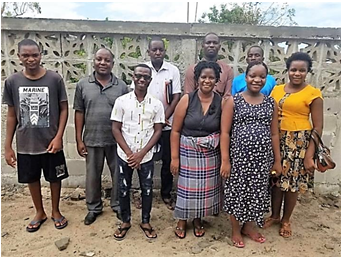
Members of Associacao Esperanca Aos Vulneravies

The local team are passionate to improve the chances for the poor.  At the most immediate level this involves providing food, fuel and medication for those who simply have no income. Blankets have been given to help keep warm at night in winter. Mosquito nets have been given out too.
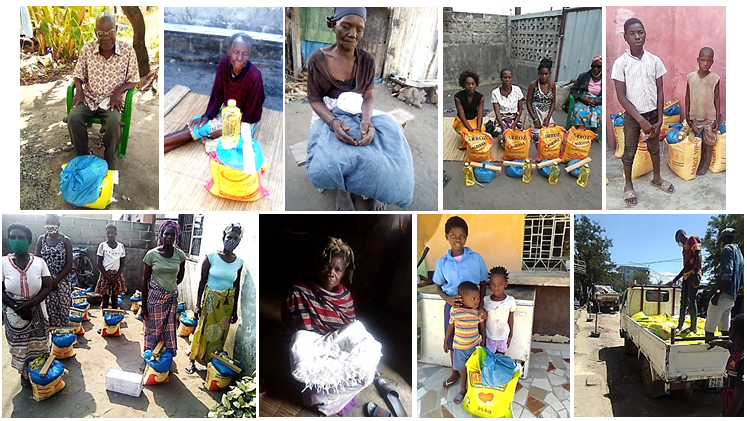
Some of the beneficiaries receiving food, oil, soap and blankets

Materials and where necessary labour are provided for repairing houses, adding cyclone protection measures and building new houses where homes have been destroyed.  Innovative and environmentally friendly approaches to construction are being investigated, such as using waste plastic bottles as building material.

Education and training, and earning a living

In addition the project is able to make grants for school fees and uniforms, and for training and apprenticeships. These often cost less than £50 each, but give the beneficiary a future. 

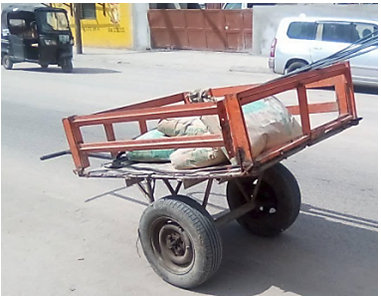
Small start-up business loans are made to pay for initial stock or in one case to buy a small cart to transport goods.  Again these loans are often less than £50, and the recipients pay back as they can so that funds can be used for future loans.
Environmental projects that help the community

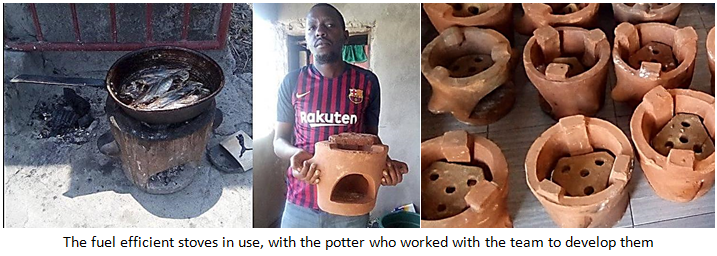
The team have worked with a local potter to design and manufacture efficient cooking stoves which not only save the user money by needing less charcoal, but also reduce CO2 emissions.  These cost under £3 each, and are sold to those who can afford them or given freely to those who cannot.
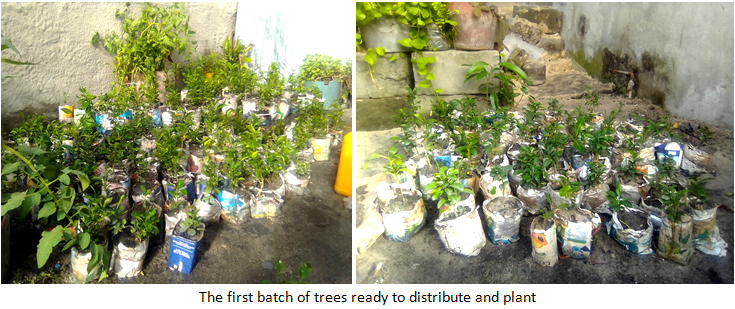
A tree planting project is just beginning, with a first batch of fifty five trees being planted costing a little over £1 each.  The local team would love to launch a programme of planting a million trees in Mozambique, in Beira and outside, and engaging pastors to encourage their members to plant trees.
The future

The Associacao Esperanca Aos Vulneravies members continue to identify people with needs, and since the registration of the project there are more people able to help in the work. 

In addition to continuing and growing the current work, we would like to provide toilets and drill wells for poorer communities.  Many living with HIV refuse to take medication, and so we would like to establish counselling support.

We have reached a state where the funding that we are providing needs to increase to keep pace with the project opportunities, and so we are asking people of goodwill to join us in sending funds to support projects which are making a real difference in the lives of fellow human beings in one of the poorest countries in the world.

If you wish to support the project, please contact us at 1john31718beira@gmail.com

Thank you.

Phil and Cathy Hemsley, and John McCoach.  Trustees, 1 John 3: 17-18 Beira
Christmas Joy?

Christmas is supposed to be a time of joy, yet my heart is torn by so much that is wrong in our world that it can be hard to find joy. 

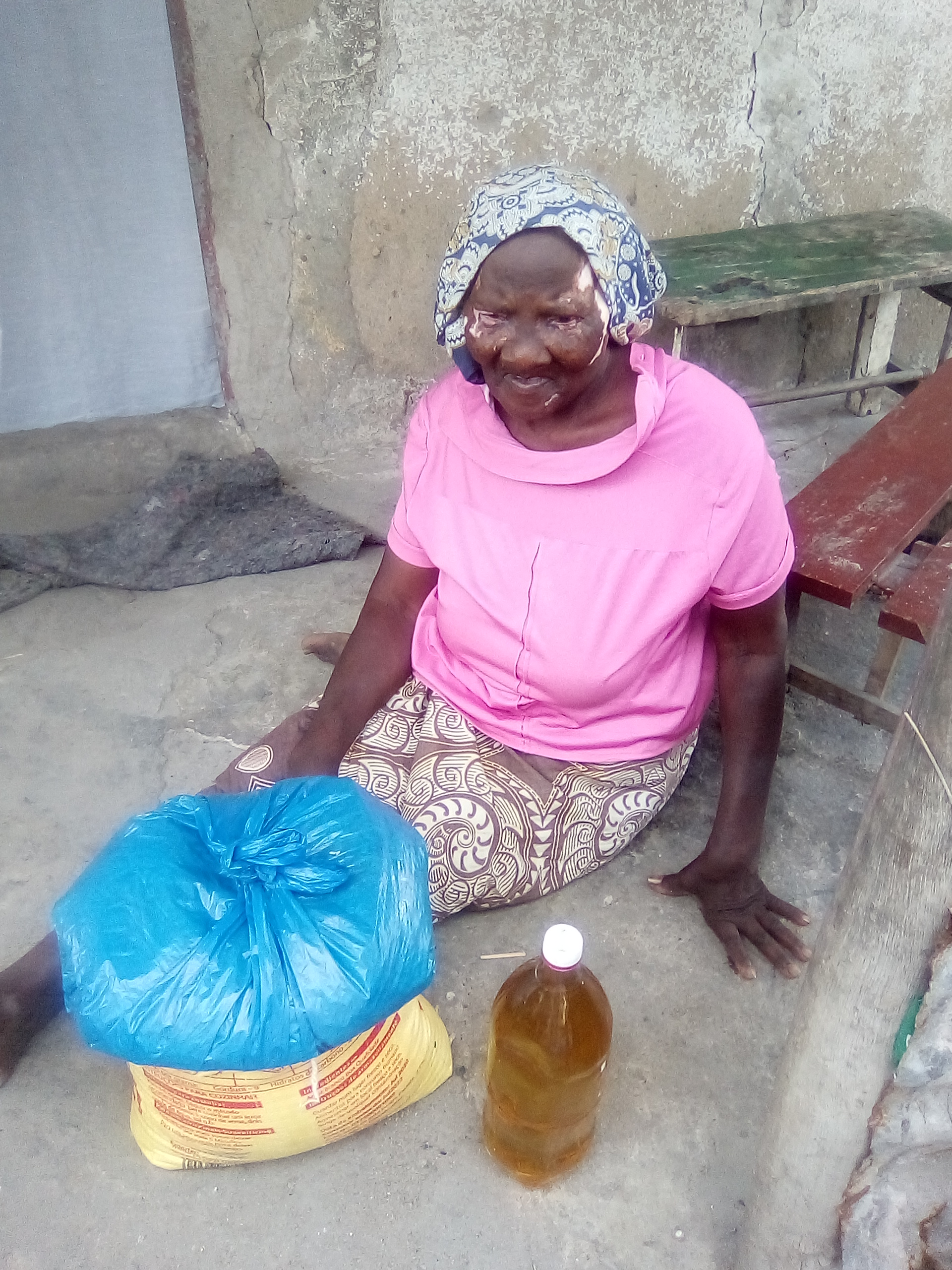
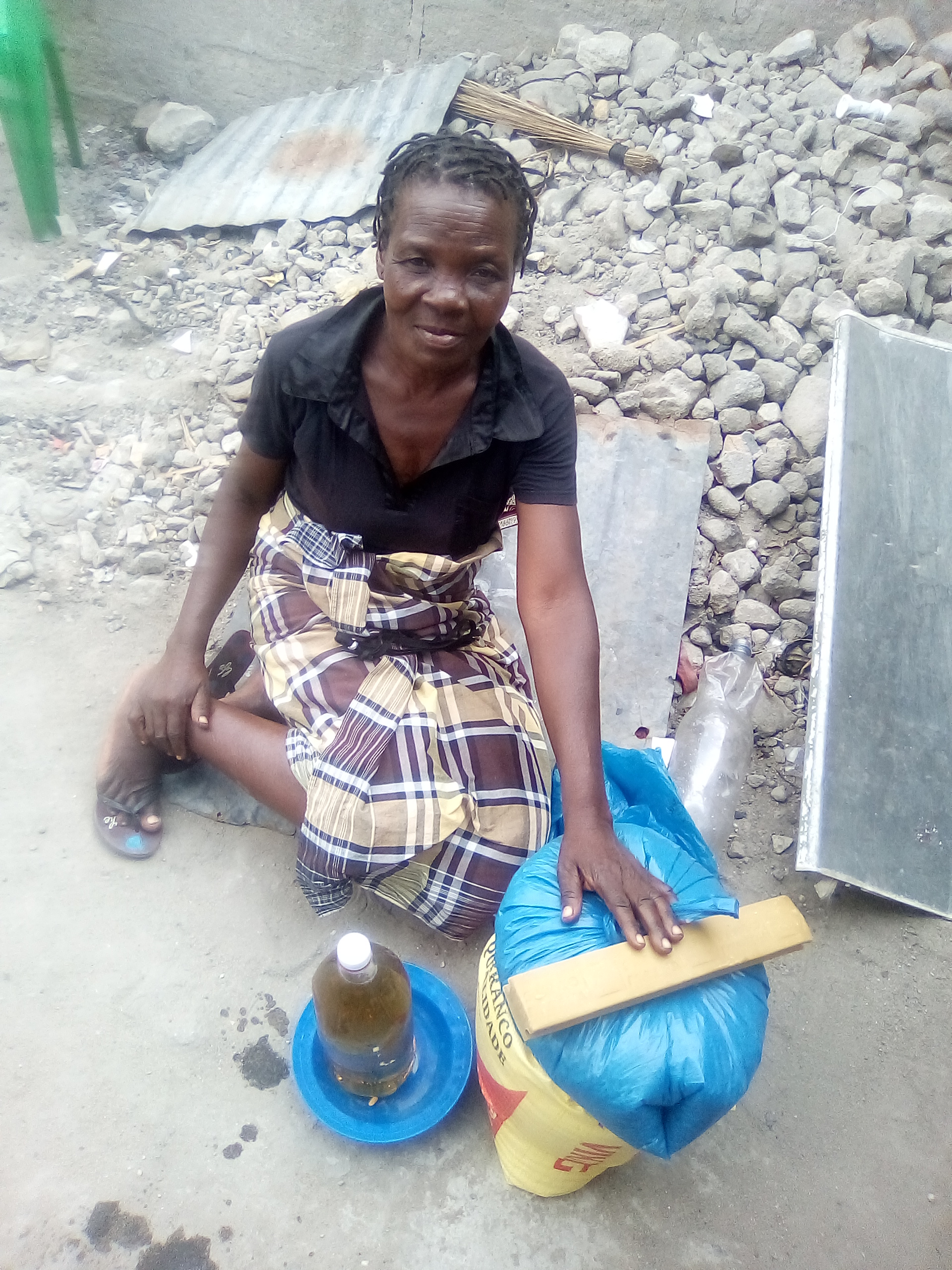
I was privileged to have visited Mozambique some years ago.  Having experienced a tiny glimpse of life there, I now regularly send money to help some of the poorest who live there.   This picture shows one lady with all that she has to live on for the next month:

Is she any less valuable human being than me, or you?  Does she matter less because she happens to have been born in a poor country?  Or because she’s black?  Isn’t that what we think deep down if we deny help to people in this situation?

It’s not just our government cutting back that matters.  What about each of us as individuals?  There is a line in a song “my Chinese take away would pay for someone’s drugs”  (medicines) – that is so true.   I know many people, quite a few now retired or close to retiring – university professors, doctors, professional engineers, teachers, civil servants – who have amassed significant amounts of money, own big houses, take expensive holidays.  Healthy pension funds and investments have secured a comfortable retirement – as our culture tells us that that is what we have to do.  

And yet this old lady has no such ‘essentials’.   She lives day to day in accommodation that we would not give space to in our garden, and is desperately grateful for a sack of rice and some cooking oil:

We in the ‘developed’ world are not deliberately evil, but we are ignorant.  We are ignorant of the life of the majority of the world.  We have money but are fearful of losing it.  We are taught to save for our rainy day, but we do that when so many others are already being flooded out by a deluge. 

It would be hypocritical of me to say we should sell all we have and give to the poor – although since Jesus said it, it is probably right.  But we can start to move in that direction.  It does not cause any discomfort if the total of our investments drop by (say) 10% when we still don’t think twice before having our Chinese takeaway – and yet I have found that joy comes from seeing the images of those who I have been able to help.  This person has something to eat because I chose to send some money.  That person can now put a tin sheet over the hole in the roof of their house because I chose to send some money.  When I  give, I feel no pain, only gain.  And yet it is still not ‘easy’ – still the pressures of sixty years of western capitalist propaganda take effort to resist.  It takes an act of will sometimes to give, but it is worth it.

Try it this Christmas?

May God bless us all.

The Secret £millions

Across the country, philanthropists in previous generations established charities to help the poor.  If you search the charity commission website for the name ‘poor’ you will find many of them.  Many have run their course and fulfilled their purpose, but others are sitting on literally £millions of assets, and generating income in excess of their giving.

From the charity commission published information, in my town alone there is one charity which has assets of £1.75 million, including £300 thousand in ‘cash’. In 2018 it had income of over £110 thousand, giving away just over half of that (£55 thousand) at a cost of running the charity of £23 thousand. Every year on record the income has exceeded what they have given away.

Another has current assets of £680 thousand, and an income of around £30 thousand per year. In 2019 it gave away £8 thousand.

Each of these charities has a board of trustees, and I’m sure that they are well-meaning people but surely it cannot be right that charities that are supposed to be helping the poor are year on year increasing their assets – particularly through years of deep austerity.  Why is nobody holding these charities to account?

Probably one problem is that few people know these charities exist; I’ve not seen any of them advertising, and so how does someone in need know that they are there to help?  And if someone is aware of them, do they know how to apply for help and is the process transparent and easy?

There is a line in a Pratchett film which runs something like “the thing about saving for a rainy day is that you have to recognise when it’s raining”.   Looking at the past ten years or more of austerity, I think we can say it’s been raining for some time now; and with the current Covid 19 crisis we might say that we have a torrential downpour.  Surely it’s time for such charities to proactively fulfill their purpose and give away their savings?

And who knows, if they begin to do a good job in really helping those in need they might find that those who have money to spare might actually donate to the charities to support their work?  But as things stand, this seems to be almost a scandal.

Can we do anything to help?  If nothing else, we can have a look at the charity commission list, see who operates in your area, and let people know that these charities exist.

A Christian way to stimulate the economy.

Economic growth is seen as a good thing.  More economic activity generates more taxes and so allows the government more money to spend on healthcare, education, and welfare.  Society benefits from extra spend on these issues.

But forecasters say that economic growth is low and predicted values are reducing.  It is the government’s responsibility to try to improve economic growth.

The present chancellor also believes that it is beneficial for the government to ‘balance the books’.  In the 2016 budget the chancellor has said that it will be more difficult to ‘balance the books’ because ecomonic growth has slowed down.  He then goes on to propose tax reduction for the better off, and to reduce benefits to the poorest and most vulnerable. In proposing these policies, he is either ignoring or unaware of a fundamental principle:

If the poor have more money, they will spend it.  They need to buy the essentials – food, clothes, rent.  This puts money into the economy, which then grows.

If the rich have more money, they will save it.  They have no basic needs, and fear being poor in the future.  This removes money from the economy and growth slows.

If we follow the basic Christian principle of giving money to the poor, we stimulate the economy and things get better for everyone.  And you don’t have to be a Christian to do it.

The chancellor refuses to do this on our behalf, which makes it more difficult.  But if you have more money than you need, give some to the poor.

Here are some ways to do this:

  • If you are a landlord, charge less rent
  • Pay your taxes, and don’t look for tax loopholes
  • Leave bigger tips at restaurants,
  • Give to anyone who asks
  • Employ people instead of DIY, and pay a fair amount
  • Give to charities that help the poor and needy
  • Give to foodbanks
  • Financially support someone less well off than you are

Give it a try.  You will feel better for it, and it will make a difference.