Great Britain? I hope so.

Eighty years ago this nation was at a crisis.  Politicians of the day worked together for the good of Britain and Europe.  The monarch was respected and brought hope to the people suffering – visiting Coventry after the horrific bombings, addressing our nation and urging us to pull together to fight against fascist powers that were oppressing the poor, the weak and the scapegoat Jews.  It was a time where national values and pride meant doing the right thing for our neighbours.

Fast forward to today.  We have in power an unelected leader who is treating our Queen with contempt, as a tool to be used as he sees fit.  We see those in high office treat our honourable institution of parliament with utter disrespect – lounging on the front benches. New scapegoats are created.  Our traditions are trampled.  Unelected oligarchs and manipulators hold powerful positions.  The similarities with the fascist regimes that “Great” Britain united to defeat are startling.

We will have a general election soon.  It will be a test.  Has our nation abandoned the values that we once held dear, and for which men and women gave their lives in our finest hour?  Or will truth and goodness prevail?  This will not be an election about Brexit, but it will be a test of what we are as a nation.  It will be a test of our values.  I hope and pray that we will choose truth, justice and honour.
Making decisions as a community

Often we have to make decisions as a community; a family, a nation, a team.  How do we go about it?  Usually we will simply ask “what do you think we should do?”  And then we will argue against the other person’s proposal.   When the decision is finally made there is conflict and resentment from those who suggested doing something else.  The results of this approach can be extremely damaging.

For instance, the government ask “do you want to leave the EU?”  Half of us say yes and half of us say no, and so half of us are very upset that we have not been listened to.  The nation is split in two.

Or a local authority will make a proposal to close Children’s Centres and then ask people’s opinion on the proposal, calling it a consultation.  But it is simply a consultation on whether you like the proposal or not.  The consultation doesn’t lead to a better solution, but just to anger from those who will be harmed by the proposal.

The steps we go through, probably unconsciously, when we decide something for ourselves can be summarised as:

  1. What is a the problem
  2. What are the alternative solutions
  3. What are the advantages and disadvantages of each
  4. What do we want to do

But when we try to make decisions as a community our normal approach is:

  1. What do you want to do?
  2. I don’t want to do that, but this.

We end up arguing, simply because trying to decide something without even knowing what problem we are trying to solve.

In both of the examples above, the process could have been different.

For example, the question could have been “What factors are important in deciding whether to remain in the EU, and how important do you think each factor is?”

With the results of this consultation, the government could have framed a proposal for how to deal with the different issues, explained the proposal and the reasoning used to get to it, and then (if necessary) asked for agreement to proceed.  In essence this is requiring the government to carry out ‘completed staff work’ (http://govleaders.org/completed-staff-work.htm) before submitting a proposal for approval.  If they have done their work well, the conclusion would simply need our approval.

Try this approach in your community.  Let me know if it helps.

Brexit … the great divorce

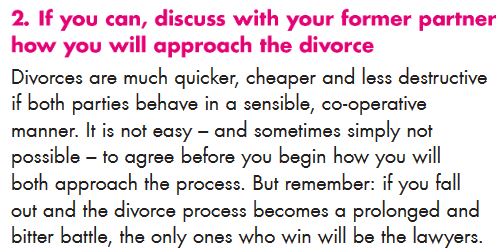
I have been married for 36 years.  Others are not that lucky, and unfortunately many marriages end in divorce.  Britain’s attachment to the EU is one such case.

Our government is launching into negotiations with the EU.  Let’s see if they are taking good advice.

Clearly it is best to negotiate Brexit in a “sensible, co-operative manner”.   It does not do anyone any good to start by making unrealistic demands and expecting to get your own way on everything.

So far all I have seen is uncompromising posturing for the UK press.

I would prefer our negotiations to be led by a government that is “Fair and Reasonable” rather than one which prides itself on pretending to be “Strong and Stable”.

That is another reason that I will be voting Labour on June 8th.

PS – here is advice on negotiating with the EU, which backs up the above http://www.independent.co.uk/news/world/europe/theresa-may-brexit-tactics-wrong-eu-former-greek-finance-minister-yanis-varoufakis-a7721151.html


“Forgive me my sin, as I forgive those who sin against me.”

Think about this carefully.  It is the route to national and individual healing.

If we are a wealthy banker and are angry and unforgiving of those who voted for Brexit, then this prayer gives the Brexit voter permission to be angry and unforgiving of us, as we maintain the system of oppression of the poor.  The country tears in two, hatred spreads and we are all worse off.

If we are poor and homeless and are unforgiving of the uncaring nature of those who are financially safe, then that gives those in power no incentive to change the situation.  And we can expect to be punished for any bad behaviour on our part.

If we are unforgiving of less than perfect service from (say) hospital A&E, teachers, or waiters then we can expect no forgiveness when we fall short of perfection in our work.

If we cannot forgive our friends or family when they say or do something that upsets us, then we must be perfect in our behaviour towards them.

The prayer asks that we are forgiven in the same way that we forgive others.  If we cannot forgive others, we must maintain the same demand for perfection in ourselves; a demand that we will never be able to live up to.  If we want to free ourselves from feelings of guilt or inadequacy, we must choose to forgive others first for their shortcomings, and then we can know then that we are forgiven.

How to really make Britain great again.

The headline tells us “Brexit to send UK tumbling down world economic league table…”.  and we ask “Is this making Britain great again?”

But the headline, indeed the whole question of where Britain ranks in the world economy has absolutely NOTHING to do with whether Britain is great.  What matters is whether Britain is becoming more human.

Being human has nothing to do with the economy or wealth, but everything to do with values. It is about valuing everybody equally, irrespective of colour, class, wealth or religion. It is about selfless behaviour for the good of others. It is about acting with integrity and speaking truth. It is about doing what is right, irrespective of the consequences.

Britain will become great when those who are well off are willing to contribute enough to ensure the wellbeing of those who are not well off,  when we are willing to give up our own comforts for those who have nothing,  when we are willing to give sanctuary to those fleeing war dispite the risk of personal harm.

Britain will become great when we stop expecting a political system that gives everyone all the rights that they demand, but encourages us all to self-centredness. We cannot demand perfection from public services that we are not prepared to fund. We need to stop demanding perfect treatment from others, when we cannot give it ourselves.  We need to stop demanding that teachers work until midnight to keep up.  We need to stop expecting to be treated in A&E within minutes when we have drunkenly staggered into a lamppost.  We need to stop abandoning our personal responsibility for our own circumstances.

Britain will become great only when we choose to love one another; when we learn to contribute what we can, and to keep our expectations of others reasonable.  That is my hope for 2017.  Make it yours.

Time to repent.

In an earlier post I wrote “Inequality between the richest and the poorest is a man-made thing. Men have put it in place. Men defend it. Men can dismantle it.”  I was wrong.

Recent events clearly show that left alone, mankind is selfish, greedy and tribal.  Only when empowered by the spirit of love and goodness can men and women make a difference.

We need more leaders who promote that spirit, but we are cursed with politicians such as Trump who despise love and goodness.  Many of the Brexit arguments from both sides were appealing to our baser nature.  And we listen to them and subdue the spirit of love in our heart.

So what must we do to change the state of things?  We were given the answer two thousand years ago:

“Repent, and give up our life of sin”

Each one of us needs to take stock of our values and choose to live by what really matters: to love our neighbour as ourselves.  We need to embrace the spirit of love and goodness, accept forgiveness for how we have been and from now on choose to love.  That is the only way that the evil in this world will be defeated.

For more details, go to your local church or read:

Christianity why bother cover

Warning!

Behaviour like that of Philip Green is more than just the unacceptable face of capitalism, it is the root cause of the turmoil in our country and world today.

The greed of the very rich caused the deprivation in the many parts of England, which in turn led to the Brexit vote.

The demand for high dividends and returns on investment leads companies to cut costs and exploit their powerless workers, demanding longer hours, zero hours contracts and low wages.  The stress this causes leads to anger.  The deprivation of family time leads to unruly children.

The sucking of money out of the economy by the rich causes the shortage of jobs and leads to hopelessness in the younger generation.  What future have they got if they see that you need a degree to work in a fast food store.

Are you someone who is profiting from the poor?  Carry on if you wish, but you bear responsibility for the coming turmoil.  Look back at history and learn what the selfishness and greed of those in power leads to.  Or simply say “let them eat cake”.

Why I will be voting to remain in the EU.

The result of the vote is likely to have little or no impact on me personally, so why do I come across as passionate that we should stay in?  Because I care deeply about the wellbeing and spiritual health of all in our nation.

The current suffering of the poorest in our society has absolutely nothing to do with the EU, but everything to do with the UK government’s austerity program and with the culture of inequality that is peddled by the press and protected by the wealthy.  It is within our nation’s power to deal with this today – irrespective of whether we are in or out of the EU.  The ‘out’ campaign put the blame for the current difficulties on immigration and ‘Jonny Foreigner’.  This creates anger, tribalism and hate in the hearts of those who listen to their message.  I do not want our nation to move further in that direction.

The claims from both sides that Britain will be better off ‘in’ or ‘out’ are all speculation. Nobody knows how other nations will respond, what the markets will do, or any of the other predictions.  Of course, the ‘out’ campaign can claim that things will be better than they are today, and in response all that the ‘in’ campaign can say is that they will be worse.  In the present austerity regime, the ‘out’ offers an end to the pain, in the same way as the National Lottery offers a way out of financial troubles – and you don’t even have to buy a ticket, just tick the right box.  And in the same way that the lottery takes money from the poorest with the promise of wealth, the out campaign is appealing to the poorest with the promise of a wonderful future.  This is manipulative, and I will not support a group of people who use such tactics.

We are currently governed by a party that was elected by 25% of the nation (we call it democracy), composed of the privileged class.  Without hindrance from the EU they are introducing policies that do not consider the personal pain of the poor.  The most extreme members of this group are the ones that want us to leave the EU.  I ask why, and the answer is simple – they don’t want the EU to constrain their policies with any social justice laws and regulations.  They want to be unfettered in pursuing their personal agendas.  I do not want to see these people given completely free reign in this county.

And finally, the whole question is causing people to ask ‘what is best for me’, whereas I would rather see people to ask ‘what can I do to help my neighbour’.  I want the leaders of our nation to encourage us to be more moral in our thinking, and yet the in/out debate is a perfect example of our politicians appealing to the basest emotions that we have.  So I advocate: “Vote to stay in Europe, stop listening to the rantings on the politicians, and get on with loving and caring for your neighbour, near and far”.

brexit