Money, Church, Jesus and me.

There is a church which has assets of £8,700,000,000 at the start 2020, at the start of the pandemic.  The nation struggled and many were in financial despair.  What might Jesus have hoped that the church would do?

The church did not ‘hide their gold in the ground’, or put it in a deposit account earning perhaps 1% return. Instead it invested its assets and achieved a growth of 10.4% in the year.  Would Jesus have been happy with that stewardship of the money?

The church spent some of the money that they received, but at the end of 2020 the assets of the church had grown by £500,000,000 to £9,200,000,000.  Is God blessing that church with growth?

“You say, ‘I am rich; I have acquired wealth and do not need a thing.’ But you do not realize that you are wretched, pitiful, poor, blind and naked. I counsel you to buy from me gold refined in the fire, so you can become rich; and white clothes to wear, so you can cover your shameful nakedness; and salve to put on your eyes, so you can see.”

Over Christmas, a small church agreed to spend £1000 to make up food hampers for those on Free School Meals.  As a result, fifty families were blessed.  People were inspired to donate towards the cost of the parcels, which meant that it actually cost the church nothing.  Was God rewarding their generous spirit?

I saw a Facebook post recently that made me think:

It is so easy to criticize those who have more money than us.  But we could equally say:

There is a charity, set up by a Christian pastor, which buys and builds houses that are loaned to local churches to house and support vulnerable homeless people.  So far they have housed 1226 people.  They raise the money through people investing in their project rather than by donating money.  They offer a 5% financial return on investment so that investors have the twin benefit of knowing that a homeless person is being housed and loved, and getting an above average return on investment. (https://www.greenpastures.net/)   The charity is growing; does that make Jesus smile?

We may worry about money; it is natural.  Everything today is described by its economic value, or the cost to do it; phrases and a culture used to justified austerity.  In such an environment it is hard not to put a financial value on everything, and to be thrifty.  Consider another quote that I came across said:

“The smart way to keep people passive and obedient is to strictly limit the spectrum of acceptable opinion, but allow very lively debate within that spectrum. That gives people the sense that there’s free thinking going on, while all the time the presuppositions of the system are being reinforced by the limits put on the range of the debate.”  Noam Chomsky

That is today’s truth. Greed is now accepted as good in this country. People simply debate how much greed. But we don’t call it greed, we use phrases like ‘reserves’, ‘savings’, ‘retirement plan’ to avoid confronting whether we should be keeping our money to ourselves.  Jesus said:

“Do not store up for yourselves treasures on earth, where moths and vermin destroy, and where thieves break in and steal.  But store up for yourselves treasures in heaven, where moths and vermin do not destroy, and where thieves do not break in and steal.  For where your treasure is, there your heart will be also.”

Dealing with money is not easy, but it is SO important.  It must not become our treasure, but it is certainly a tool.  It allows us to be a blessing to others in as little time as writing a cheque – and time is a stress for many. It blesses us to bless others, but if we agonise about the smallest financial decision then our worrying steals our time, our energy, and can lead to conflict!  We need to train ourselves to be instinctively generous.  We might reflect on these phrases of Jesus, remembering that he spoke them because he loves us; because they are good for us:

“Therefore I tell you, do not worry about your life, what you will eat or what you will drink, or about your body, what you will wear. Is not life more than food, and the body more than clothing?”

“Give to everyone who asks you, and if anyone takes what belongs to you, do not demand it back.”

“None of you can become my disciple if you do not give up all your possessions.”

And as St Paul wrote:

“Remember this: Whoever sows sparingly will also reap sparingly, and whoever sows generously will also reap generously. Each of you should give what you have decided in your heart to give, not reluctantly or under compulsion, for God loves a cheerful giver.  And God is able to bless you abundantly, so that in all things at all times, having all that you need, you will abound in every good work.”

1 John 3:17-18 Beira

In March 2019 Cyclone Idai devastated much of Mozambique.  Local contacts identified that despite humanitarian relief being provided by major aid agencies many people were missing out – particularly the elderly – and in desperate need of help.  Privately sent funds were used by the team in Beira to provide emergency food hampers and water, and then to help repair and rebuild houses. This work highlighted the ongoing need for financial help.

In view of the clear and ongoing need and opportunity, and to build on this initial successful partnership, in the UK we established the charity “1 John 3:17-18 Beira”, and in Mozambique our partners have registered their project with the government: “Associacao Esperanca Aos Vulneravies” (Hope Association for the Vulnerable).

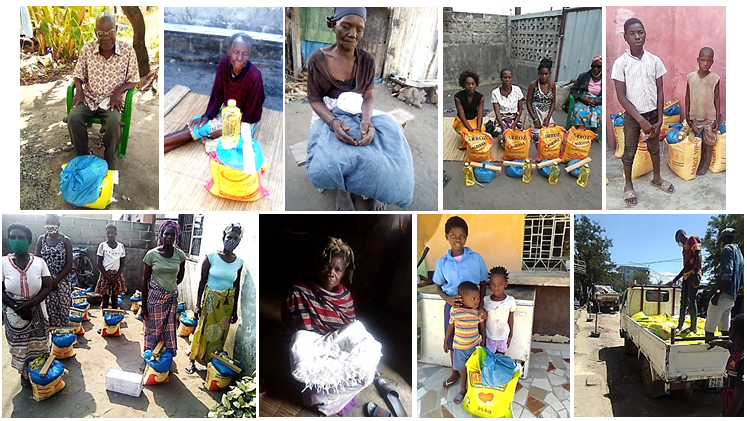
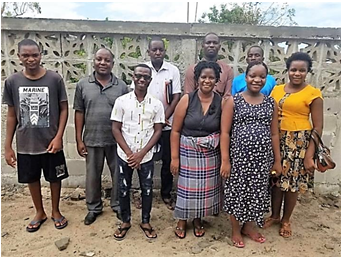
Each month a list of needs is created by the local team of volunteers in Beira (see photo), and those needs which can be funded are agreed.  1 John 3:17-18 Beira then sends the money.  At the end of each month a report is received confirming how the funds were used, and providing photographs of the work, ensuring accountability.

The charity currently supports around seventy of the poorest people with food and fuel.  We have built more than ten houses for those whose homes were demolished, and repaired many more. We support nursing students, apprentices, and those doing short term courses (IT, electrician, baking). We have provided business loans to around ten people. We have provided nearly a hundred fuel efficient stoves and planted over fifty trees.

Members of Associacao Esperanca Aos Vulneravies

The local team are passionate to improve the chances for the poor.  At the most immediate level this involves providing food, fuel and medication for those who simply have no income. Blankets have been given to help keep warm at night in winter. Mosquito nets have been given out too.

Some of the beneficiaries receiving food, oil, soap and blankets

Materials and where necessary labour are provided for repairing houses, adding cyclone protection measures and building new houses where homes have been destroyed.  Innovative and environmentally friendly approaches to construction are being investigated, such as using waste plastic bottles as building material.

Education and training, and earning a living

In addition the project is able to make grants for school fees and uniforms, and for training and apprenticeships. These often cost less than £50 each, but give the beneficiary a future. 

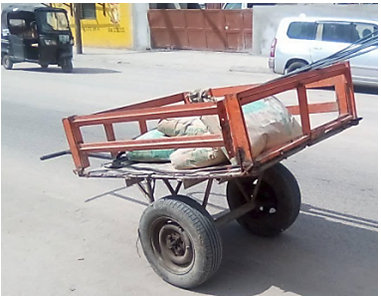
Small start-up business loans are made to pay for initial stock or in one case to buy a small cart to transport goods.  Again these loans are often less than £50, and the recipients pay back as they can so that funds can be used for future loans.

Environmental projects that help the community

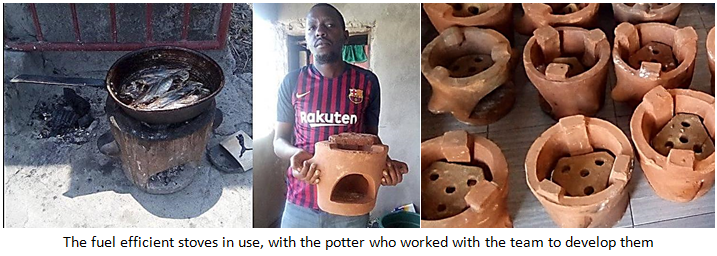
The team have worked with a local potter to design and manufacture efficient cooking stoves which not only save the user money by needing less charcoal, but also reduce CO2 emissions.  These cost under £3 each, and are sold to those who can afford them or given freely to those who cannot.

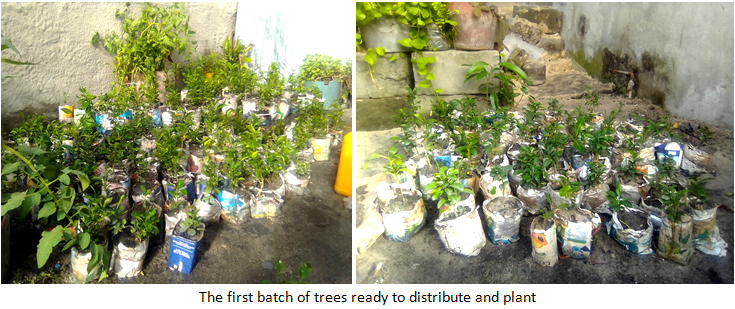
A tree planting project is just beginning, with a first batch of fifty five trees being planted costing a little over £1 each.  The local team would love to launch a programme of planting a million trees in Mozambique, in Beira and outside, and engaging pastors to encourage their members to plant trees.

The future

The Associacao Esperanca Aos Vulneravies members continue to identify people with needs, and since the registration of the project there are more people able to help in the work. 

In addition to continuing and growing the current work, we would like to provide toilets and drill wells for poorer communities.  Many living with HIV refuse to take medication, and so we would like to establish counselling support.

We have reached a state where the funding that we are providing needs to increase to keep pace with the project opportunities, and so we are asking people of goodwill to join us in sending funds to support projects which are making a real difference in the lives of fellow human beings in one of the poorest countries in the world.

If you wish to support the project, please contact us at 1john31718beira@gmail.com

Thank you.

Phil and Cathy Hemsley, and John McCoach.  Trustees, 1 John 3: 17-18 Beira

Why we still need the pandemic.

As I listened to the news this morning, I began to realise that we are not yet ready for this pandemic to end.  We still haven’t learned what we need to learn.

We still haven’t learned that one person is just as valuable and important as another.

We haven’t learned that money and economic systems must be our servant and not our master.

Can you believe that as a nation we are debating whether it is necessary to ensure that children should be fed?  Of course it is!  We would not contemplate not feeding our own children, so the question betrays that we think ‘our’ children are more valuable than ‘their’ children. 

We are debating whether, if we do have to help, is it better to give food vouchers or food parcels to the poor.  Why would we not simply give the money? Because ‘they’ are not to be trusted to spend it wisely, whilst ‘we’ have so much money that we can spend it frivolously and still have full bellies.

Within this nation, within this world, we don’t value one person as much as another .  The pandemic is forcing us to see this and learn our lesson – but we are not there yet.

Money is a man-made invention; a tool that should allow everyone to contribute what they are able to society and to receive what they need from society.  Yet an alien would see that although there is food in supermarkets, there are people who have no food but are not allowed to eat it.   The alien would see that whilst some people are contributing according to their abilities, others are not permitted to – those same people who are not allowed to eat.  The alien would see that – for instance – there are those who have no homes but that those with building skills are building bigger houses for those who already have them. 

The alien would ask why.  Why is this person allowed to eat, but that one is not?  Why are people building this person a bigger house when that person has nowhere to live?  The alien would conclude that ‘this’ person must be different from ‘that’ person; a superior being, more valuable and important.

Our actions show that we do not believe that one person is just as valuable and important as another.

We might say ‘everyone matters’ and ‘everyone is equally important’. And if we really mean it, then we have become subservient to an economic system that does not allow us to express that belief.  We have sacrificed our beliefs in fundamental  morality and truth to an artificially generated concept – money – that is supposed to be our servant but that has become our master.

We have become slaves to an economic situation where two equally important human beings receive grossly unequal shares of the fruits of the labour of society, and where two equally important human beings are given vastly different opportunities to use their skills and abilities to contribute to society.

The Nazis outwardly claimed superiority over other races – but don’t our actions show that we hold those beliefs in our hearts?  

That is one lesson of this pandemic. Have we learned it yet? If we have learned it, are we not ashamed?  If so, we can repent and amend our thinking and our actions. 

And have we learned yet from that pandemic that we have become slaves to our economic system?  That we have sacrificed our morality, our humanity to a man-made mechanism?  When we have learnt that lesson we need to decide what we are going to do about it:  Individually, and as a nation.

So perhaps we are not yet ready for this pandemic to end.  Perhaps we still haven’t learned what we need to learn.  But I hope it won’t take us too long!

Why it is right to reverse the increase in Inheritance Tax threshold.

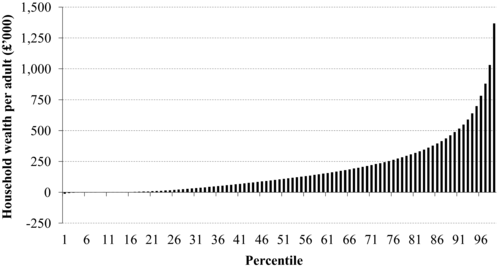
The Institute of Fiscal Studies says that “..wealth is distributed very unequally. One per cent of households have negative net wealth of greater than £12,000 per adult (the 1st percentile), while the 9th percentile is £0 so 9 per cent of households have no positive net wealth. Wealth at the median is £104,000 per adult. Wealth at the very top increases dramatically across a small number of percentiles – the 95th and 99th percentiles are £0.7 million and £1.4 million per adult respectively. In fact, the estimates of wealth held at the very highest percentiles could be underestimates;”

There is no problem with saving your income to increase your wealth.  But there is a problem when inherited wealth means that those who have not had the good fortune to have wealthy parents or ancestors are denied the chance to ‘better’ themselves.

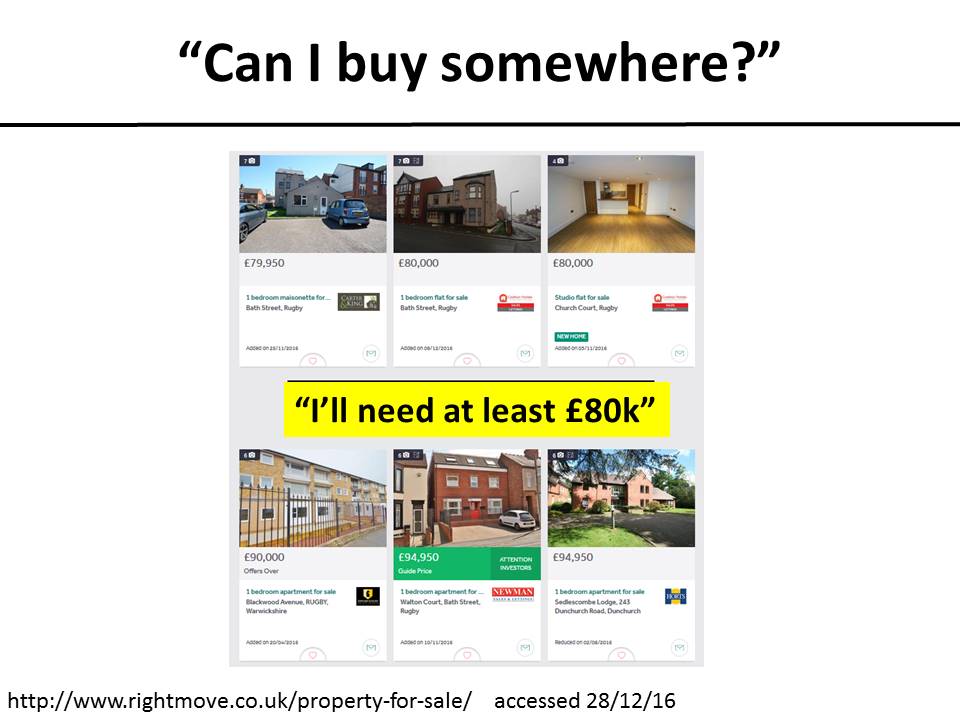
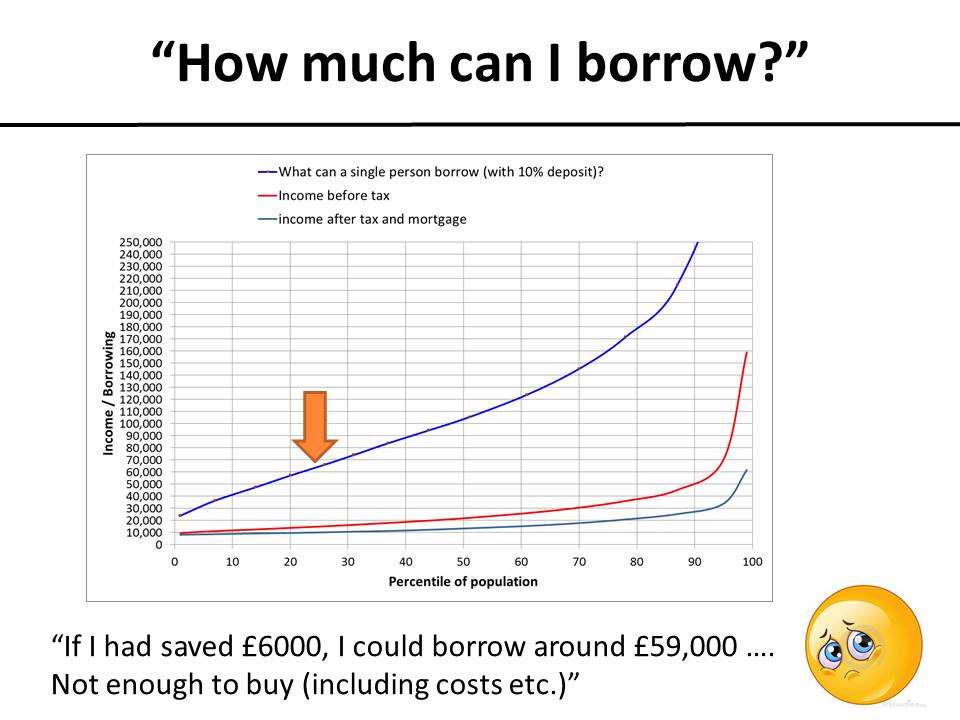
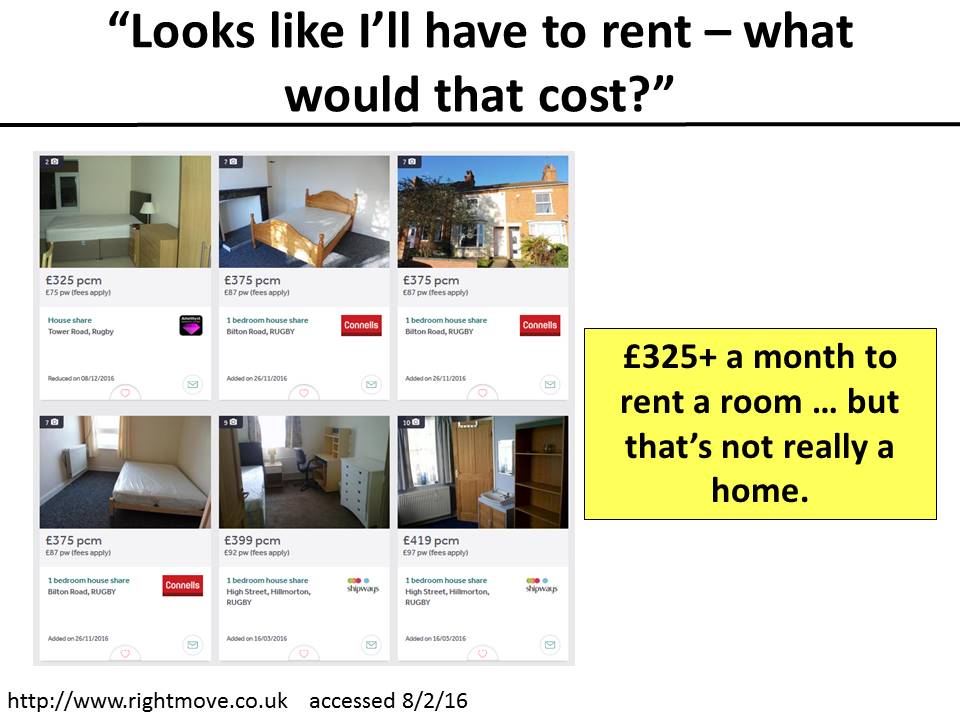
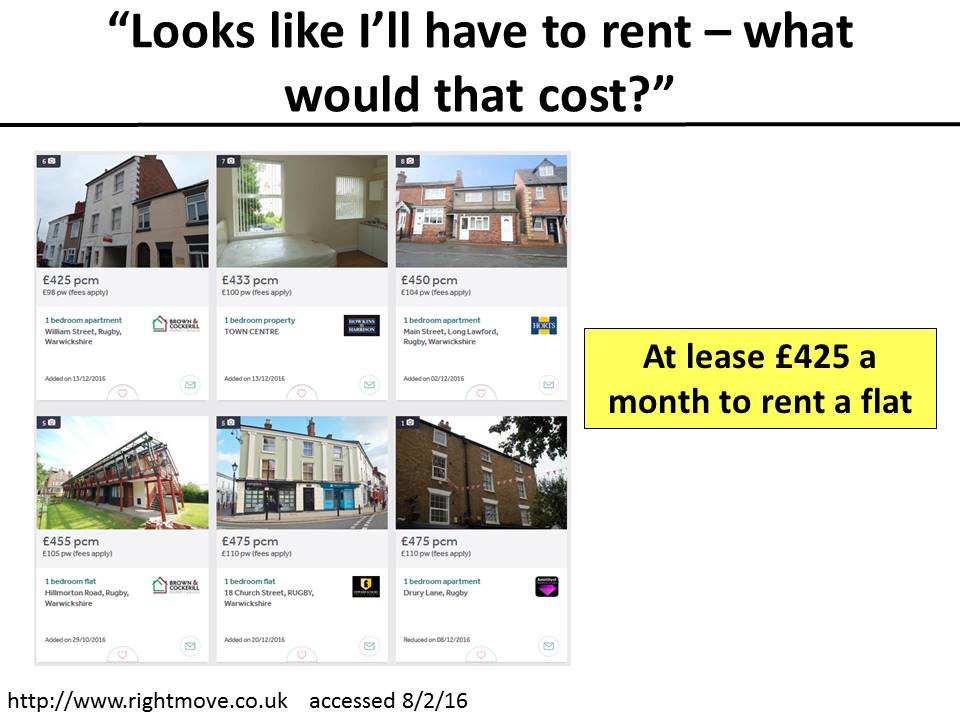
This is more than an academic problem.  For example, for most people, the biggest expenditure is housing.  If you look at how much you can borrow, and at typical house prices then two-thirds of people cannot buy a home without help from someone who has wealth.  The graph above shows that perhaps a third of the population have insufficient wealth to avoid the having to enter the private rental market.  The high cost of renting means they have less chance of building themselves a better future – the rules are stacked against them.

That is why it is right to reverse the increase in Inheritance Tax threshold, we need to even out the playing field.

It is time to cut VAT.

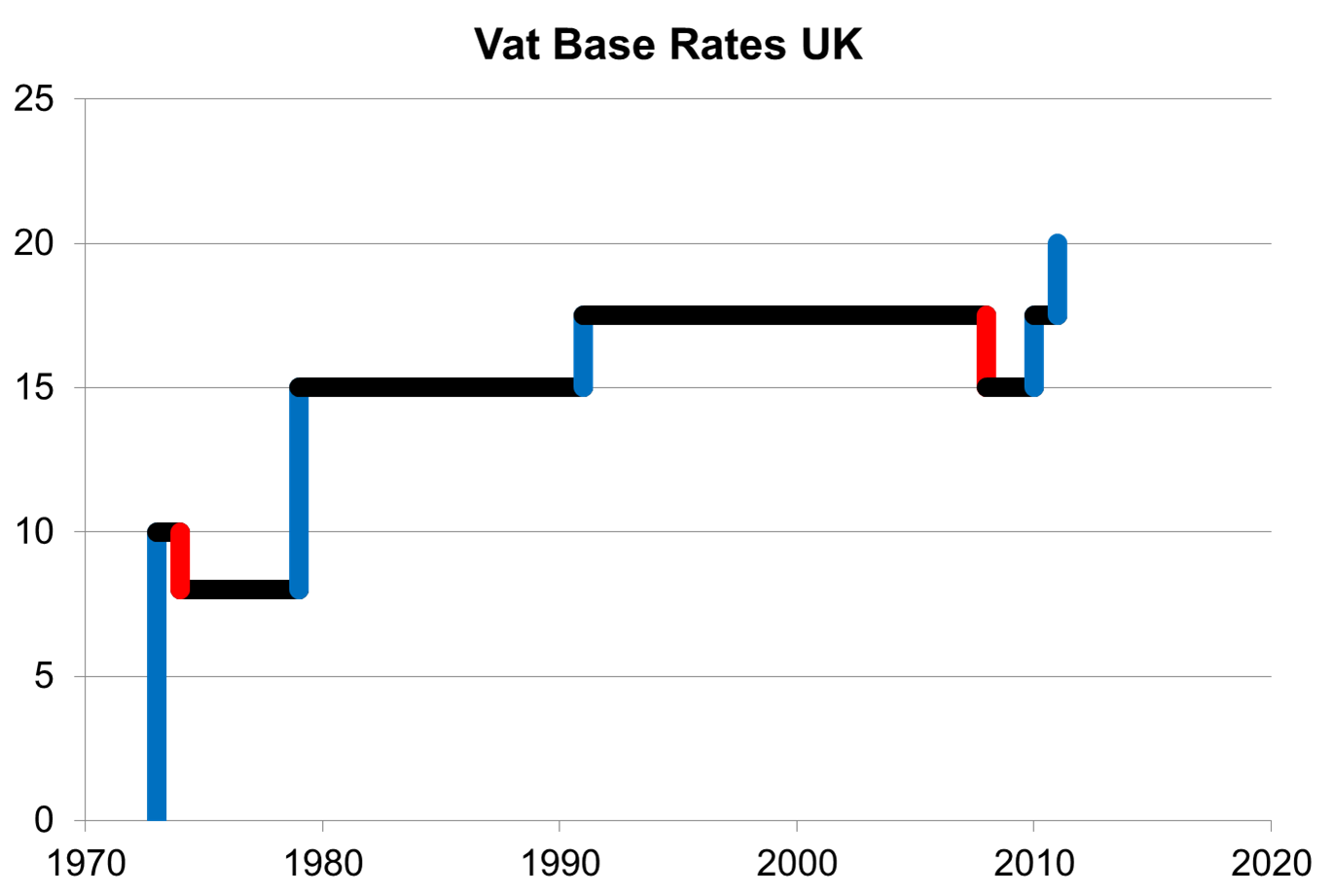
VAT is a tax on what we spend.  Everybody has to pay VAT at the same rate, rich and poor alike.  The following chart shows which parties have changed the basic rate of VAT since its introduction by the Conservative government on 1973.

VAT rate changes

Increasing VAT puts a bigger burden on the poor than the rich, as shown by the following analysis of the most recent VAT risk from 17.5% to 20%:

Reducing the rate of VAT will ease life for the less well off, increase sales, increase business activity and lead to higher employment.  That will increase income and corporation tax revenues and reduce the cost benefit payments as there will be less people out of work.

It is time to cut VAT, not to consider increasing it.

How to approach the General Election campaign.

“Stop telling lies. Let us tell our neighbours the truth for we are all part of the same body.”

“Get rid of all bitterness, rage, anger, harsh words and slander, as well as all types of evil behaviour. Instead, be kind to each other, tenderhearted, forgiving one another, just as God through Christ has forgiven you”

“Live a life filled with love”

“You can be sure that no immoral, impure or greedy person will inherit the Kingdom of Christ and of God.  For a greedy person is an idolater, worshiping the things of this world.  Don’t be fooled by those who try to excuse their sins, for the anger of God will fall on all those who disobey him.  Don’t participate in the things these people do.  Take no part in the worthless deeds of evil and darkness; instead, expose them.”

In the run-up to this latest election, here are instructions from St Paul on how to behave.  They are as valid today as when they were written, and I long for politicians and those in the media to listen to them.  Let’s encourage them to behave like this when we can.

But they are also a challenge for each one of us.  I find myself getting angry and bitter at what I hear from the campaigns, and I can let it control my responses.  Look at most of discussion threads and you will see the same.  But it does not help to use harsh words or slander; let’s try to put our arguments graciously.

And finally there is the message of justice: “no immoral, impure or greedy person will inherit the Kingdom of Christ and of God” and “the anger of God will fall on all those who disobey him”.  We don’t know how – it may be simply that they become bitter and unhappy individuals, or it may be something more painful.  But if we know that justice will be done then it helps us restrain our own feelings of anger, and perhaps be moved to compassion and mercy instead.

Please share this message to try to make the next few weeks more bearable for us all.

(Quotes are from the book of Ephesians)

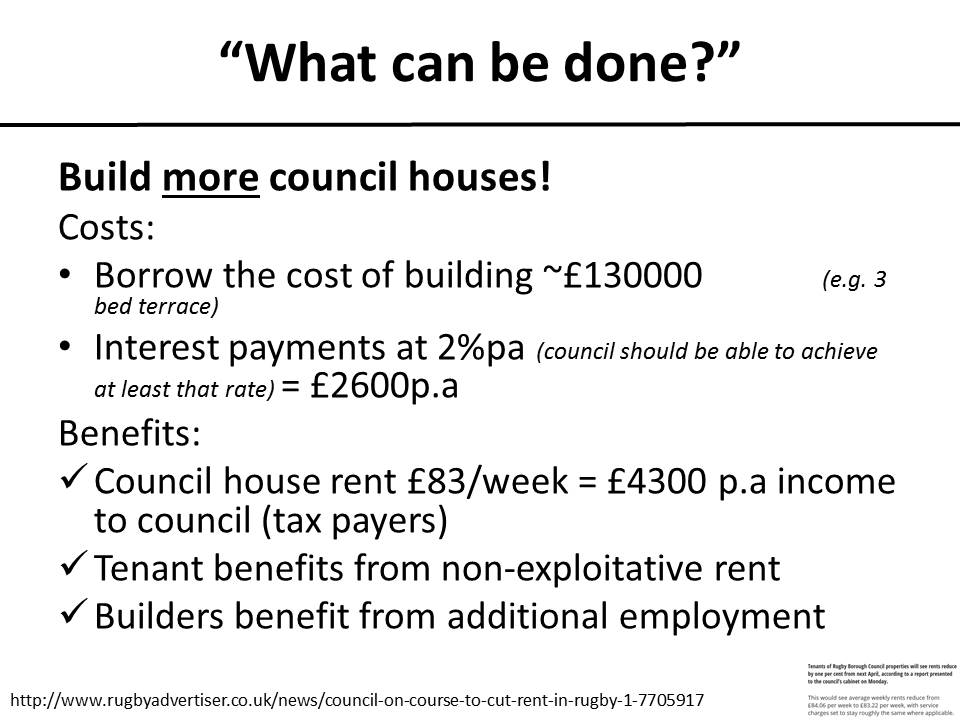
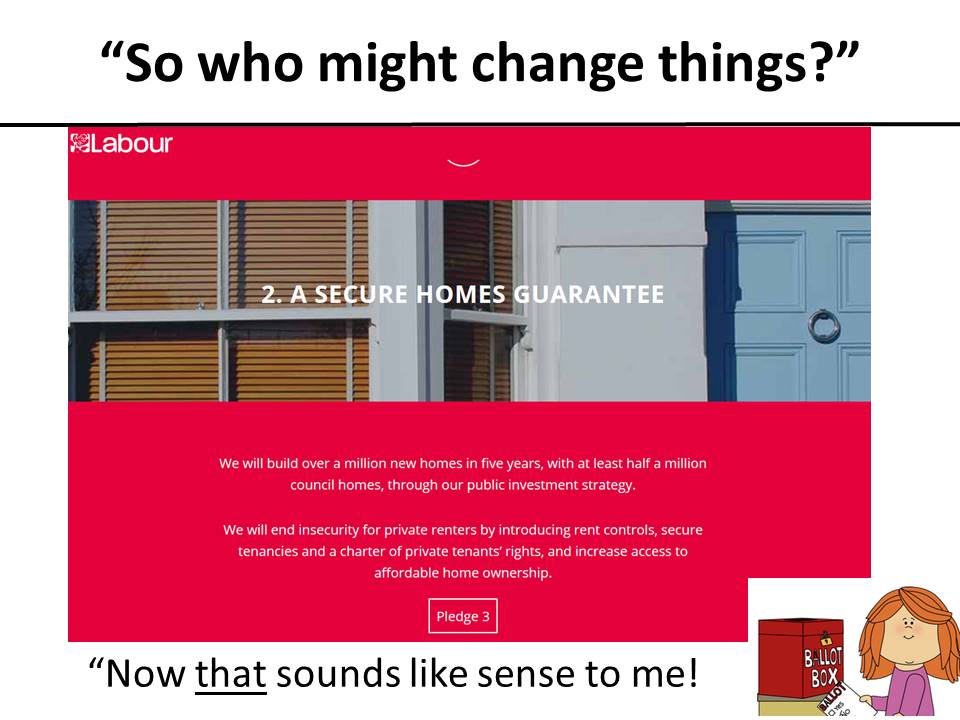
A tale of housing exploitation….

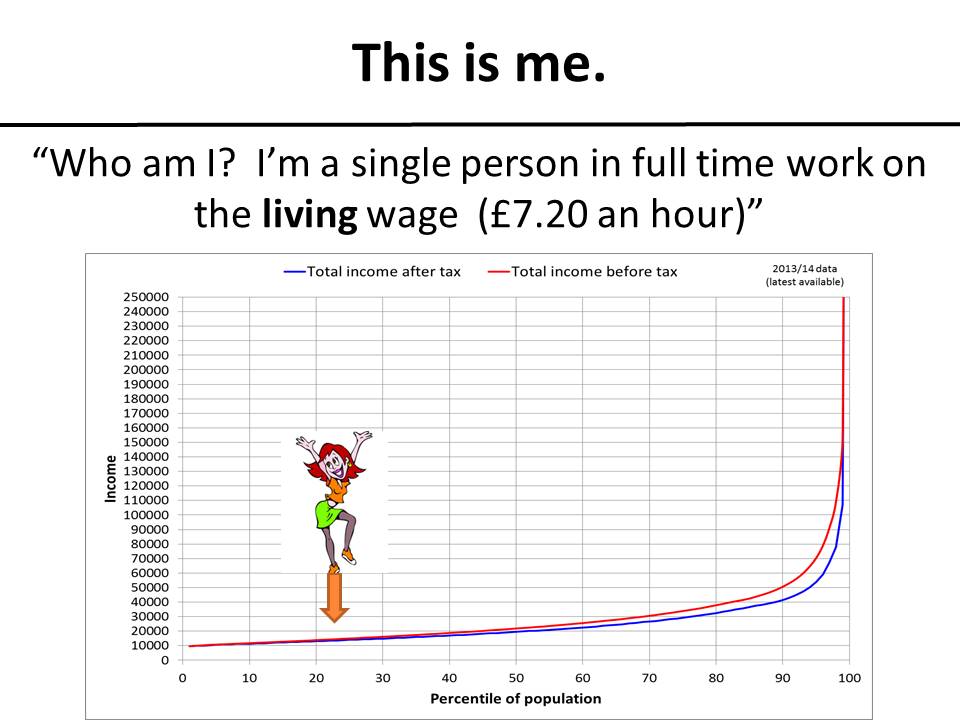
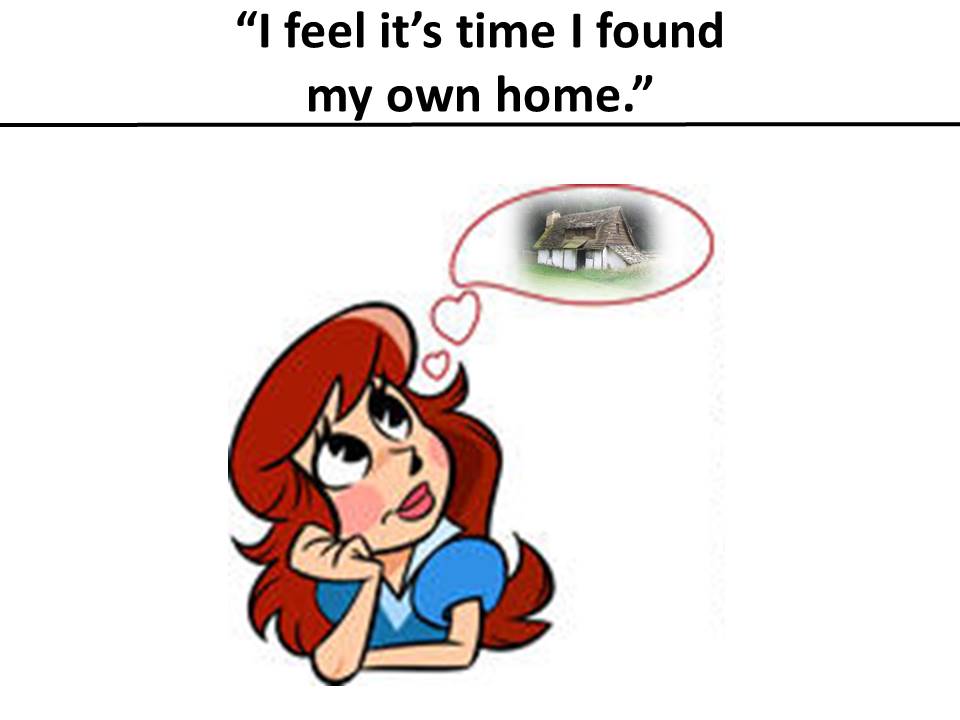
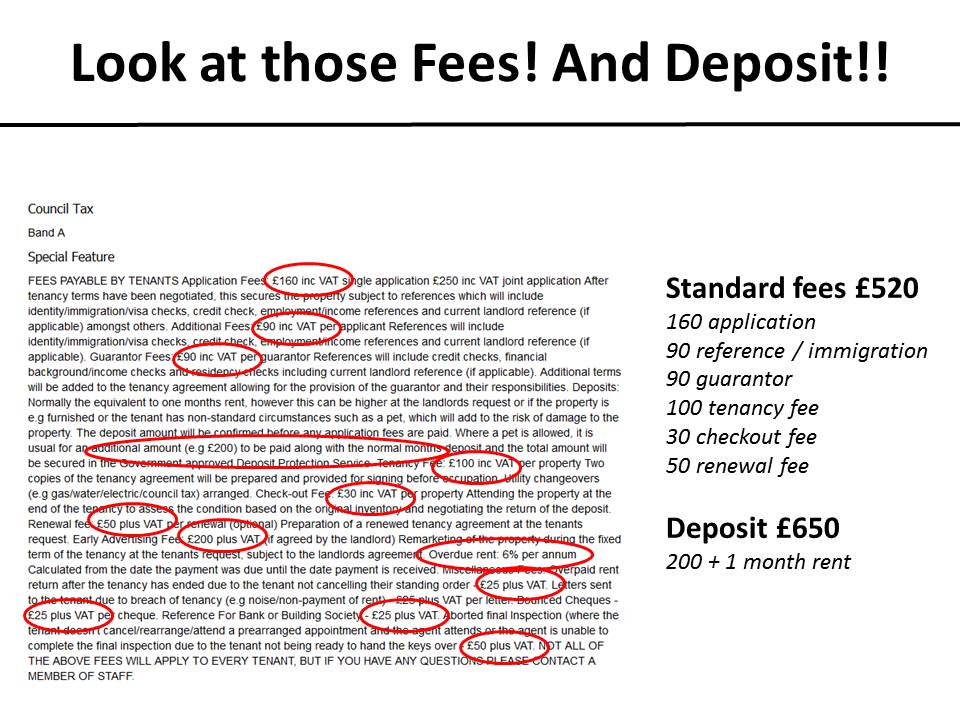
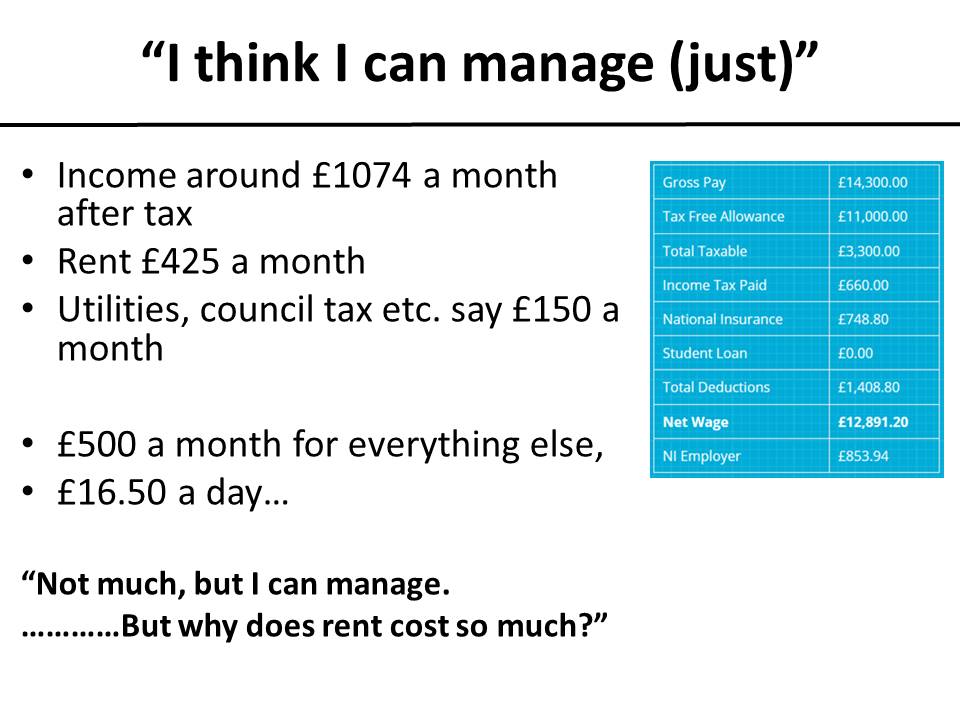
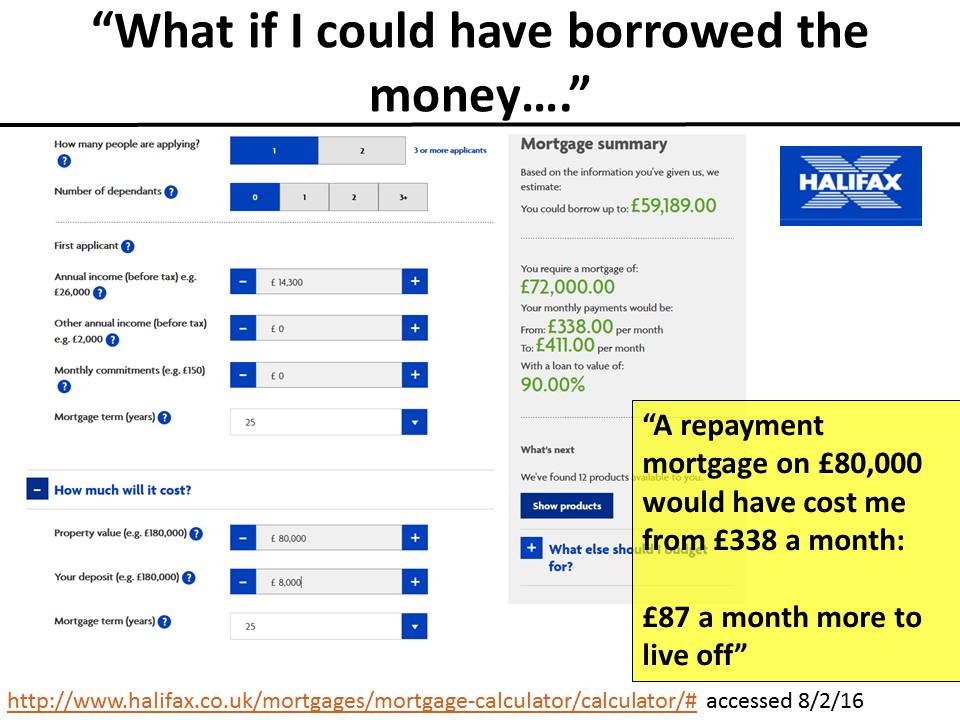
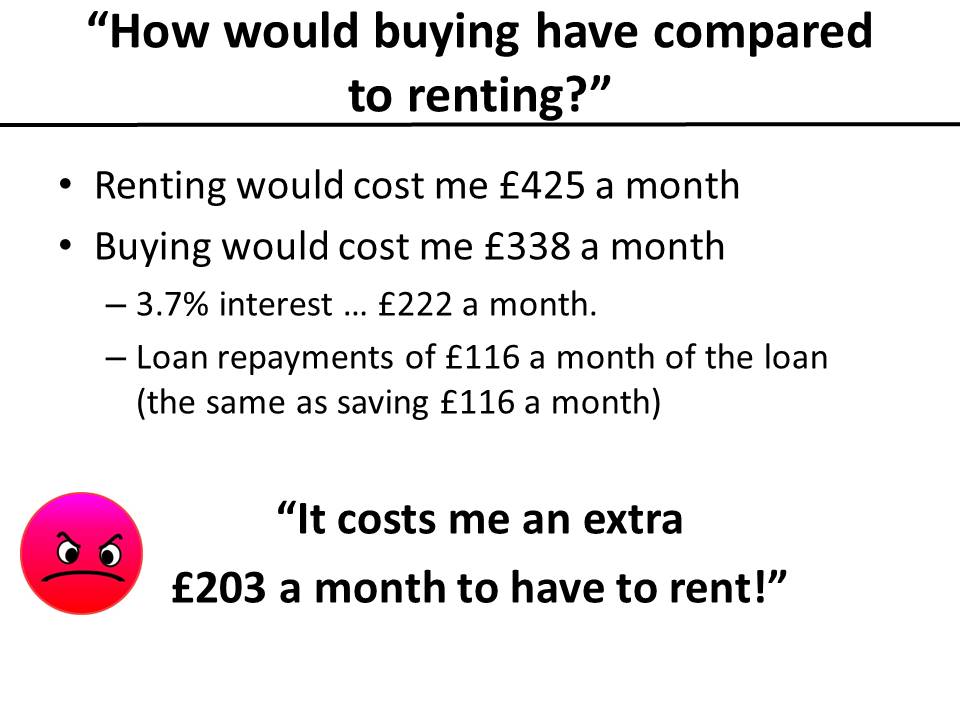
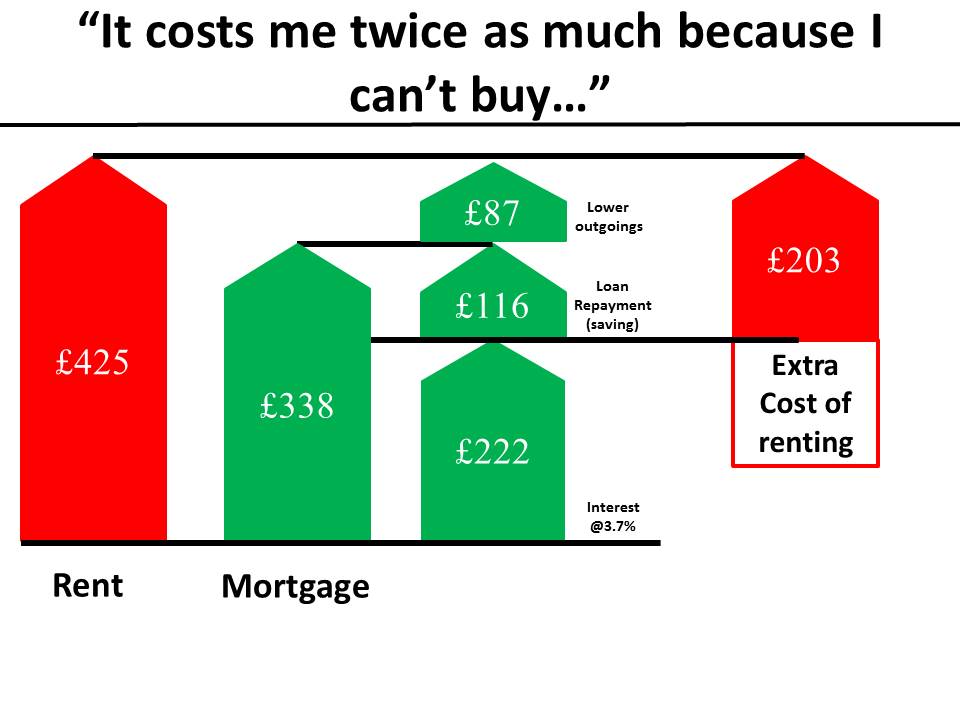
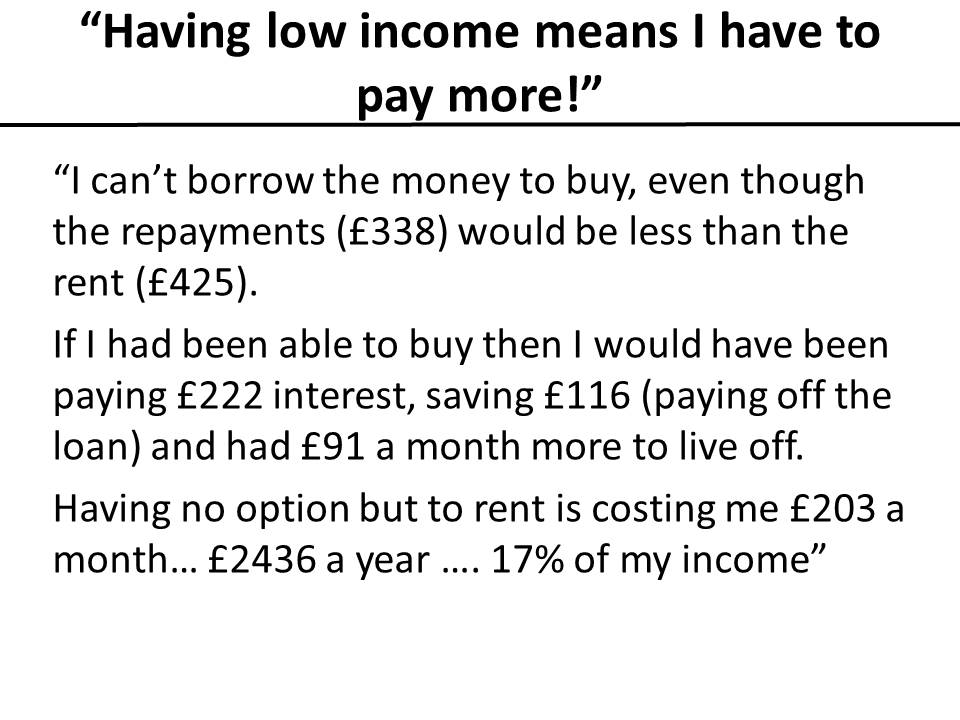
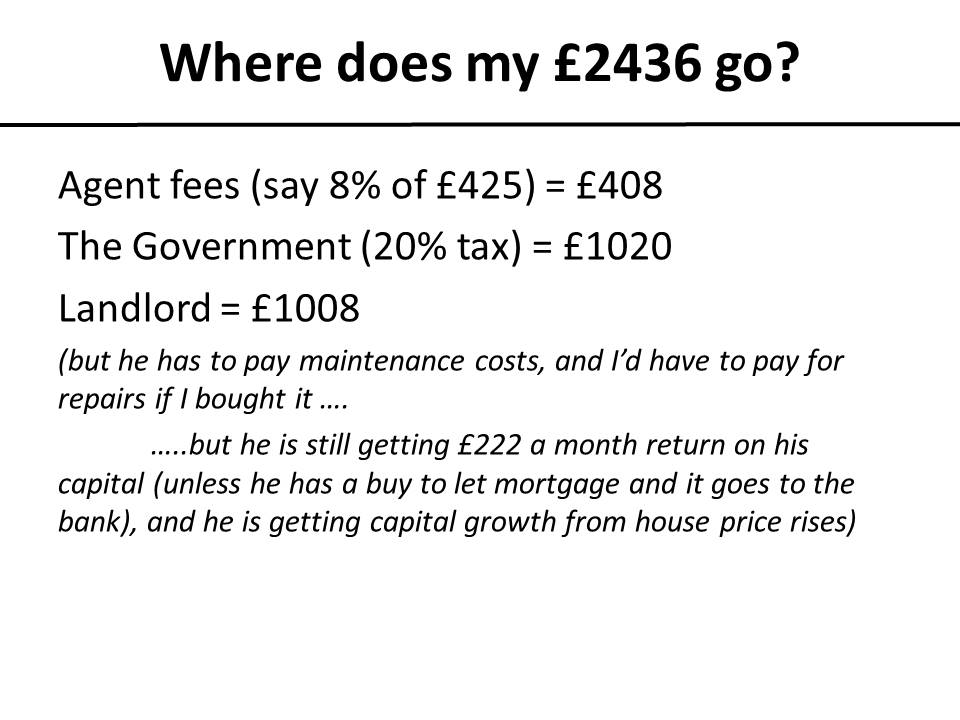
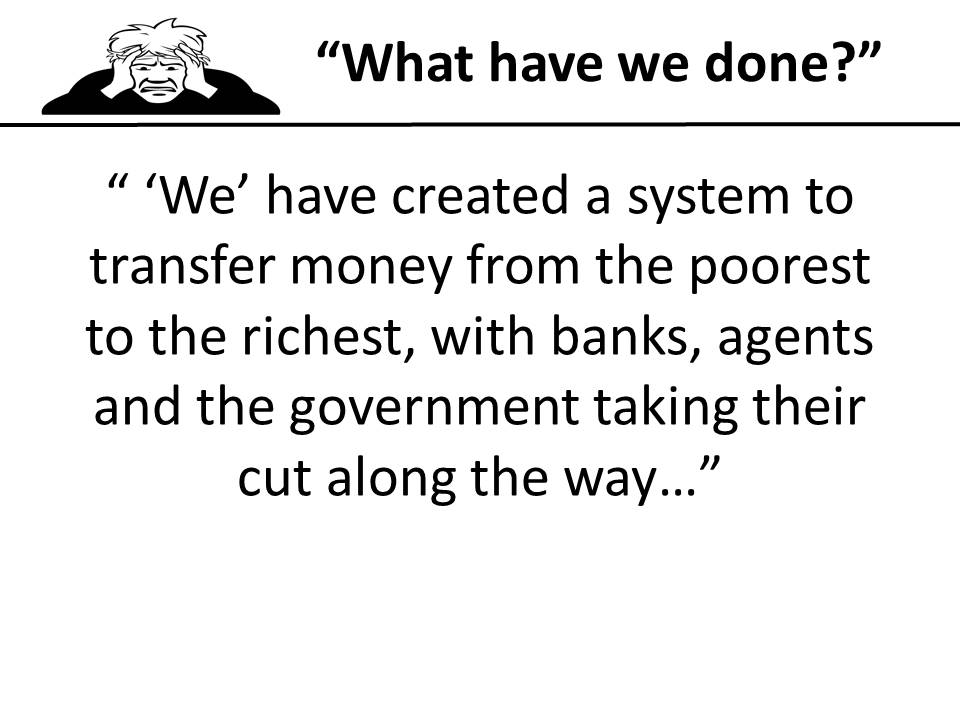
Here is a tale of the exploitation, told from the point of view of a young single girl trying to find a home.

slide2

slide3

  slide7

slide8

slide10

slide11

slide12

slide13

slide14

slide16

slide17

slide18

slide19

slide20

slide21

slide22


How to really make Britain great again.

The headline tells us “Brexit to send UK tumbling down world economic league table…”.  and we ask “Is this making Britain great again?”

But the headline, indeed the whole question of where Britain ranks in the world economy has absolutely NOTHING to do with whether Britain is great.  What matters is whether Britain is becoming more human.

Being human has nothing to do with the economy or wealth, but everything to do with values. It is about valuing everybody equally, irrespective of colour, class, wealth or religion. It is about selfless behaviour for the good of others. It is about acting with integrity and speaking truth. It is about doing what is right, irrespective of the consequences.

Britain will become great when those who are well off are willing to contribute enough to ensure the wellbeing of those who are not well off,  when we are willing to give up our own comforts for those who have nothing,  when we are willing to give sanctuary to those fleeing war dispite the risk of personal harm.

Britain will become great when we stop expecting a political system that gives everyone all the rights that they demand, but encourages us all to self-centredness. We cannot demand perfection from public services that we are not prepared to fund. We need to stop demanding perfect treatment from others, when we cannot give it ourselves.  We need to stop demanding that teachers work until midnight to keep up.  We need to stop expecting to be treated in A&E within minutes when we have drunkenly staggered into a lamppost.  We need to stop abandoning our personal responsibility for our own circumstances.

Britain will become great only when we choose to love one another; when we learn to contribute what we can, and to keep our expectations of others reasonable.  That is my hope for 2017.  Make it yours.

The ethical way to balance the books

If the government makes ‘savings’ of £1million, what does it actually save?  Well, by savings we mean job cuts, and almost all of the job cuts are from lowly paid workers.

A person on (say) £12000 a year will pay £673 in tax and NI contribution.  They now do not have a job and so will receive (at least) jobseekers allowance of £73.1 a week, or the equivalent of £3801 a year.  So the immediate saving is not £12000 but £7525 a year.

But someone on a low income will not be saving, but spending their money to live.  The government will therefore lose VAT on their spending, let’s say on average 15%.  Applied to £7525 a year this reduces the saving to £6397.

On top of that, anything that they buy will add to the profits of the business who sell them the product – and the business will be paying tax on the profit. The business will employ someone to get the product to them and serve them – and that person is paying tax too.

So for every £1million that the government claims to cut the saving is probably only half at best.

In terms of human suffering this seems to me to be a very cruel and inefficient way of balancing the books.  Surely it is better to increase the contributions from the wealthy who will not suffer any hardship, but simply see a reduction in the amount of money that they squirrel away?

Is it possible to be a Christian and right wing?

It’s not complicated.  Jesus said “Those who accept my commandments and obey them are the ones who love me.”

And what are His commandments?

“‘You must love the Lord your God with all your heart, all your soul, and all your mind.’ This is the first and greatest commandment. A second is equally important: ‘Love your neighbor as yourself.’ The entire law and all the demands of the prophets are based on these two commandments.”

and here are some more details:

“If you lend only to those who can repay you, why should you get credit? …  Lend to them without expecting to be repaid”

“Give to those who ask, and don’t turn away from those who want to borrow”

How does this square with austerity measures imposed by the wealthy on the poor?

Just asking…..