We are all the same

A doctor has the resources to help those who are injured or unwell, to make them comfortable and to set them on the path to healing and recovery.  Would it be wrong for a doctor to walk past a person injured and dying on the street and do nothing to help, even if the doctor didn’t know them or like them? 

We know it would be wrong for a doctor to not do what they were able to help someone who is suffering severely or dying through sickness or injury.  Yet doctors are only people like us so it must also be wrong too for us not to help someone who is dying through – for instance – malnutrition, or lack of clean water, or military oppression even if they are not on our doorstep.  It would be wrong of us not to make room in our country for those who would die from war or persecution in their home country.

Let’s not shirk our responsibilities to our fellow human beings.  Let’s remember that every single person is equally valuable and worthy of our love and care and do what we can to help and accommodate them. When we fall short of doing all we can, let’s recognise that that is our shortcoming.  Let’s not justify our inaction by claiming that they are somehow inferior to us, and that we ‘don’t want them here’.

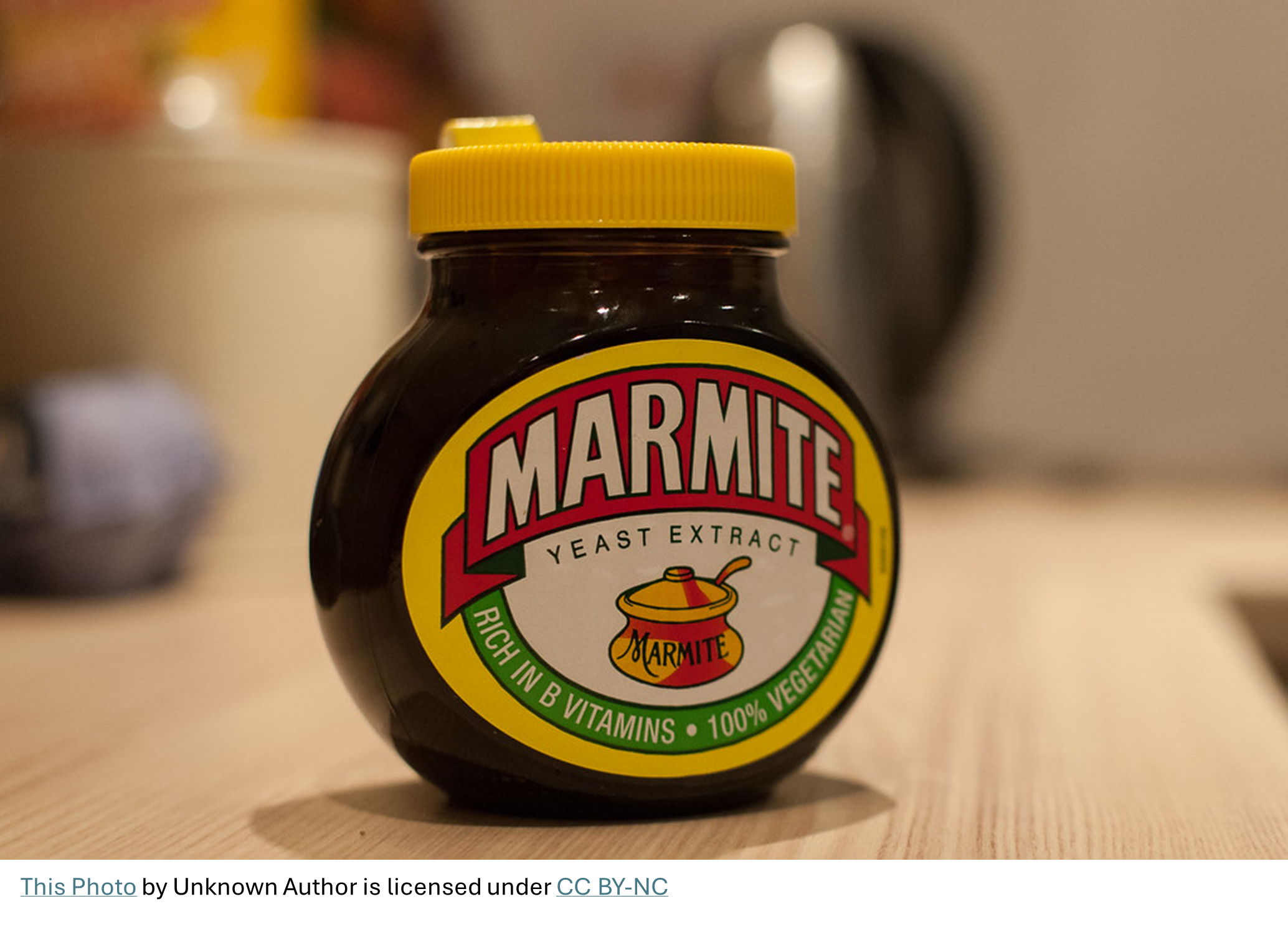
You wouldn’t hate someone because they like Marmite.

As decent human beings we accept that there are people who have different taste from ourselves. Society agrees that it would be wrong to hate someone because they liked (or disliked) Marmite for instance. We know that we should not shout abuse at them because of something that they have no control about.  Much of what we are is a result of our genes which have been honed through the process of evolution to provide a successful species, and it is generally accepted that it is not appropriate to judge someone on that basis.  Unfortunately, this is not a universal truth as we see for example when people consider other races to be ‘inferior’ – i.e. racist behaviour.  But society has agreed that this is unacceptable, and laws are drawn up in an effort to eliminate it.

And yet we seem to think it’s acceptable to mock, at best feel angry with and at worst hate those who hold different values to ourselves; the ‘left’ hates and mocks the ‘right’, and vice versa.  Just look at some of the memes that populate your social media stream.

I recently discovered that there is a strong genetic basis for our political leaning (left / right), and our ‘moral’ make-up.  We cannot help our ‘gut reaction’ to different actions or situations; it is largely defined by our genes.  And there are profound differences between the gut reaction of different people.

If we were to think about another person’s moral matrix in the same way that we think of someone who doesn’t like Marmite then might we start to treat them more considerately?

The book ‘The Righteous Mind’ by Jonathan Haidt describes how our gut reaction defines our response to a situation, and that we then use our reasoning to justify our gut reaction; rather than the other way round.  It takes a conscious effort for our reasoning to ‘train’ or change our response.  If we want to persuade someone else to our point of view, we have to earn their trust before explaining how things look to us.  It doesn’t help just criticising their ‘genetic’ opinion. 

And it’s also worth considering whether they might just have a point, and that there is a blind spot in our own thinking.  Maybe, we can reach a compromise or consensus on the best approach to an issue, combining the different viewpoints to get a full picture of a situation.  Maybe the diversity of points of view that evolved in successful societies and served us well for thousands of years might be worth resurrecting, rather than the present approach of division into ‘Marmite lovers’ and ‘Marmite haters’?  Think about that when you are about to ‘repost’ the latest mocking meme…

Why we still need the pandemic.

As I listened to the news this morning, I began to realise that we are not yet ready for this pandemic to end.  We still haven’t learned what we need to learn.

We still haven’t learned that one person is just as valuable and important as another.

We haven’t learned that money and economic systems must be our servant and not our master.

Can you believe that as a nation we are debating whether it is necessary to ensure that children should be fed?  Of course it is!  We would not contemplate not feeding our own children, so the question betrays that we think ‘our’ children are more valuable than ‘their’ children. 

We are debating whether, if we do have to help, is it better to give food vouchers or food parcels to the poor.  Why would we not simply give the money? Because ‘they’ are not to be trusted to spend it wisely, whilst ‘we’ have so much money that we can spend it frivolously and still have full bellies.

Within this nation, within this world, we don’t value one person as much as another .  The pandemic is forcing us to see this and learn our lesson – but we are not there yet.

Money is a man-made invention; a tool that should allow everyone to contribute what they are able to society and to receive what they need from society.  Yet an alien would see that although there is food in supermarkets, there are people who have no food but are not allowed to eat it.   The alien would see that whilst some people are contributing according to their abilities, others are not permitted to – those same people who are not allowed to eat.  The alien would see that – for instance – there are those who have no homes but that those with building skills are building bigger houses for those who already have them. 

The alien would ask why.  Why is this person allowed to eat, but that one is not?  Why are people building this person a bigger house when that person has nowhere to live?  The alien would conclude that ‘this’ person must be different from ‘that’ person; a superior being, more valuable and important.

Our actions show that we do not believe that one person is just as valuable and important as another.

We might say ‘everyone matters’ and ‘everyone is equally important’. And if we really mean it, then we have become subservient to an economic system that does not allow us to express that belief.  We have sacrificed our beliefs in fundamental  morality and truth to an artificially generated concept – money – that is supposed to be our servant but that has become our master.

We have become slaves to an economic situation where two equally important human beings receive grossly unequal shares of the fruits of the labour of society, and where two equally important human beings are given vastly different opportunities to use their skills and abilities to contribute to society.

The Nazis outwardly claimed superiority over other races – but don’t our actions show that we hold those beliefs in our hearts?  

That is one lesson of this pandemic. Have we learned it yet? If we have learned it, are we not ashamed?  If so, we can repent and amend our thinking and our actions. 

And have we learned yet from that pandemic that we have become slaves to our economic system?  That we have sacrificed our morality, our humanity to a man-made mechanism?  When we have learnt that lesson we need to decide what we are going to do about it:  Individually, and as a nation.

So perhaps we are not yet ready for this pandemic to end.  Perhaps we still haven’t learned what we need to learn.  But I hope it won’t take us too long!
Plastic – part of the solution.

The primary environmental crisis today is the accelerating effect of CO2 emissions on climate change and global warming.  To address this issue we need to put less CO2 into the atmosphere and we need to capture more carbon.

Plastic has a high carbon content and takes hundreds of years to biodegrade (a process that needs oxygen).  That is why we don’t like it – little bits of plastic are getting everywhere and littering the world for hundreds of years to come.

There are vast empty caverns underground where we have in the past and continue to extract coal for fueling our power needs.

So surely part of our solution is to capture all our waste plastic, and put it underground – in the mines where we have extracted the coal.  Having taken carbon out, we put carbon back.

This is potentially more powerful than recycling plastic, simply because recycling leaves the carbon that would have been used to make new plastic available for power production and CO2 emission.

It is also potentially more powerful than eliminating plastics and replacing with fast degrading packaging, particularly if the replacement packaging takes more energy to produce, or allows more product waste.

Finding a new use for disused coal mines could revitalize regions devastated (in the UK) by Thatcher.

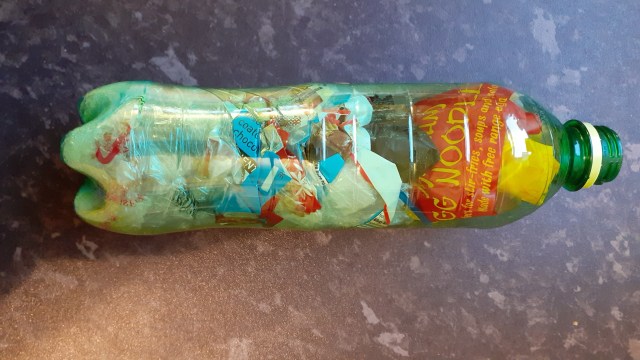
We could use plastic recycling networks to gather the plastic, but we would need to public to fully engage with capturing their plastic and not allowing it to litter.  A start would be to compressing all our plastic sheet waste in plastic bottles.

Four things to check in manifesto costings

During an election all parties make commitments to do things which cost money.  Voters expect them to put a cost against each item.  Commentators then add up the costs and say that this is what each party is going to spend.  This process is way too simplistic to make meaningful comparisons.

Spend v invest

 If I spend £5000 on a holiday, when I get home all I have left are the memories.  If I spend £5000 on a car I have both the asset of the car and the cost saving of reduced bus fares.  I have ‘invested’ in the car, instead of ‘spending’ on the holiday

If a government ‘spends’ on purchasing assets, particularly those which will generate revenue, then this is investment – and a saving for the future.  The assets of the nation will have increased.

Similarly, if a government sells off assets and then spends the money it is really a ‘spend’ and should be reported as such – spending our savings.

The cost of unemployment

As a civilised society we provide a safety net for those who are unable to work at a given time.  If a government ‘spends’ money on something that allows them to work then there is an immediate saving in benefit payments.  Plus there is an increase in government income from tax and NI contributions, and VAT on whatever the person purchases with their income.

Maintaining health and Correcting past shortfalls

A household could cut down on their spending by stopping eating.  This is clearly a crazy thing to do, leading to wasting and death.

Similarly certain basics of infrastructure of society need maintaining, without which society becomes sick and will eventually fall apart.  Making ‘savings’ in these areas are extremely costly on the health of the nation, and correcting past shortfalls takes more time and effort to remedy than if the ‘saving’ was not made in the first place.

The cost of impatience

If you want something immediately it always costs more than if you are ready to wait.  We can pay a high price for ‘same day delivery’ or we can get free delivery in a few days time.

A government can also make expensive choices from impatience.  Setting a deadline by which a deal has to be done significantly weakens the negotiators hand and will always lead to a more costly deal

So when we look at election costings we must not simply look at a totaled up figure.  We really need to think about what category they are in.  Are they investment,  are they too high due to impatience,  are they compensating for past under-investment,  are they allowing people to contribute usefully to society through good jobs?

Great Britain? I hope so.

Eighty years ago this nation was at a crisis.  Politicians of the day worked together for the good of Britain and Europe.  The monarch was respected and brought hope to the people suffering – visiting Coventry after the horrific bombings, addressing our nation and urging us to pull together to fight against fascist powers that were oppressing the poor, the weak and the scapegoat Jews.  It was a time where national values and pride meant doing the right thing for our neighbours.

Fast forward to today.  We have in power an unelected leader who is treating our Queen with contempt, as a tool to be used as he sees fit.  We see those in high office treat our honourable institution of parliament with utter disrespect – lounging on the front benches. New scapegoats are created.  Our traditions are trampled.  Unelected oligarchs and manipulators hold powerful positions.  The similarities with the fascist regimes that “Great” Britain united to defeat are startling.

We will have a general election soon.  It will be a test.  Has our nation abandoned the values that we once held dear, and for which men and women gave their lives in our finest hour?  Or will truth and goodness prevail?  This will not be an election about Brexit, but it will be a test of what we are as a nation.  It will be a test of our values.  I hope and pray that we will choose truth, justice and honour.

Amazon Rain-forest Fires – are we being hypocritical?

Pictures of the burning Amazon rain-forests are horrifying enough to bring despair.  Surely the world is doomed unless they stop!

Easy to say, isn’t it.  And I have found myself responding like that to the media attention.  But is that really the situation?   Is this just a smokescreen (no pun intended) to distract attention from deeper problems?  Let’s see if we can find the facts:

Carbon uptake in the Amazon is important.  The following article https://phys.org/news/2017-02-carbon-uptake-amazon-forests-region.html  points out that the carbon captured by the Amazon rainforests is equal to “four times the UK emissions for 2016”.  It is also equivalent to emissions in the region.  The nations of the Amazon are carbon neutral!

The  entire combined emissions from deforestation and fossil fuels  from the nations in the Amazon is only four times the emissions of the UK.   UK emissions are about 1% of global emissions. https://www.ucsusa.org/global-warming/science-and-impacts/science/each-countrys-share-of-co2.html .  China emissions account for 28% of global emissions.  The same site shows the emissions per person, with the top few being Saudi Arabia, USA, Australia and Canada at over 15 tonnes per person per year.  By contrast Brazil emits 2.17 tonnes per person.  France (with reference to comments from M Macron) emits twice that – and remember that France has a lot of nuclear power.

Clearly the countries of the Amazon are not the culprits in producing carbon emissions.  But consider why they are burning the forest.  They want to improve their standard of living, fulfilling a market ‘need’ for food.  And which capitalist country can argue with that?  Why do they want to improve their standard of living?  Because they are nowhere near the top. Brazil ranks 62 in the quality of life index. UK ranks 18th and USA 13th.  https://www.numbeo.com/quality-of-life/rankings_by_country.jsp

So the scale of the problem is small compared to the global emissions of the rest of the world, and the reason for the burning of the forests is to improve the standard of living of the population in the only way possible in the capitalist culture of the modern world.

And things have improved considerably in recent years.  Deforestation in the Amazon is roughly a third of what it was at the turn of the century: https://rainforests.mongabay.com/amazon/deforestation_calculations.html  and is ‘reasonably’ stable at around 80% of the 1970 levels.  This is not to say it is not important, but that perhaps most of the damage has been done.

If we in the west value the contribution that the rain-forests make to the world then we should pay for it.  We should not be sanctioning, or even threatening to invade (which I saw suggested on one site).  We pay for oil, which we then use to produce CO2 for our comfort, so we should pay those who capture our carbon.

In fact, there are mechanisms in place if we are willing to put our money where our concerns are, then we can each do something to reduce deforestation.  Here is one example: https://www.carbonfootprint.com/brazil_para_redd.html. Why not commit to offset all your personal emissions in this way? And before you ask, yes, I have – my emissions for the last 35 years.

Jesus teaching on workers pay

Jesus taught about the kingdom of God. In one example a wealthy man ensured that the workers all received enough pay for their needs, although it cost him more than it needed to. He knew that he would still have sufficient for himself.

If you are wealthy then this might be a good example to follow.

And if you are a worker, take heed too: if you are lucky enough to have a job, your needs are no different from the one who doesn’t.

The story is recorded in Matthew 20:

“For the Kingdom of Heaven is like the landowner who went out early one morning to hire workers for his vineyard. He agreed to pay the normal daily wage and sent them out to work.

“At nine o’clock in the morning he was passing through the marketplace and saw some people standing around doing nothing. So he hired them, telling them he would pay them whatever was right at the end of the day. So they went to work in the vineyard. At noon and again at three o’clock he did the same thing.

“At five o’clock that afternoon he was in town again and saw some more people standing around. He asked them, ‘Why haven’t you been working today?’

“They replied, ‘Because no one hired us.’

“The landowner told them, ‘Then go out and join the others in my vineyard.’

“That evening he told the foreman to call the workers in and pay them, beginning with the last workers first. When those hired at five o’clock were paid, each received a full day’s wage. 10 When those hired first came to get their pay, they assumed they would receive more. But they, too, were paid a day’s wage. 11 When they received their pay, they protested to the owner, 12 ‘Those people worked only one hour, and yet you’ve paid them just as much as you paid us who worked all day in the scorching heat.’

13 “He answered one of them, ‘Friend, I haven’t been unfair! Didn’t you agree to work all day for the usual wage? 14 Take your money and go. I wanted to pay this last worker the same as you. 15 Is it against the law for me to do what I want with my money? Should you be jealous because I am kind to others?’

16 “So those who are last now will be first then, and those who are first will be last.”

Making decisions as a community

Often we have to make decisions as a community; a family, a nation, a team.  How do we go about it?  Usually we will simply ask “what do you think we should do?”  And then we will argue against the other person’s proposal.   When the decision is finally made there is conflict and resentment from those who suggested doing something else.  The results of this approach can be extremely damaging.

For instance, the government ask “do you want to leave the EU?”  Half of us say yes and half of us say no, and so half of us are very upset that we have not been listened to.  The nation is split in two.

Or a local authority will make a proposal to close Children’s Centres and then ask people’s opinion on the proposal, calling it a consultation.  But it is simply a consultation on whether you like the proposal or not.  The consultation doesn’t lead to a better solution, but just to anger from those who will be harmed by the proposal.

The steps we go through, probably unconsciously, when we decide something for ourselves can be summarised as:

  1. What is a the problem
  2. What are the alternative solutions
  3. What are the advantages and disadvantages of each
  4. What do we want to do

But when we try to make decisions as a community our normal approach is:

  1. What do you want to do?
  2. I don’t want to do that, but this.

We end up arguing, simply because trying to decide something without even knowing what problem we are trying to solve.

In both of the examples above, the process could have been different.

For example, the question could have been “What factors are important in deciding whether to remain in the EU, and how important do you think each factor is?”

With the results of this consultation, the government could have framed a proposal for how to deal with the different issues, explained the proposal and the reasoning used to get to it, and then (if necessary) asked for agreement to proceed.  In essence this is requiring the government to carry out ‘completed staff work’ (http://govleaders.org/completed-staff-work.htm) before submitting a proposal for approval.  If they have done their work well, the conclusion would simply need our approval.

Try this approach in your community.  Let me know if it helps.

More than a General Election

8th June 2017 was so much more than just a General Election.  I am writing this on June 9th with a joyful heart.  I give thanks that Love, Joy, Peace, Kindness, Gentleness, Faithfulness, Patience, Goodness and Self Control are not dead. But I am also aware that neither are hatred, anguish, fear, selfishness, aggression, betrayal, impatience, evil and knee-jerk responses.

The things on the first list are “the fruit of the spirit”, those on the second list are natural human responses to situations.  We have all experienced both lists – giving and receiving – and we know that the first list brings life, the second brings despair.

I have learned that the first list is not just fruit of the spirit, it is God within us– whether we recognise it as him or not.  God is love, and love is God.  God is joy and joy is God….  When we experience love, we are experiencing God.

The second list describes the absence of God.  Hatred is the absence of love, anguish is the absence of peace…

Yesterday showed that God is still present in us.  But it also showed that we can behave in very selfish ways. Many of us have selfish habits and responses that we cannot control, and think that we cannot get rid of.  Believe me, we can conquer them! Talk to me privately if you want to know more.

Politics is important, but much of politics is about making the best of a bad job.  It is about managing a dysfunctional society which tends to the natural human response.  But I have a great hope.  I hope that we can bring transformation to society.  Let us strive to exercise and experience Love, Joy, Peace, Kindness, Gentleness, Faithfulness, Patience, Goodness and Self Control.  Let us choose God within us.