The God of Science

Neuroscientist Michael Graziano has speculated on the connection between the material and the spirit world.  His book “God Soul Mind Brain” has the stated aim to describe ‘the mechanistic understanding of the spirit world’.  With is background he makes the assumption that ‘mechanism’ is the reality and perception is the illusion.

“we do not perceive the world as it is, the brain constructs a simulated world”

“colour is not actually out there…. The same set of wavelengths may look green to you in a different context or grey or blue”

“We experience the model rather than the reality”

The statements are fascinating reminders of what the brain does: it constructs a simulated world, it provides the stimulus to allow the experience of colours, it somehow appears to create a model in our brains.

However, it is a false assumption that the mechanism is the reality and the perception is the illusion.   Accepting the assumption is like saying that the material pages of a book and the printed ink are the reality, and the story that the book tells or the information that it contains is not the reality.  Whist nobody would disagree that the book is the material and the story is not, which of them is the reality?

In a book, we read the words rather than perceiving the paper and letters and we construct in our imagination a picture and an experience based on the words and story within the book.  In the only scale of importance that matters to a human being, the book is the words, not the paper and ink.  War and Peace is a famous story, the paper that it was written on was just the framework for holding it. The story is eternal although the paper decays. To a human being, the story is the reality.

Consider a work of art; the material is not the masterpiece, it is merely a framework which holds the masterpiece.  The canvas and paint is meaningless, the picture is the meaning.

If we can free ourselves of the dogma of materialism then we can perhaps begin to consider that in the universe created from nothing, where particles are only potentialities until they are observed the reality is the experience, the qualia, the ‘I’, and that the material is just the skeleton for holding the reality.

The material universe is meaningless until it is perceived, the perception of it gives it meaning.

The butterfly nebula is beautiful when it is observed; without observation it is meaningless.

Two bags of chemicals are meaningless, but the intimate relationship between two people who are in love has immense meaning and purpose.

Is this so strange?  When we look at the quantum level of the material, there is no such thing as paper or ink.  There are particles and forces that we cannot understand.  They are outside of our ability to perceive, so we think of them as miniature versions of ping pong balls and sticks.  They are only potentialities until they are observed.  What we consider material reality is not really real, it performs its function only when it is perceived and observed.  So perhaps what we perceive as real day to day, the material world, is similarly non-material. Perhaps the only reality is our perception, our model.

So what of God in this?  Jesus spoke of God living in us and us in him.  Perhaps our material framework that holds us is part of God.  As Anselm wrote, everything is what it is through extreme goodness, through God, so we are what we are through and within God.  We are told that God is love, and that we are made in his image.  Jesus said that ‘if you have seen me, you have seen the father’; I don’t think he was talking about his flesh, but his ‘being’ – his ‘spirit’.  Our framework (our body and brain) is a small part of a material universe that is created and sustained by God.  If that universe is within God, part of God, then we too are ‘in him’, as he is ‘in us’.

And what of laws of physics, of evolution and biology?  We can create mathematical models of inanimate physical objects, and we can observe the behaviour of molecules and cells which seems to be beyond the possibility of simply responding to those physical laws – yet seems to be consistent, predictable, and purposeful. Within the framework where the universe is within and part of God there may be causes other than the laws of physics for the astonishing growth and development of the human being from the single cell; a God whose will ‘knits us together in our mother’s womb’. In the same way that our ‘will’ causes our hands to move, makes our choices, interacts with others, so God’s will can cause our bodies to grow and develop, to form our brain, to manufacture us as the masterpiece we are, our body being the receptacle for our spirit.

It is the non-material that motivates us, the non-material that leads to change, the non-material that makes our world like it is rather than a desolate moonscape.  The non-material is master over matter.  The non-material is the meaning, the meaning is the reality.

Who would disagree that there is a ‘spirit of Christmas’, all of society embracing a season of joy and giving.  People speak of the true spirit of Christmas; we know that there is something that transcends each of us as individuals.  It is part of the sprit that is God.

When we observe a beautiful woodland track, sunlight shining through the leaves to create a dappled light settling on a trickling stream, that beauty is part of the essence that is God.

When we listen to a sublime piece of music that moves us to tears, or an energising rock ballad that lifts our hearts with passion, that is part of God.

When we love someone, our love is part of the supreme love that is God.

When we meet friends in a party, in a community, that spirit of community is part of God’s spirit of community.

If we can appreciate that the greater reality is the spirit, and the material is just the framework then we can see God and the universe in a whole new light.  The universe can be considered the canvas for a cosmic work of art, a magnificent symphony of action and awe.  Life is a molecular dance of astonishing intricacy and beauty.  We are permitted to explore and understand through science.  We are permitted to glimpse the canvas and participate in the dance; characters created by the dance emerging as individual caring, loving, interacting beings partaking of some of the glory that is the story; individual masterpieces beyond the beautiful, whose reality is our character, our choices, our nature, our soul.  Creatures of purpose and with purpose.  Creatures honoured with the possibility of relating to our creator, the master artist, engineer, scientist, musician, teacher, parent, friend, but never are we his equal.

So this is the God of Science:  A God who was there before the universe began.  An un-created, creator God who gave ‘nothing’ the ability to become ‘something’.  A God who sustains, and maybe actually is, the very fabric of the universe. A God who actually is the laws of physics, who benevolently guides providence to bring life out of a set of chemicals.   A God who imbues the chemical dance that is us with the ability to feel, to taste, to see, to experience: love, joy, peace, fulfilment, intellectual challenge, selflessness, forgiveness, anger, hate, disgust, bitterness.  Perhaps even a God who is love, joy, peace, fulfilment…. But a God who allows us to experience both the good and the bad, and who allows us to choose to pursue that which is good, or that which is not.

Add to this the God revealed to us by Jesus Christ and we begin to understand the complete context.


butterfly nebula

What’s it all mean?

I unashamedly quote the following that was written perhaps 3000 years ago.  If you’re having a stressful time, perhaps at work, this puts it into perspective:

“Everything is meaningless,” says the Teacher, “completely meaningless!”

What do people get for all their hard work under the sun? Generations come and generations go, but the earth never changes.  The sun rises and the sun sets, then hurries around to rise again.  The wind blows south, and then turns north. Around and around it goes, blowing in circles.  Rivers run into the sea, but the sea is never full. Then the water returns again to the rivers and flows out again to the sea.  Everything is wearisome beyond description. No matter how much we see, we are never satisfied. No matter how much we hear, we are not content.

 History merely repeats itself. It has all been done before. Nothing under the sun is truly new.  Sometimes people say, “Here is something new!” But actually it is old; nothing is ever truly new. We don’t remember what happened in the past, and in future generations, no one will remember what we are doing now.…….

So I decided there is nothing better than to enjoy food and drink and to find satisfaction in work. Then I realized that these pleasures are from the hand of God……

.... remember your Creator now while you are young, before the silver cord of life snaps and the golden bowl is broken. Don’t wait until the water jar is smashed at the spring and the pulley is broken at the well.  For then the dust will return to the earth, and the spirit will return to God who gave it.

…taken from the Holy Bible, New Living Translation, copyright © 1996, 2004. Used by permission of Tyndale House Publishers, Inc., Carol Stream, Illinois 60188. All rights reserved.

Christianity, rules and regulations

Christianity is about freedom, yet we keep tying ourselves up with rules and rituals, and then feeling guilty when we break them.

It seems to be in our nature to want rules.  We want to be told what we can do and what we can’t do.  We don’t want to have to think.  Take driving for example.  We know that we shouldn’t go at high speed in built up areas, so why do we need to be told that we mustn’t go above 30 miles per hour?  What’s special about 30, why not 29, or 33?

Setting a rule is a way of avoiding guilt.  We prefer to pretend that we are not guilty rather than that accept we are guilty and ask for forgiveness.  If I go at 29 miles per hour and knock someone over, then you can’t accuse me of going too fast – I was within the speed limit.  I can say “it wasn’t my fault – it was the person who set the speed limit.”

This is living the Old Testament way: “Thou shalt not exceed 30 miles per hour in a built up zone”.

If we were to ask Jesus then he would say “don’t go so fast that you knock someone over”.  It’s a much tougher requirement, and means that there is no way we can escape our personal responsibility.  If we knock someone over it’s our fault and that’s that.  All we can do is to ask for forgiveness, to which he would reply “Are you really sorry? Are you going to change your driving habits so that you don’t do it again? Yes? Then I forgive you.”

Tougher, isn’t it?  I have to take full responsibility, and I have to be humble enough to admit that I was wrong and to ask for forgiveness.

Christians, as anyone else would, find it difficult trying to live a life which is totally without laws, but where the standard is perfection. There is no speed limit, but you are responsible if your driving harms someone. So we make up our own laws.  Some are moral, some are conventions or traditions.  Although Christianity is about freedom, we have tied ourselves up in chains again.

Everybody does it without realising it.  Have you ever been to a conference or meeting that runs over a couple of days.  On day one, we look round the room, and then choose a seat.  Next day, that’s our seat – we go straight there.  It’s easiest, it worked yesterday, but we’ve just made up a little law: “that’s where I sit”.  It’s OK to make up rules, so long as we don’t let the rule become more important than the issue it’s solving.  We need to keep remembering the reason behind the law.  Going 30 miles an hour in itself is not important; avoiding running someone over is the issue.  Christians need to be wary of our natural love of rules and laws; Jesus looks at the heart; do we want to do what is right or do we want just to keep the law?

…………………………………………………………

If you enjoyed this and like to read reasoned thinking, buy my book The Big Picture

Time to come alive!

As you walk round this weekend, look at the faces of those you pass.  Look perhaps at the men pushing the trolleys in Aldi, Asda or Sainsbury’s.  How many of them are lifeless, pursuing the daily trudge?  Then look in the mirror – are we the same?

Life is not meant to be like that.  We are made for life in abundance, life in all its fullness.  A great man once said “I have come that they may have life, and have it to the full.”

What does life in abundance mean?  Perhaps we should see what the man said.  When asked he answered: “‘Love the Lord your God with all your heart and with all your soul and with all your strength and with all your mind’; and, ‘Love your neighbour as yourself.'”

It’s not so much what you do as how you live that brings life in abundance.  It’s not so much climbing the mountain or sailing the seas – although I recommend both – it’s about choosing to love, every moment of every day, even in the aisles in Asda.

It’s been said “Find out what makes you come alive, and go and do it.” If you are not alive today, you need to follow that advice.  Perhaps you feel you don’t have the energy to love at the moment, perhaps your work is just so draining that it deadens you.  If so then it is worth looking for a change.  Perhaps there’s an addiction that you need to break; it’s possible, you can break it!

But the key to coming alive is love; positive, hardworking, determined expending of ourselves for the benefit of others.

Does injustice make you angry?  Don’t just grumble, go and do something about it. Come alive fighting it.

Does poverty make you angry? Don’t just grumble, go and do something about it. Come alive fighting it.

Does child abuse make you angry? Don’t just grumble, go and do something about it. Come alive fighting it.

Does the sex trade make you angry? Don’t just grumble, go and do something about it. Come alive fighting it.

Does human trafficking make you angry? Don’t just grumble, go and do something about it. Come alive fighting it.

Does the hopeless plight of teenagers make you angry? Don’t just grumble, go and do something about it. Come alive fighting it.

The list goes on.

St. Irenaeus said that “Man Fully Alive is the Glory of God”

It is time to come alive.


Pete and Graham

Pete and Graham had worked with each other for years.  Pete went to church every week, a fact that Graham was unaware of.

“Hi Pete”, said Graham, “Did I see you coming out of the Christian book shop yesterday?”

“Yes, I was buying a Christening card for a friend.  I’m going to the Christening this weekend.”

“Ah, that explains it,” said Graham, “I didn’t imagine that you could be a Christian, after knowing you all these years!” said Graham smiling.

“No” mumbled Pete, embarrassed.

Graham went away just hoping that he could find someone to talk to about the lump that he’d got on his stomach, and the questions that the possibility of cancer and death had raised in his mind about whether God existed.

Pete went away ashamed, but after a day or two he felt better … after all God forgives everything (doesn’t he?).  Still, he found it rather hard in the singing that Sunday, “I will offer up my life ….”

Jesus sighed,  “was this the sort of forgiveness that I went through it all for?”

“But whoever disowns me before men, I will disown him before my Father in heaven.” Matthew 10:33

The Wonky Car

“It’s all in the genes” the scientists say. “Your genetic make-up determines your shape, size, colour and even your behaviour.” Some people it seems are made good, and some evil. Well maybe things are not that clear-cut, but we can understand that in the same way that we have different physical features, we have different behavioural characteristics.

Imagine our body being like a car, and our soul being like the driver. We don’t all have identical cars; some of us might be given Rolls Royce models but others get a wonky car – you know the type – the steering wheel is loose, the brakes are useless and the engine is shot. We all have to drive these cars on a straight and narrow motorway; is it surprising that some of us have accidents? If you are in the wonky car, you might be working like anything to try to keep it on track whilst the guy in the Roller just puts it on cruise control, sits back and relaxes.

As we steer our way through life we are more likely to shout abuse at the wonky car than the Rolls, but when we reach our destination who is God going to be pleased with? The driver of the Rolls who continually cut in front of the wonky car? The driver of the Rolls who went slowly next to the wonky car to keep it going straight? The driver of the wonky car who reached the end despite all the difficulties?

So today, are you going to judge the driver by his car? Or by how many cars he bumps into? Who are you going to help keep on track – or are you going to make sure you get there first by cutting in front of everyone else?

Let’s leave the judgement to God, but let’s encourage and support those who need our help – even if they do keep meandering off track, bumping into us and hurting us. Let’s learn the grace and wisdom to look behind the car to the driver inside.

What do we do with our money?

Through no virtue of my own, I was born with skills that have allowed me to find a good job, and to manage my money. Before I was a Christian I thought that this was just good luck, and that I didn’t have to thank anyone for this. I could do with my money what I pleased (of course, in consultation with my wife!).

We have always had a joint bank account, but when she became a Christian many years before me, she suggested that we each have an additional private account which we can use completely as we please. I was happy with this, as I could then ‘treat’ myself without feeling guilty, and also it seemed to make the act of giving each other presents a bit more meaningful, and it allowed her to give money to charity without having to ask my permission.

I used to think myself reasonably charitable. I’d give to people in the street, and I gave a little to Macmillan nurses after my father died of cancer. I was probably like most of the rest of the country, quite happily giving less than 1% of my income away. And following worldly advice I set some financial targets for my life – I decided to have saved £100,000 by retirement age. (I have to admit I struggled to know what I was going to do with it, but it is something that you have to do, isn’t it).

On the road to becoming a Christian I read ‘challenging lifestyles’ by Nicky Gumbell. I decided that it was OK to give more away. I didn’t have to keep it all for myself for the future, and so I made a standing order from my bank to a Charity Card account, of a relatively small proportion of my income. Perhaps the surprising rate at which the amount I had in the account built up showed how little I was really giving away. But having that account meant that I had to give it away – and I found that really quite rewarding. “Now, who can I give this to” is quite a nice feeling. And I didn’t feel any poorer!

But when I first visited Mozambique I learned so much more!  It was so liberating to see how much closer people come to God when they have no money.  And if you put a Mozambican and an Englishman next to each other and dressed them the same, how would you know who was the richer?

But I also saw again the massive amount of good work that is not happening because of lack of money.  I wept when Pastor Caetano described how he had started the orphanage at the House of the Sparrow with all he had – how they don’t know each day where food is coming from, but God always provides.  Forty-seven children, being cared for and loved by a Christian pastor with nothing but what God provides.  I learned that God really cares what we do with our money.

If someone asks us to give to charity the first thought is, “Can we afford it?”  Of course we can – we still have so much more than the children in Mozambique.  Can we afford not to?  No, not unless we want to harden our hearts.

Do not store up riches for yourselves here on earth, where moths and rust destroy, and robbers break in and steal.  Instead, store up riches for yourselves in heaven, where moths and rust cannot destroy, and robbers cannot break in and steal. For your heart will always be where your riches are. (Matthew 6:19-21)

My experience is that my giving to charity has increased twenty-fold or more since choosing to follow Christ, and my financial savings goals have disappeared.  Where is the logic in saving for something that might be needed in the future when you can see something that is needed today?

Things that a Minimalist Christian does not have to believe – The Bible is the complete and perfect truth

I struggled to phrase the title of this post, but I’m talking about the attitude that because something is written in the Bible it must be taken as absolutely accurate and true. The Bible is often called the ‘Word of God’, and Christians are encouraged to study God’s Word, but the basis for such assertions is seldom presented.  St Paul referred to scriptures being ‘God breathed’, but if we think about it, what isn’t ‘God breathed’?  Can anything exist without God?

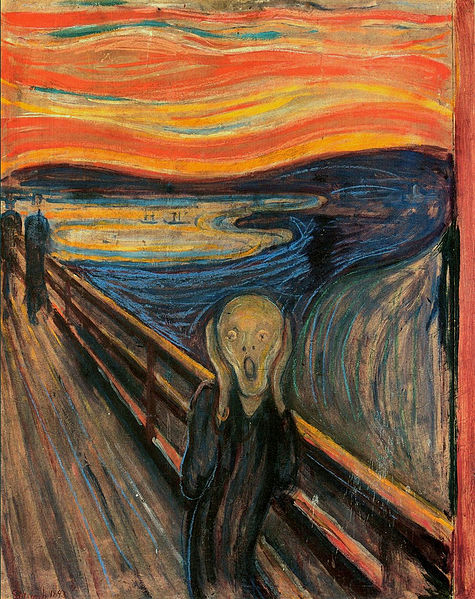
Bible study often takes the form of taking each sentence and trying to interpret it. This can lead to lengthy discussions about the translation of a particular word. It is trying to understand by dissection, but then risks missing the whole. It is similar perhaps to trying to understand the human being by examining each molecule, or ‘The Scream’ by examining a single brush stroke.

If we view the Bible as a collection of documents that were written by human beings describing their journey with God then we can understand why, for instance, different accounts of the same event may differ. We can understand that the meaning of any part must be discerned in the context of the day. We can understand that the writers might simply have got some things wrong. It was men who decided what the best books were to put in the Bible, and they made their decision based on sober judgement. But we should not now view the book as somehow having a magic spell on it that says that ‘this is God’s complete and unchallengeable word’.

There is immense value in the Bible, but I fear that modern Christians have been led to worship the Bible rather than God. It contains wisdom and encouragement, and is correctly used to support our growth rather than constrain it.

Oswald Chambers

If you’ve never come across him, I recommend Oswald Chambers.  I feel he has great insight into so much of life.  See http://utmost.org/ for daily thoughts.  From this morning:

“The golden rule to follow to obtain spiritual understanding is not one of intellectual pursuit, but one of obedience. If a person wants scientific knowledge, then intellectual curiosity must be his guide. But if he desires knowledge and insight into the teachings of Jesus Christ, he can only obtain it through obedience. If spiritual things seem dark and hidden to me, then I can be sure that there is a point of disobedience somewhere in my life. Intellectual darkness is the result of ignorance, but spiritual darkness is the result of something that I do not intend to obey.”