Supreme power and love indwelling all of space and time, or cheerless physics?

We live in an age of information. I know there is fake news, but there is a vast wealth of knowledge. You can find almost anything you need to know on-line.  Yet just a few decades ago nobody could even conceive of the internet.

It didn’t happen spontaneously. We got here through the hard work and inspiration of highly intelligent designers and visionaries.

Imagine now a vast cloud of molecules in space, the debris perhaps of an exploded star.  Just a collection of atoms and molecules: hydrogen, iron, oxygen, beryllium, carbon, nitrogen, silicone … a little bit of everything perhaps.  But a vast, lifeless, formless cloud drifting in space.

Imagine that there are no influences acting on the cloud of molecules apart from the forces of physics; gravity, weak and strong nuclear interaction, and electromagnetic forces.

We can imagine that those inanimate forces are sufficient to cause the molecule cloud to collapse into a star and some planets.  Over billions of years, gravity slowly pulls the gases together to form a solar system.

But can we imagine that those basic forces are sufficient to organise the lifeless cloud into a butterfly,  a magnolia tree or a human being?

Can we imagine that those basic forces are sufficient to organise the matter that they act on into the internet?  That the molecules organise themselves unaided into a smartphone, or the Mona Lisa, or a performance of Beethoven’s seventh symphony?

Take a molecule cloud, leave it completely alone for ten billion years, come back and you will find fitbits, contraceptive pills and life-forms intent on destroying themselves and each other.

Just through the laws of physics?

Intelligence creating itself, life with all its complexity spontaneously initiating and evolving.

Just through the laws of physics?

Love,  joy,  purpose existing without any material form that you can touch or measure.  Great stories and legends; “The Lord of the Rings” expressed in a myriad of forms…

All of these, with the only ingredients of a molecule cloud and the laws of physics.  Really?

Or is there something more? 

Something which indwells all of space and time, sustaining matter and the forces that act on it, imbuing form on the formless,  bestowing intelligence and ‘self’ on lifeforms, giving purpose to material and non-material reality.  Intelligence that gives intelligence.  Life that gives life? An eternal ‘something’, or ‘someone’ without cause but within everything?

If I put my pride aside, it seems to me that the universe, life, and love point to there being a supreme and eternal, creating, sustaining and loving God.

Not cheerless physics.

Image by David Mark from Pixabay

Is there place for God and religion in today’s world?

The first thing to realise is that we are all living in a computer generated world, and that we are living in the past.  Nothing exists in the form that we perceive it, and by the time we perceive it, it has already happened.

That steaming cup of coffee that you see is just the result of your eyes, optic nerves and brain processing photons that hit the back of your retina.  You are experiencing a brain (computer) generated model of what you now understand to be a cup of coffee.

Your brain’s processing inherently includes a delay to allow all of the bits of information to ‘catch up’.  It takes longer for visual stimuli to be processed than it does for sounds. When you experience the crash of your cup on the floor your brain has had to delay presenting the event to your consciousness until the signals from both your ears and your eyes have arrived.  Our reaction time is evidence of this, and the fact that we react faster to sounds than to lights.  If you start a sprint race with a gun then the sprinters set off faster than if you start it with a flash of light – although the speed of sound is much slower than the speed of light.

So we do not experience the world as it is, but we experience a three dimensional model created within our brain. 

As a child I used to wonder ‘does the colour green look the same to me as it does to you?’  Today I would answer almost certainly ‘no’.  First of all, we know that some people are colour-blind, and so all colours must be perceived differently by them.  And our eyes all have different sensitivities to shades of colours, and so the raw data that our brain has to process must be different between individuals.

But would we have the same ‘experience’ of the colour of our coffee cup if our brains received identical signals?  That is a hard one, because we can’t really explain what it means to ‘experience’ a colour. (Google ‘qualia’ to find out more).

So although our bodies live in real time, we ‘experience’ a computer generated world that has already happened.

Weird.

But weirder perhaps is to ask what we mean by ‘we’.  What is the ‘me’ that experiences this computer generated world?  Warning – science cannot answer this, it’s the meat and drink of philosophy; the discussion of abstract ideas by bright people who build arguments on certain basic assumptions that they continually disagree about.

My subjective view is that there is a ‘me’ that experiences things.  I interact with my brain (and hence body, and hence world) and can influence but not control what my brain and body does.  I can influence what my consciousness presents to me (ignoring distractions when focused on a task for instance), and I can influence how my body responds to things – but I am not really in control.  Just think of a tennis player returning a 140mph serve; there is no time for them to get directly involved in the process of selecting which direction to go, or what shot to play.  They have to leave the action up to their body. But they can influence what their body’s reaction will be by training, by giving it a strategy such as “don’t try to hit a winner off every shot”, and then they need to get out of the way!  Sportsmen know that consciousness gets in the way of winning; thinking too carefully about how to play a shot at best slows things down and at worst causes us to make a mess of it.

When we think about it we realise that ‘we’ have relatively little influence on what our minds and bodies do, and yet ‘we’ get to experience it all! 

And yet ‘we’ are unexplainable. To try to understand the unexplainable ‘we’, and much to the chagrin of materialistic scientists, we use terms like ‘soul’ and ‘spirit’ to define ‘us’. And we believe that other people have souls and spirit too.  And we spend a lot of time and money trying to find ways to interact with our brain/bodies that will lead to our soul’s wellbeing.  So much advertising money is spent on encouraging us to buy products to bring us ‘peace of mind’ or other palliatives for the soul.

It is natural, and not at all illogical, to imagine that in the same way that you and I are tiny individual souls (that happen to inhabit a bunch of chemicals that we had nothing to do with initiating) there is an overarching bigger ‘soul’ who initiated the material universe of space and time (God).  And if our individual soul ‘experiences’ interaction with this bigger soul then there is all the more reason to believe in its existence.  But of course, this can be frustrating to those souls who have not had similar experience…

So yes, there is a place for God in today’s world.  There is good intellectual reason to believe that there is a God, and this is reinforced by the experience and evidence of many witnesses who report interaction with and experience of God.  These interactions have been documented for millennia and continue today.  And there are many who feel that they have directly experienced such an ‘interaction’ yet believe that there is a larger ‘soul’, or God.   

In response to concluding that there is a God and recognising that our very existence is a gift, it is also natural to want to give thanks for that gift and to want to make best use of the gift.  Hence there is a place for religion too in today’s world.

How about you?  If you haven’t recognised them yet – why not start seeking God for yourself?

Have a blessed day.

How do I live a good life?

Nobody wakes up in the morning and thinks, “I’m going to hurt as many people and do as much damage as I can”, unless they are mentally deranged.  Usually we don’t even think about how we are going to live our day, but if we did we’d think something like “I’m going to try to be nice to people, to do my job well, to keep the environment safe”. 

Yet if we look back at the end of a day we are more than likely to think “I wasn’t very nice to X, I did that bit of work badly, I didn’t need to drive so fast”.   And most like as not, we would then justify our actions in our head to make us feel better, “He caught me at a bad moment,  I was late for lunch and wasn’t given time to do a good job,  that idiot in front of me was dawdling and I needed to get home.”  But we have let ourselves down.  We have not been the person we want to be, or could be.  And when we find ourselves doing the same thing every day we avoid thinking about it, and are likely to get angry if someone points it out to use.

There is a better way.  There is a way to be the people we want to be.  And it starts with understanding what’s going on.  An ancient letter written by Saul of Tarsus helps to enlighten us: 

Within us we have two ‘natures’.  We have our ‘sinful nature’ and we have our ‘spirit’.

Out sinful nature is that part of us which clamours ‘me, me, me’ all the time.  Its roots are in the animal instinct that successfully evolved us to survive when everything else was out to eat us, and where if we didn’t grab something for ourselves then something else would.  It is the instinct which leads a lion to defend its territory, the instinct which leads a gerbil to eat its young if there is not enough food, the instinct that leads the black widow spider to eat its mate.  It is the instinct that leads us to crave riches, to accumulate wealth beyond what we can ever use.  It is the instinct which says that the human beings in my tribe are more important than the human beings in yours.

And then there is our spirit.  Our spirit is revolted by the idea of eating our young; we know that we should not eat our babies.  It is our spirit which leads us to help and to make sacrifices for those who are suffering:  looking out for those shielding in the Covid crisis, giving to food banks, marching in Black Lives Matter rallies, campaigning to save the environment.  Our spirit calls us to love, and to goodness.

The ancient letter describes the consequences of following each ‘nature’.  Obeying the spirit leads to life and peace.  But giving in to our sinful nature leads to death; death of love, death of peace, death of goodness.  We become filled with anger, guilt, bitterness, self-pity, depression and despair.

We are slaves to whatever we choose to obey. But many are not willing to make that choice.  We flip flop between doing what we know is right and good, and giving in to our selfish ‘lusts’.  And we live in a constant state of dissatisfaction and guilt.  We strive for more wealth, but it doesn’t satisfy.  And at the same time we wish that injustice would go away; “how can we have food-banks in our country?”

Even if we were to say ‘I choose to obey the spirit, to love and to be good’ we would still find ourselves failing.  And at the end of the day we would be full of guilt and shame, and like as not we would give up.  “The spirit is willing but the flesh is weak”. We need help. 

And there is help available, and hope.  If we have made that decision to obey the spirit, and we do sinful or selfish things then the ancient letter tells us that it is not us that does them, but the sinful nature within us.  It is just that our spirit is not strong enough.  We need to strengthen our spirit, to resist the temptations to give up.  And we can do that. 

The spirit within us is a bit like a battery, it has power but only a limited amount.  We need to plug into the mains.  We need to connect our spirit battery to the mains supply of the spirit that is called the Holy Spirit; an inexhaustible supply of love and goodness – God.   Then the power of sin can be broken.  And how do we connect?  We ask.  We speak with God; we pray.

And we also need to reinforce our decision by focusing on what is good, by giving honour and praise to goodness and love – resisting out sinful nature telling us not to be a ‘goody-goody’.  We remind ourselves of the importance and value of self-sacrificial love.  In a word, we need to worship love and goodness.

We may still do sinful things, but we can plug back in to the mains, pick ourselves up and start again.  We do that by ‘repenting’; an old fashioned word that means wishing that we hadn’t done it and committing to try again. Part of repenting is accepting and confessing that we’ve sinned.  Then we receive forgiveness for what we did wrong and be re-energised to follow the spirit again.  We know that we receive forgiveness because Jesus – God – said that we are to forgive, and so we know that he will forgive us.  And if we are particularly stubborn about accepting that love and goodness (God) would forgive us, then we look at Jesus’s crucifixion; he gave himself as the ritual sacrifice that the Jewish people believed carried off their sins.  And we look at his resurrection – showing that those sins had been dealt with.

When we deliberately choose to obey the spirit, it is empowering.  We do things that please the spirit, and it makes us feel alive.  It brings us peace.  We take joy in the good that we do, and we are able to actively love others.

Think of people you know.  Can you recognise any who are obeying and following the spirit?  It is written that “By their fruit they will be known”.   Fruit that you might look out for are: love, joy, peace, patience, kindness, goodness, faithfulness, gentleness, and self-control.

Wouldn’t we all like to be like that? 

We can be!

Why we still need the pandemic.

As I listened to the news this morning, I began to realise that we are not yet ready for this pandemic to end.  We still haven’t learned what we need to learn.

We still haven’t learned that one person is just as valuable and important as another.

We haven’t learned that money and economic systems must be our servant and not our master.

Can you believe that as a nation we are debating whether it is necessary to ensure that children should be fed?  Of course it is!  We would not contemplate not feeding our own children, so the question betrays that we think ‘our’ children are more valuable than ‘their’ children. 

We are debating whether, if we do have to help, is it better to give food vouchers or food parcels to the poor.  Why would we not simply give the money? Because ‘they’ are not to be trusted to spend it wisely, whilst ‘we’ have so much money that we can spend it frivolously and still have full bellies.

Within this nation, within this world, we don’t value one person as much as another .  The pandemic is forcing us to see this and learn our lesson – but we are not there yet.

Money is a man-made invention; a tool that should allow everyone to contribute what they are able to society and to receive what they need from society.  Yet an alien would see that although there is food in supermarkets, there are people who have no food but are not allowed to eat it.   The alien would see that whilst some people are contributing according to their abilities, others are not permitted to – those same people who are not allowed to eat.  The alien would see that – for instance – there are those who have no homes but that those with building skills are building bigger houses for those who already have them. 

The alien would ask why.  Why is this person allowed to eat, but that one is not?  Why are people building this person a bigger house when that person has nowhere to live?  The alien would conclude that ‘this’ person must be different from ‘that’ person; a superior being, more valuable and important.

Our actions show that we do not believe that one person is just as valuable and important as another.

We might say ‘everyone matters’ and ‘everyone is equally important’. And if we really mean it, then we have become subservient to an economic system that does not allow us to express that belief.  We have sacrificed our beliefs in fundamental  morality and truth to an artificially generated concept – money – that is supposed to be our servant but that has become our master.

We have become slaves to an economic situation where two equally important human beings receive grossly unequal shares of the fruits of the labour of society, and where two equally important human beings are given vastly different opportunities to use their skills and abilities to contribute to society.

The Nazis outwardly claimed superiority over other races – but don’t our actions show that we hold those beliefs in our hearts?  

That is one lesson of this pandemic. Have we learned it yet? If we have learned it, are we not ashamed?  If so, we can repent and amend our thinking and our actions. 

And have we learned yet from that pandemic that we have become slaves to our economic system?  That we have sacrificed our morality, our humanity to a man-made mechanism?  When we have learnt that lesson we need to decide what we are going to do about it:  Individually, and as a nation.

So perhaps we are not yet ready for this pandemic to end.  Perhaps we still haven’t learned what we need to learn.  But I hope it won’t take us too long!

Christmas Joy?

Christmas is supposed to be a time of joy, yet my heart is torn by so much that is wrong in our world that it can be hard to find joy. 

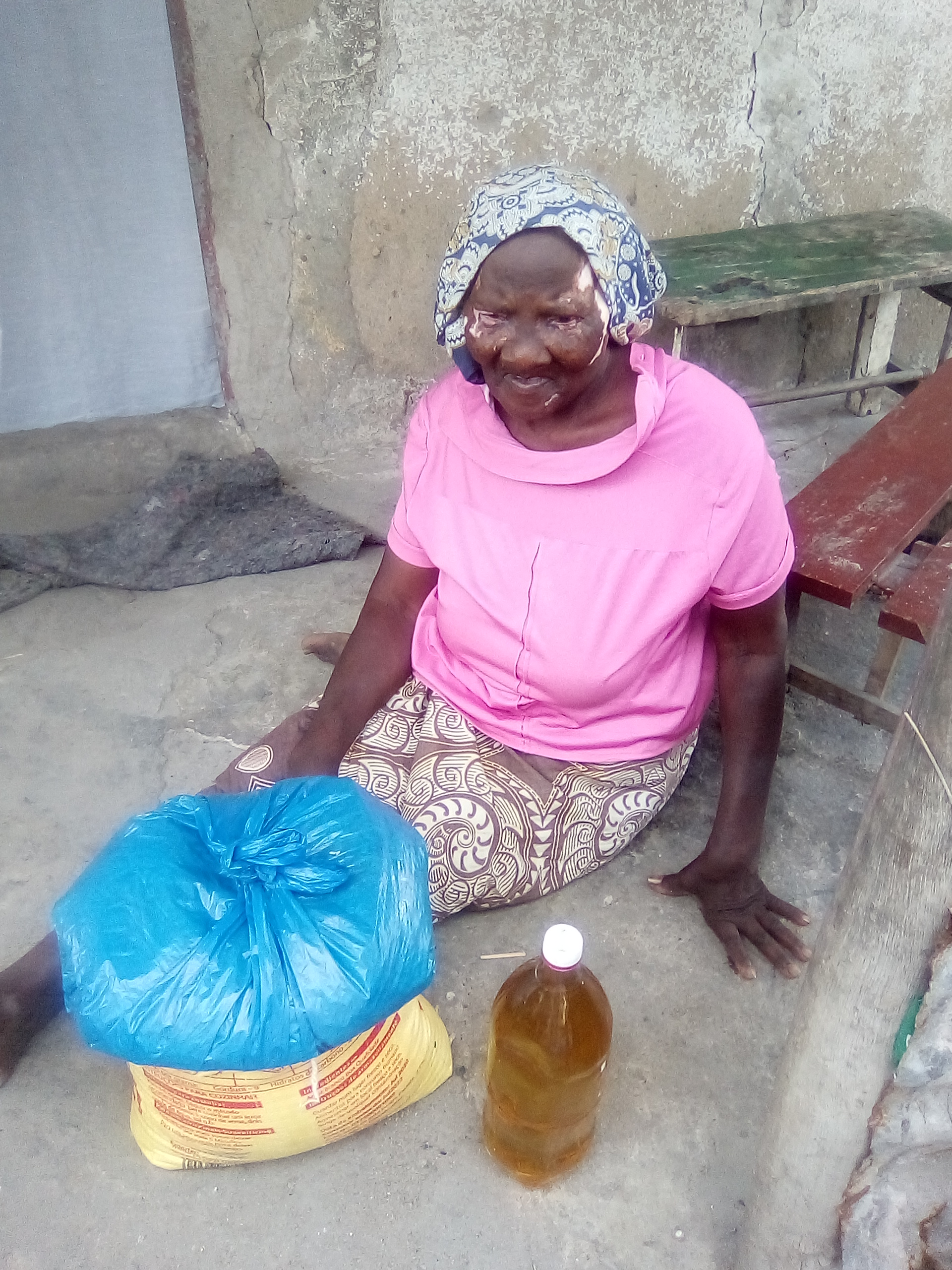
I was privileged to have visited Mozambique some years ago.  Having experienced a tiny glimpse of life there, I now regularly send money to help some of the poorest who live there.   This picture shows one lady with all that she has to live on for the next month:

Is she any less valuable human being than me, or you?  Does she matter less because she happens to have been born in a poor country?  Or because she’s black?  Isn’t that what we think deep down if we deny help to people in this situation?

It’s not just our government cutting back that matters.  What about each of us as individuals?  There is a line in a song “my Chinese take away would pay for someone’s drugs”  (medicines) – that is so true.   I know many people, quite a few now retired or close to retiring – university professors, doctors, professional engineers, teachers, civil servants – who have amassed significant amounts of money, own big houses, take expensive holidays.  Healthy pension funds and investments have secured a comfortable retirement – as our culture tells us that that is what we have to do.  

And yet this old lady has no such ‘essentials’.   She lives day to day in accommodation that we would not give space to in our garden, and is desperately grateful for a sack of rice and some cooking oil:

We in the ‘developed’ world are not deliberately evil, but we are ignorant.  We are ignorant of the life of the majority of the world.  We have money but are fearful of losing it.  We are taught to save for our rainy day, but we do that when so many others are already being flooded out by a deluge. 

It would be hypocritical of me to say we should sell all we have and give to the poor – although since Jesus said it, it is probably right.  But we can start to move in that direction.  It does not cause any discomfort if the total of our investments drop by (say) 10% when we still don’t think twice before having our Chinese takeaway – and yet I have found that joy comes from seeing the images of those who I have been able to help.  This person has something to eat because I chose to send some money.  That person can now put a tin sheet over the hole in the roof of their house because I chose to send some money.  When I  give, I feel no pain, only gain.  And yet it is still not ‘easy’ – still the pressures of sixty years of western capitalist propaganda take effort to resist.  It takes an act of will sometimes to give, but it is worth it.

Try it this Christmas?

May God bless us all.

On life, and death

Have you reached the point yet of wondering what happens when you die?  Perhaps the current pandemic will prompt more of us to think about this important question.  It is important because of the impact that the answer has on us whilst we are alive.

There is an unspoken assumption behind all the current fears and actions that death is a bad thing; that we must do whatever we can to extend life – even if the extended life comprises sitting in an armchair in a care home gazing out the window or watching daytime TV.  I use the term ‘extend’ deliberately instead of the more common term ‘save’ because we are all destined to die;  rescuing someone from drowning does not ‘save’ their life, it extends it.  But to what purpose?

Actually, it may be that rescuing someone from drowning does ‘save’ their life, in that the experience may cause them to turn from a previous pointless and self-centred existence to a life of love and purpose.  The fact that someone cared about them enough to rescue them may make them realise the importance of relationships, the importance of selflessness, the importance of love.

People who have gone through near death experiences often become dramatically changed, dedicating the rest of their lives to acts of loving kindness to others.  So it is indeed possible to save someone’s life. But it is the quality, value and purpose of the life that is saved rather than the biological state of being alive for ever.

We confuse the biological life with what I will call spiritual life.  An amoeba has biological life, a tree has biological life, and so does a virus.  But none of these have spiritual life.  They do not ‘experience’ life, they have not brain to sustain any form of consciousness and they simply live biologically.  There may be other forms of higher life (apes, dolphins) that can ‘experience’ life; I don’t know because I’m not one of them.  But I do know that I experience life.  When I eat a curry I ‘experience’ a taste, but even that is hard to pin down.

If you Google “The Qualia Problem” you will find a paper by Frank Jackson which states that:

“I think that there are certain features of the bodily sensations especially, but also of certain perceptual experiences, which no amount of purely physical information includes. Tell me everything physical there is to tell about what is going on in a living brain, the kind of states, their functional role, their relation to what goes on at other times and in other brains, and so on and so forth, and be I as clever as can be in fitting it all together, you won’t have told me about the hurtfulness of pains, the itchiness of itches, pangs of jealousy, or about the characteristic experience of tasting a lemon, smelling a rose, hearing a loud noise or seeing the sky.”

But whatever it means for me to experience the taste of the curry, I know that there is a ‘me’ to experience it.  It is that ‘me’, not the biological me which I long to preserve, whose ‘life’ I want to save.  And so the big question is, does that ‘me’, that spiritual me, cease to be when my physical body ceases to be?

If the spiritual ‘me’ will end when the biological me ends, there will be no ‘me’ to experience that I am dead.  Do not grieve for me, I will no longer exist.

Of course I will remain in your memory, and you will look back on your memories with joy and sadness – as with all memories.  They are not erased simply because I die; they are as real as they are today while I live.   But if extending my life gives me no ‘spiritual’ life at all, then any new memories will bring sadness in remembering my final days.  So what will be the value of extending my biological life when I have no spiritual life?  The preservation of my decaying body simply to avoid biological death will bring sadness to overshadow previous memories, and will in practice bring mourning forward before my death.

This may sound heartless, particularly if you have not yet lost your parents or other loved ones.  But before you condemn me, I have suffered loss.  I have lost a child, at birth.  I have lost both of my parents.  And I know the pain that the pointlessness of the latter days of their lives brought them.  My father knowing he had to suffer the pain of prostate cancer with no hope of end other than death; my mother wondering when the pointlessness would end, her daily routine seeing her sitting on her bed gazing out at the suburban street for hours.  I grieved over them all when they died, and the grief is still there of course, many years later, just less acute.

I am not heartless.  No.  I want to see people truly, spiritually ‘live’ whilst they have biological life.

But what if the spiritual ‘me’ continues to exist beyond death?  What if my purpose is indeed eternal?  And how can I know?

The crew of early sailing ships believed that there were other lands over the horizon.  Europeans believed that there must be a large land mass south of the equator before they found it.  And brave adventurous souls set off to find it.  Some came back and told others that it was true, and soon constant travel to and fro confirmed it.  That made it easy for those who had not been there to ‘know’ that Australia existed.

But it’s not quite the same with life beyond biological death.  Our bodies cease to function and eventually the flesh rots and we are left with a skeleton.  We don’t find dead people returning to re-inhabit their skeletons; there is no free travel between here and any ‘afterlife’.  At least, not that we are aware of.

Imagine for a moment a caterpillar.  It has a physical body, it eats and excretes, it moves around and (pretending for a moment that it has the capability) experiences the physical domain of the leaf.  And then, after it has grown and fattened up, it appears to die.  It becomes encased in a shell and the caterpillar’s physical form decays.  But it is still alive, rather than being dead, it is being transformed into something different.  The butterfly that emerges from the cocoon bears no resemblance to the caterpillar, and is not even constrained to living on the leaf.  A thing of beauty, it soars into the air and is a delight to see.  Yet it cannot return and tell the caterpillars who remain on the leaf that there is life beyond the cocoon.  Neither should we expect human spirits return to tell us what happens beyond biological death.

And yet… one did return.  No ordinary man, but a man who had turned the lives of those he met upside down;  A man who taught the secrets of true spiritual life to those who would listen – yet more than a great teacher;  A man who healed those who were physically ill by the touch of his hand, yet more than a great doctor;  A man who brought biological life back into a friend’s physical body after they had been buried in a tomb for three days;  A man who willingly surrendered his body to excruciating crucifixion and inevitable physical death and burial in a tomb.

Two days later, his tomb was empty.  Although his friends and more importantly his enemies searched everywhere for it, no body was to be found, just some folded grave clothes.  His enemies were desperate to find the body to disprove the claims of his closest friends that he was alive; that they had seen him, spoken with him, and touched him.

Madness we say – they must have imagined it.  And yet such a madness that they were willing to die rather than deny it.  Such a madness that they were filled with joy, and their lives were transformed;  freed from the greed and selfishness of their world – sharing all they had with one another, loving one another.  Such a madness that they began to understand the secrets their friend had taught them about what a true spiritual life looks like.  Such a madness that brought ‘life in abundance’, not just for them but for all who listened to their eye witness accounts and trusted and believed them.  A madness that has affected millions upon millions over the past 2000 years.

Our decision of what we believe happens when our bodies physically die has enormous impact on our lives whilst our physical bodies live. Do we trust in the eyewitness accounts of what happened to that man, and hope and expect  that spiritual life is not snuffed out with our decaying bodies?   Do we choose to believe that our spiritual selves will live on, no longer constrained to the two dimensional leaf of this world but soaring into the sky of eternity; that we will be transformed from caterpillars to butterflies.  Do we start putting into practice the words of wisdom that bring spiritual life today?

Madness?  Or the sanest decision that we ever make?  Do we trust or ignore the evidence?  Do we dare to find out?

Liberating repentance – Acts 10; 34-43

I’m going to draw out from Acts 10; 34-43 what makes the Gospel transformational, and suggest how we can engage it more fully.

The short speech by Peter was made after he’d been summoned to meet a Roman centurion.  Peter willingly went to meet him after having had a vision where Peter was being told to eat food that Jews considered unclean.  In the vision he was told “What God has made clean, you must not call profane.”

Peter is describing what he learnt from the event, and it efficiently describes why  I am a Christian.

First of all Peter declares “I truly understand that God shows no partiality, but in every nation anyone who fears him and does what is right is acceptable to him.”  In short, God loves you and me equally to the Jews.  We are ALL allowed to share in the life giving message of the good news of Christ.

Peter then describes that he personally was witness to the facts that:

  • John baptised Jesus, at which point God anointed Jesus with the Holy Spirit
  • Jesus went around doing good and healing people
  • Jesus was crucified
  • Jesus was raised to life on the third day, and appeared to those selected to be his witnesses
  • Jesus told them to preach that He is the one who will judge the living and the dead
  • And finally that everyone who believes in Jesus will have their sins forgiven

The first four points bear witness to who Jesus was.  But I want to focus on the last two points. That Jesus will judge the living and the dead, and that everyone who believes will have their sins forgiven.

If we are honest, we’d rather not be judged at all.  Perhaps we are living quiet lives, keeping our head below the parapet.  We come to church on Sunday and we just want to be left alone until we die when we hope to go to heaven.

If we are to be judged, we don’t want our neighbours or friends judging us.  And when we see what the Tabloids say about people, we certainly don’t want society to judge us.

We probably get angry at anyone who dares to criticise us – “who are they to judge?  They’re no better than me! Hypocrites!”

What about Jesus judging us?

Jesus – the human incarnation of infinite goodness.

The one who gave every moment of his life to heal, teach and serve.

The one who allowed himself to be sacrificed by crucifixion, and still forgave those who nailed him to the cross.

Jesus.  We can’t be angry with Him – he’s certainly no hypocrite.  We can probably accept that he has the right to judge us, but maybe we are still not happy with the idea.

Deep down we know that if Jesus were to judge us he would see SUCH shortcomings in our lives.

  • Our petty grievances with our neighbours, with our fellow Christians
  • Our contentment to live in comfort whilst we know that there are others who have nothing
  • Our consumerism, looking for the cheapest product that then keeps the poorest in poverty and makes those in work put in more hours at lower pay than they can manage
  • Our readiness to get in our car to go anywhere, to take cheap overseas holidays, to travel on a whim, leading to overheating of our planet and the mass extinction of so many species

And that’s before we get to more obvious ‘sins’…

And yet we probably don’t ‘feel’ like sinners.

When I was on the cusp of becoming a Christian I had been told that I needed to ‘pray the sinner’s prayer’.  This is what I wrote in my journal:

I sit down – I’m not ready for kneeling yet – and start to read the prayer…

 “Dear lord I have sinned…”

 The trouble is…I don’t feel like a sinner.  Yes, I know that I could be a lot better than I am, but I just don’t feel it at the moment.  So I start to pray that God will help me to make the step from logic to feeling.  At least I try to do what I think praying is ….  I wonder if I’m doing it right.

I didn’t ‘feel’ like a sinner – but I recognised that I needed to.

If we don’t ‘feel’ our sin, then we need help.  We can pray, like I did, for God to help us make the step from logic to feeling.

A little later in my journal I wrote:

My daughter had organised her own birthday party, with half a dozen friends coming round for a ‘scary party’.  It was impressive to see them all dressed up as witches and devils (and a cat!?).  However, for some reason I was rather grumpy.  I didn’t get into the party spirit and got rather short with all the mess, and split drinks and so on.  I wasn’t very sympathetic when my daughter got upset that no-one was listening to her, and tried to explain that they couldn’t help it if they got distracted.  At the end of it I felt that I had let her down.  I don’t know if she noticed particularly, since it was rather a busy affair, but that was how I felt.  I felt like a sinner.  Was someone trying to tell me something?

But if we can ‘feel’ our sin, if we can let the Holy Spirit show us our shortcomings then we will surely fear his judgement.  That is in part what it means to fear God.

And recognising our sin is the start of healing.  When recognise what we are, when we see through our masks of self-justification, and we don’t like what we see!  We want to be different, we want to change.  That is what repentance is – honest assessment followed by determination to change.

I recently watched a TED talk by Eve Ensler, and activist for women.  She was talking on the profound power of an authentic apology.  She describes how her father abused her, but that he’d never apologised – never repented.  She describes the process of repentance.  In her words:

Apology is a sacred commitment. It requires complete honesty. It demands deep self-interrogation and time. It cannot be rushed. I discovered an apology has four steps, and, if you would, I’d like to take you through them. 

 The first is you have to say what, in detail, you did. Your accounting cannot be vague. “I’m sorry if I hurt you” or “I’m sorry if I sexually abused you” doesn’t cut it. You have to say what actually happened. “I came into the room in the middle of the night, and I pulled your underpants down.” “I belittled you because I was jealous of you and I wanted you to feel less.” The liberation is in the details. An apology is a remembering. It connects the past with the present. It says that what occurred actually did occur. 

 The second step is you have to ask yourself why. Survivors are haunted by the why. Why? Why would my father want to sexually abuse his eldest daughter? Why would he take my head and smash it against a wall? …..  My father had to live up to this impossible ideal, and so he was never allowed to be himself. He was never allowed to express tenderness or vulnerability, curiosity, doubt. He was never allowed to cry. And so he was forced to push all those feelings underground…

 Those suppressed feelings later became Shadowman, and he was out of control, and he eventually unleashed his torrent on me. 

 The third step is you have to open your heart and feel what your victim felt …. You have to let your heart break. You have to feel the horror and betrayal and the long-term impacts of your action on your victim. You have to sit with the suffering you have caused. 

 And, of course, the fourth step is taking responsibility for what you have done and making amends. 

 So, why would anyone want to go through such a gruelling and humbling process? Why would you want to rip yourself open? Because it is the only thing that will set yourself free.”

This is SO important.  This is what Jesus is talking about when he says “Repent of your sins and turn to God”

When we repent we still feel the guilt of our past mistakes.  I still feel angst thinking about that party.  And this is where the final point is Paul’s speech brings such freedom:

“Anyone who believes in Jesus will have their sins forgiven.”

Perhaps this seems a little unfair – what about someone who doesn’t ‘believe in Jesus’.  Are they not forgiven?  Well clearly they will not be able to believe that they are forgiven.  We have to believe that Jesus has the authority to forgive our sins in order to accept that forgiveness.

Maybe it’s actually more serious if we claim to believe in Jesus. We know the theory, but have we really repented?  Do we really know that freedom that we are forgiven?  How can we tell?

I actually found the TED talk above when I was looking for a quote about activism:

“An activist is someone who cannot help but fight for something.  That person is not usually motivated by the need for power, or money or fame.  But in fact is driven slightly mad by some injustice, some cruelty, some unfairness, so much so that he or she is compelled by some internal moral engine to make it better.”

So my question is, are we activists for Christ?  Have we repented and turned to God with such deep honesty that we “cannot help but fight for Him”, such that we are “compelled by some internal moral engine to make it better”

And if not, it’s time we did something about it.

Let’s pray that God shows us our sin, that we can understand why we do it, that we can feel what our ‘victims’ feel, that we take responsibility for it and that we commit to making amends.

That is the only thing that will set us free.

(Delivered as a sermon – January 2020)

How should we respond to climate change? – A Christian perspective

The earth’s climate has seen dramatic change. Four and a half billion years ago, the earth was formed.  Its atmosphere had massively high levels of carbon dioxide, and there was very little oxygen.  Miraculously, life originated in this extremely hostile environment, and for the next one and a half billion years or so the cyanobacteria began cleaning up the atmosphere and enriching it with oxygen and allowing the formation of the protective ozone layer.

Over the next two billion years the beautifully designed process of evolution took those earliest forms of life and developed them into the staggering array of life that we take so readily for granted today.   Darwin hinted at the beauty of the process in the final paragraph of his book “the origin of species” when he wrote “There is grandeur in this view of life, with its several powers, having been originally breathed into a few forms or into one; and that, whilst this planet has gone cycling on according to the fixed law of gravity, from so simple a beginning endless forms most beautiful and most wonderful have been, and are being, evolved.”

So it is clear that man-made climate change will not destroy the planet, nor will it extinguish life.  But it will disrupt the extremely finely balanced ecosystem that sustains the human race.  That disruption will enlarge areas of local extinction of humans (desert regions), and in the extreme the whole planet could become unsuitable for human life.  Whilst wealthy countries are able to create local ‘microclimates’ with technology, for example air conditioning, people sentenced to live in the ‘natural’ local climate will inevitably suffer and may face extinction.  We already see an increase in suffering from natural disasters such as the cyclone Idai, and other increasingly destructive climactic events.

Greater parts of the world will become uninhabitable not just for humans, but for the cornucopia of other species who thrive in the environment that spawned us.  New species will emerge, but many of our present ‘friends’ will disappear.

The first book of the Bible describes how we were given the world to look after.  It is clear from the description above that if we don’t look after it then it will not be taken away from us, but we will be taken away from it.  This is reminiscent of the description of Adam and Eve being taken away from the Garden of Eden: the garden still thrives, but they were no longer in it.

God allows us to do things that harm us.  He doesn’t want us to, but he allows it.  Such action is called sin.  The basis of the Old Testament law was that God gave us rules that would bring us wellbeing, but our selfishness leads us to choose ways that harm ourselves and others.  Greed, lust, envy, and all the ‘sins’ damage both us and our neighbour.  Climate change is damaging to us and to our neighbour, and so the actions that leads to climate change are ‘sin’.  God permits us to damage the planet that sustains us, but it is not His will.  And disobeying the will of God is sin.  It is not good for us to do it!

There is not space here to fully discuss how we, through our actions are hurting God themselves, but we might empathise by imagining how we would feel if after giving a loved one a beautiful gift – perhaps a bunch of flowers,  we see them slowly trashing it, picking off one petal at a time.

So, how should we, as Christians, respond to the challenge of climate change?

First of all, we must recognise that it is real! (see for instance https://climate.nasa.gov/effects/)

Climate change is not the sin, but the consequence of our sin.  We need to reflect on what sins are the root cause of climate change.  Greed, selfishness, gluttony, envy will be high on our list, but a thorough examination of our lifestyle (in the context of and comparison with the other seven and a half billion people on the plant) must bring insight.

We then need to ‘repent of our sins and turn to God’.  There is surely enough evidence that we know that we are sinning, but we need to let the evidence sink into our hearts and truly convict us before we can honestly repent.  Until we reach that state then we might feel a little guilty but we will not have the power that comes from true repentance.  We need to be so convicted that we get on our knees, confess, and ask for forgiveness.

We must work with God to eliminate our sinful behaviour. We will need to be bold, counter-cultural and outrageously attractive in our approach.  We are Christ’s representatives, and our response has to mirror his character. And we must encourage our brothers and sisters to do the same.  Not only must we turn from our damaging practices, but we must do our utmost to relieve the suffering of those whose homes and livelihoods are ruined by the changing climate.  A radical change in our lifestyle must include loosening our grip on our wallets.

For example, we need to ask ourselves why we need to go to America, or China, or Australia for our holidays, for a speaking engagement, or for work.  99% of the world’s population cannot afford these luxuries – and yet many are closer to God than we are.  http://www.globalrichlist.com/

We have to challenge every decision of where we spend our money.  Should we always buy the cheapest, or should our buying decisions be made to minimise planetary damage?

We can make reparation for the damage caused by our personal sin.  We can ‘offset’ our carbon emissions, for example “Climate Stewards helps you to offset unavoidable carbon emissions by supporting community forestry, water filter and cookstove projects in the developing world”.  Some are beginning to do this for holidays or the odd long haul flight, but that is surely just lip-service.  Should we not examine our carbon emissions over our lifetime and offset them?  (see https://www.climatestewards.org/) At only £20 a tonne, many of us are in the privileged financial position to be able to do that.  There is real potential for tree planting projects to ‘buy some time’: https://www.sciencenews.org/article/planting-trees-could-buy-more-time-fight-climate-change-thought.  And churches can do the same, committing to offset past energy usage and adding carbon offset as a statutory spend each year.  It is much easier if we all make the commitment together.  Leadership from our Bishops can help here.

Those of us who live comfortably in brick houses in rural England can send financial assistance to those whose pole and dagga houses are swept away by floods or typhoon. (see https://www.christianaid.org.uk/emergencies/south-asia-floods-appeal)   As James says:  “Suppose you see a brother or sister who has no food or clothing, and you say, ‘Good-bye and have a good day; stay warm and eat well’—but then you don’t give that person any food or clothing. What good does that do?  So you see, faith by itself isn’t enough. Unless it produces good deeds, it is dead and useless.”  Communication is so good that we see our ‘brother or sister who has no food or clothing’ daily on our TV’s or computer screens.

We will of course fail to live up to our aspirations, but we can try. And when we fail, God’s grace will free us to try again.

And finally a thought about our legacy.  The younger generation are worried.  Environmental issues are at the top of their concerns.  And the younger generation tend not to know Christ.  We have a wonderful opportunity to bring them hope, both for a world to live in and from a God who loves them.  That is a far better legacy than bequeathing a scorching earth that is hardly able to sustain human life.

Let us be at the forefront of change, not dragging our feet but leading the way to a sustainable future.

The universe is so big and has been here so long …

Big Bang was about 14 billion years ago; the universe is older and bigger than we can possibly imagine.  Dinosaurs were on the earth for over a hundred million of years, a thousand times longer than the humans have been around. And looking at the population of the world today, as an individual among 9 billion people alive, In comparison with the totality of space and time, each individual is surely completely insignificant.

But… there is an alternative.

If God exists they must be bigger than all this, and older than all this and they must have had a reason to bring the universe into being and sustain it, and to wait while the stars and planets formed and reformed, life began and evolved, and  mankind emerged and developed.  And if, as many of us believe, they sent their son to teach us and to die for us then we move from being completely insignificant to enormously significant.

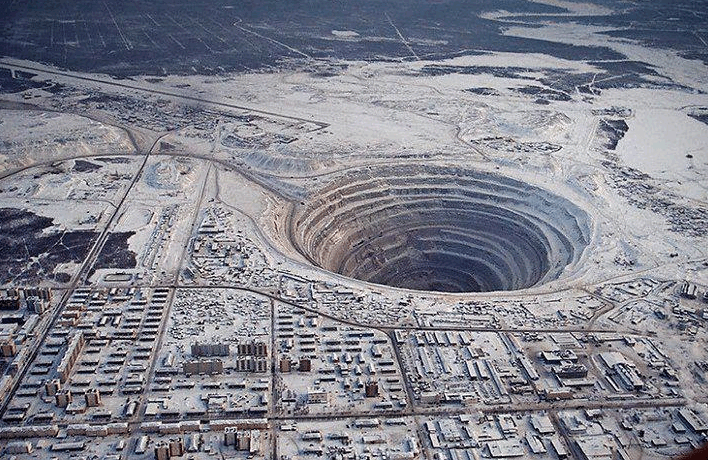
But perhaps it still seems an awful lot of effort for God, too much to believe perhaps. But think about the effort that we put in to the smallest of things used for enrich a very short period of time.  Think of how much time, energy and space goes into making a simple gold ring with a diamond on it, and getting it to a shop so that someone can buy it to propose an engagement.  Just compare the size of the gold and diamond mines with the end product – let alone all the work needed to refine, shape and manufacture the ring, and to transport it to the shop.  We are pleased to do all that, God’s work just takes things to a bigger scale…

Jesus teaching on workers pay

Jesus taught about the kingdom of God. In one example a wealthy man ensured that the workers all received enough pay for their needs, although it cost him more than it needed to. He knew that he would still have sufficient for himself.

If you are wealthy then this might be a good example to follow.

And if you are a worker, take heed too: if you are lucky enough to have a job, your needs are no different from the one who doesn’t.

The story is recorded in Matthew 20:

“For the Kingdom of Heaven is like the landowner who went out early one morning to hire workers for his vineyard. He agreed to pay the normal daily wage and sent them out to work.

“At nine o’clock in the morning he was passing through the marketplace and saw some people standing around doing nothing. So he hired them, telling them he would pay them whatever was right at the end of the day. So they went to work in the vineyard. At noon and again at three o’clock he did the same thing.

“At five o’clock that afternoon he was in town again and saw some more people standing around. He asked them, ‘Why haven’t you been working today?’

“They replied, ‘Because no one hired us.’

“The landowner told them, ‘Then go out and join the others in my vineyard.’

“That evening he told the foreman to call the workers in and pay them, beginning with the last workers first. When those hired at five o’clock were paid, each received a full day’s wage. 10 When those hired first came to get their pay, they assumed they would receive more. But they, too, were paid a day’s wage. 11 When they received their pay, they protested to the owner, 12 ‘Those people worked only one hour, and yet you’ve paid them just as much as you paid us who worked all day in the scorching heat.’

13 “He answered one of them, ‘Friend, I haven’t been unfair! Didn’t you agree to work all day for the usual wage? 14 Take your money and go. I wanted to pay this last worker the same as you. 15 Is it against the law for me to do what I want with my money? Should you be jealous because I am kind to others?’

16 “So those who are last now will be first then, and those who are first will be last.”