We are all the same

A doctor has the resources to help those who are injured or unwell, to make them comfortable and to set them on the path to healing and recovery.  Would it be wrong for a doctor to walk past a person injured and dying on the street and do nothing to help, even if the doctor didn’t know them or like them? 

We know it would be wrong for a doctor to not do what they were able to help someone who is suffering severely or dying through sickness or injury.  Yet doctors are only people like us so it must also be wrong too for us not to help someone who is dying through – for instance – malnutrition, or lack of clean water, or military oppression even if they are not on our doorstep.  It would be wrong of us not to make room in our country for those who would die from war or persecution in their home country.

Let’s not shirk our responsibilities to our fellow human beings.  Let’s remember that every single person is equally valuable and worthy of our love and care and do what we can to help and accommodate them. When we fall short of doing all we can, let’s recognise that that is our shortcoming.  Let’s not justify our inaction by claiming that they are somehow inferior to us, and that we ‘don’t want them here’.

How do we manage the pressure to worry and despair about what is going on in the world?

There is so much that we can see that is worrying, and that we can do nothing about.  (As I write this Los Angeles is suffering intense wildfires, Trump is threatening to take over Greenland, the wars in Ukraine and Gaza are still taking lives, global temperatures continue to rise…)  Yet if we didn’t look at our TVs, papers or phones we would know nothing of this – and surprisingly little is ‘in our face’ – we are not directly affected by most of the list above.

The secret is to realise that we are not God.  These things are beyond our power to control, but we are not helpless or hopeless – we can play our part using the prayer that Jesus taught us:

“May Your kingdom come; may Your will be done on earth – as it is in heaven”

We might reflect that what is going on actually is God’s will; his permissive will.  Throughout history greedy, power hungry bullies have oppressed ordinary people and we have ransacked the natural world.  Jesus was fully aware of the brutal Roman regime, but he didn’t overthrow it.  He healed people, focusing on the individuals around him – and we can do that too.  We can pray the Lord’s prayer and leave the state of the world in his hands, but then get on with interacting with those around us according to his will.  We don’t care less about the global situation, but we can worry less. And we can use our energy to influence our local communities instead.

After putting the world’s troubles in God’s hands, the Lord’s prayer allows us to ask for God’s heap meeting our own needs:  give us our food for the day, forgive our sins (as we forgive), don’t let us yield to temptation, save us from evil.  All of which do personally affect us day by day, and which will allow us to fulfil our daily purpose.

Jesus’ prayer is a powerful gift from God.

The hand of God

A few years ago I decided to dig deeper into the apparent conflict between science and religion.

Many people have the view that science can in theory explain everything, that even if we don’t know the answers yet then it is just a matter of time before we find them.  This view of Science has turned it into a faith.

I admit that I wondered if advances in science since I studied it might actually bring more powerful arguments than I was aware of. But I also wondered whether the extreme unlikeliness of life might be sufficient to prove that there must be a God and so I spent several years reviewing what science has discovered and assessing how that fits with Christianity. 

The first thing to say is that there are clearly things written in the Bible that are not to be taken literally.  And it causes problems when people do. When people hear both Christians and atheists claim that Christians believe that Genesis is the literal truth then they are unlikely to look any further.  It is that which put me off even considering God until I was forty, and so I feel that Creationists do God a disservice.

Putting Creationism aside, I have not found any serious conflict between science and faith.

I have found that when you try to calculate numbers, you find that the chances of us being here are extremely small – but we are here.  The chance of me winning the lottery if I buy one ticket is extremely small, but every week someone wins. If you try often enough then extremely unlikely events will happen. 

But how can I say that there isn’t any serious conflict between science and faith?  Isn’t there a conflict between science and miracles?  Hasn’t science shown that they are impossible?

To answer that we need to think about what we actually mean by science. It’s a term that is in such common use that we often don’t think about what it really is. A few years ago the Science Council realised that they didn’t have a definition of science, and so they came up with one.

“Science is the pursuit of knowledge and understanding of the natural and social world following a systematic methodology based on evidence.”

Let’s break that down a little:

“the pursuit of knowledge and understanding” – I’m sure we are happy with that, although it doesn’t say ALL knowledge and understanding.

“of the natural and social world” – that’s good, it defines the scope where it applies.  Science has nothing to do with what is not the natural and social world.

“following a systematic methodology based on evidence” We can expand on that a little.  The methodology includes steps of

  1. Observation of a phenomenon and experiment to find out what happens
  2. Trying to think of what the rules are that describe the phenomenon – the rules should be consistent with the accepted laws of science.
  3. Establishing new experiments or observations to test the theory
  4. Repeat the experiments
  5. Analyse and review the results, and publish.

Critical to this is repetition.  Science assumes that the “natural and social world” behaves in a manner that is repeatable.

Richard Feynman, a famous physicist was giving a talk about what is known as the ‘two slit experiment’ – you shoot electrons at a barrier which has two slits in it, and a screen behind it, and you observe where each electron hits the screen. He comments that

“A philosopher once said that: ‘It is necessary for the very existence of science that the same conditions always produce the same results’. Well, they do not. You set up the circumstances, with the same conditions every time, and you cannot predict behind which hole you will see the electron.”

Through repetition, science has discovered that if you look at enough numbers of electrons then a predictable pattern emerges.  However,  the behaviour of an individual electron cannot be predicted.

And what is a miracle?  The Cambridge Dictionary definition of a miracle is:

“An unusual and mysterious event that is thought to have been caused by a god because it does not follow the usual laws of nature

By definition, science and miracles are mutually exclusive.

  • Science defines the usual laws of nature
  • Miracles don’t follow the usual laws of nature

But this does NOT mean that science tells us that miracles cannot happen.

It’s like putting everything that behaves in a predictable manner into a box and calling that science.  I can learn all about what goes on inside the box.  But none of my knowledge about what goes on inside the box can tell me anything about what is outside the box.  

I might assume that nothing exists outside the box, but science can give me no evidence of whether my assumption is true.  Belief in that assumption is called materialism. The faith of materialism asserts that there cannot be miracles, but science itself can say nothing about whether miracles can happen. 

But what if there is evidence that the universe doesn’t always behave according to fixed materialistic laws? Does that disprove materialism?

What if I know that there are things outside the box?

It seems to us that we are able to make choices.  We can decide who to vote for in elections.  We can decide whether to come to a breakfast talk.  We can decide whether or not to kill our next door neighbour. 

It’s called free will.  We experience our free will every day.

But if the universe operates according to fixed laws of nature, where is there scope for free will? 

There are some who believe so completely in Materialsm that they think free will is an illusion.  Here’s an example from an on line discussion forum:

“. . . given our understanding of determinism and un-determinism there is nothing left that explains exactly what free will could be, in the traditional sense. It’s more a case of a challenge to those that assume free will to explain its mechanism.”

In other words, Materialists believe that free will cannot exist in a universe which operates according to fixed laws.  So if you or I believe that we have free will, then that is a strong hint that materialism is wrong – that there are things outside of our box. 

There is another definition of miracle in the Cambridge dictionary:

“a very lucky event that is surprising and unexpected”

Even within the laws of physics it is possible for miracles to happen. 

There is an account in the Bible of when Jesus told one of his followers to go and catch a fish, and that in the mouth of the fish he would find a gold coin, and then he was to use that coin to pay their tax.  That is such an extremely unlikely event that it becomes a miracle, but a miracle operating within the “laws of physics”.

I said earlier that I’d wondered whether the extreme unlikeliness of life might be sufficient to prove that there must be a God.  Whilst the origin of life may follow the laws of physics, is it so unlikely that it is classed as a miracle? Let’s explore that a little and try to get a feel for some numbers. 

It is difficult to define what life is, but one element that we are all aware of is the ability to reproduce, or replicate.

All life as we know it – plants and animals – contain long chain molecules.  Proteins are building blocks for much of the body, and DNA acts as a template for organising amino acids into the correct order to make proteins and to replicate itself.

DNA is made up of four nucleotides, called ‘bases’.  These are held in place on a sugar/phosphate backbone.  The order of the bases defines the order of amino acids that are assembled by machinery in the cell in order to form a protein.  The machinery in the cell includes other long chain molecules that are essential for the replication process.

Although human DNA has around 3 billion bases, scientists have estimated that the minimum length of a long chain molecule that would be able to replicate is around 40 bases.  Like DNA, those 40 bases would need to be in a precise order to be able to replicate.

The question is, where did this first long chain molecule come from?  It was not built by the mechanism in the cell, because there was no mechanism. 

Perhaps it might have self assembled by chance if we had a pot of molecules bubbling in a primordial soup.

Now, the number of different possible sequences of a chain of forty molecules of four different types is massive, and the chance of any particular one forming at random is on in a septillion!  That’s 1024  –  a million billion billion.

And if you needed two specific molecules to ensure replication then it would be the same as searching for a single molecule in the whole mass of the earth.

No wonder Richard Dawkins has said that

“Self-replicating molecules that made copies of themselves came into existence by sheer luck….. Nobody knows how it happened.”

We can agree I think that the origin of life is “a very lucky event that is surprising and unexpected” …. i.e. a miracle. 

Another extremely unlikely occurrence is the fine tuning of the universe.

We use equations to represent the laws of physics as we know them. The equations usually include a number of constants.   Some constants can be derived mathematically, such as the ratio of the circumference of a circle to the diameter which is known as Pi.

Other constants don’t appear to have their value for any particular reason – as far as I’m aware there is no particular reason why the speed of light is what it is.   These constants are only obtained by careful measurement.

Scientists can calculate what might have happened if the constants had been different. These calculations show us that the constants in this universe seem to be incredibly fine-tuned. 

John Lennox quotes that “If the ratio of the strong nuclear force to the electromagnetic force had been different by one part in 1016, no stars could have formed. If the ratio of electromagnetic force-constant to the gravitational force-constant was increased by only 1 part in 1040 then only small stars would exist; decrease it by the same amount and there will only be large stars. You must have both large and small stars in the universe; the large ones produce elements in their thermonuclear furnaces and it is only the small ones that burn long enough to sustain a planet with life. That is the kind of accuracy a marksman would need to hit a coin on the far side of the observable universe, twenty billion light years away.

Many thinkers and Christian scientists pursue the idea that these levels of extreme improbability must ‘prove’ that the laws of nature are insufficient, and that ‘The hand of God’ is required at critical points in the history of the universe to explain where we are today. I find the idea attractive, but it is not unquestionable proof as there is always the counter argument that with enough attempts unlikely things happen. 

And for me, trying to find God in the unlikely concedes too much.  It is a false way of thinking that seems to accept that if we can explain something scientifically then we don’t need God – so we have to look for things that we can’t explain scientifically and voila: God. This is called ‘God of the Gaps’, and constrains God to those things that we can’t explain – the gaps. 

But it is actually applying the faith of the Materialist to God.  “I’m going to claim everything that is explainable as my materialist faith, and just leave you with the gaps to explain by God” 

It implies that:

  • God is confined to the gaps
  • God only ‘appears’ intermittently
  • God only does miracles

That is a misunderstanding of God.

What if we apply this sort of ‘improbability thinking’ to the development of a human being from a single cell?

DNA is often called the blueprint of the body, and is the template to build all the protein molecules in the body. Human DNA has just under 3 billion bases.  There are around 3.5million letters in the Bible, so it would need around 800 books the size of the Bible to write out human DNA. That sounds a big number (although our DNA only a tenth of the size of that of an amoeba), but let’s look at what the DNA has to do.

An adult has fifty trillion human cells.  That’s 17000 cells for each DNA base. And scientists have said that 97% of our DNA is actually ‘junk’ … not used for producing proteins. If that is right, then there are over half a million cells for each non-junk DNA base.

Our fifty trillion cells are organised into systems:

  • Circulatory system
  • Skeletal system
  • Immune system
  • Muscular system
  • Hearing
  • Sight
  • Nervous system
  • Brain
  • ….

Those systems change with time.  Components are built at different times in the development process.  Cells have to die off to make way for other cells.  We have to stop growing at some point.  We are programmed to die.

And our “short” string of DNA is supposed to define all of this. The orchestrated operation of the fifty trillion cells for over seventy years is not something that is learned as the body grows. And the coding of these systems was contained in the DNA of one single fertilised cell.

Using a ‘probability’ type of thinking, we might deduce that it is impossible for a human to grow from a single fertilised cell without the hand of God.

And yet we see it happen every day, 350,000  new babies born a day around the world. This miracle has being repeated by the hand of God billions of times, just in humans. The hand of God is very busy!

Now actually, this is a better understanding of God.  This is not a ‘God of the gaps’ but a ‘God of everything’. This is a God who sustains the operation of matter in a consistent manner that we can predict through the scientific method.  This is a God who provides the raw materials for science to study.

This is a God of whom the psalmist wrote:  “For you created my inmost being; you knit me together in my mother’s womb.”

The behaviour of matter, as modelled by the laws of physics can be understood to be the hand of God. We no longer search for a God who lives outside the universe and occasionally pops in to correct it when it goes wrong, but we have a God who is intimately involved in the universe, sustaining not only the laws of physics but also our very being. Everything that science discovers is simply discovering more of the wonders of God. 

If we can grasp this it leads to two responses:

Wow! …. and…. Why?

To understand the Why, we can’t look to science – but we can look to Jesus. And when we understand the Why, and respond to it, the Wow becomes our worship.  The study of science returns to its origin, the search for a better understanding and knowledge of God.

Thank you for reading.

Covid Inquiry – lockdowns and saving lives.

When China introduced their strict lock-down I remember saying ‘That could never happen here’.  And when people on social media were saying ‘we’ve got to lock-down immediately’  I didn’t think it should – imprisoning the elderly in their homes for 3 months for no offense!

When my father died of prostate cancer after several years of suffering and treatment, I was relieved.  I was desperately sad and sat alone and cried to mourn the loss, but he was never going to be young and healthy again and his suffering was over.

Before my mother died I used to cry coming home from visiting her at the pointlessness of her days, she had no joy anymore and would sit on her bed looking out the window.  She would often say that she was ready to die, but her body kept holding on.  When she fell with a broken hip and was taken to hospital she signed a DNR.  She didn’t want to eat and only did when pressed by the kindly nurses.  When she died it was a relief but again desperately sad – but she was never going to be young and healthy again, and she had fulfilled her purpose.

The Covid inquiry is asking how many more lives could have been ‘saved’ by earlier lock-downs.   Would my mother or father’s lives have been ‘saved’ by extending them further?

In “Screwtape Letters” – letters from one demon to another CS Lewis writes “They, of course, do tend to regard death as the prime evil and survival as the greatest good. But that is because we (the demons) have taught them to do so.”  In his non-fictional writing Lewis points out that we have lost sight of the ‘true reality’ of God and the spiritual life.  In our earthly, material world everyone dies; it is just a question of when. 

In reality, it is not the length of our days but what we have striven to become on earth that matters – our character, or values, our loves.  Of course the death of a loved one is sad, but let’s have less of this ‘saving lives’ when we simply mean ‘extending lives’ and let’s focus more on reality.

——————————————

““Reality, in fact, is usually something you could not have guessed. That is one of the reasons I believe Christianity. It is a religion you could not have guessed. If it offered us just the kind of universe we had always expected, I should feel we were making it up. But, in fact, it is not the sort of thing anyone would have made up. It has just that queer twist about it that real things have. So let us leave behind all these boys’ philosophies–these over simple answers. The problem is not simple and the answer is not going to be simple either.”” ― C.S. Lewis

How can one God be Father, Son and Holy Spirit?

Christian doctrine tells us that Jesus is God, that the Holy Spirit is God and that ‘the Father’ is God.  And that Jesus is not the Father, who is not the Holy Spirit, who is not Jesus.  And that there is only one God.

Doesn’t it defy common sense and logic? How might we think about this mystery? 

Consider an analogy:  what is War and Peace?  It is a novel by Leo Tolstoy of course.  And of course, we all know what a novel is.  Or do we? 

It is of course the book that you buy in a bookshop?  But is it the paper and ink? No, it’s more than that.  Is it the pattern made by the dark ink on the white paper? No, the same words can be written in different fonts?  And what about different translations? And what if the book is read out loud?

Is it the precise set of words that Tolstoy wrote? – were early drafts not War and Peace? 

Is it the precise story? – then what of screenplays, are they not War and Peace?

War and Peace is the book, it’s the film, it’s the spoken word, it’s all the translations.  The book is not the film, which is not the spoken word.  The Chinese translation is War and Peace, the English translation is War and Peace, but the English translation is not the Chinese translation – there is only one War and Peace.

Something which we think is simple is actually much more complex! 

And so it is with God.  We might think we know who or what God is, but most certainly we don’t.  They are far more complex!  But perhaps thinking about the analogy of War and Peace we will understand a little more.

And here’s a bonus question – did the story exist before Tolstoy wrote it?  Would it cease to exist if humanity was wiped out and there was nobody to remember it? (Isn’t memory just another medium for recording the story anyway).  If another civilisation emerged ten thousand years after humanity died out and were able to read the book, would War and Peace come into existence again?  Or did it continue to exist throughout that period.  Did the tale exist before it was written down, in the same way that 1 + 1 has always equalled 2 – even before there was intelligent life to discover it.  Has War and Peace always existed?  Does this help us understand how Jesus always existed, how ‘in the beginning was the word’?

Living with Hope in the Climate Tragedy

There are different phases as a tragedy unfolds.  Perhaps like when someone is diagnosed with terminal disease.

First of all, there is ignorance – the problem is not known about.  The tragedy is ‘undercover’ and waiting to unfold.

Then there is awareness – maybe a doctor’s diagnosis, or a smoke alarm going off in the middle of the night

Then there is anguish – the understanding of what is to come suddenly becomes real, and heart wrenching.

  • Reading up on the illness
  • Realising that flames have taken hold
  • First picture of the invasion of Ukraine
  • Seeing an ancient woodland being torn up for HS2, or the Amazon being burned down for cattle farming
  • The disciples seeing Jesus arrested, tied up and carried off by the mob

We are desperate to do something, we want the tragedy to stop and do all we can to prevent it.  Even if what we do will make no difference, we need to do it – mopping someone’s brow, sitting by their bedside.  Throwing buckets of water on the flames.  Striking off an ear.

We get frustrated and angry with others who get in the way – holding us back from putting out the flames.  Setting regulations preventing us from even seeing our child suffering in hospital, let alone hugging them tightly.

The anguish grows the more we care.  If we hear of a distant acquaintance getting cancer we might say ‘ah well, that’s sad’, but if it’s our child, or our spouse it is like a kick in the stomach.

The anguish gnaws our heart and becomes almost unbearable.

And when we are in the middle of a crisis and we realise there is no hope, anguish turns to despair:

No matter what we do, Russian troops are still pounding Ukrainian cities with artillery.  No matter what we do, the cancer is spreading.  And Jesus is bound, beaten, and nailed to a cross – and we are helpless to do anything.  But we continue to try. And we cry out in despair, even though hope is gone.

And then it is finished.  Grief takes hold as we look on the result – the dead child, the burnt house, the destroyed city, the body taken down from the cross.

The mourning for what was, for what has been lost, for what could have been.

The feeling of purposelessness – what is the point of anything anymore?  Why bother?

Hope has gone.

We are in a global climate tragedy.  Humanity is destroying life on this planet. We are condemning future generations to extreme climate and weather events, to suffering, to rising sea levels, maybe to extinction.

It’s actually a multitude of mini tragedies.  Each goes through the same stages, but they are relentless. At the grieving stage of one, another is waiting.  And they combine into one big tragedy.

In the past few of years I have become more and more aware of the desperate situation that the world is in.  The relentless rise in CO2 and average temperature.  The worsening climate disasters and weather events.  The melting of glaciers, Greenland ice and the poles.  The extinctions, and destruction of life.

That took me deep into the anguish phase – prompting me to do what I can!

My wife and I have invested our money and made changes in our lifestyle to radically reduce our CO2 footprint – almost meat free diet, using the train instead of flying, insulating our house, fitting solar panels and a heat pump – our house is now carbon neutral! 

I invest a lot of time and energy trying to put the message across to others, researching the facts and trying to put them into simple terms.  There is some encouragement when we see others doing the same, and when we see vegan burgers that taste like meat, plant-based butter, and other replacements for meat produce.

But people still don’t realise the scale of change needed, or the urgency: 

According to a poll carried out in G20 countries the vast majority – 83% – said they wanted to do more to protect and restore nature. However, when asked what actions they would take, they prioritised increasing recycling and avoiding excess packaging. ‘Higher impact changes like diet change and flying less are consistently bottom of their list,’ said Sophie Thompson, part of the Ipsos MORI team that carried out the survey.”

I can see that the technology is available, but action is too slow.  The world still wants to follow the rules of financial justification.  And poor countries rightly want to experience the same quality of life that rich countries do, and so don’t want to sign up to CO2 targets.   Time is running out – it has already run out for several mini-tragedies, but there is little sense of urgency. 

The steady stream of cars and trucks, the rush to book flights after covid, the meat-fest menus, people buying multi-packs of plastic bottled water, the waste …. You can’t get away from it, the relentless ‘in your face’ inaction that says, “I don’t care”, but that I realise may simply be “I don’t know”.

I moved beyond anguish to despair.  And sometimes I have felt I need to give up completely; get a log cabin on the coast in Northumberland and watch the sea.

And then I realised that whatever I do, much more climate change will happen.  Even with all the current government pledges, global temperatures will continue to increase.  And to imagine that our institutions will honour climate commitments, or that individuals will change enough to prevent further deterioration is to delude ourselves.  But also, for the majority world to be dragged out of poverty to share the lifestyle that I have enjoyed since I was born will need increased carbon emissions.  Population will grow as better sanitation, medicine and housing allows people to live longer – consuming more energy through their lifetime.  Reading the signs shows that CO2 emissions will rise further, and global warming will go beyond 2 towards 3 degrees – or higher!  It’s going to happen and nothing I can do will stop it.

And I entered the grief phase.  Do we ever leave that phase?  We recognise what is lost, or what is destined to be lost and it saddens us deeply.  Accepting the loss, the grief means the intensity of feeling fades.  The loss is still there, and we are no longer frustrated and angry at our helplessness.  And we are changed. 

And where is God in this?

“Father, in our despair, in our grief, bring us hope.  Show us the hope we can bring to others.  Tell us what you want us to do.  And give us the courage we need to act.  Amen”

God’s hope comes from where it has always come – but we have forgotten it.

There is nothing I can do that will prevent climate change.

There is nothing I can do that will prevent the powerful having their way.

There is nothing I can do that will make the world good.

These are things that are beyond the power of the individual.  It has always been so, and in a world where many choose selfishness over goodness it will always be so. 

My individual goodness does not make the world good.  The omnipresence of the spirit of goodness acting in all individuals could make things good, if each individual were to respond.  We can see this – if only everyone was good, then the world would be a good place; it would be heaven!  And it is because ‘they’ are not good (we are not either!) we find ourselves responding with anger and frustration and are tempted to despair.  

In the battle for good to prevail we have a great ally in ‘The Law’.   Laws, enforced by appointed guardians, codify what we understand to be good.  The law limits the power of the selfish, those who don’t respond to the spirit of goodness.  The law tries to teach what is good behaviour – but the law is made by human hands trying to define goodness.  Human hands can be wrong.  Human hands can corrupt the law.  And so the law does not reach goodness.  Although we say that nobody is above the law, the law is not above goodness.  We cannot be fully good by following the law.

The law is a powerful tool towards preventing climate change, and towards preventing the powerful having their way.  It is good and necessary to have good laws, but those who have the power to make the law are also those who have personal interests to serve, and so they do not always make good laws.  And people do not always keep the law.

So where is hope?

Christian hope comes from the power of the spirit of God; from a bigger picture that we have forgotten. People in the past understood that there was a life to come, that this world is not all there is.  The bigger picture is that we are offered everlasting life, against which this world fades into nothing.  Everlasting life in a new world where everyone chooses to be and is truly good, in the presence of the spirit of goodness and love.

My wife Cathy writes that:

“humanity has always been up to its chest in its own mire, mistakes, and sin. Because we live relatively fulfilled lives, we can forget that most people did, and still do, endure lives of fear, pain, hunger, death, and drudgery. Consider the slums of Victorian England, the lives of medieval peasants, the wars and diseases that have stained our history. It has always been thus. The Bible shows that this is the story of humanity: drowned in our self-inflicted suffering, with no hope that we can rescue ourselves, but that somehow, beyond anything that we can possibly understand, God has intervened to initiate a great rescue plan. That at some point, the mess will be tidied up and ‘every tear will be dried’.”

Many passages in the Bible describe this hope:

‘Look! God’s dwelling-place is now among the people, and he will dwell with them. They will be his people, and God himself will be with them and be their God.  “He will wipe every tear from their eyes. There will be no more death” or mourning or crying or pain, for the old order of things has passed away.’

He who was seated on the throne said, ‘I am making everything new!’ Then he said, ‘Write this down, for these words are trustworthy and true.’

He said to me: ‘It is done. I am the Alpha and the Omega, the Beginning and the End. To the thirsty I will give water without cost from the spring of the water of life.  Those who are victorious will inherit all this, and I will be their God and they will be my children.

And from the apostle Peter:

Praise be to the God and Father of our Lord Jesus Christ! In his great mercy he has given us new birth into a living hope through the resurrection of Jesus Christ from the dead, and into an inheritance that can never perish, spoil, or fade. This inheritance is kept in heaven for you, who through faith are shielded by God’s power until the coming of the salvation that is ready to be revealed in the last time.  In all this you greatly rejoice, though now for a little while you may have had to suffer grief in all kinds of trials.  These have come so that the proven genuineness of your faith – of greater worth than gold, which perishes even though refined by fire – may result in praise, glory, and honour when Jesus Christ is revealed.  Though you have not seen him, you love him; and even though you do not see him now, you believe in him and are filled with an inexpressible and glorious joy, for you are receiving the end result of your faith, the salvation of your souls.

Cathy continues

“I find hope in the belief that every person is unique, loved, precious.  That every person has something incredibly valuable to offer to others, whether teaching, engineering, dancing, poetry, cooking, listening, encouraging, smiling, gardening… and that God wants everyone to have the chance to grow into their own potential.  So, as part of His rescue plan, the child that drowns in Pakistan will – somehow – be restored, healed, and given the chance to become its full self.

Furthermore, I think that the earth itself, and all that lives on it, is also valued and precious to God.  That the koala bears that died in the fires in Australia, the glaciers that have disappeared, the animals hunted to extinction, the trees killed by drought, the hedges uprooted, may also be restored.

But this isn’t a ‘pie in the sky’ hope that gives me an excuse to do nothing now. I believe that I am called to take part in this great plan, and that my actions; not flying abroad but taking the train, moving to a more plant based diet, donating to charities to help feed the poor or plant trees, turning down my heating thermostat, biking more; are part of a great unnoticed movement of rescue.

I think and hope that the kingdom of heaven, a kingdom of fairness and wisdom, will be established in a restored, peaceful, green earth; bursting with life and enjoyed by loved, healed and beautiful people living their lives to the full.  And I believe that my efforts towards that are not wasted.”

So there is hope in the future, and purpose in what we do now.  But in the now there is more than just duty and hope for the future. We can and need to find happiness, peace, and joy. I have found some secrets to this in a short book called ‘Finding Happiness’ by Abbot Christopher Jamison.  And even if we do not accept the Christian hope we can benefit from the wisdom of the ancients.

Considering the ideas of the philosopher Plato, he describes that “contemplation of the good and the beautiful is Platonic happiness”.  Taking time to really observe and to absorb into ones immediate being that which is good and beautiful draws out joy and wonder.  A form of worship is appreciating the beauty of an ever-changing landscape, the journey of a piece of music, the wholeness of a novel.  Goodness and beauty contemplated in every diverse opportunity, fought for against the pressures of the rush of daily life, brings peace, joy, and happiness.

This is what the Apostle Paul said too, ‘brothers and sisters, whatever is true, whatever is noble, whatever is right, whatever is pure, whatever is lovely, whatever is admirable—if anything is excellent or praiseworthy—think about such things.’

Abbot Christopher also tells us that “Happiness for Aristotle is ‘the activity of the soul expressing virtue’.  So in essence where Plato sees happiness as contemplation, Aristotle sees happiness as living virtuously.”  The call to action that Cathy described is thus not just a call of duty, but a call to happiness.  Living virtuously brings happiness. It will take courage, and effort, and perseverance.  It will test our reserves and frustrate us.  But as we persist in scrupulously examining our actions and our motives and seeking to live virtuously then we will begin and grow happiness in our lives.

Again, Paul wrote “For we are God’s handiwork, created in Christ Jesus to do good works, which God prepared in advance for us to do.”  Doing good deeds is part to becoming who we are.

We are not responsible for anyone’s behaviour but our own. That’s why the world is in the state it is – many choose the selfish path to death.  And as a consequence, we will experience global warming way beyond where it is today.  It is a tragedy, but it is the same tragedy that has been unfolding since the world began – the tragedy that many choose the path of selfishness.  But let us choose to be a people of hope.

Good news!

Deep inside each of us we know that we ought to be good.  Perhaps it’s stronger than that, and we want to be good.  But we aren’t as good as we’d like to be, and we often disappoint ourselves and perhaps give up trying, and ignore our shortcomings – burying them in a busy and ‘important’ life.

Millions of years of ‘survival of the fittest’ evolution has honed our human nature to make sure that we thrive physically and materially, even if it is at the expense of others.  We want a better house, a better car, more money.  We want our country to be richer and have a better healthcare system than others.  We recognise that there are laws that we must obey, but we will find ways round them if we can if it improves our lot.  We might get angry about world situations; the dreadful behaviour of the Taliban, or Trump, or Putin, or global warming, or social injustice; demanding action from governments but perhaps being unwilling to actually do much, if anything ourselves.

In this environment, what is the relevance of and role of religion?  And what about God? And do They have anything to do with religion, or us?

Reliable historical texts describe that Jesus brought ‘good news’ to the people of Israel, and that he told his followers to take that good news to all nations.  The people he brought the good news to were probably not that different to us, although with less technology and material possessions; they had the same drives and motivations.  They felt the same disillusionments.  Yet many people were changed by the message he brought, transforming their lives and motivated to take his message to the world. 

So what was this ‘good news’ that Jesus brought, and why don’t we hear it today?

Basically, the good news was (and still is) that ‘You can be good, and this is what being good looks like.’

On top of that simple message, he brought us tools and techniques to help us, the primary one being the tool to free us from the ‘badness’ of our past.  Using his tools we can look forward to what we can become rather than being dragged back by our past mistakes. 

The tool that he offered was repentance; sincere regret and remorse.  But repentance alone is clearly not enough and might simply add a feeling of extreme guilt and worthlessness (who would want to subject themselves to that).  The ‘magic’ that Jesus brought was, and still is authoritative forgiveness.

Forgiveness only works if it is offered by someone with the authority to forgive; it doesn’t mean a thing if I forgive you for stealing, it needs a judge to do so.  In Jesus day the religious leaders recognised that ‘only God can forgive sins’ and so were angry that Jesus did so. 

Today, we don’t have the same understanding of God, and perhaps for us it is better to think of ‘infinite love’ or ‘infinite goodness’ instead of the God.  But how ever we look at it, the magic of Jesus clearly worked at the time and has continued to work ever since – if we repent and ask Jesus to forgive us then he does.

As I wrote in my book “Christianity – why bother?”:

“To live a rich and satisfying life in the future we have to accept that we made mistakes in the past.  We have to want to change for the better.  We have to want to wipe the slate clean and start again. And we do that by accepting God’s forgiveness.

It’s about accepting God’s unconditional love, and then working with Him to become who we are meant to be. And it starts with a decision to submit leadership of our life to Christ.

And this is freedom.

Freedom from the guilt of past sins.

Freedom to love God.

Freedom to love one another.

Freedom to stop sinning and to do what is right without worrying about the future.

Freedom to trust Jesus when he tells us that he has come to bring life in abundance.

Freedom from religious ritual.

In essence, that is the Good News of Christianity; that is the Gospel.”

And what is the role of religion?  Well religion should help us find this truth.  Religion should help us to understand who and what God is, and to help us see what ‘good’ looks like.  Unfortunately, much religion today seems to want to show what is good by living the opposite – a perverse sort of reverse psychology.  Nevertheless, there are many good and solid leaders and grass roots members of religions who are simply trying to tread a good path, trying to live graciously with one another.  Being part of such a community can be a great help and encouragement, and can bring companionship on our journey.  Spending an hour or two of ‘spiritual’ reflection once a week helps us maintain focus and direction.  So yes, there is still a role for religion.

Money, Church, Jesus and me.

There is a church which has assets of £8,700,000,000 at the start 2020, at the start of the pandemic.  The nation struggled and many were in financial despair.  What might Jesus have hoped that the church would do?

The church did not ‘hide their gold in the ground’, or put it in a deposit account earning perhaps 1% return. Instead it invested its assets and achieved a growth of 10.4% in the year.  Would Jesus have been happy with that stewardship of the money?

The church spent some of the money that they received, but at the end of 2020 the assets of the church had grown by £500,000,000 to £9,200,000,000.  Is God blessing that church with growth?

“You say, ‘I am rich; I have acquired wealth and do not need a thing.’ But you do not realize that you are wretched, pitiful, poor, blind and naked. I counsel you to buy from me gold refined in the fire, so you can become rich; and white clothes to wear, so you can cover your shameful nakedness; and salve to put on your eyes, so you can see.”

Over Christmas, a small church agreed to spend £1000 to make up food hampers for those on Free School Meals.  As a result, fifty families were blessed.  People were inspired to donate towards the cost of the parcels, which meant that it actually cost the church nothing.  Was God rewarding their generous spirit?

I saw a Facebook post recently that made me think:

It is so easy to criticize those who have more money than us.  But we could equally say:

There is a charity, set up by a Christian pastor, which buys and builds houses that are loaned to local churches to house and support vulnerable homeless people.  So far they have housed 1226 people.  They raise the money through people investing in their project rather than by donating money.  They offer a 5% financial return on investment so that investors have the twin benefit of knowing that a homeless person is being housed and loved, and getting an above average return on investment. (https://www.greenpastures.net/)   The charity is growing; does that make Jesus smile?

We may worry about money; it is natural.  Everything today is described by its economic value, or the cost to do it; phrases and a culture used to justified austerity.  In such an environment it is hard not to put a financial value on everything, and to be thrifty.  Consider another quote that I came across said:

“The smart way to keep people passive and obedient is to strictly limit the spectrum of acceptable opinion, but allow very lively debate within that spectrum. That gives people the sense that there’s free thinking going on, while all the time the presuppositions of the system are being reinforced by the limits put on the range of the debate.”  Noam Chomsky

That is today’s truth. Greed is now accepted as good in this country. People simply debate how much greed. But we don’t call it greed, we use phrases like ‘reserves’, ‘savings’, ‘retirement plan’ to avoid confronting whether we should be keeping our money to ourselves.  Jesus said:

“Do not store up for yourselves treasures on earth, where moths and vermin destroy, and where thieves break in and steal.  But store up for yourselves treasures in heaven, where moths and vermin do not destroy, and where thieves do not break in and steal.  For where your treasure is, there your heart will be also.”

Dealing with money is not easy, but it is SO important.  It must not become our treasure, but it is certainly a tool.  It allows us to be a blessing to others in as little time as writing a cheque – and time is a stress for many. It blesses us to bless others, but if we agonise about the smallest financial decision then our worrying steals our time, our energy, and can lead to conflict!  We need to train ourselves to be instinctively generous.  We might reflect on these phrases of Jesus, remembering that he spoke them because he loves us; because they are good for us:

“Therefore I tell you, do not worry about your life, what you will eat or what you will drink, or about your body, what you will wear. Is not life more than food, and the body more than clothing?”

“Give to everyone who asks you, and if anyone takes what belongs to you, do not demand it back.”

“None of you can become my disciple if you do not give up all your possessions.”

And as St Paul wrote:

“Remember this: Whoever sows sparingly will also reap sparingly, and whoever sows generously will also reap generously. Each of you should give what you have decided in your heart to give, not reluctantly or under compulsion, for God loves a cheerful giver.  And God is able to bless you abundantly, so that in all things at all times, having all that you need, you will abound in every good work.”

Seeking adventure?

There is an account in the gospels of Jesus sleeping in a boat while a storm rages and seems about to sink it.  The disciples wake Jesus, he calms the storm and then says to his followers “Why are you so afraid? Do you still have no faith?”

Usually we take from this story that Jesus has the power to calm storms, and that we can ask him to calm the storms in our lives.  i.e. call out to Jesus so that we can live placid boring lives. But I think the message is different. 

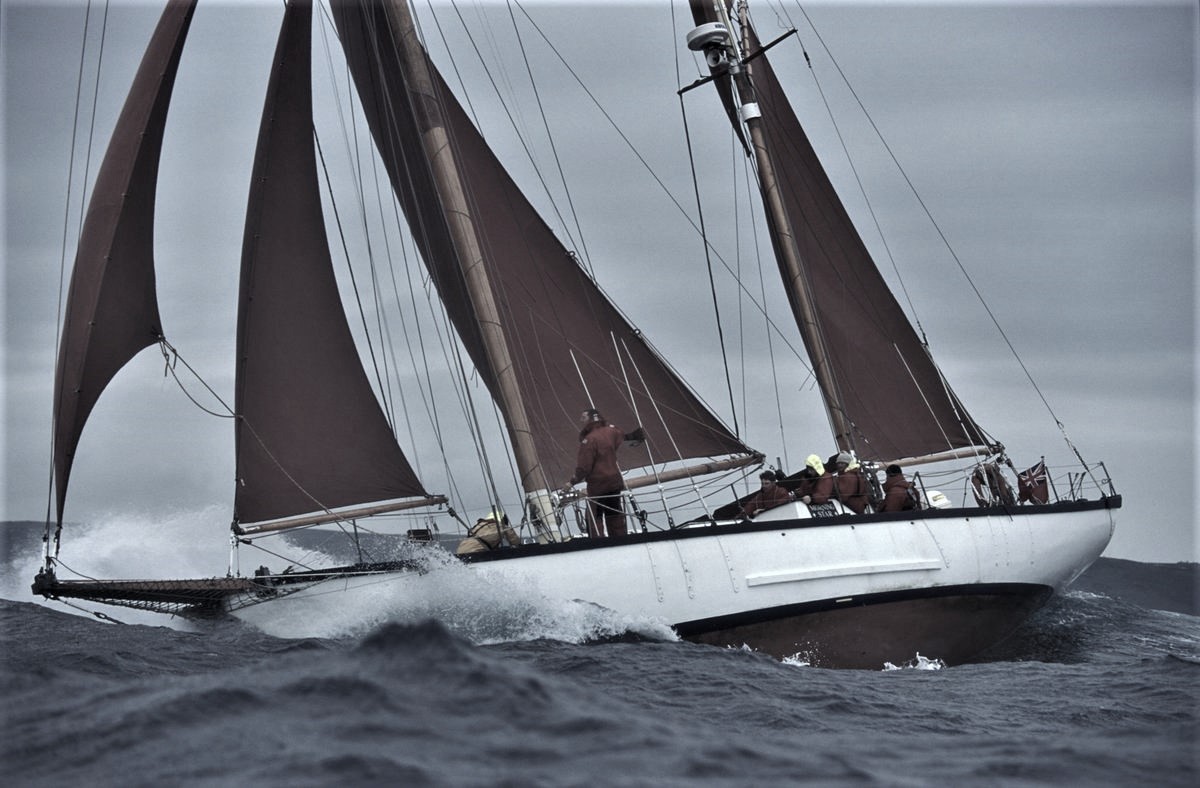
I was on a sailing boat in storm force winds when a mast fitting broke. We had to get the sail down whilst being tossed in the massive waves, with wind and rain and spray.  It was exciting, we felt alive and ‘present’, …. and yet safe.  Our skipper was completely calm, and so we were confident that we would come to no harm; and we didn’t.  It was a joyful and exhilarating shared experience which we will all remember and which is a bond between us; so much more than flat seas and a gentle breeze.

So I think that instead of offering calm seas in our lives, Jesus is saying ‘I am in your boat, you are perfectly safe.  Go and enjoy the adventure.’ And it is with sadness that he has to calm our storm because we have so little faith.

Do you want adventure?  ‘Safe’ adventure?  Feel free to get in touch…

1 John 3:17-18 Beira

In March 2019 Cyclone Idai devastated much of Mozambique.  Local contacts identified that despite humanitarian relief being provided by major aid agencies many people were missing out – particularly the elderly – and in desperate need of help.  Privately sent funds were used by the team in Beira to provide emergency food hampers and water, and then to help repair and rebuild houses. This work highlighted the ongoing need for financial help.

In view of the clear and ongoing need and opportunity, and to build on this initial successful partnership, in the UK we established the charity “1 John 3:17-18 Beira”, and in Mozambique our partners have registered their project with the government: “Associacao Esperanca Aos Vulneravies” (Hope Association for the Vulnerable).

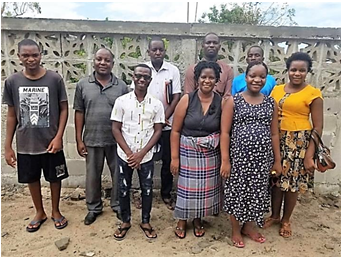
Each month a list of needs is created by the local team of volunteers in Beira (see photo), and those needs which can be funded are agreed.  1 John 3:17-18 Beira then sends the money.  At the end of each month a report is received confirming how the funds were used, and providing photographs of the work, ensuring accountability.

The charity currently supports around seventy of the poorest people with food and fuel.  We have built more than ten houses for those whose homes were demolished, and repaired many more. We support nursing students, apprentices, and those doing short term courses (IT, electrician, baking). We have provided business loans to around ten people. We have provided nearly a hundred fuel efficient stoves and planted over fifty trees.

Members of Associacao Esperanca Aos Vulneravies

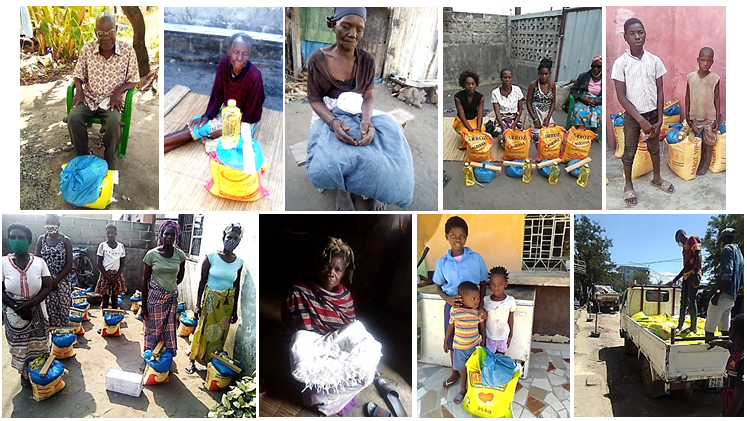
The local team are passionate to improve the chances for the poor.  At the most immediate level this involves providing food, fuel and medication for those who simply have no income. Blankets have been given to help keep warm at night in winter. Mosquito nets have been given out too.

Some of the beneficiaries receiving food, oil, soap and blankets

Materials and where necessary labour are provided for repairing houses, adding cyclone protection measures and building new houses where homes have been destroyed.  Innovative and environmentally friendly approaches to construction are being investigated, such as using waste plastic bottles as building material.

Education and training, and earning a living

In addition the project is able to make grants for school fees and uniforms, and for training and apprenticeships. These often cost less than £50 each, but give the beneficiary a future. 

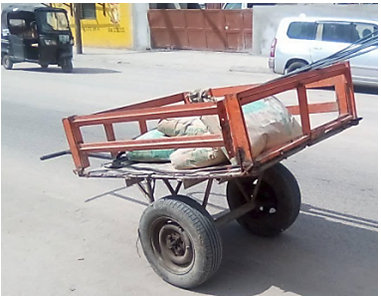
Small start-up business loans are made to pay for initial stock or in one case to buy a small cart to transport goods.  Again these loans are often less than £50, and the recipients pay back as they can so that funds can be used for future loans.

Environmental projects that help the community

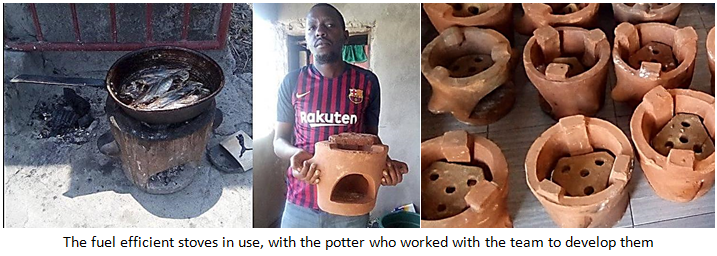
The team have worked with a local potter to design and manufacture efficient cooking stoves which not only save the user money by needing less charcoal, but also reduce CO2 emissions.  These cost under £3 each, and are sold to those who can afford them or given freely to those who cannot.

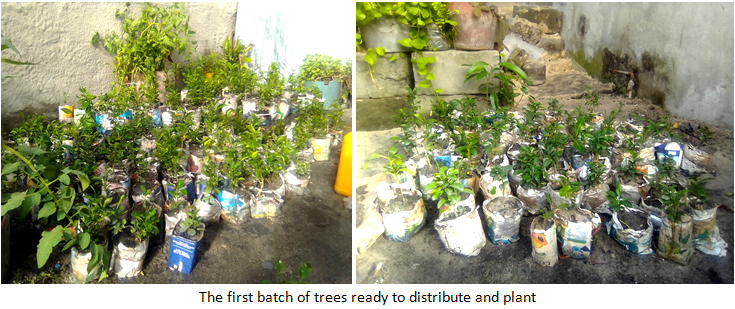
A tree planting project is just beginning, with a first batch of fifty five trees being planted costing a little over £1 each.  The local team would love to launch a programme of planting a million trees in Mozambique, in Beira and outside, and engaging pastors to encourage their members to plant trees.

The future

The Associacao Esperanca Aos Vulneravies members continue to identify people with needs, and since the registration of the project there are more people able to help in the work. 

In addition to continuing and growing the current work, we would like to provide toilets and drill wells for poorer communities.  Many living with HIV refuse to take medication, and so we would like to establish counselling support.

We have reached a state where the funding that we are providing needs to increase to keep pace with the project opportunities, and so we are asking people of goodwill to join us in sending funds to support projects which are making a real difference in the lives of fellow human beings in one of the poorest countries in the world.

If you wish to support the project, please contact us at 1john31718beira@gmail.com

Thank you.

Phil and Cathy Hemsley, and John McCoach.  Trustees, 1 John 3: 17-18 Beira