Austerity is working? II

Some items that I heard on the radio driving home – excuse any imprecision, I had my hands on the wheel and did not take notes:

  • In the past year, the top 1% incomes have risen by around 35%, everyone else has risen by around 0.5%.   Economists are debating whether this signifies and economic recovery.
  • Quantitative easing puts money into the hands of the already very rich, in the hope that it will trickle down to the rest of the population.  So far we have seen an increase in the number of houses exchanged for over £1million, and the highest price ever paid for a work of art.
  • No central bank is likely to be bold enough to stop quantitative easing in the future.

I struggle to understand how, in a supposed democracy, this fits with austerity working. The poorer are getting poorer and the richer are getting richer.  How can a civilized world accept this?

See the following for more.  This is a global problem.

https://philhemsley.wordpress.com/2013/12/10/austerity-is-working/

http://www.youtube.com/watch?v=QPKKQnijnsM

http://www.youtube.com/watch?v=uWSxzjyMNpU

And some alternatives:

http://www.youtube.com/watch?v=CKCvf8E7V1g

http://robinhoodtax.org.uk/

http://www.robinhoodtax.org/

https://philhemsley.wordpress.com/2012/10/06/basic-economics/

See also:

https://philhemsley.wordpress.com/2013/12/30/austerity-is-working-iii/

Don’t forget to ‘follow’ to hear more…

Austerity is Working?

Austerity is Working” proclaims the headline in The Sunday Times.

Why does this make me angry?  Shouldn’t I be glad that this pain that we are ‘all’ going through is finally working?  After all, ‘we are all in this together’ so isn’t this encouragement to keep taking the treatment?

But what does ‘working’ mean?  Let’s look at some other headline news that I recall recently:

  • More people in work than ever before rely on state support to feed their families
  • Food banks opening and helping thousands (and bizarrely someone claimed that this was a sign of a civilized society, that a few good people try to make up for the ineptitude of the rich)
  • The “lost generation”: young people struggle to find work and purpose.

Is that what we mean by ‘working’?  Surely not.  Let’s look further:

  • 2500 bankers are going to get bonuses of over £1 million
  • 11% pay rise for MPs to take their salaries over £70thousand

If I were cynical I might think that the writer must be referring to the latter two examples.  But no, he is referring to the new god, “the economy”.  This “thing” that we have raised above basic humanity, above compassion, above “loving our neighbour as ourself”.

And who are the priests of this new god?  Not the small people.  Not those who suffered from losing all their savings in the banking crisis, or those whose money bailed out the banks.  Not those who have to pay the extra ‘bedroom tax’.  Not those who are now going to have to work to 66 or older just to feed themselves.  Not those who frequent the foodbanks and rely on state support.

The priesthood are the wealthy.

Compared to many, I am wealthy.  I could pay more tax and it would be no more than a minor inconvenience. But it makes me ashamed that we have a government who would rather tax the poor than risk offending the rich.  Why do we not have a government who would close the budget deficit through taxing the higher paid, or tackling obscene bonuses, and a rich class who would willingly support them?

I have not suffered at all in this economic crisis.  I continue not to suffer.  And neither do any of our MPs, or any of those who administer the economy.  Neither does Mr Johnson, who openly advocates greed as good.

I am ashamed, but helpless.  I cannot see any political party that would change things.  They all worship at the same altar.

I do what I can for those around me, and I’m sure you do to – but it’s not enough.  It’s time for a new politics.  It’s time for another Mandela, or Gandhi; time for a statesman not a politician.

The nation waits, but where is such a leader to be found?

—————————————————————

https://philhemsley.wordpress.com/2012/10/06/basic-economics/

https://philhemsley.wordpress.com/2013/12/27/austerity-is-working-ii/

Mitochondrial donation – some concerns

The UK government has decided to consult publicly on the introduction of regulations to allow mitochondrial donation.

I suspect that at the majority of people in the UK have no idea what mitochondrial donation is, what the risks and technical issues are, or what the ethical considerations might be. I wasn’t until very recently!

This short note attempts to give a very brief introduction to the concept and raise some considerations that might inform the discussion.  It is not an expert paper – I am not an expert, but it is an overview to prompt further thought and discussion by the majority of UK citizens, who are also not experts.  A source of information on the topic is “Novel techniques for the prevention of mitochondrial DNA disorders: an ethical review”.

What is Mitochondrial donation?

The majority of human DNA is contained in the cell nucleus, however some is contained in the mothers mitochondria – so called Mitochondrial DNA.  Mutations or abnormalities in mitochondrial DNA (as in all DNA) can lead to disorders in the developing offspring.  Since these disorders are due to the DNA, they are not curable.

“They are progressive, can be very seriously debilitating and disabling. They may also cause miscarriage and stillbirth, death in babies, children and young people, or severe symptoms which onset in adulthood. The symptoms and the age and severity at which they are experienced vary widely between patients, which can make diagnosis difficult. Mitochondrial disorders may affect one organ at a time – for example resulting in blindness or heart failure – or may affect several areas of the body at the same time. Mothers can pass on mitochondrial disorders without having experienced symptoms themselves, which in some cases may mean that they are not aware that they carry mutated mitochondrial DNA that can cause disorders in their children.”[i]

Mitochondria are separate ‘bags’ within a cell, and so can be separated and removed from a cell.  They can be transferred from cell to cell, and so in theory the mitochondria from a parent whose DNA is abnormal can be removed and then replaced with mitochondria from another person who has normal DNA.  The new cell then contains DNA from the female nucleus donor and the father, and a small proportion of DNA from the mitochondria donor.

As with all new technology, implementation is far more difficult than the theory.  However, experimenters believe they are making progress.  Around 30 children worldwide have been born using a technique whereby mitochondria from a donor are injected into the mother cell, providing an excess of mitochondria, in effect trying to dilute the faulty mitochondria.  These trials have indicated a higher than normal incidence of Turners Syndrome (which resulted in miscarriage and a termination), a lack of ovarian development at puberty and short stature.  It may be associated with problems with major organs and mild learning difficulties.

What are some of the risks?

What loving person cannot want to improve the life of another in the best way they can?  If I were a scientist researching mitochondrial diseases I would use all of my expertise to try to find solutions.  In my own job as a design engineer I am continually striving to improve our product, and I sometimes get immensely frustrated by the procedures and processes that are put in place to make sure that new developments are as risk free as possible.  New concepts that I think are very likely to work are often years in development and testing before being introduced into a machine.  But I accept the situation because of the consequences of something going wrong.  A similar situation must apply with Mitochondrial donation.

The amount of testing and refinement that is needed with a new technology depends on the impact if it goes wrong.  Let’s consider some of the impacts if mitochondrial donation were to go wrong.

  • Being genetic, the outcome of the genetic manipulation will be permanently in the gene pool of the descendants.  Our knowledge of how DNA works is still very limited.  Only a few years ago scientists labelled most of the human DNA as ‘junk’, but now controversial recent research is showing that what was previously written off as junk may be important in helping each cell become the type of cell that it needs to be.[ii]  There must be a risk that future generations will suffer unknown and unpredictable consequences of ‘unnatural’ DNA mixing.
  • We really don’t understand how DNA forms our developing body.  We know that a single DNA change can make the difference between a fruit fly having two or four wings, but we don’t know how that happens.  Humans comprise 50 trillion cells, yet our DNA string only contains 3 billion base pairs. That’s more than 10,000 cells per base pair.  We don’t know exactly how so few DNA base pairs can manufacture such a complex entity as a human, although applying engineering principles we can infer that the cell itself must be an intelligent component.[iii]  How will that cell respond to the modified mitochondrial DNA from a donor?  Would it be like running Microsoft software on an Apple computer?
  • The body has evolved to reject unviable embryos.  The trials mentioned above showed that this happens.  Might mitochondrial donation lead to an increase in miscarriages and terminations?  Would the stress and damage to the mother and couple exceed the risk of mitochondrial disease?
  • If mitochondrial donation techniques were to become widespread, but only effective for a proportion cases, what would be the consequence on those parents who still have ‘disabled’ children?  Would the emotional strain be even greater than today?  Would society shun or blame them for having disabled children?
  • We learnt above that often a mother will not know that she has a disorder.  For such parents mitochondrial donation will not be an option, unless there is a universal screening program.  What would be the social and emotional impacts of such a program?

Questioning our assumptions

These are of course only a few of the questions that need to be considered.  However, perhaps it is also important to consider the cultural assumptions that we might be unknowingly making when considering the issues.

A parent will always want the best for their children.  If one were to ask any couple, “would you like a healthy or unhealthy child” then I cannot imagine any couple opting for the latter. However, if you were to ask the parent of a disabled child, “would you rather have Julie or not have Julie” the responses would not be so clear-cut.  If you were to ask “would you rather have Julie but that Julie was not disabled” then the responses would probably lean towards the not disabled Julie.

Anyone who loves others would love to see them fully healthy, intelligent, happy, hard-working, fulfilled, loving and loved, friendly, etc. etc.  Whilst the attributes and character traits of an individual are interlinked, they are not directly and positively correlated.  Health doesn’t lead to happiness.  Intelligence doesn’t lead to being loving or loved.  So we must be wary of concluding that it would have been better if Julie had been born healthy.  She may be more loved, more fulfilled and happier being disabled than she would have been if she had been healthy.  Would Stephen Hawking have become the great physicist that he is if he had not been disabled?

We assume that a long life is better than a short life.  Is this correct?  How do older people think about this?  Are the years in our life more important than the life in our years?

Are we convinced that the end of this life is the end of everything?  If not, then why do we want to keep people from dying? Is it for their sake or ours?

What aspects of life are important, what we produce or the relationships we forge?

Is suffering always a bad thing?  What does evidence suggest?  Would South Africa have successfully transitioned from apartheid to democracy without Mandela suffering years of imprisonment?

In conclusion

This short post was prompted by the UK government’s intention to introduce regulations to allow mitochondrial donation.

We need to question that intention.  This is not an issue to approach lightly and quickly.  Consideration goes beyond the term of a single parliament, and beyond single countries.  I do not feel comfortable that our government, elected by only a small proportion of the population, seems to be intent on adopting a technology which could have severe consequences.

What do you think?

Kill your darlings

A recent post by my wife:

Kill your darlings.

I’m worried!   Just hope I ‘add to the story’…

The Big Picture – an honest examination of God, Science and Purpose

If you have wondered if science, faith and reason are compatible then this is a book for you.

The book explores how everything (including science) is based on faith of some sort.  It explains in understandable terms what science tells us (quantum physics, evolution, DNA, neuroscience etc), and what it can’t tell us, and presents some of the documentary and rational evidence for and basis of Christianity – useful if you want to base your outlook on information instead of propaganda.

The style is a combination of balanced data presentation and respectful discussion; you will not be brow-beaten into having to agree with the author!

Click on the book cover (right) to order your copy.

Richard Miles – Archaeology: A Secret History

The description of this program on iPlayer is “Archaeologist Richard Miles presents a series charting the history of the breakthroughs and watersheds in our long quest to understand our ancient past. He begins by going back 2,000 years to explore how archaeology began by trying to prove a biblical truth – a quest that soon got archaeologists into dangerous water.”

Unfortunately the tone and style of presentation of the program was similar to the description.  The program frequently asserts that there is conflict between Archaeology and Biblical truth, and implies that Archaeology has proved the Bible to be wrong.  The church is presented as a dogma bound institution that can only consider that everything in the Bible is to be taken literally.  The church’s only contact with scientific methods was to use them to show that the world was created a few thousand years ago.  Isn’t he aware that different parts of the Bible are written in different genre’s?  Would he think that if archaeology could prove that there wasn’t a good Samaritan then that must show that Jesus was lying when he told the parable?  Does he think that Christians really believe that the Genesis account is to be taken literally?  As far back as the early fifth century St Augustine was forthright in his criticism of literal interpretation of Genesis.

The presenter, Dr Miles, frequently implies that archaeologists were ‘in dangerous water’ by thinking – thinking is something that is presumably not allowed by the church.  Doesn’t he know that many of the greatest minds have been and continue to be Christians?  Even the greatest secular scientists realize that questions of God are not trivial.

Dr Miles  appears dismissive of the approach of looking for evidence to support a theory (Empress Helena seeking for evidence of Jesus’ crucifixion) – isn’t he aware that this is precisely the scientific method – build a large Hadron collider to look for a Higgs bosun for instance?  

Dr Miles seems far happier to find something and then simply guess what it might mean.  He appeared disappointed that the speculations of John Frayre (sp?) who ‘instinctively knew’ that the triangular objects had been made by human hand were not immediately adopted.

So for me, the undercurrent of generating a false conflict between God and Archaeology/Science, and the implied rejection of ‘belief’ spoilt what could otherwise have been an interesting and enjoyable program.  I am disappointed that the BBC feel the need to generate some sort of conflict or controversy in so much of their programming.

Related posts:

https://philhemsley.wordpress.com/2012/04/29/things-that-a-minimalist-christian-does-not-have-to-believe-the-genesis-account-of-creation/

https://philhemsley.wordpress.com/2012/06/21/an-argument-for-and-definition-of-god/

https://philhemsley.wordpress.com/2013/03/11/how-far-should-we-trust-scientific-prediction/

Why I will never fly with SAS again

It began with a business trip to Poland.  I booked an outward flight with Wizzair for about £27 (including reserving a seat in the front two rows) from Luton, but the return Wizzair flight would have got me home after 8pm on the Friday,  so I decided to go for the earlier SAS route through Copenhagen.  It cost around ten times as much but the extra hours are worth it at the weekend.  First mistake!

I wait at the gate in Gdansk for the first leg flight to Copenhagen.  The flight time arrives.  No plane. No SAS representative to ask what is happening.  The Lot representative on the desk next door tells me that they see the flight is delayed, and while we are speaking the SAS rep turns up, and I see the plane arrive.  I ask the SAS lady and she says I have a slim chance of  getting my connection, and if I miss it then the next SAS to Birmingham will go via Frankfurt and get me to Birmingham at 22.50 … but boarding will be in about 10 minutes.

I decide it would be best to cut my losses and go Wizzair, but SAS don’t cooperate with Wizzair and so I have to ring Carlson (my travel agent) who helpfully check but inform me that the Wizzair flight is full.  They tell me that if SAS got me on the flight to Amsterdam then they can get me to Birmingham with Flybe.  The Amsterday flight is forty minutes later than the Birmingham flight, so that sounds feasible.  If I miss the Birmingham flight then I will have to get the SAS groundstaff at Copenhagen to route me to Amsterdam and Carlson will book the Flybe flight – SAS don’t work with Flybe.  I decide to try it as I’m now the only one who hasn’t yet boarded.  Second mistake!

Things look up as the stewardess says ‘don’t worry, we will be quick – it’s only forty minute flight’.   And then she helpfully announces the departure gates for tight connections.  The forty minutes becomes more of course because of waiting to take off, taxiing, queuing to get off, but I’m in the terminal 15 minutes before the Birmingham flight is due to leave.  There is still hope.  But then I see the queue through passport control.  Fifty people at least, maybe a hundred. And only one passport gate open!  Do I be very un-English and queue jump saying my flight is about to leave?  I see the sign on the board tells me to go to the transfer center and I naively think that perhaps they will be able to get me directly on the flight – like sometime Lufthansa will meet you at the gate when your connection is tight.  Third mistake!

I follow the signs to the transfer center  and then they stop.  Have I arrived?  There is a row of desks but only one person sat at them speaking with a customer.  Nothing tells me it is the transfer center  but I see no more signs telling me where to go.  I realise the chance of getting the Birmingham flight is nil.  But I hold out hope of the Amsterdam option.  The person at the desk finishes with his customer so I approach and ask if it’s the transfer center  he says yes.  I begin to explain my situation but he tells me I have to take a ticket.  Huh?  You take a ticket and when your number comes up I will speak to you.  Oh!  Like the meat counter at Sainsbury’s I guess.  I find a machine which I guess is where you get a ticket, but the first is dead.  The second dispenses a ticket.  It gives me number A182, but he is now dealing with A171.  I quickly estimate, five minutes per person and 11 people in front of me…  I won’t even be able to speak to anyone from SAS until the Amsterdam option is gone.  I ring Carlson again, and speak to the woman I spoke to before.  She helpfully tries to look for other options.  As I watch I see the number that the SAS rep is dealing with is now C007.  Huh?  There are not just A series numbers!  Who knows how many people are in front of me?  Things are looking worse!

But I have my meat queue ticket number, so I explore.  I see that there is a SAS to Heathrow leaving in about forty minutes.  Anywhere in UK will do by now! I find someone at the information stand in the airport and she helpfully rings the gate and finds that there are spaces, but the SAS gate rep tells her that I would have to be ‘in the system’ to get on it.  How do I do that?  Yup! You have to go to the transfer center   But she suggests I could try the SAS lady on gate C4.  I ask, but she curtly tells me that no, she’s just waiting for the last passenger at that gate and … you’ve guessed it … I have to go to the transfer centre.

Back at the transfer center  the A series has moved perhaps two numbers.  I ring Carlson again (we are getting quite familiar now) to see if they can get me on the flight somehow, but the system would mean that whilst they could get me a fresh ticket I’d have to check in  somewhere other than the gate (the transfer center ) so there’s not much hope – but it’s worth a try going to the gate.  I go through passport control, only five in the queue now, and arrive at the gate before boarding is complete.  The SAS staff consult each other but decide, no, they can’t let  me on.  They comment that it would not be a good business model for SAS would it.  I suggest that it is not a good business model that I won’t fly SAS again (I’m getting a little irked by now).

So I need the transfer center  I see that there is one this side of passport control – worth a try, but no, it’s temporarily closed ‘we are sorry for the inconvenience, please use the transfer center the other side of passport control’.  Sigh.  But how do I get back?  All the passport control gates facing out are closed!  With another SAS passenger we find someone to ask.  He resorts to banging on the window of the passport officer’s rest room and he comes and lets us out.

It is still some way off my number at the transfer desk, although there are now four people dealing with the backlog.  I discuss again with Carlson and they tell me there is a BA flight to Heathrow or an SAS flight fifteen minutes after that.  They are just looking up the costs when there is a rush on numbers and A182 flashes up on the screen.  ‘Oh, my number’s just come up, hang on a moment’ and I start to walk to the assistant.  Too late!  He’s now moved on to A183, and the passenger was closer than me.  What?  Do they seriously expect me to take another ticket?  No way!

The nice Carlson lady books me on the BA flight, and my wife kindly comes from Rugby to Heathrow to pick me up.  We arrive home at 11.20pm, having left the office in Poland at midday UK time.  So much for saving a few valuable hours at the weekend.  Thank you SAS for taking such care of me, and treating me like a human being, and doing your best to make my journey smooth and comfortable!   Don’t you realise that treating people like a meat queue will not win friends?

I realised that what we need in situations like this is someone to talk to.  Not a machine that issues you a number.  Not a notice on the noticeboard.  I’d have been quite happy if I’d been quickly able to speak to a SAS representative who then arranged an alternative route.  I know things go wrong, flights are delayed.  But to be simply given a ticket in a queue of unknown length before you can even speak to someone, when your flight options are dwindling – that is the worst, that is the frustration, the hopelessness.  I just want a human being to talk to who can help me sort my problem.  Like the Carlson ladies, who were great!

So SAS have lost my custom, and I recommend that you don’t trust them with your travel plans either.

Oh, and I’m writing this at 4.30am because I need to get it out of my head.  Roll on weekend…..

SAS – shocking air services?  scandinavian air scandal?  can you think of any? feel free to add some of your own.

SAS meat queue ticket

How far should we trust scientific prediction?

Scientific models can accurately predict behaviour of what we have measured. Popular science programmes imply that we can assume that what we haven’t measured is equally predictable.  Are they correct?

We can record data from all sorts of events.  A man walks to work, we can record how far he has got at which time, and we can plot a graph of it.  We can then derive an equation to fit a curve through the data points that we have recorded. Programs like excel do this automatically.  Some equations will fit the data very badly; others will match each point of data exactly.  So we now have some equations that match the data, but those equations do not predict what happened before and after we recorded our data.  They do not predict how the man got up and walked around his house before leaving for work, or how he sat on his chair for three hours before walking to get a coffee.  In this case it is easy to see that the equations are only valid as a model for the data that has been recorded.  We would be completely wrong to use them to predict all the walking that the man does in his life.

We have all seen a graphical representation of a sound.  Whenever any sound or noise is recorded it can be represented by a graph.  Once we have the raw data, it is possible to define equations that describe the shape of the data.  This is known as Fourier Analysis.  So, we have our raw data, and we have our equations, and we can find that the equations almost perfectly match the behaviour of the raw data.  In our Fourier analysis, we can take a short stretch of  completely random signal, and we can analyse it and model it with equations that match it almost perfectly.  But if we try to use those equations to predict the precise signal in the section of the noise before or after what we have analysed we will get completely the wrong answer.  The sort of shape will look similar, but the detail will be completely different.

Both of these are examples of what science does.  It records data and then it determines equations that match the data that has been recorded.  We use these equations to immense practical purpose and most of the time they hold true.  When measurement doesn’t match the equations then we tend to dismiss the measurement as faulty.  Nobody would believe me if I claim to have invented a perpetual motion machine!

However, we must recognise that we may simply be in a short stretch of ‘white noise’ and it would be bad science and bad logic to insist that our equations hold true outside of the domain in which they were developed and tested.  Commentaries about potential other universes,  events before Big Bang, or even events in the distant past of our own universe or planet fall into this category.  It is not an act of science, but an act of faith to assume that the behaviour of the material universe has always been and always will be the same, as that which we see today.

White-noise

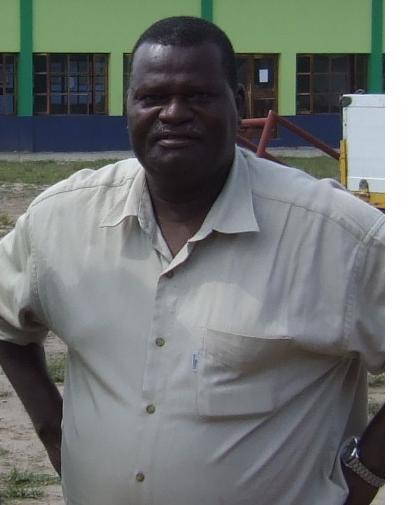
A tribute to Pastor Antonia Bonga, who passed away on Friday night.

A man who I counted as a friend died on Friday night.

I first met Pastor Bonga in 2004 when I visited Mozambique for the first time.  He was running a center for street children called Casa Reom.  That visit was a turning point in my life, showing me many things: that we don’t need monetary richness to be rich, that it is better to do what is right today even if it risks an uncertain future, that most people live in far more difficult circumstances than we do in the West but can still be happy, and that God is close to the poor.

A few years ago he visited England, and sent us a short resume of his life:

 “I was born on 3rd February 1950 at Bawaze-Lampene, Marromeu, the son of Tomo Bonga and Carita. I was educated at Jaravura. My parents were very poor and they were only able to pay for my education up to grade 3.

When I was 18 I came to Beira where I worked during the day and went to a night school. The same year (1968) I was converted in the Apostolic Faith Mission, and was baptized in 1969. I got married and later on was ordained to be a deacon. I had a spiritual experience.

I have had 12 children, 8 of them have died so only 4 remain.

I went to Zimbabwe to Bible school, and when I came back to Mozambique was ordained to be a church pastor. I have planted 5 new churches.

In 1986, I did another bible course in Zimbabwe when I returned home things were worse. A civil war was causing difficulties among Mozambicans. In 1988 things had got so bad that even some of the church leaders were fighting over power.

In 1989, I met 5 missionaries with whom I shared my vision of ministering and planting new churches. The civil war was still going on and the government were harassing me. The government became my number one enemy. It was not easy to preach the word of God at this time. Eventually, God gave a solution to my difficulties. Later on, I founded my present church called “International Body of Christ church”. This started with meetings under a tree. Many people were laughing at the church and at me. Now the churches are all over Mozambique.

When I joined Youth With A Mission (YWAM), I did Discipleship Training (1993) and a Leadership Training programme (1997) in Zimbabwe.

In 2000 God touched my life and told me to care for the orphans and those living in difficult situations on the street. The same year I began leading the YWAM base in Beira.”

I visited Pastor Bonga and the Casa Reom project several times, and I wrote about one visit in my book ‘The Leap’:

When I came back from my last trip to Mozambique, my friend Pastor Bonga had just taken on the running of a second orphanage, with about forty children from ages 1 to 10.  He was asked to take it on, but was not given any money to pay for the running costs.  He couldn’t refuse when he’d been asked.  He couldn’t allow the children to be turned out onto the streets again.  What would happen to the one year old babies? He chose to do what was right, without considering the consequences; he left them up to God.

Pastor Bonga was not perfect, none of us are, but he pursued what his heart told him.  He persevered in extremely difficult circumstances, supported sometimes only by his love of God.  He died unexpectedly.  The evening before he died he had been meeting with others about a new project to help orphans in Nhamatanda, Mozambique.

He will be missed on this earth.

Jimmy Saville OBE – tribute to the sex trade.

Britain is offended, and rightly so, by the behaviour of Jimmy Saville, and by the collusion of those close to him who knew of his salacious deeds and did nothing.

But rather than spending our energy on the past, on a witch hunt from 30 years ago, can’t we direct our anger towards stamping out the same thing that is happening today?

Saville wasn’t born a sex fiend, he was trained.  And who trained him?  The same people who are training the men of Britain today: the porn industry.

It starts innocuously with that great British institution – the Page 3 girl.  And it leads on to the soft porn mags, or more effectively the internet.  And it grows to the depravity of the sex traffickers and the brothels.

Are you willing to do anything to turn the tide?  Here are some simple steps:

Remember the words of Martin Luther King:

“The greatest sins of our time are committed not by the few who have destroyed, but by the vast majority who sat idly by”