Gifts that are wasted, plans that fail, a world on the brink of war………
The Gifts is now published! With a beautiful, perfect cover designed by Beck Hemsley. Worth buying for the cover alone. Thanks to all those who helped along the way: there are too many of you to mention, but especial thanks go to Edwina Mohtady, all the writers in Rugby, Beck Hemsley and Izzy Jarvis.
I am so happy – and slightly scared…
Available on Amazon as a paperback for £8.99 of the Kindle version for £1.99
In March 2019 Cyclone Idai devastated much of Mozambique. Local contacts identified that despite humanitarian relief being provided by major aid agencies many people were missing out – particularly the elderly – and in desperate need of help. Privately sent funds were used by the team in Beira to provide emergency food hampers and water, and then to help repair and rebuild houses. This work highlighted the ongoing need for financial help.
In view of the clear and ongoing need and opportunity, and to build on this initial successful partnership, in the UK we established the charity “1 John 3:17-18 Beira”, and in Mozambique our partners have registered their project with the government: “Associacao Esperanca Aos Vulneravies” (Hope Association for the Vulnerable).
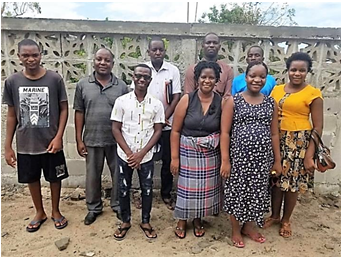
Each month a list of needs is created by the local team of volunteers in Beira (see photo), and those needs which can be funded are agreed. 1 John 3:17-18 Beira then sends the money. At the end of each month a report is received confirming how the funds were used, and providing photographs of the work, ensuring accountability.
The charity currently supports around seventy of the poorest people with food and fuel. We have built more than ten houses for those whose homes were demolished, and repaired many more. We support nursing students, apprentices, and those doing short term courses (IT, electrician, baking). We have provided business loans to around ten people. We have provided nearly a hundred fuel efficient stoves and planted over fifty trees.
Members of Associacao Esperanca Aos Vulneravies
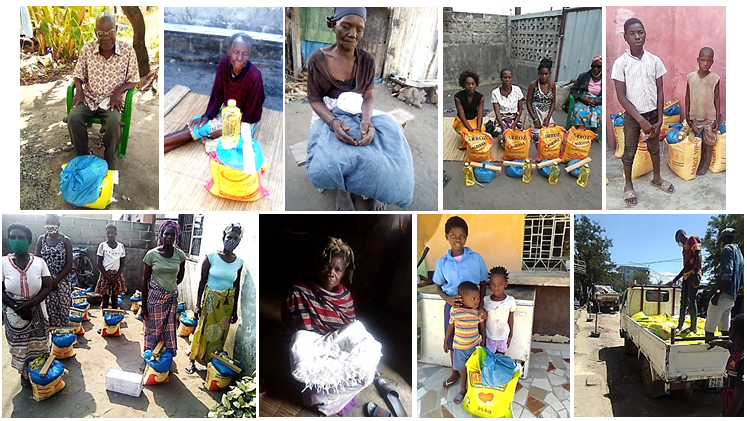
The local team are passionate to improve the chances for the poor. At the most immediate level this involves providing food, fuel and medication for those who simply have no income. Blankets have been given to help keep warm at night in winter. Mosquito nets have been given out too.
Some of the beneficiaries receiving food, oil, soap and blankets
Materials and where necessary labour are provided for repairing houses, adding cyclone protection measures and building new houses where homes have been destroyed. Innovative and environmentally friendly approaches to construction are being investigated, such as using waste plastic bottles as building material.
Education and training, and earning a living
In addition the project is able to make grants for school fees and uniforms, and for training and apprenticeships. These often cost less than £50 each, but give the beneficiary a future.
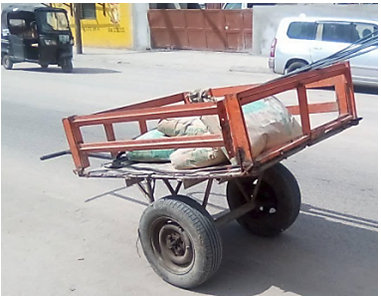
Small start-up business loans are made to pay for initial stock or in one case to buy a small cart to transport goods. Again these loans are often less than £50, and the recipients pay back as they can so that funds can be used for future loans.
Environmental projects that help the community
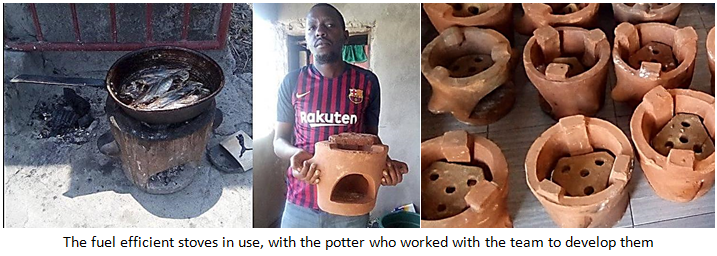
The team have worked with a local potter to design and manufacture efficient cooking stoves which not only save the user money by needing less charcoal, but also reduce CO2 emissions. These cost under £3 each, and are sold to those who can afford them or given freely to those who cannot.
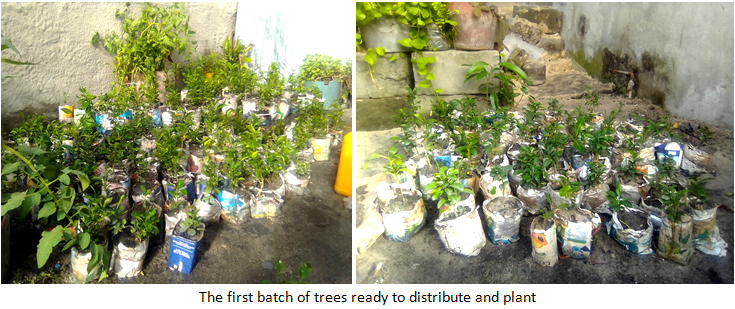
A tree planting project is just beginning, with a first batch of fifty five trees being planted costing a little over £1 each. The local team would love to launch a programme of planting a million trees in Mozambique, in Beira and outside, and engaging pastors to encourage their members to plant trees.
The future
The Associacao Esperanca Aos Vulneravies members continue to identify people with needs, and since the registration of the project there are more people able to help in the work.
In addition to continuing and growing the current work, we would like to provide toilets and drill wells for poorer communities. Many living with HIV refuse to take medication, and so we would like to establish counselling support.
We have reached a state where the funding that we are providing needs to increase to keep pace with the project opportunities, and so we are asking people of goodwill to join us in sending funds to support projects which are making a real difference in the lives of fellow human beings in one of the poorest countries in the world.
If you wish to support the project, please contact us at 1john31718beira@gmail.com
Thank you.
Phil and Cathy Hemsley, and John McCoach. Trustees, 1 John 3: 17-18 Beira
Tackling climate change is not just the job of government. We all have to do our bit. We all have to change our habits, particularly today when renewable energy is insufficient to meet demand and when demand is growing.
Demand is us. Growth in demand is us.
Yes, government can offer grants and subsidies for insulation, for improved heating and for solar panels but we have to take up those offers. And this is one area where the government can and should do more, with pubic information advertising. We need a culture change.
We need to choose low energy foods, locally sources, less meat, less waste.
We need to think before we drive. Every mile we drive causes global warming of ten square metres – is that an incentive to walk, or cycle, or take a train?
We need to think before we fly. Do we really need to go half way round the planet on holiday? Or to that meeting (I know one example of a business trip comprising a flight to Australia, a one hour meeting, a flight straight back. And I was summoned to Brussels for a meeting but was bumped off the agenda). Can we use the train instead, and make that part of the ‘adventure’?
Do we really need to wash our clothes so often, on such a high temperature? Do we really need to wash ourselves so often, on such a high temperature, for such long showers?
Do we really need to heat all of our houses for so long, to such a high temperature?
These are but a few examples.
There is so much that we can do without any detriment to our joy of life, but which will make such a difference. But we need to accept low energy decisions as the ‘norm’.
Can I really buy renewable electricity, or is the whole renewable tariff thing just a political stunt?
It is to an extent political, and it is to an extent how capitalism works.
Starting with how the grid and distribution system works:
Imagine instead of electrons, the grid is a big water reservoir (the power pool). It is essential that the amount of water in the reservoir stays constant. We are on the south side taking out water, so someone needs to put in water to cover what we take out. We used to just buy water from the ‘pool’, but today we have to buy from someone who is putting water into the reservoir. Say we agree with someone on the north side that they will put in what we use. It’s clear that we won’t actually take out the water molecules that they put in. In fact, if someone next to us is putting in water, we will probably actually take out their molecules. But one molecule is the same as another and so it doesn’t make any difference. The point is, we have made an agreement, outside of the reservoir, with someone who is putting water into it. So we might choose a ‘renewable water’ provider (e.g. a rainwater collector) to put water into it, and then we claim that we are using renewable water – it is as if we had a direct pipe from them to us.
But, if we didn’t make that agreement with the rainwater collector, he would still put his rainwater into the reservoir! So what’s the benefit of us making the agreement to buy electricity from him?
Well, he had to invest in his rainwater capture system, and he needs to know that he’s going to get his investment back. If he doesn’t have a specific agreement for the water he captures then he will only be able to sell his water at the price anyone will pay – which may be close to zero! So by choosing to buy ‘renewable water’ we would be allowing him to know that he can safely invest in his new plant and get his money back.
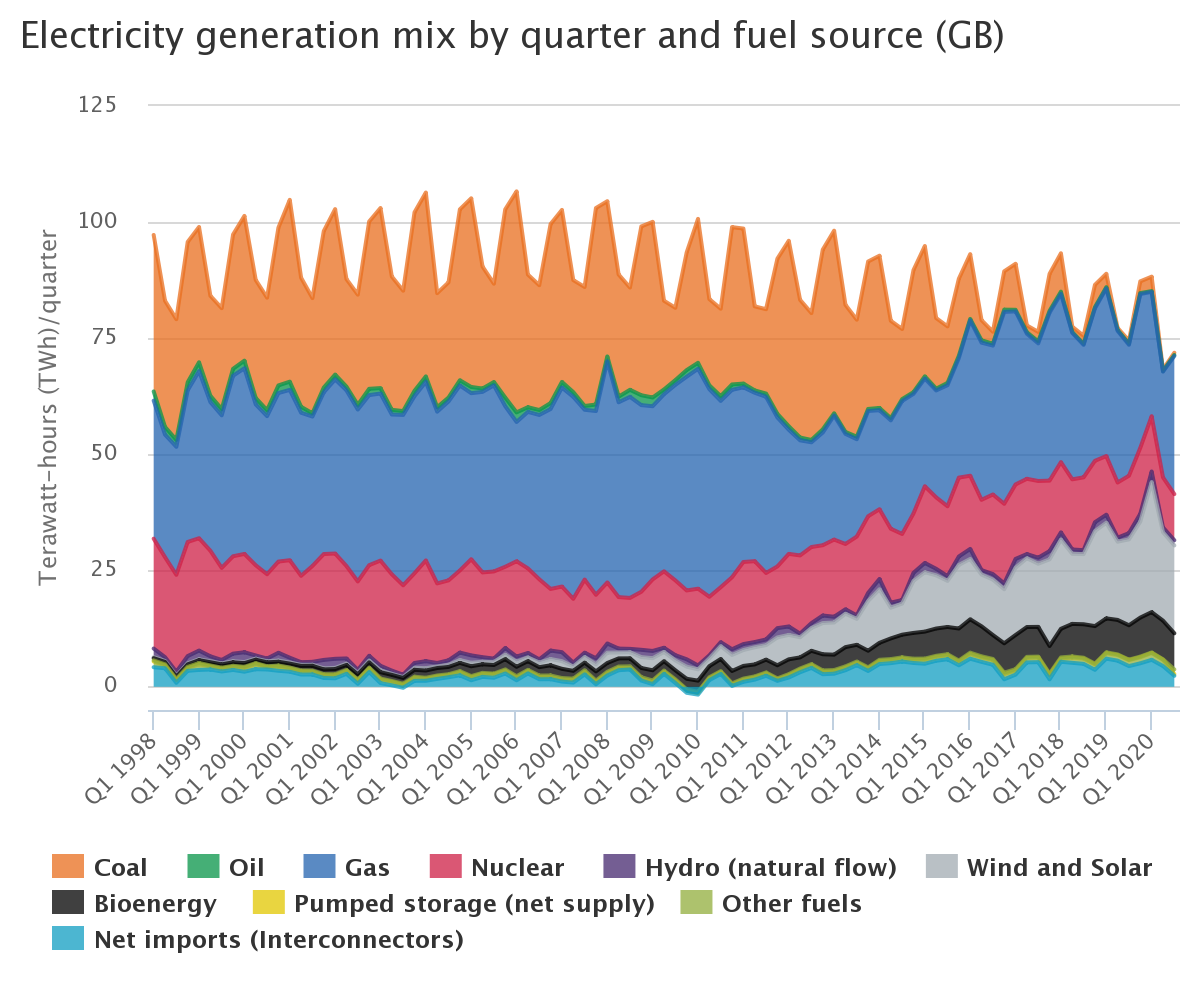
Buying from a renewable tariff is the mechanism whereby politics and capitalism invests in renewable energy. And it seems to be working! The proportion of wind and solar has grown dramatically, at the expense of coal.
So in practice, are we using renewable energy each time we switch on a light?
No, not at all. There would be a certain mix of generation producing the power that everyone else is using before we switch on our light. That would already include all the renewable sources, and ‘carbon free’ nuclear. Every extra kW that has to be generated would come from fossil fuel. i.e. every time we switch on a light, the marginal generation will be the highest carbon producer! Hence we should continue to minimise our usage, even on a renewable tariff.
And it will be the same if we have solar panels and generate our own electricity – every kW that we don’t use will prevent someone else having to use fossil fuel generated electricity so we should still minimise our use.
As the amount of renewables increases though, we may get to the stage where there is no fossil fuel generation at all. When we reach that point, we still need to balance the peaks and troughs of demand but with unpredictable renewable supply. For that reason people are developing ways of storing the overproduced electricity (like if we fit panels, we might fit a battery to save the electricity generated when the sun shines for when we need it). I recently did a bit of consultancy work for a company developing a compressed air energy storage project – a bit like pumped storage at Dinorwig but using compressed air pumped in to vast salt caverns underground.
Another way to store the excess electricity is to convert it through electrolysis into hydrogen gas. And gradually the expectation is that hydrogen will replace natural gas in the grid – hence some organisations who want to fit gas heating are buying ‘hydrogen ready’ equipment. But to my mind, that will be a long way off, and since hydrolysis process is only around 60% efficient, gas must be less energy efficient that direct use of renewable electricity.
Carbon offsetting is again a mechanism whereby politics and capitalism can lead to the right projects going ahead. The route is a bit indirect, and it can be an excuse to keep burning fossil fuels and so it should only be the last resort.
I have been challenged to give an opinion on the lock-down, based on a claim that “99.7% of people recover” (source unknown). A referenced and logically argued study suggests that in fact the death rate is much higher.
But let’s assume for a moment that the death rate is only 3 in every thousand (0.3%).
So, if we were to simply allow the virus to ‘let rip’, and the death rate were only the 0.3% quoted we would see deaths in the over 75s equivalent to two in every thousand of the population.
Deaths from the disease are highly selective. Accepting this situation would be equivalent to sacrificing our over 75’s population. To put the ‘two in every thousand of the population’ into context, roughly two in every thousand of the world’s population are Jews – so this would be equivalent to eliminating all the Jews. Do I need to go on?
Data shows that hospital treatment has improved, with the chance of surviving if hospitalised with Covid increasing from 70% to nearly 90%. Without hospital treatment the death toll would increase between three and ten times. This is why there is so much focus on ‘protecting the NHS’.
If we were to let the virus ‘let rip’ then our hospitals would indeed be overwhelmed and the death rate would conservatively increase by a factor of 3. Using the death rate from my challenger of 0.3% today, that would increase it to about one in every hundred of the population.
Again this would be targeted at the older generation, and equivalent in numbers to eliminating the world’s population of Jews three times over. Or globally that would be equivalent to wiping out the whole population of the United Kingdom.
We have a clear choice.
Either we accept personal restrictions in order to save a category of our population. Or we ‘sacrifice’ that population for the sake of our ‘personal freedom’.
This is something that I completely oppose. And many of our fathers and grandfathers fought and died in the Second World War to destroy a regime which had that approach; I deliberately used the example of the number of Jews to reinforce the point.
I for one am willing to accept some personal sacrifice in order to protect the vulnerable, and those who dedicate their lives to care for those who are vulnerable, and I call on everyone to do the same.
POSTSCRIPT
To be clear – there have been appalling decisions, profiteering and cronyism by those in power. But we must not let such behaviour prevent us from doing what is right. We have to make up for the shortcomings of leadership, but perhaps we might remember this when we next get the chance to choose who will lead our country.
The world is in crisis. It has been for some time, but we have all been too busy to really notice. Maybe we have noticed big obvious things like climate change, or obscene rates of top pay, or housing crisis, but there is so much that is deeply wrong that we have simply not observed it.
Covid19 has given us the time to look. Covid19 has shone a spotlight on so many wrongs, intensifying their effect. It is like a biopsy, and unfortunately the results are not looking good. There are of course many signs of good health, but we need to look for the cancer. Within the UK we see
hypocritical and untrustworthy government
under-equipped NHS
gross inequality
institutional racism – reflected in the higher rates of death among BAME people
the availability of money to pay for things that we deem important
Many of these are seen in more exaggerated forms in the US.
But we are not yet focusing on the global wrongs. You need to look beyond the normal media news outlets to hear what is happening in majority world countries; across Africa, India, Pakistan… In these countries the lockdown is causing more deaths and fear than the virus itself.
What does the world need to do? What do each of us as individuals need to do? There are 5 steps:
We need to recognise what’s wrong – Covid is helping us do that.
We need to take responsibility for it, to own the part that our behaviour has played in it.
We need to repent of that behaviour. To commit that we will apply our energy to changing our behaviour.
We need to receive forgiveness for what we have done and cannot change, to liberate us to make a new start. In the same way that the priest flooded Jean Valjean with gifts and forgiveness in Les Miserables, so Jesus Christ has flooded us with the gift of God’s love and forgiveness. We need to accept this gift to empower us with the determination to live changed lifes.
We need to live out our new commitments
It may all seem daunting, we are just one among billions. But we are not called to be the Cathedral of Love, but to be individual stones in that cathedral. We each have our part to play in the great and glorious endeavour.
Across the country, philanthropists in previous generations established charities to help the poor. If you search the charity commission website for the name ‘poor’ you will find many of them. Many have run their course and fulfilled their purpose, but others are sitting on literally £millions of assets, and generating income in excess of their giving.
From the charity commission published information, in my town alone there is one charity which has assets of £1.75 million, including £300 thousand in ‘cash’. In 2018 it had income of over £110 thousand, giving away just over half of that (£55 thousand) at a cost of running the charity of £23 thousand. Every year on record the income has exceeded what they have given away.
Another has current assets of £680 thousand, and an income of around £30 thousand per year. In 2019 it gave away £8 thousand.
Each of these charities has a board of trustees, and I’m sure that they are well-meaning people but surely it cannot be right that charities that are supposed to be helping the poor are year on year increasing their assets – particularly through years of deep austerity. Why is nobody holding these charities to account?
Probably one problem is that few people know these charities exist; I’ve not seen any of them advertising, and so how does someone in need know that they are there to help? And if someone is aware of them, do they know how to apply for help and is the process transparent and easy?
There is a line in a Pratchett film which runs something like “the thing about saving for a rainy day is that you have to recognise when it’s raining”. Looking at the past ten years or more of austerity, I think we can say it’s been raining for some time now; and with the current Covid 19 crisis we might say that we have a torrential downpour. Surely it’s time for such charities to proactively fulfill their purpose and give away their savings?
And who knows, if they begin to do a good job in really helping those in need they might find that those who have money to spare might actually donate to the charities to support their work? But as things stand, this seems to be almost a scandal.
Can we do anything to help? If nothing else, we can have a look at the charity commission list, see who operates in your area, and let people know that these charities exist.
The primary environmental crisis today is the accelerating effect of CO2 emissions on climate change and global warming. To address this issue we need to put less CO2 into the atmosphere and we need to capture more carbon.
Plastic has a high carbon content and takes hundreds of years to biodegrade (a process that needs oxygen). That is why we don’t like it – little bits of plastic are getting everywhere and littering the world for hundreds of years to come.
There are vast empty caverns underground where we have in the past and continue to extract coal for fueling our power needs.
So surely part of our solution is to capture all our waste plastic, and put it underground – in the mines where we have extracted the coal. Having taken carbon out, we put carbon back.
This is potentially more powerful than recycling plastic, simply because recycling leaves the carbon that would have been used to make new plastic available for power production and CO2 emission.
It is also potentially more powerful than eliminating plastics and replacing with fast degrading packaging, particularly if the replacement packaging takes more energy to produce, or allows more product waste.
Finding a new use for disused coal mines could revitalize regions devastated (in the UK) by Thatcher.
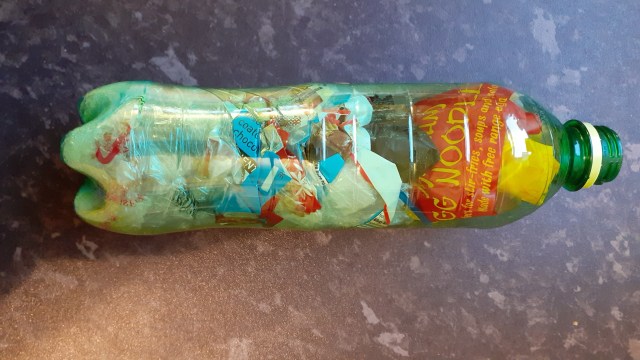
We could use plastic recycling networks to gather the plastic, but we would need to public to fully engage with capturing their plastic and not allowing it to litter. A start would be to compressing all our plastic sheet waste in plastic bottles.
Pictures of the burning Amazon rain-forests are horrifying enough to bring despair. Surely the world is doomed unless they stop!
Easy to say, isn’t it. And I have found myself responding like that to the media attention. But is that really the situation? Is this just a smokescreen (no pun intended) to distract attention from deeper problems? Let’s see if we can find the facts:
Carbon uptake in the Amazon is important. The following article https://phys.org/news/2017-02-carbon-uptake-amazon-forests-region.html points out that the carbon captured by the Amazon rainforests is equal to “four times the UK emissions for 2016”. It is also equivalent to emissions in the region. The nations of the Amazon are carbon neutral!
The entire combined emissions from deforestation and fossil fuels from the nations in the Amazon is only four times the emissions of the UK. UK emissions are about 1% of global emissions. https://www.ucsusa.org/global-warming/science-and-impacts/science/each-countrys-share-of-co2.html . China emissions account for 28% of global emissions. The same site shows the emissions per person, with the top few being Saudi Arabia, USA, Australia and Canada at over 15 tonnes per person per year. By contrast Brazil emits 2.17 tonnes per person. France (with reference to comments from M Macron) emits twice that – and remember that France has a lot of nuclear power.
Clearly the countries of the Amazon are not the culprits in producing carbon emissions. But consider why they are burning the forest. They want to improve their standard of living, fulfilling a market ‘need’ for food. And which capitalist country can argue with that? Why do they want to improve their standard of living? Because they are nowhere near the top. Brazil ranks 62 in the quality of life index. UK ranks 18th and USA 13th. https://www.numbeo.com/quality-of-life/rankings_by_country.jsp
So the scale of the problem is small compared to the global emissions of the rest of the world, and the reason for the burning of the forests is to improve the standard of living of the population in the only way possible in the capitalist culture of the modern world.
And things have improved considerably in recent years. Deforestation in the Amazon is roughly a third of what it was at the turn of the century: https://rainforests.mongabay.com/amazon/deforestation_calculations.html and is ‘reasonably’ stable at around 80% of the 1970 levels. This is not to say it is not important, but that perhaps most of the damage has been done.
If we in the west value the contribution that the rain-forests make to the world then we should pay for it. We should not be sanctioning, or even threatening to invade (which I saw suggested on one site). We pay for oil, which we then use to produce CO2 for our comfort, so we should pay those who capture our carbon.
In fact, there are mechanisms in place if we are willing to put our money where our concerns are, then we can each do something to reduce deforestation. Here is one example: https://www.carbonfootprint.com/brazil_para_redd.html. Why not commit to offset all your personal emissions in this way? And before you ask, yes, I have – my emissions for the last 35 years.






 Thoughts from a Minimalist Christian