Why I will be voting to remain in the EU.

The result of the vote is likely to have little or no impact on me personally, so why do I come across as passionate that we should stay in?  Because I care deeply about the wellbeing and spiritual health of all in our nation.

The current suffering of the poorest in our society has absolutely nothing to do with the EU, but everything to do with the UK government’s austerity program and with the culture of inequality that is peddled by the press and protected by the wealthy.  It is within our nation’s power to deal with this today – irrespective of whether we are in or out of the EU.  The ‘out’ campaign put the blame for the current difficulties on immigration and ‘Jonny Foreigner’.  This creates anger, tribalism and hate in the hearts of those who listen to their message.  I do not want our nation to move further in that direction.

The claims from both sides that Britain will be better off ‘in’ or ‘out’ are all speculation. Nobody knows how other nations will respond, what the markets will do, or any of the other predictions.  Of course, the ‘out’ campaign can claim that things will be better than they are today, and in response all that the ‘in’ campaign can say is that they will be worse.  In the present austerity regime, the ‘out’ offers an end to the pain, in the same way as the National Lottery offers a way out of financial troubles – and you don’t even have to buy a ticket, just tick the right box.  And in the same way that the lottery takes money from the poorest with the promise of wealth, the out campaign is appealing to the poorest with the promise of a wonderful future.  This is manipulative, and I will not support a group of people who use such tactics.

We are currently governed by a party that was elected by 25% of the nation (we call it democracy), composed of the privileged class.  Without hindrance from the EU they are introducing policies that do not consider the personal pain of the poor.  The most extreme members of this group are the ones that want us to leave the EU.  I ask why, and the answer is simple – they don’t want the EU to constrain their policies with any social justice laws and regulations.  They want to be unfettered in pursuing their personal agendas.  I do not want to see these people given completely free reign in this county.

And finally, the whole question is causing people to ask ‘what is best for me’, whereas I would rather see people to ask ‘what can I do to help my neighbour’.  I want the leaders of our nation to encourage us to be more moral in our thinking, and yet the in/out debate is a perfect example of our politicians appealing to the basest emotions that we have.  So I advocate: “Vote to stay in Europe, stop listening to the rantings on the politicians, and get on with loving and caring for your neighbour, near and far”.


brexit

How each of us can help the poorest find somewhere to live

Here’s an article I wrote, just published in Church Times:

https://www.churchtimes.co.uk/articles/2016/29-april/comment/opinion/use-what-power-you-have-to-help-the-poor

A Christian way to stimulate the economy.

Economic growth is seen as a good thing.  More economic activity generates more taxes and so allows the government more money to spend on healthcare, education, and welfare.  Society benefits from extra spend on these issues.

But forecasters say that economic growth is low and predicted values are reducing.  It is the government’s responsibility to try to improve economic growth.

The present chancellor also believes that it is beneficial for the government to ‘balance the books’.  In the 2016 budget the chancellor has said that it will be more difficult to ‘balance the books’ because ecomonic growth has slowed down.  He then goes on to propose tax reduction for the better off, and to reduce benefits to the poorest and most vulnerable. In proposing these policies, he is either ignoring or unaware of a fundamental principle:

If the poor have more money, they will spend it.  They need to buy the essentials – food, clothes, rent.  This puts money into the economy, which then grows.

If the rich have more money, they will save it.  They have no basic needs, and fear being poor in the future.  This removes money from the economy and growth slows.

If we follow the basic Christian principle of giving money to the poor, we stimulate the economy and things get better for everyone.  And you don’t have to be a Christian to do it.

The chancellor refuses to do this on our behalf, which makes it more difficult.  But if you have more money than you need, give some to the poor.

Here are some ways to do this:

  • If you are a landlord, charge less rent
  • Pay your taxes, and don’t look for tax loopholes
  • Leave bigger tips at restaurants,
  • Give to anyone who asks
  • Employ people instead of DIY, and pay a fair amount
  • Give to charities that help the poor and needy
  • Give to foodbanks
  • Financially support someone less well off than you are

Give it a try.  You will feel better for it, and it will make a difference.

God is fair, the economy isn’t, we can do our bit.

Mankind has established a system that breeds injustice. Wealth sucks money from the poor. Those with money enjoy luxury whilst those without struggle to survive.

God is not like that. He is just and fair. The Apostle Peter writes, “This faith was given to you because of the justice and fairness of God”. Faith is available to all, rich or poor.

God is fair. “He gives his sunlight to both the evil and the good, and he sends rain on the just and the unjust alike.” In God’s kingdom, rich and poor are treated fairly.

God is just. In God’s kingdom rich and poor will receive the justice they deserve.

The poor will receive justice for suffering under the unfair economic system of this world. But the actions of the rich sustain that system.

It is so ingrained in our culture to maximise our income that we forget that the more we gain we gain the more someone else loses. Let’s remember.

Let’s question each financial decision to make sure it will reduce the unfairness of the system:  Does it move money from the poor to the rich, or does it help the poor?

“Looking at the man, Jesus felt genuine love for him. “There is still one thing you haven’t done,” he told him. “Go and sell all your possessions and give the money to the poor, and you will have treasure in heaven. Then come, follow me.” At this the man’s face fell, and he went away sad, for he had many possessions. Jesus looked around and said to his disciples, “How hard it is for the rich to enter the Kingdom of God!”

It is hard to go against the flow, but if we choose to reinforce an unfair monetary system, why should we expect to escape justice?

Inequality between the richest and the poorest is man-made

Inequality between the richest and the poorest is a man-made thing. Men have put it in place. Men defend it. Men can dismantle it.

A young person on a modern-day apprenticeship (learning skills that will make a day-to-day difference in our lives) earns just £3.30 an hour, £6300 a year. The starting salary for a banker (who shuffles money around whilst taking a percentage) is in the range of £35000 a year? Is that just?

Is it good that “the rich are 64% richer than before the recession, while the poor are 57% poorer”?

Where do you sit on the UK income scale?

  • If you earn less than £10000 you are in the bottom 5%
  • If you earn more than £21000 then you are in the top 50%.
  • If you earn more than £35000 (starting salary for a banker) then you are in the top 25%.
  • If you earn more than £68000 you are in the top 5%.

If it is right and just that the top 5% earn over ten times more than the lowest paid, then let’s enjoy our position.

If not, then let’s ask ourselves what we can do to make a difference.

And let’s make a new year’s resolution to start to make that difference.

References:
https://www.gov.uk/national-minimum-wage-rates
http://www.prospects.ac.uk/corporate_investment_banker_salary.htm
http://www.independent.co.uk/news/uk/home-news/britains-divided-decade-the-rich-are-64-richer-than-before-the-recession-while-the-poor-are-57-10097038.html
https://www.gov.uk/government/statistics/percentile-points-from-1-to-99-for-total-income-before-and-after-tax

How YOU can help achieve affordable rent

Rents are too high. A single person over the age of 21 on minimum wage of £6.50 an hour will earn around £1000 a month, less deductions. Even with the lowest rent prices, half of that will go on rent leaving around £120 a week for everything else.

Here’s a painless way to get rent down. It just needs some visionary people with a little capital to decide to do something about it.

Here is an example:
£60,000 invested in a building society or bank will be doing well to make 3% interest (although a ‘help to buy’ ISA can give 4%) e.g http://www.halifax.co.uk/savings/?WT.ac=SNCA1012

Therefore a good (4%) return on that £60,000 is £2400 a year, or £200 a month.
If we are happy with a 4% return on our savings, then why not but a property and rent it out at the same return?

The cheapest (1 bedroom) property available today is £395 a month. http://www.rightmove.co.uk/property-to-rent/property-56267795.html

There is a flat for sale in Rugby for £60,000. (http://www.rightmove.co.uk/property-for-sale/property-54091703.html?premiumA=true )

Using the £60,000 to buy the property, we could charge a very fair rent of (say) £250 a month, offering a low rental price and getting a very good return on the investment. (£250 instead of £200 to include an allowance for maintenance and fees)..

This represents a saving of a third on the lowest rental cost, and would give someone on low income the chance of an improved standard of living, and maybe even the chance to save enough to put down a deposit on a house of their own.

And all of this giving the same (or better) return that we get from the building society. Maybe there is a little more risk – but there is the benefit of doing something personally to help the current difficult situation for the poor in our town.

If enough of us do this, then it might even cut the overall rental market price (supply and demand!) with wider benefits.  I know that not everyone can help in this way, but some can, and it makes a difference to each person who is helped.

If you are interested and want to take it further, I’m happy to share my experience so far (I have made use of a legacy from when my mother died to do this). Please get in touch privately.

rent

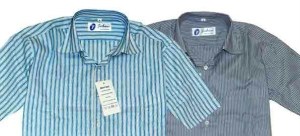
Two shirts at Christmas?

Friends on Facebook know that I often share posts highlighting injustice.  And I have written blog posts prompted by claims that ‘austerity’  is working.  But in the face of injustice, with a government that shows no sign of compassion, and with years to the next general election, doesn’t this just breed despair and helplessness: “It’s too big a problem, and what can a single human being do to change things?” So why do I speak out about injustice?

  • To grumble and whinge?  No
  • To cry out for change? Yes
  • To educate that it is indeed injustice? Yes
  • To encourage readers to ask “what can I do?” Definitely.

Many years ago a wise man said “If you have two shirts, give one to the poor. If you have food, share it with those who are hungry.”   He was speaking in a time of great injustice, under a government that brooked no dissent.  There was no changing the system, but he was calling every person to make a difference.  He was challenging the culture of the day.  That is what I hope to achieve.

I choose not to follow the culture of self-interest and greed endemic today, where we are expected to make all decisions on the basis of maximising our personal income. I try to make life decisions on what is good and right, and that includes recognising that I have “two shirts”.  I long for the wealthy to recognise the same.

But where does the strength come from to be counter-culture?  It does not come from the media, or from political leadership.  It comes from the one that the wise man served.

Do you want to make a difference?  Then begin.  Choose goodness.  Choose love.  Transfer your allegiance from the culture of selfishness to the one who is supreme goodness; the one whose birthday the world is celebrating.

Have a great Christmas!

two shirts

“Je suis Nigerian”

They may not be white Europeans, and they may have done nothing to provoke the attack, but is it any less horrific?  Can the world do nothing to help?  Let us at least show that we care:  #jesuisnigerian

http://www.independent.co.uk/news/world/africa/nigerias-forgotten-massacre-2000-slaughtered-by-boko-haram-but-the-west-is-failing-to-help-9970355.html

http://www.vox.com/2015/1/10/7525199/nigeria-boko-haram-attack

http://www.aljazeera.com/news/africa/2015/01/boko-haram-massacre-toll-possibly-2000-201511004229409787.html

“Here, there be dragons”

Centuries ago many people used to live their entire lives within a few miles of where they were born. Occasionally travellers would pass through with tales of far-away places which held wonders, treasures and maybe ‘dragons’. But few would dare cross the borders surrounding their small world of familiarity.

Dragon-Linda_BlackWin24_JanssonNowadays many people again live their entire lives within a relatively small environment. Maybe it is not physical, since modern transportation puts the whole world within reach, but I’m speaking of relationships, culture and spirituality.

Our sphere of friends is gathered through encounters where we like to pass our time: work, the sports club, the toddler group or school, the pub. We meet like-minded people in comfortable environments and put down roots there. Occasional travellers pass through with tales of other lifestyles: we get peeps at them on the TV reality shows, a foreigner might join our band, or a tragedy might move us out of our comfortable world. But “few dare cross the borders of their small world of familiarity”, and most will lobby to maintain their personal utopia.

We understand how the world works through what we have learned through personal experience, the media and common sense.  With our Western worldview glasses we know such things as: the economy has to be healthy, everyone should be educated and democracy is the only system that works. And of course we should all have rights, to health, happiness and freedom, particularly freedom of speech. We seldom stop to question the basis on which we have decided that all of these ‘truths’ are correct. When we hear tales of other cultures we are fearful that they will invade our territory and bring unimaginable horrors and suffering.

But perhaps we are most fearful of uncharted spiritual seas. England used to be a Christian nation, although deeply divided between Protestant and Catholic, but has largely come to believe in Scientism; the religion that science can explain everything. It can be comforting to think that science can tell us why Grandma died, and to hope that in the future cancer will be conquered. Occasionally we will hear tales of a spiritual realm, something that is not simply made of ‘stuff’, and strangers will speak of God and tell us that we have a ‘soul’. A frequent response is to ignore such ramblings, or to accept that such things may be ‘okay’ for them, but I’m quite happy in my own ideas thank you very much.

Secretly, if we are bold enough to ask ourselves, we will admit that our small-world outlook is largely driven by fear. We are afraid that we will lose our basis for life, even if it doesn’t seem to be working too well for us at the moment. We would love to befriend those in different circles, experience different cultures, and reach a satisfying understanding of who we are spiritually; we yearn to find our soul and our purpose.

It is the beginning of a new year: 2015. Two thousand and fifteen years after a special baby was born. Who as a man spoke strange tales of a spiritual realm and a God. A man whose words gave us a rock to build our lives on. A man who willingly allowed himself to be crucified to show that death could not hold him – or us. A man who Christians call God. Perhaps it is time to take our courage in our hands and explore this strange new land? Many have gone there before, but few have returned with tales of dragons! Instead, they come back with stories of hope and fulfilled purpose; the promised land. Shall we go?

War, religion, God, and why I write

I remember a discussion soon after I became a Christian where I was asked “so what about all the other religions?”  My reply was that they were simply mistaken.  I think the remark was taken to be rather arrogant.

I read the news today. I see the conflict, anger and fear; fighting between Moslems of different sects.  I see forced imposition of religious dogma; conversion to another religion punishable by death.  We all know that this is not as it should be. And I am reminded of my reply.

Reason and evidence tells me there is a God, and my whole being tells me that love is our ultimate purpose.  And when I find that love underpins and is at the heart of Jesus teaching I begin to see how it all fits together; how we are meant to be.

If I were God and someone from another religion was praying to me, I would not ignore them because they think I have a different name, I would not condemn them because they don’t understand my intentions for them.  I would be saddened that they are misled, I would try to teach them, and I would restrain some of their actions, but I would still love them.

As a mere human trying to follow God’s purpose, I don’t hate the Muslims, or even the Westborough Baptists, but I believe they are misled and mistaken.  I hate what they do, and I want them to stop.  I want them to understand the truth, and find their real purpose.  I want that for everyone.

If we all really understood Christ’s teaching, if we really loved God with all our heart, and loved our neighbour as ourselves, if we really were ready to forgive others and restore broken relationships we know that the world would be a better place.

That is why I write.  That is why I follow Christ.  That is my purpose.

What is yours?