We are all the same

A doctor has the resources to help those who are injured or unwell, to make them comfortable and to set them on the path to healing and recovery.  Would it be wrong for a doctor to walk past a person injured and dying on the street and do nothing to help, even if the doctor didn’t know them or like them? 

We know it would be wrong for a doctor to not do what they were able to help someone who is suffering severely or dying through sickness or injury.  Yet doctors are only people like us so it must also be wrong too for us not to help someone who is dying through – for instance – malnutrition, or lack of clean water, or military oppression even if they are not on our doorstep.  It would be wrong of us not to make room in our country for those who would die from war or persecution in their home country.

Let’s not shirk our responsibilities to our fellow human beings.  Let’s remember that every single person is equally valuable and worthy of our love and care and do what we can to help and accommodate them. When we fall short of doing all we can, let’s recognise that that is our shortcoming.  Let’s not justify our inaction by claiming that they are somehow inferior to us, and that we ‘don’t want them here’.

1 John 3:17-18 Beira

In March 2019 Cyclone Idai devastated much of Mozambique.  Local contacts identified that despite humanitarian relief being provided by major aid agencies many people were missing out – particularly the elderly – and in desperate need of help.  Privately sent funds were used by the team in Beira to provide emergency food hampers and water, and then to help repair and rebuild houses. This work highlighted the ongoing need for financial help.

In view of the clear and ongoing need and opportunity, and to build on this initial successful partnership, in the UK we established the charity “1 John 3:17-18 Beira”, and in Mozambique our partners have registered their project with the government: “Associacao Esperanca Aos Vulneravies” (Hope Association for the Vulnerable).

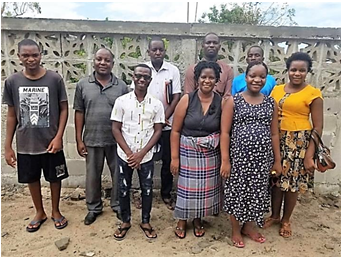
Each month a list of needs is created by the local team of volunteers in Beira (see photo), and those needs which can be funded are agreed.  1 John 3:17-18 Beira then sends the money.  At the end of each month a report is received confirming how the funds were used, and providing photographs of the work, ensuring accountability.

The charity currently supports around seventy of the poorest people with food and fuel.  We have built more than ten houses for those whose homes were demolished, and repaired many more. We support nursing students, apprentices, and those doing short term courses (IT, electrician, baking). We have provided business loans to around ten people. We have provided nearly a hundred fuel efficient stoves and planted over fifty trees.

Members of Associacao Esperanca Aos Vulneravies

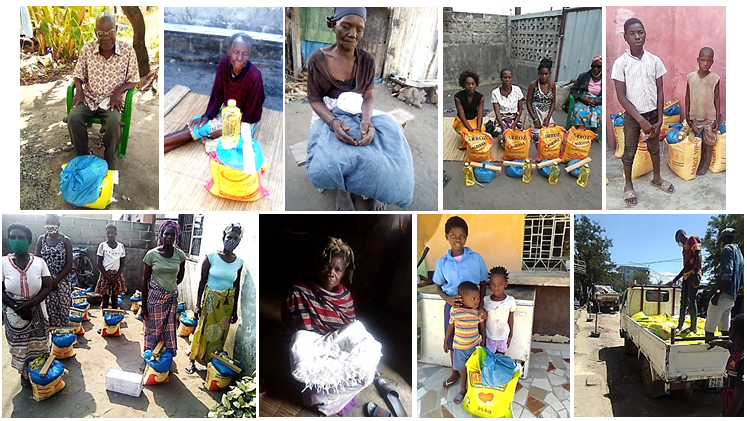
The local team are passionate to improve the chances for the poor.  At the most immediate level this involves providing food, fuel and medication for those who simply have no income. Blankets have been given to help keep warm at night in winter. Mosquito nets have been given out too.

Some of the beneficiaries receiving food, oil, soap and blankets

Materials and where necessary labour are provided for repairing houses, adding cyclone protection measures and building new houses where homes have been destroyed.  Innovative and environmentally friendly approaches to construction are being investigated, such as using waste plastic bottles as building material.

Education and training, and earning a living

In addition the project is able to make grants for school fees and uniforms, and for training and apprenticeships. These often cost less than £50 each, but give the beneficiary a future. 

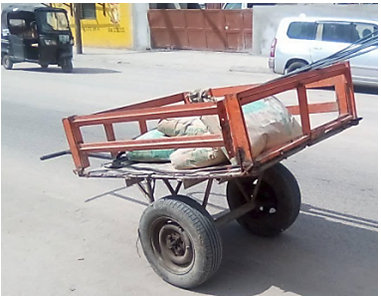
Small start-up business loans are made to pay for initial stock or in one case to buy a small cart to transport goods.  Again these loans are often less than £50, and the recipients pay back as they can so that funds can be used for future loans.

Environmental projects that help the community

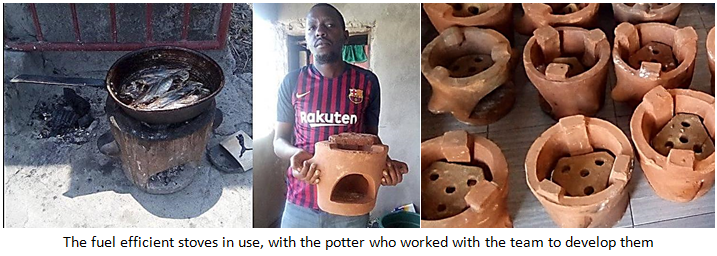
The team have worked with a local potter to design and manufacture efficient cooking stoves which not only save the user money by needing less charcoal, but also reduce CO2 emissions.  These cost under £3 each, and are sold to those who can afford them or given freely to those who cannot.

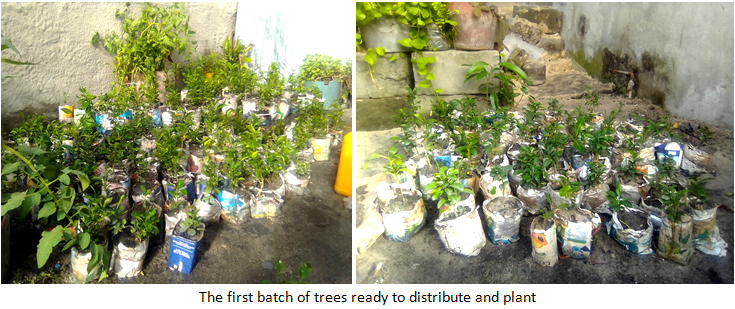
A tree planting project is just beginning, with a first batch of fifty five trees being planted costing a little over £1 each.  The local team would love to launch a programme of planting a million trees in Mozambique, in Beira and outside, and engaging pastors to encourage their members to plant trees.

The future

The Associacao Esperanca Aos Vulneravies members continue to identify people with needs, and since the registration of the project there are more people able to help in the work. 

In addition to continuing and growing the current work, we would like to provide toilets and drill wells for poorer communities.  Many living with HIV refuse to take medication, and so we would like to establish counselling support.

We have reached a state where the funding that we are providing needs to increase to keep pace with the project opportunities, and so we are asking people of goodwill to join us in sending funds to support projects which are making a real difference in the lives of fellow human beings in one of the poorest countries in the world.

If you wish to support the project, please contact us at 1john31718beira@gmail.com

Thank you.

Phil and Cathy Hemsley, and John McCoach.  Trustees, 1 John 3: 17-18 Beira

Our role in tackling climate change

Tackling climate change is not just the job of government.  We all have to do our bit. We all have to change our habits, particularly today when renewable energy is insufficient to meet demand and when demand is growing.

Demand is us.  Growth in demand is us.

Yes, government can offer grants and subsidies for insulation, for improved heating and for solar panels but we have to take up those offers.  And this is one area where the government can and should do more, with pubic information advertising.  We need a culture change.

We need to choose low energy foods, locally sources, less meat, less waste.

We need to think before we drive.  Every mile we drive causes global warming of ten square metres – is that an incentive to walk, or cycle, or take a train?

We need to think before we fly.  Do we really need to go half way round the planet on holiday?  Or to that meeting (I know one example of a business trip comprising a flight to Australia, a one hour meeting, a flight straight back.  And I was summoned to Brussels for a meeting but was bumped off the agenda).  Can we use the train instead, and make that part of the ‘adventure’?

Do we really need to wash our clothes so often, on such a high temperature? Do we really need to wash ourselves so often, on such a high temperature, for such long showers?

Do we really need to heat all of our houses for so long, to such a high temperature?

These are but a few examples.

There is so much that we can do without any detriment to our joy of life, but which will make such a difference.  But we need to accept low energy decisions as the ‘norm’. 

The Secret £millions

Across the country, philanthropists in previous generations established charities to help the poor.  If you search the charity commission website for the name ‘poor’ you will find many of them.  Many have run their course and fulfilled their purpose, but others are sitting on literally £millions of assets, and generating income in excess of their giving.

From the charity commission published information, in my town alone there is one charity which has assets of £1.75 million, including £300 thousand in ‘cash’. In 2018 it had income of over £110 thousand, giving away just over half of that (£55 thousand) at a cost of running the charity of £23 thousand. Every year on record the income has exceeded what they have given away.

Another has current assets of £680 thousand, and an income of around £30 thousand per year. In 2019 it gave away £8 thousand.

Each of these charities has a board of trustees, and I’m sure that they are well-meaning people but surely it cannot be right that charities that are supposed to be helping the poor are year on year increasing their assets – particularly through years of deep austerity.  Why is nobody holding these charities to account?

Probably one problem is that few people know these charities exist; I’ve not seen any of them advertising, and so how does someone in need know that they are there to help?  And if someone is aware of them, do they know how to apply for help and is the process transparent and easy?

There is a line in a Pratchett film which runs something like “the thing about saving for a rainy day is that you have to recognise when it’s raining”.   Looking at the past ten years or more of austerity, I think we can say it’s been raining for some time now; and with the current Covid 19 crisis we might say that we have a torrential downpour.  Surely it’s time for such charities to proactively fulfill their purpose and give away their savings?

And who knows, if they begin to do a good job in really helping those in need they might find that those who have money to spare might actually donate to the charities to support their work?  But as things stand, this seems to be almost a scandal.

Can we do anything to help?  If nothing else, we can have a look at the charity commission list, see who operates in your area, and let people know that these charities exist.

How should we respond to climate change? – A Christian perspective

The earth’s climate has seen dramatic change. Four and a half billion years ago, the earth was formed.  Its atmosphere had massively high levels of carbon dioxide, and there was very little oxygen.  Miraculously, life originated in this extremely hostile environment, and for the next one and a half billion years or so the cyanobacteria began cleaning up the atmosphere and enriching it with oxygen and allowing the formation of the protective ozone layer.

Over the next two billion years the beautifully designed process of evolution took those earliest forms of life and developed them into the staggering array of life that we take so readily for granted today.   Darwin hinted at the beauty of the process in the final paragraph of his book “the origin of species” when he wrote “There is grandeur in this view of life, with its several powers, having been originally breathed into a few forms or into one; and that, whilst this planet has gone cycling on according to the fixed law of gravity, from so simple a beginning endless forms most beautiful and most wonderful have been, and are being, evolved.”

So it is clear that man-made climate change will not destroy the planet, nor will it extinguish life.  But it will disrupt the extremely finely balanced ecosystem that sustains the human race.  That disruption will enlarge areas of local extinction of humans (desert regions), and in the extreme the whole planet could become unsuitable for human life.  Whilst wealthy countries are able to create local ‘microclimates’ with technology, for example air conditioning, people sentenced to live in the ‘natural’ local climate will inevitably suffer and may face extinction.  We already see an increase in suffering from natural disasters such as the cyclone Idai, and other increasingly destructive climactic events.

Greater parts of the world will become uninhabitable not just for humans, but for the cornucopia of other species who thrive in the environment that spawned us.  New species will emerge, but many of our present ‘friends’ will disappear.

The first book of the Bible describes how we were given the world to look after.  It is clear from the description above that if we don’t look after it then it will not be taken away from us, but we will be taken away from it.  This is reminiscent of the description of Adam and Eve being taken away from the Garden of Eden: the garden still thrives, but they were no longer in it.

God allows us to do things that harm us.  He doesn’t want us to, but he allows it.  Such action is called sin.  The basis of the Old Testament law was that God gave us rules that would bring us wellbeing, but our selfishness leads us to choose ways that harm ourselves and others.  Greed, lust, envy, and all the ‘sins’ damage both us and our neighbour.  Climate change is damaging to us and to our neighbour, and so the actions that leads to climate change are ‘sin’.  God permits us to damage the planet that sustains us, but it is not His will.  And disobeying the will of God is sin.  It is not good for us to do it!

There is not space here to fully discuss how we, through our actions are hurting God themselves, but we might empathise by imagining how we would feel if after giving a loved one a beautiful gift – perhaps a bunch of flowers,  we see them slowly trashing it, picking off one petal at a time.

So, how should we, as Christians, respond to the challenge of climate change?

First of all, we must recognise that it is real! (see for instance https://climate.nasa.gov/effects/)

Climate change is not the sin, but the consequence of our sin.  We need to reflect on what sins are the root cause of climate change.  Greed, selfishness, gluttony, envy will be high on our list, but a thorough examination of our lifestyle (in the context of and comparison with the other seven and a half billion people on the plant) must bring insight.

We then need to ‘repent of our sins and turn to God’.  There is surely enough evidence that we know that we are sinning, but we need to let the evidence sink into our hearts and truly convict us before we can honestly repent.  Until we reach that state then we might feel a little guilty but we will not have the power that comes from true repentance.  We need to be so convicted that we get on our knees, confess, and ask for forgiveness.

We must work with God to eliminate our sinful behaviour. We will need to be bold, counter-cultural and outrageously attractive in our approach.  We are Christ’s representatives, and our response has to mirror his character. And we must encourage our brothers and sisters to do the same.  Not only must we turn from our damaging practices, but we must do our utmost to relieve the suffering of those whose homes and livelihoods are ruined by the changing climate.  A radical change in our lifestyle must include loosening our grip on our wallets.

For example, we need to ask ourselves why we need to go to America, or China, or Australia for our holidays, for a speaking engagement, or for work.  99% of the world’s population cannot afford these luxuries – and yet many are closer to God than we are.  http://www.globalrichlist.com/

We have to challenge every decision of where we spend our money.  Should we always buy the cheapest, or should our buying decisions be made to minimise planetary damage?

We can make reparation for the damage caused by our personal sin.  We can ‘offset’ our carbon emissions, for example “Climate Stewards helps you to offset unavoidable carbon emissions by supporting community forestry, water filter and cookstove projects in the developing world”.  Some are beginning to do this for holidays or the odd long haul flight, but that is surely just lip-service.  Should we not examine our carbon emissions over our lifetime and offset them?  (see https://www.climatestewards.org/) At only £20 a tonne, many of us are in the privileged financial position to be able to do that.  There is real potential for tree planting projects to ‘buy some time’: https://www.sciencenews.org/article/planting-trees-could-buy-more-time-fight-climate-change-thought.  And churches can do the same, committing to offset past energy usage and adding carbon offset as a statutory spend each year.  It is much easier if we all make the commitment together.  Leadership from our Bishops can help here.

Those of us who live comfortably in brick houses in rural England can send financial assistance to those whose pole and dagga houses are swept away by floods or typhoon. (see https://www.christianaid.org.uk/emergencies/south-asia-floods-appeal)   As James says:  “Suppose you see a brother or sister who has no food or clothing, and you say, ‘Good-bye and have a good day; stay warm and eat well’—but then you don’t give that person any food or clothing. What good does that do?  So you see, faith by itself isn’t enough. Unless it produces good deeds, it is dead and useless.”  Communication is so good that we see our ‘brother or sister who has no food or clothing’ daily on our TV’s or computer screens.

We will of course fail to live up to our aspirations, but we can try. And when we fail, God’s grace will free us to try again.

And finally a thought about our legacy.  The younger generation are worried.  Environmental issues are at the top of their concerns.  And the younger generation tend not to know Christ.  We have a wonderful opportunity to bring them hope, both for a world to live in and from a God who loves them.  That is a far better legacy than bequeathing a scorching earth that is hardly able to sustain human life.

Let us be at the forefront of change, not dragging our feet but leading the way to a sustainable future.

More than a General Election

8th June 2017 was so much more than just a General Election.  I am writing this on June 9th with a joyful heart.  I give thanks that Love, Joy, Peace, Kindness, Gentleness, Faithfulness, Patience, Goodness and Self Control are not dead. But I am also aware that neither are hatred, anguish, fear, selfishness, aggression, betrayal, impatience, evil and knee-jerk responses.

The things on the first list are “the fruit of the spirit”, those on the second list are natural human responses to situations.  We have all experienced both lists – giving and receiving – and we know that the first list brings life, the second brings despair.

I have learned that the first list is not just fruit of the spirit, it is God within us– whether we recognise it as him or not.  God is love, and love is God.  God is joy and joy is God….  When we experience love, we are experiencing God.

The second list describes the absence of God.  Hatred is the absence of love, anguish is the absence of peace…

Yesterday showed that God is still present in us.  But it also showed that we can behave in very selfish ways. Many of us have selfish habits and responses that we cannot control, and think that we cannot get rid of.  Believe me, we can conquer them! Talk to me privately if you want to know more.

Politics is important, but much of politics is about making the best of a bad job.  It is about managing a dysfunctional society which tends to the natural human response.  But I have a great hope.  I hope that we can bring transformation to society.  Let us strive to exercise and experience Love, Joy, Peace, Kindness, Gentleness, Faithfulness, Patience, Goodness and Self Control.  Let us choose God within us.

How to approach the General Election campaign.

“Stop telling lies. Let us tell our neighbours the truth for we are all part of the same body.”

“Get rid of all bitterness, rage, anger, harsh words and slander, as well as all types of evil behaviour. Instead, be kind to each other, tenderhearted, forgiving one another, just as God through Christ has forgiven you”

“Live a life filled with love”

“You can be sure that no immoral, impure or greedy person will inherit the Kingdom of Christ and of God.  For a greedy person is an idolater, worshiping the things of this world.  Don’t be fooled by those who try to excuse their sins, for the anger of God will fall on all those who disobey him.  Don’t participate in the things these people do.  Take no part in the worthless deeds of evil and darkness; instead, expose them.”

In the run-up to this latest election, here are instructions from St Paul on how to behave.  They are as valid today as when they were written, and I long for politicians and those in the media to listen to them.  Let’s encourage them to behave like this when we can.

But they are also a challenge for each one of us.  I find myself getting angry and bitter at what I hear from the campaigns, and I can let it control my responses.  Look at most of discussion threads and you will see the same.  But it does not help to use harsh words or slander; let’s try to put our arguments graciously.

And finally there is the message of justice: “no immoral, impure or greedy person will inherit the Kingdom of Christ and of God” and “the anger of God will fall on all those who disobey him”.  We don’t know how – it may be simply that they become bitter and unhappy individuals, or it may be something more painful.  But if we know that justice will be done then it helps us restrain our own feelings of anger, and perhaps be moved to compassion and mercy instead.

Please share this message to try to make the next few weeks more bearable for us all.

(Quotes are from the book of Ephesians)

How to really make Britain great again.

The headline tells us “Brexit to send UK tumbling down world economic league table…”.  and we ask “Is this making Britain great again?”

But the headline, indeed the whole question of where Britain ranks in the world economy has absolutely NOTHING to do with whether Britain is great.  What matters is whether Britain is becoming more human.

Being human has nothing to do with the economy or wealth, but everything to do with values. It is about valuing everybody equally, irrespective of colour, class, wealth or religion. It is about selfless behaviour for the good of others. It is about acting with integrity and speaking truth. It is about doing what is right, irrespective of the consequences.

Britain will become great when those who are well off are willing to contribute enough to ensure the wellbeing of those who are not well off,  when we are willing to give up our own comforts for those who have nothing,  when we are willing to give sanctuary to those fleeing war dispite the risk of personal harm.

Britain will become great when we stop expecting a political system that gives everyone all the rights that they demand, but encourages us all to self-centredness. We cannot demand perfection from public services that we are not prepared to fund. We need to stop demanding perfect treatment from others, when we cannot give it ourselves.  We need to stop demanding that teachers work until midnight to keep up.  We need to stop expecting to be treated in A&E within minutes when we have drunkenly staggered into a lamppost.  We need to stop abandoning our personal responsibility for our own circumstances.

Britain will become great only when we choose to love one another; when we learn to contribute what we can, and to keep our expectations of others reasonable.  That is my hope for 2017.  Make it yours.

“Back in the day …” But why not now?

There was a time when it was wrong to tell a lie.

There was a time when we were taught that “if you can’t say something nice, don’t say anything at all.”

There was a time when we were taught that it was good to share.

There was a time when we were taught to “do as you would be done by”; to treat others as you would like them to treat you.  That every person was our neighbour, irrespective of where they came from, or which ‘tribe’ they belonged to.

All of these were accepted fundamental truths: words of Christ which spoke to our conscience and were proved correct by our experience.

Look at the papers, with the lies and attitudes of politicians in the US election and the Brexit campaign, the inequality, the refugee situation, the callous treatment of the poor, and we can see that we do not live in such a time.

I miss when human beings cared about each other, when decency was valued and we respected each other.  I want to see our nation, our world return to those values.

Do you?

Let it start with you and me.  Let’s vote knowingly, and act selflessly to change society back to what it should be.

Warning!

Behaviour like that of Philip Green is more than just the unacceptable face of capitalism, it is the root cause of the turmoil in our country and world today.

The greed of the very rich caused the deprivation in the many parts of England, which in turn led to the Brexit vote.

The demand for high dividends and returns on investment leads companies to cut costs and exploit their powerless workers, demanding longer hours, zero hours contracts and low wages.  The stress this causes leads to anger.  The deprivation of family time leads to unruly children.

The sucking of money out of the economy by the rich causes the shortage of jobs and leads to hopelessness in the younger generation.  What future have they got if they see that you need a degree to work in a fast food store.

Are you someone who is profiting from the poor?  Carry on if you wish, but you bear responsibility for the coming turmoil.  Look back at history and learn what the selfishness and greed of those in power leads to.  Or simply say “let them eat cake”.