“Sorry Jesus, you got it wrong”

Two children are in a fight, and when we separate them both point at the other and shout “well he started it”.  We might respond “well even if he did, you carried it on!”

But as we grow older we forget to apply Christ’s simple but profound wisdom to our own lives.

 “You have heard the law that says, ‘Love your neighbour and hate your enemy. But I say, love your enemies!  Pray for those who persecute you! In that way, you will be acting as true children of your Father in heaven. For he gives his sunlight to both the evil and the good, and he sends rain on the just and the unjust alike. If you love only those who love you, what reward is there for that? Even corrupt tax collectors do that much. If you are kind only to your friends, how are you different from anyone else? Even pagans do that.

 But you are to be perfect, even as your Father in heaven is perfect.”

Of course, as we become adults our disputes are less likely to be over schoolboy issues.  We might have a ‘neighbour from hell’ who takes advantage of us and tramples over our ‘rights’.  And when we respond in kind, and when the conflict escalates we say ‘well he started it’.  And perhaps ‘who are you to criticise what I do?’.

When,  was a Christian,e find ourselves in this sort of situation, do we respond by justifying our actions? Do we argue that Jesus’ teaching is wrong and doesn’t apply to our case?  Or do we admit that we are in the wrong, perhaps too tired or weak to do what we should.  Do we accept that we are falling short of his instruction to be ‘perfect’ (i.e. do we repent) and humbly ask him to work with us to correct this flaw in our character?

If we look elsewhere at Jesus’ wisdom we find that he has already given guidance on how to love our enemy.  Again, we have a choice of arguing that he must have got it wrong, or we can choose to work with him to try to follow his words:

“You have heard the law that says the punishment must match the injury: ‘An eye for an eye, and a tooth for a tooth.’ But I say, do not resist an evil person! If someone slaps you on the right cheek, offer the other cheek also. If you are sued in court and your shirt is taken from you, give your coat, too.  If a soldier demands that you carry his gear for a mile, carry it two miles. Give to those who ask, and don’t turn away from those who want to borrow.”

 “But I say, if you are even angry with someone, you are subject to judgment! If you call someone an idiot, you are in danger of being brought before the court. And if you curse someone, you are in danger of the fires of hell.  “So if you are presenting a sacrifice at the altar in the Temple and you suddenly remember that someone has something against you, leave your sacrifice there at the altar. Go and be reconciled to that person. Then come and offer your sacrifice to God.”

None of us are yet perfect and we all fall short of Jesus standard.  But the critical question is, do we want to be perfect?  Do we want to change and allow Jesus sacrifice and grace wash us clean.

If we want to hold on to our hatred, anger and right to hit back at our neighbour then Jesus cannot help us.  A pastor often told me “Sin cannot get into heaven” … if we want to hold on to our sin, we can do – but we could not be allowed into heaven; we would spoil it for everyone else.  If we choose to hold on to our hatred then we are choosing to separate ourselves from the infinite goodness that is God.

To be clear, I am not judging or criticising anyone who finds themselves in a difficult situation with an enemy. None of us know how we would respond if we were in someone else’s shoes.  None of us can tell another to remove the speck from their eye!  Judgement is for God alone.  But hopefully this post points out simply and lovingly what Jesus tells us.

“the Lord has told you what is good, and this is what he requires of you: to do what is right, to love mercy, and to walk humbly with your God.”

Immigrants!

“A business man was coming back from a sales trip overseas.  His flight was delayed and he managed only to get the last train back to where his car was parked at the station.  It was late at night, and as he took his keys to open his car he was set upon by robbers.  They beat him up, stole his keys, wallet and computer, and left him lying there in the station car park.

The car park was quiet, for it was late at night and he lay there, hunched up and groaning in pain.

Another late train drew in. The first into the car park was a wealthy land owner and landlord.  He saw the man lying there and muttered under his breath about how drug addicts were spreading everywhere.  As he clicked the central locking on his 4×4 he made a mental not to write to the leader of the council about cleaning addicts out of the area.

The next person into the car park was a middle classed lady coming back from a day shopping.  She looked across at the man, and in the dark assumed that he was one of the homeless, turning to drink to drown his sorrows.  She kept her distance; she was worried for her own safety.  Why doesn’t the government do something to help these people she thought to herself.  I might have to think about voting for one of the other parties next time.

No more trains came in, but later that night an immigrant was walking by on his way to his night shift at an out of town warehouse and distribution centre.  He saw the man still slumped there, and went across to him.  He saw the state of the man, and tried his best to bandage the wounds and make him comfortable, wrapping his own coat around him and giving him a sip from the hot drink he’d brought with him to keep out the cold on the walk home.  He called the emergency services and waited with the man for the two hours until they came.  Finally some paramedics arrived and told the immigrant that they would now look after the business man and that he should go on his way.

He walked the two miles to his warehouse job, but when he arrived the supervisor berated him for lateness and summarily dismissed him.  His story of helping the injured man was treated as such – a story made up to cover his laziness, and he was told that he was a shirker who should go back to his own country.  He sadly walked back to his shared room, wondering how to break the news to his family, and worrying about how he would now be able to afford this month’s rent.”

Which of these people was making our nation great again?

Is it possible to be a Christian and right wing?

It’s not complicated.  Jesus said “Those who accept my commandments and obey them are the ones who love me.”

And what are His commandments?

“‘You must love the Lord your God with all your heart, all your soul, and all your mind.’ This is the first and greatest commandment. A second is equally important: ‘Love your neighbor as yourself.’ The entire law and all the demands of the prophets are based on these two commandments.”

and here are some more details:

“If you lend only to those who can repay you, why should you get credit? …  Lend to them without expecting to be repaid”

“Give to those who ask, and don’t turn away from those who want to borrow”

How does this square with austerity measures imposed by the wealthy on the poor?

Just asking…..

“Back in the day …” But why not now?

There was a time when it was wrong to tell a lie.

There was a time when we were taught that “if you can’t say something nice, don’t say anything at all.”

There was a time when we were taught that it was good to share.

There was a time when we were taught to “do as you would be done by”; to treat others as you would like them to treat you.  That every person was our neighbour, irrespective of where they came from, or which ‘tribe’ they belonged to.

All of these were accepted fundamental truths: words of Christ which spoke to our conscience and were proved correct by our experience.

Look at the papers, with the lies and attitudes of politicians in the US election and the Brexit campaign, the inequality, the refugee situation, the callous treatment of the poor, and we can see that we do not live in such a time.

I miss when human beings cared about each other, when decency was valued and we respected each other.  I want to see our nation, our world return to those values.

Do you?

Let it start with you and me.  Let’s vote knowingly, and act selflessly to change society back to what it should be.

Worried about where your children are going to live?

Worried about where your children are going to live?  You should be.

The average house price in the UK is around £300,000, with average first time buyer house price at around £200,000. https://www.theguardian.com/business/2016/may/16/average-asking-price-first-time-buyer-home-buy-to-let-stamp-duty

If a prospective first time buyer has raised the £20,000 deposit, then taking into account costs they will need an income of around £39000 a year to be offered a mortgage.  And they will be charged around 4% for the privilege. http://www.halifax.co.uk/mortgages/mortgage-calculator/calculator/#

Only the top 20% of earners in the country have that level of income.   http://www.salarygraph.co.uk/

So, if your children want a home of their own, then without help they will need to be in the top 20% of wage earners.

How can you help as a parent?  Here’s one example.  If you own your home and have paid off your mortgage already then you could take out a mortgage on your home at a much better rate, and then lend the money to your children.  Suppose your home is the average value, then you would need to borrow just under 65% of the value.  An offset mortgage with the Coventry for instance offers a rate of under 2% (lower because of the better loan to value ratio) http://www.coventrybuildingsociety.co.uk/mortgages/AccountSummary.aspx?socseqno=1&prodCode=OFL50&Company=1  Taking out an offset mortgage on your own house also means that you can set up the mortgage before your children need the money to buy a home.   So even if they are some years away from wanting to buy, you can still be putting arrangements in place.

But you could make good use of the funds in the meantime. Why not do something immediately to help others who are desperately in need of homes?  Think about the suggestion in this article: https://www.churchtimes.co.uk/articles/2016/29-april/comment/opinion/use-what-power-you-have-to-help-the-poor .  Or if you want even lower risk, then you could buy a house and lease it to your local council. http://www.independent.co.uk/arts-entertainment/let-your-home-to-the-council-paul-gosling-reports-on-a-tenant-who-could-prove-ideal-1535702.html

The housing situation is difficult, not just for our own children but for many others.  This is worrying, but I hope this short article shows that as individuals we are not helpless.  If you are in a position to help, then why not have a go?  It can be fun and rewarding.

20160724_141140

Time to repent.

In an earlier post I wrote “Inequality between the richest and the poorest is a man-made thing. Men have put it in place. Men defend it. Men can dismantle it.”  I was wrong.

Recent events clearly show that left alone, mankind is selfish, greedy and tribal.  Only when empowered by the spirit of love and goodness can men and women make a difference.

We need more leaders who promote that spirit, but we are cursed with politicians such as Trump who despise love and goodness.  Many of the Brexit arguments from both sides were appealing to our baser nature.  And we listen to them and subdue the spirit of love in our heart.

So what must we do to change the state of things?  We were given the answer two thousand years ago:

“Repent, and give up our life of sin”

Each one of us needs to take stock of our values and choose to live by what really matters: to love our neighbour as ourselves.  We need to embrace the spirit of love and goodness, accept forgiveness for how we have been and from now on choose to love.  That is the only way that the evil in this world will be defeated.

For more details, go to your local church or read:

Christianity why bother cover

Warning!

Behaviour like that of Philip Green is more than just the unacceptable face of capitalism, it is the root cause of the turmoil in our country and world today.

The greed of the very rich caused the deprivation in the many parts of England, which in turn led to the Brexit vote.

The demand for high dividends and returns on investment leads companies to cut costs and exploit their powerless workers, demanding longer hours, zero hours contracts and low wages.  The stress this causes leads to anger.  The deprivation of family time leads to unruly children.

The sucking of money out of the economy by the rich causes the shortage of jobs and leads to hopelessness in the younger generation.  What future have they got if they see that you need a degree to work in a fast food store.

Are you someone who is profiting from the poor?  Carry on if you wish, but you bear responsibility for the coming turmoil.  Look back at history and learn what the selfishness and greed of those in power leads to.  Or simply say “let them eat cake”.

Why I will be voting to remain in the EU.

The result of the vote is likely to have little or no impact on me personally, so why do I come across as passionate that we should stay in?  Because I care deeply about the wellbeing and spiritual health of all in our nation.

The current suffering of the poorest in our society has absolutely nothing to do with the EU, but everything to do with the UK government’s austerity program and with the culture of inequality that is peddled by the press and protected by the wealthy.  It is within our nation’s power to deal with this today – irrespective of whether we are in or out of the EU.  The ‘out’ campaign put the blame for the current difficulties on immigration and ‘Jonny Foreigner’.  This creates anger, tribalism and hate in the hearts of those who listen to their message.  I do not want our nation to move further in that direction.

The claims from both sides that Britain will be better off ‘in’ or ‘out’ are all speculation. Nobody knows how other nations will respond, what the markets will do, or any of the other predictions.  Of course, the ‘out’ campaign can claim that things will be better than they are today, and in response all that the ‘in’ campaign can say is that they will be worse.  In the present austerity regime, the ‘out’ offers an end to the pain, in the same way as the National Lottery offers a way out of financial troubles – and you don’t even have to buy a ticket, just tick the right box.  And in the same way that the lottery takes money from the poorest with the promise of wealth, the out campaign is appealing to the poorest with the promise of a wonderful future.  This is manipulative, and I will not support a group of people who use such tactics.

We are currently governed by a party that was elected by 25% of the nation (we call it democracy), composed of the privileged class.  Without hindrance from the EU they are introducing policies that do not consider the personal pain of the poor.  The most extreme members of this group are the ones that want us to leave the EU.  I ask why, and the answer is simple – they don’t want the EU to constrain their policies with any social justice laws and regulations.  They want to be unfettered in pursuing their personal agendas.  I do not want to see these people given completely free reign in this county.

And finally, the whole question is causing people to ask ‘what is best for me’, whereas I would rather see people to ask ‘what can I do to help my neighbour’.  I want the leaders of our nation to encourage us to be more moral in our thinking, and yet the in/out debate is a perfect example of our politicians appealing to the basest emotions that we have.  So I advocate: “Vote to stay in Europe, stop listening to the rantings on the politicians, and get on with loving and caring for your neighbour, near and far”.

brexit

How each of us can help the poorest find somewhere to live

Here’s an article I wrote, just published in Church Times:

https://www.churchtimes.co.uk/articles/2016/29-april/comment/opinion/use-what-power-you-have-to-help-the-poor

A contemporary Genesis

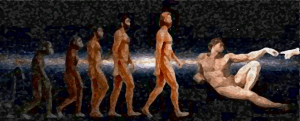
One morning I felt the inspiration to write a modern version of the Genesis account of creation, incorporating and alluding to the scientific discoveries of recent times.  I hope that nobody chooses to take offence:

Before the beginning of time and matter in our universe, there was God.  Of his works other than our universe we know nothing, but of his works in this universe we have learned much through the gift of our intellect. Of all his purpose in our universe we can know only what he has chosen to reveal to us, and he has revealed that we were his purpose.  One purpose alone or one purpose among many is not for us to know.

God chose to create this universe.  He created time, and then he tore nothingness into matter and antimatter, and in that great explosion from nothing he caused there to be an excess of matter over antimatter.  And he causes matter to interact with matter through invisible forces acting across nothingness. And ripples of that rending apart of nothing remain until this day for us to observe with wonder.

Since God knows his plans, he chooses to cause matter to behave in a consistent way. He allows the tiniest particles to behave in individually unpredictable ways, but in community he causes them to follow his chosen laws.  In the presence of spirit, whether God’s own or that of humans or other spiritual beings, God allows his laws to be suspended.  God continues to sustain and guide his creation, acting as and when he chooses and allowing individuals to choose how to act.

And so for billions of years, although years were yet to be invented, the universe unrolled according to the laws that God had chosen.  Particles formed into atoms, atoms formed into great stars and stars drew together into galaxies.  The first stars grew to such a size that the interaction between the matter and the forces caused great energy and the explosion of the stars, and in those explosions new atoms were formed.  God was making the building blocks of life, the carbon and the oxygen atoms.  Out of those explosions, and according to God’s laws of interaction new stars formed, and planets were formed around those stars.

One of those planets, the earth, had the right conditions for the next phase in God’s plan.  The planet was at first a molten mass, bombarded from space by asteroids and meteors as the turmoil of the formation of the particular sun and galaxy subsided.  A crust was formed on the molten mass, and a gaseous atmosphere formed above the crust.  In that atmosphere and on the crust, the carbon, hydrogen and oxygen atoms joined to form more complex short molecules.  When the time was right, these short molecules formed into long chain molecules.  These very special molecules continued to work according to the laws that God had chosen for the atoms and particles.  The molecules had different purposes, some formed into cell membranes, some formed into little molecular machines, and some formed into very long instruction chains.  And God caused them to be combined into what we today would call cells, and God had given them the mechanism to multiply in number.

To the first cells he gave the task of changing the atmosphere of the earth.  Using the energy of the nearest star, the sun, the cells separated oxygen from carbon dioxide and pumped the oxygen into the atmosphere.  For more than a billion years the cells carried out their task of preparing the atmosphere of the earth, getting ready for the more complex organisms that were next on his plan.

When conditions were right, the individual cells formed into groups or communities that were dependant on each other, where each cell in the group performed slightly different functions and so the new organism was able to both become larger but also to perform more complex functions.  God gave the individual cells the means to evolve a mechanism that would carry the instructions for each cell in the group to perform its function, and to respond to the communications from other cells within the group.  And so, multicellular organisms were formed.

The instructions embedded in each of these cells ran to billions of characters in length.  The mechanisms of the cell and these instructions were both necessary for the cells to operate and grow, and to reproduce from generation to generation.  God didn’t plan to make all organisms identical, so he designed ways and means of bringing variation to the offspring of the organisms.  He allowed “random” variations due to inaccurate copying, and he caused deliberate mixing of the instructions in one organism with another, requiring separate organisms to come together in order to create the next generation.  The organisms themselves thus had to live in partnership and community to survive.

So God had established a process of growing a wide diversity of organisms of increasing functionality that relied on each other to survive and thrive.  Whilst each individual organism would be allowed to behave in an individual way, only those that were successful in progressing God’s plan survived and reproduced.  God chose to allow a process of competition to develop the organisms as he wanted; a process which required individual capability and cooperation between individual cells within an organism, and between organisms of the same type.  Through this phase of God’s plan he used the law of “survival of the fittest” to perfect each organism, and to select which organisms to perfect.  The organisms didn’t know anything of right and wrong.

But that was not the end of God’s purpose, although it took billions of years to accomplish.  His plans were greater than that, for there to be beings in his likeness; beings that would design and create, but more than that, beings that would know right from wrong, beings that would love, spiritual beings that would know and seek God himself.

So he selected one of the organisms and he planted his spirit in that organism and gave it an awareness of God himself, and he gave that organism the ability to know what is right and what is wrong, and he gave that organism the ability to choose to do what is right or what is wrong.  That organism is mankind, the pinnacle of God’s creation. 

You might not be ready to accept this new account. Certainly it is not literally correct, but maybe it is more relevant to today’s society in the same way that the original Genesis was relevant to the society of its day.  It conveys that all of us are spiritual and material beings, willed by God as the culmination of a creative process of unimaginable complexity spanning billions of years, following the creation of time itself.  Mankind: created with the opportunity to know God and to relate to him, but allowed the alternative of rejecting and ignoring him.

Excerpt from “The Big Picture – an honest examination of God, Science and Purpose”

evolution